Original author: Route 2 FI
Original translation: Deep Tide TechFlow
Gm, friends.
The crypto market is undergoing profound changes, and we must adjust our strategies and tactics, as the methods that once worked are no longer applicable.
The traditional "buy and hold (HODL)" strategy is gradually losing its effectiveness. As market volatility increases and new projects emerge continuously, the belief in long-term holding becomes more fragile.
Today, the survival rule in the market is to trade flexibly, constantly adjust positions, and seek opportunities in a decentralized and uncertain environment.
Whether you can successfully adapt to this new situation will determine whether you survive or are eliminated by the market.
Let’s delve deeper and see if there is still a glimmer of hope in such a market.

Altcoin Casino: How to Find a Way to Survive in the Fragmented Cryptocurrency Market
For those who entered the crypto market in the past year to year and a half, this market is undergoing a profound transformation.
The "shortcut" to easy profits through centralized exchanges has become increasingly complex. The way the market operates resembles a casino rather than a traditional trading market, requiring investors to possess unprecedented flexibility and acuity.
The traditional "buy and hold" strategy, which worked in earlier cycles, is no longer applicable. Holding periods have become shorter, shrinking from weeks to even days (remember when those old players told us to just buy altcoins at low prices and wait to sell at highs?).
Behind this change is the continuous emergence of new coins and projects. Each new project competes for market attention and funds, constantly challenging the status of existing projects.
Even some events traditionally viewed as positive can have unexpected consequences. For example, Trump's launch of a highly publicized meme may attract a large number of new users into the crypto market, but it could also lead to a significant drop in the value of many altcoins. Typically, the beneficiaries are limited to Bitcoin (BTC), Solana (SOL), and related meme coins.
Many investors have learned a painful lesson—if the portfolio does not heavily invest in BTC and SOL, it may suffer significant losses.
A similar situation occurred with the launch of Berachain, which attracted a lot of attention and funds but impacted the Abstract ecosystem.
In such a dynamic and unpredictable market, the wisest approach is to accept that volatility is the norm and recognize that as new coins, new chains, and new projects continue to emerge, this volatility may further intensify.
As a result, many investors are readjusting their strategies, increasing their holdings of BTC and stablecoins while significantly reducing their positions in long-term altcoins. The market's focus has shifted from "long-term investment" in altcoins to tactical operations of "short-term trading."
The goal is to avoid becoming the "last believer" in those failing projects, watching their value go to zero.
At this stage, as the current cycle nears its end, buying coins other than BTC based on long-term investment logic may not offer an ideal risk-reward ratio. Although altcoins may be nearing their bottoms, the likelihood of most coins, NFTs, or ecosystems hitting new highs simultaneously is decreasing.
Every day, a large number of new coins are launched, diluting market attention and funds, making it more difficult for existing projects to rise again.
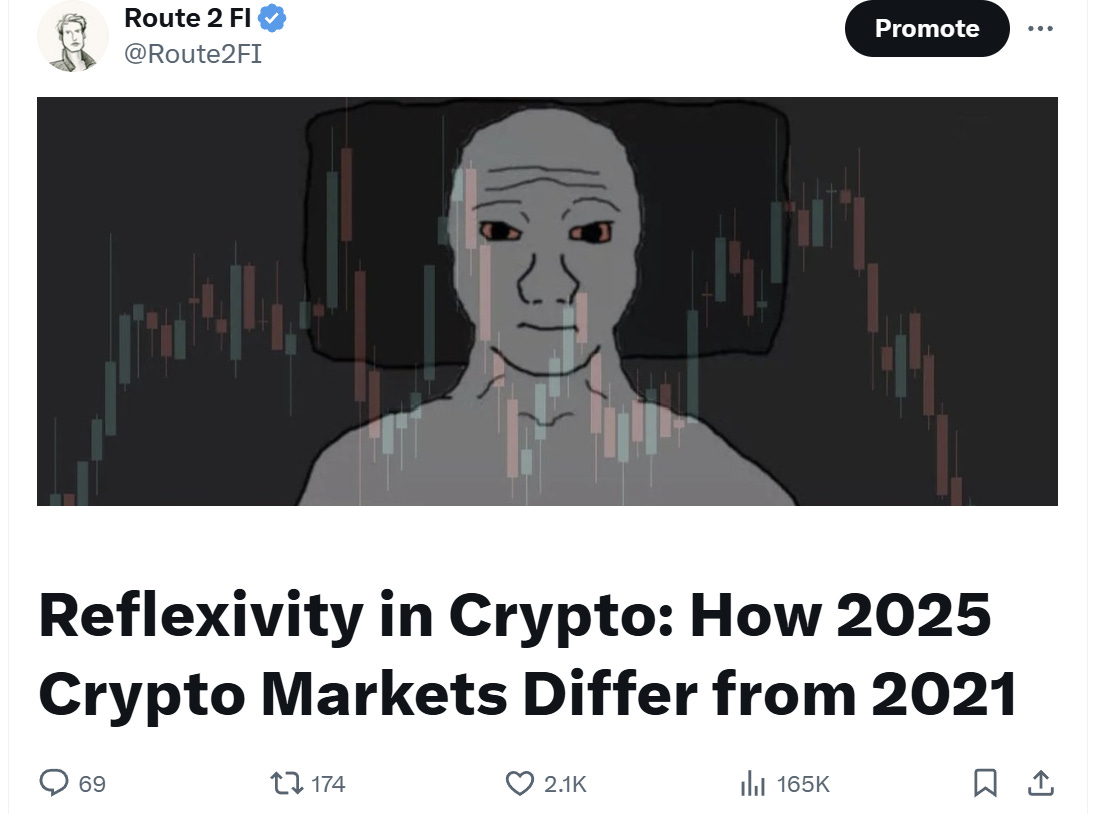
The current cryptocurrency cycle is filled with unprecedented challenges, primarily due to a stronger sense of uncertainty permeating the market than ever before. This uncertainty mainly stems from the fact that even popular altcoins, after experiencing significant declines, lack sufficient confidence to confirm their rebound.
Looking back at the cycles of 2017 and 2021, investors were generally confident about buying altcoins during downturns, as long as these projects had a market cap (mcap) that was not too low (usually below $100 million). The prevailing view at that time was that these coins would recover their value during the cycle, at least not completely fade away in this round. Coins that gained early market attention often maintained their popularity and market position until the cycle ended.
However, this cycle is entirely different (yes, it really is). The market is filled with various narratives and sub-narratives, each vying for investors' attention, but this attention is often fleeting. Investors are now more cautious about "catching the bottom," as the entire narrative of a coin can collapse at any moment, rendering the investment worthless.
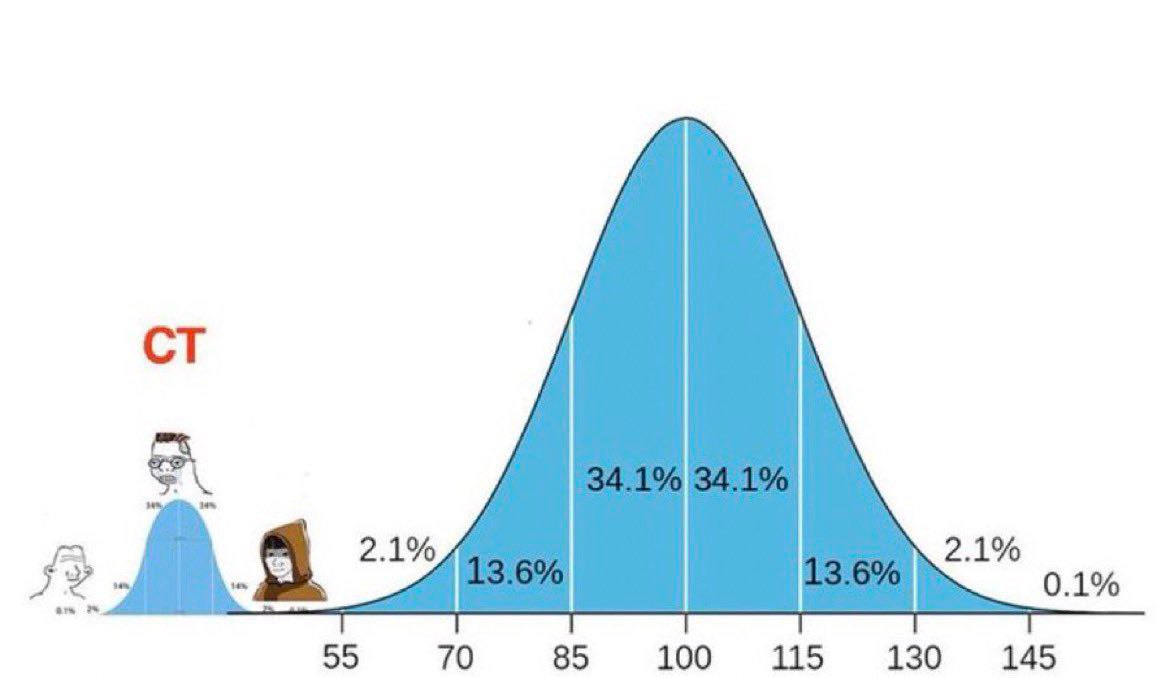
Unlike past cycles centered around a single main narrative, the current market presents multiple narrative-driven mini-cycles, each with its own peaks and troughs. Bitcoin (BTC) and Solana (SOL) are generally considered relatively safe choices that may eventually recover their value, but for investors seeking high multiples, their potential returns may not be attractive (after all, BTC has risen sixfold from its bottom, while SOL has risen twentyfold). The question is whether to invest in areas like AI cryptocurrencies. Although these areas have recently garnered attention, they have significantly retraced from historical highs, and there are no clear signs indicating they can return to their peaks.
The market's high fragmentation makes it difficult for investors to accurately identify and seize emerging trends. Since its inception, cryptocurrency has been a speculative market, although past cycles attempted to legitimize it by emphasizing "peer-reviewed blockchain technology," "solid fundamentals," and "real-world applications." However, this cycle seems to have abandoned that facade, embracing a more realistic view: everything depends on how to attract and maintain market attention. This trend has led to a significant shortening of investors' attention spans. The once one to two-year "bull market cycles" are now compressed into mere months, weeks, or even days.
The current market seems to be experiencing a meme super cycle (or has this cycle already ended?). However, even the most popular memes have experienced significant declines from their peaks, making the rationale for investing in them even more questionable.
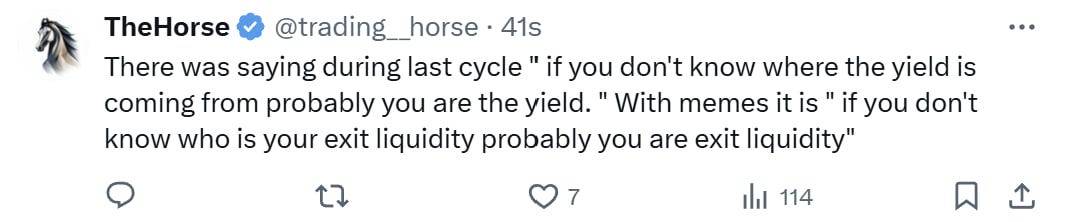
In the current crypto market, the "risk of picking up" faced by investors is higher than ever. In past cycles, when coins experienced similar declines, investors typically viewed them as opportunities to catch the bottom, as the likelihood of these coins eventually rebounding was almost certain. However, the current question is whether these coins can regain the market attention they once had. The current market is more inclined to support leading coins rather than underperforming projects. Even if certain projects have strong fundamentals, they struggle to gain favor without market enthusiasm.
Although meme coins and AI projects are performing well in the current market, investors remain cautious about these trends, as the shift in market focus is often rapid and unpredictable. This widespread uncertainty stems from the overwhelming number of choices investors face. With thousands of coins and projects competing for attention in the crypto market, it becomes challenging for investors to discern which projects have real potential and which are merely fleeting. The dispersion and brevity of market attention make it difficult to form a long-term market consensus on any particular project. A thought-provoking question is whether this phenomenon has become the new norm in the crypto market or is merely a temporary occurrence in the current market environment.
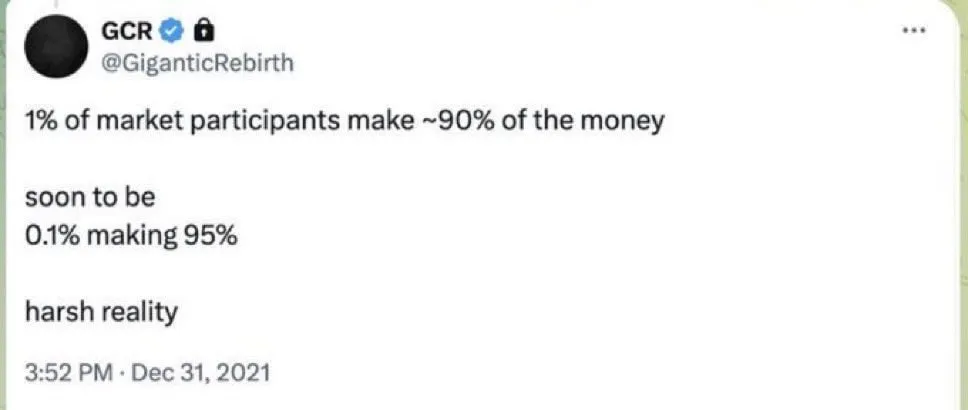
Typically, each market cycle goes through an initial phase of chaos and distraction, gradually stabilizing as clear winners emerge. However, it is also possible that the market has undergone a fundamental change, with investors' attention spans becoming shorter, making it impossible for a single narrative to dominate for long. Meanwhile, macroeconomic factors are also profoundly influencing the current market landscape. In the past, loose monetary policies made investing relatively simple, as ample liquidity fueled speculative bubbles. However, in the current environment of high interest rates and liquidity tightening, the market has become more severe.
The weakening confidence in "catching the bottom" likely reflects broader economic realities. In the face of an unclear economic outlook, investors' risk appetite has significantly decreased. The debate over the traditional four-year cycle is also increasing, with some predicting that the cycle may extend. However, based on the current market performance, the four-year cycle seems to still exist, albeit with some significant changes compared to the past. For instance, the market performance in the current cycle is relatively lackluster: Bitcoin has only reached about 1.5 times the previous historical high, while Ethereum has not even managed to break new historical highs. This market performance is largely driven by specific events, such as Michael Saylor's support for Bitcoin and the launch of Bitcoin ETFs, which have attracted the attention of institutional investors. However, outside of the Bitcoin ecosystem, the inflow of funds has been weak, with speculative capital more inclined to flow into short-lived meme coins.
In the current market, widespread speculative funds have almost disappeared, and the market lacks sufficient momentum to break through overall new highs. Instead, funds are more circulating within the existing cryptocurrency space, presenting a "net flat" state. Due to the lack of major liquidity providers, these scattered hotspots struggle to drive overall capital flow and attract significant inflows from new investors.
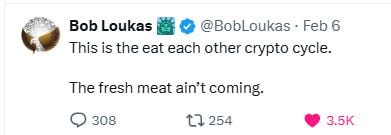
The performance of this round of the cryptocurrency market cycle is significantly different from previous bull markets. This has sparked profound reflections on the nature of cryptocurrency market cycles. The current market lacks widespread speculative enthusiasm, with returns concentrated on Bitcoin, while funds are more circulating within the crypto ecosystem. These phenomena indicate that the market is trying to adapt to a completely new operating model. Key factors that previously drove bull markets, such as loose monetary policy and retail investor enthusiasm, seem to be less significant in the current environment. The long-awaited "alt season," where almost all altcoins experience rapid increases, has yet to truly arrive.
Since the launch of the Bitcoin ETF, the gap between Bitcoin's market capitalization and the total market capitalization of other cryptocurrencies (the BTC-TOTAL2 metric) has continued to widen. In past alt seasons, a large amount of speculative capital flooded into the market, causing almost all coins to rise indiscriminately. However, Bitcoin now seems to have become an independent entity, with its price movements increasingly influenced by ETFs, Microstrategy's strategic layout, macroeconomic conditions, and political factors. In contrast, the altcoin market resembles a high-risk "casino." Returns are only possible when there is a significant net inflow of funds into the market, and you can choose the right investment direction.
However, in this casino, every winner is accompanied by a loser. Compared to previous cycles, the cryptocurrency market in 2025 appears more complex and difficult to grasp. There are too many "investment tracks" (i.e., different altcoins and subfields) in the market, with new tokens emerging daily, competing for investors' attention and funds. The overwhelming choices make it challenging for investors to quickly identify truly promising projects, while also increasing the risk of falling into failing projects. In such a rapidly changing market, success requires a high level of insight, sharp market awareness, and flexible response capabilities.
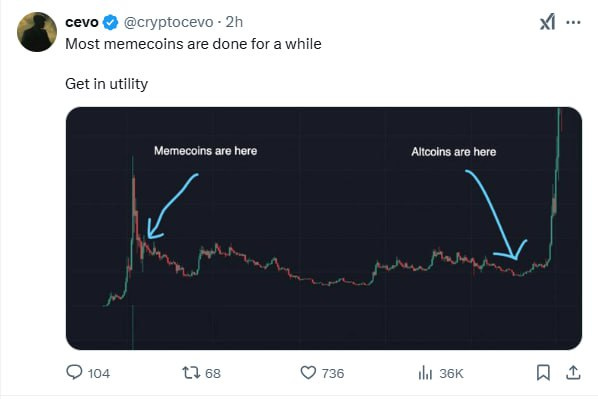
Nevertheless, some people remain confident about the future alt season, and I sincerely hope their predictions come true.
That's all for today's sharing.
Wishing everyone a pleasant weekend, and see you next week!
免责声明:本文章仅代表作者个人观点,不代表本平台的立场和观点。本文章仅供信息分享,不构成对任何人的任何投资建议。用户与作者之间的任何争议,与本平台无关。如网页中刊载的文章或图片涉及侵权,请提供相关的权利证明和身份证明发送邮件到support@aicoin.com,本平台相关工作人员将会进行核查。


