During the Spring Festival of 2025 (from January 28 to February 5), the cryptocurrency market experienced a thrilling "roller coaster" trend. The prices of mainstream digital assets such as Bitcoin (BTC) and Ethereum (ETH) plummeted significantly, followed by a rebound, attracting widespread attention in the market.
This article will analyze the major events during this period and their impact on the cryptocurrency market from multiple dimensions, including global economic policies, market sentiment, and industry dynamics.
1. The "Butterfly Effect" of Global Economic Policies
On January 24, U.S. President Trump signed an executive order announcing tariffs on imported goods from Mexico and Canada, as well as increased tariffs on Chinese imports. This policy raised concerns in the market about escalating global trade tensions, leading to a rise in investor risk aversion and a withdrawal of funds from high-risk assets like cryptocurrencies. As a result, the prices of digital assets such as Bitcoin and Ethereum fell sharply.
However, on February 3, Mexican President López Obrador announced that the U.S. tariffs on Mexico would be delayed by one month.
On February 4, Canadian Prime Minister Trudeau also announced that the U.S. would suspend the imposition of tariffs on Canada for at least 30 days. With the temporary easing of trade war tensions, signs of a rebound appeared in the cryptocurrency market.
The tariff policy of the Trump administration undoubtedly added uncertainty to the global economy, and this uncertainty quickly transmitted to the financial markets, with the cryptocurrency market being no exception. The temporary suspension of the tariff policy alleviated market tensions and provided an opportunity for the rebound in the cryptocurrency market.

2. The "Seesaw" of Market Sentiment and Funding Rates
Following the announcement of the tariff policy, panic spread in the market, and the funding rates on major trading platforms turned negative. The funding rate for BTC perpetual contracts on the Binance platform dropped to -0.0007%, indicating a strong bearish sentiment in the market. Analyst James Van Straten pointed out that a negative funding rate is typically seen as a "local bottom" signal, but the uncertainty brought by the trade war still put pressure on the market.
As the implementation of the tariff policy was delayed, market confidence began to recover. Additionally, on February 3, Trump signed an executive order to establish a sovereign wealth fund. The market speculated that this fund could become a channel for the government to purchase and hold cryptocurrencies, further driving the rebound of assets like Bitcoin.
Market sentiment is a crucial factor influencing cryptocurrency prices. Panic led to negative funding rates, exacerbating the market decline. Conversely, the emergence of positive news helped boost market confidence and drive price rebounds.

3. The "Booster" of Internal Industry Dynamics
On January 24, Ethereum founder Vitalik Buterin published an article discussing Ethereum's scaling strategy for 2025 and beyond. He emphasized Ethereum's unique advantages in both decentralization and practical application value, stating that the success of Layer 2 confirms the development philosophy of the Ethereum ecosystem. However, despite the positive news regarding technological developments, Ethereum's price was still significantly affected by macroeconomic factors, leading to substantial volatility.
Vitalik Buterin's article showcased Ethereum's potential in technological development, which is undoubtedly good news for Ethereum's long-term growth. However, in the short term, macroeconomic factors have a more direct impact on the cryptocurrency market.

4. The "Roller Coaster" of Price Trends
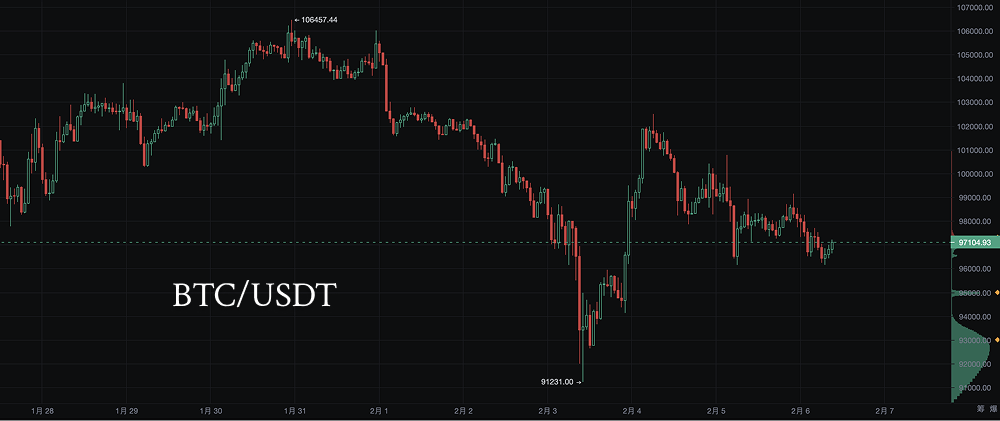
According to market data, from January 28 to February 5, Bitcoin's price exhibited a trend of rising and then falling. On January 28, Bitcoin opened at $102,095.42 and closed at $101,332.48, showing a slight decline. In the following days, the price rebounded, reaching a closing price of $104,735.30 on January 30. However, starting from February 1, Bitcoin's price fell again, dropping below the $100,000 mark on February 2, closing at $99,678.2, with a daily decline of over 2%. As of February 5, Bitcoin's price had dropped about 16% from the historical high of $109,350.72 set on January 20.
Ethereum experienced even more dramatic price fluctuations during this period. On January 28, ETH opened at $3,179.09 and closed at $3,077.11. On January 30, the price reached a recent high, closing at $3,247.78. However, starting from February 1, Ethereum's price saw a significant decline, with an 8.01% drop on February 2, closing at $2,868.69. On February 3, panic spread in the market, and Ethereum's price briefly fell to around $2,100, with a maximum decline of about 40% over three days. As of February 5, Ethereum's price had rebounded somewhat, but it remained at a low level overall.
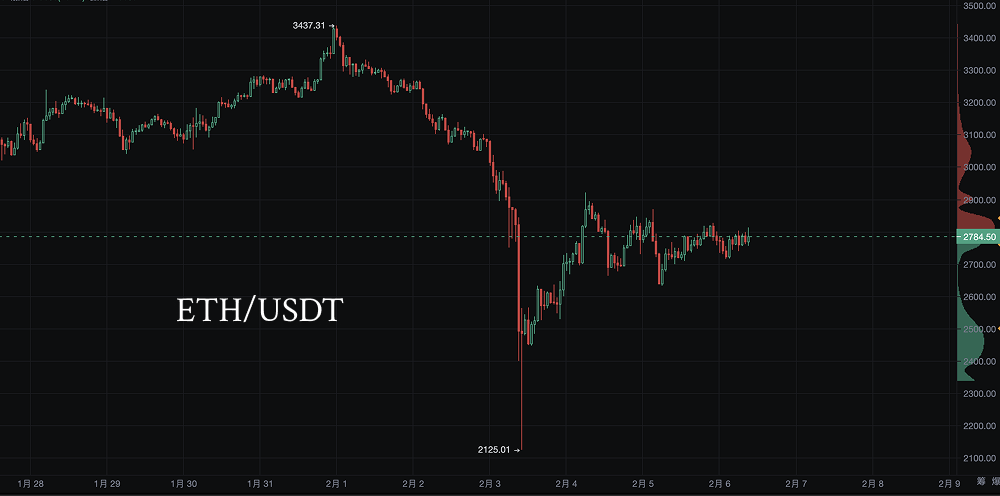
Analysis: From the price trends, both Bitcoin and Ethereum experienced significant fluctuations during the Spring Festival, presenting a clear "roller coaster" market. This indicates that the cryptocurrency market is highly sensitive to changes in macroeconomic policies and market sentiment.
5. Summary and Outlook
During the Spring Festival of 2025, the cryptocurrency market was influenced by changes in global economic policies, fluctuations in market sentiment, and internal industry dynamics. The announcement of U.S. tariff policies triggered risk aversion in the market, leading to declines in Bitcoin and Ethereum prices. Subsequently, the temporary suspension of the tariff policy and expectations for the establishment of a sovereign wealth fund boosted market confidence and drove price rebounds. However, overall, the cryptocurrency market still faces significant uncertainty, and investors should remain cautious, closely monitoring global economic policies and industry dynamics to make more informed investment decisions.
Looking ahead, the development prospects of the cryptocurrency market remain full of opportunities and challenges. On one hand, the continuous maturation of blockchain technology and the expansion of application scenarios provide fundamental support for the development of cryptocurrencies. On the other hand, the uncertainty of regulatory policies and the volatility of market sentiment remain important factors affecting cryptocurrency prices. Therefore, investors should remain rational when participating in the cryptocurrency market, carefully assess risks, and choose projects with long-term investment value.
Disclaimer: The above content does not constitute investment advice.
If you have any questions, you can contact us through the following official channels:
AiCoin Official Website: www.aicoin.com
Telegram: t.me/aicoincn
Twitter: x.com/AICoincom
Email: support@aicoin.com
Group Chat: Customer Service Yingying, Customer Service KK
免责声明:本文章仅代表作者个人观点,不代表本平台的立场和观点。本文章仅供信息分享,不构成对任何人的任何投资建议。用户与作者之间的任何争议,与本平台无关。如网页中刊载的文章或图片涉及侵权,请提供相关的权利证明和身份证明发送邮件到support@aicoin.com,本平台相关工作人员将会进行核查。


