This report delves into the deep-rooted reasons behind the underperformance of Web3 games during the 2024 bull market.
Written by: Stella
In 2024, the Web3 gaming industry presents a complex situation, achieving significant progress while also facing numerous challenges. Although daily active users surged by over 300% and traditional gaming companies began to make concrete moves in this field, the market performance shows that the sector's market capitalization only grew by 60.5%, significantly lagging behind the Meme coin and AI sectors. As Bitcoin hits new historical highs and various crypto sectors thrive, a key question arises: "Did Web3 games miss the best development opportunity in this bull market?"
However, behind these surface data, 2024 marks an important transformation period for the industry. The sector has transitioned from a purely speculative phase to maturity. This report will analyze how Web3 games evolve in the market cycle of 2024, exploring key indicators, technological advancements, and strategic shifts in the sector. From infrastructure development to user engagement models, we will explore how the industry builds sustainable growth while addressing mainstream adoption challenges.
Note: Unless otherwise specified, all data in this report is as of December 15, 2024. Data sources are Footprint Analytics and CoinMarketCap.
Annual Key Indicator Overview
Market Capitalization: Reached $31.8 billion, an increase of 60.5%;
Trading Volume: $5.2 billion, an increase of 18.5%;
Number of Transactions: 5.3 billion, a decrease of 30.3%;
Daily Active Users: Reached 6.6 million by year-end, an increase of 308.6% compared to the beginning of the year;
Active Games: Out of 3,602 games, 1,361 remain active (37.8%);
Annual Financing: 220 financing events, totaling $910 million;
Leading Public Chains:
Trading Volume Share: BNB Chain (23.1%), Ethereum (17.6%), Blast (9.2%);
Transaction Count Share: WAX (33.6%), Aptos (11.6%), Ronin (6.1%);
Daily Active Users: opBNB (2.2 million), Ronin (1.1 million), Nebula (458,000) (average daily in December).
Market Performance Analysis
Market Capitalization Performance
The Web3 gaming sector achieved strong growth in 2024, but underperformed compared to other crypto sectors. According to Footprint Analytics, the market capitalization of gaming tokens reached $31.8 billion by year-end, an increase of 60.5% from the previous year. Although the sector hit an intra-year high of $47.4 billion in March, it remains significantly below the historical peak of $114.1 billion set in November 2021.
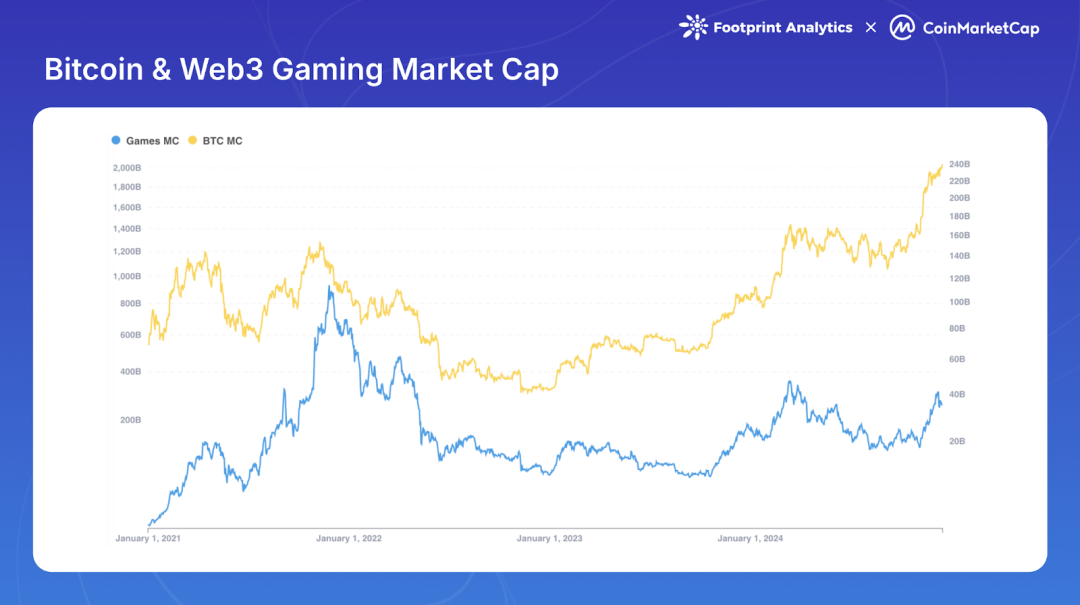
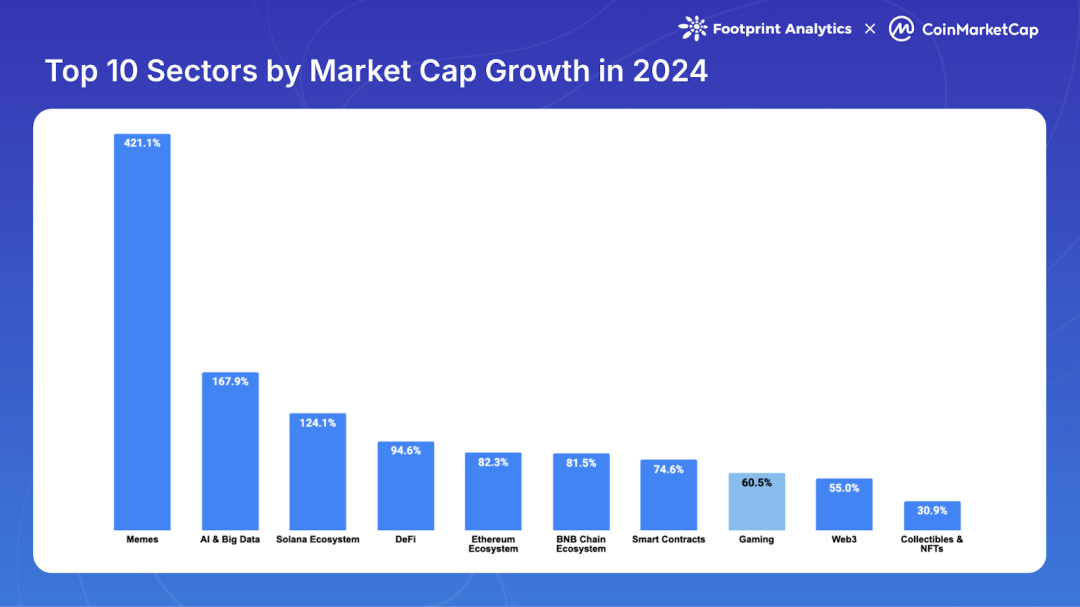
Despite the overall crypto market performing strongly in the second half of 2024, particularly in the last two months driven by Bitcoin, gaming tokens lagged behind other sectors. CoinMarketCap data shows that Web3 games ranked eighth in market capitalization growth among the top ten sectors, significantly trailing behind leading sectors: Meme coins (421.1%), AI and Big Data (168.0%), and the Solana ecosystem (124.1%).
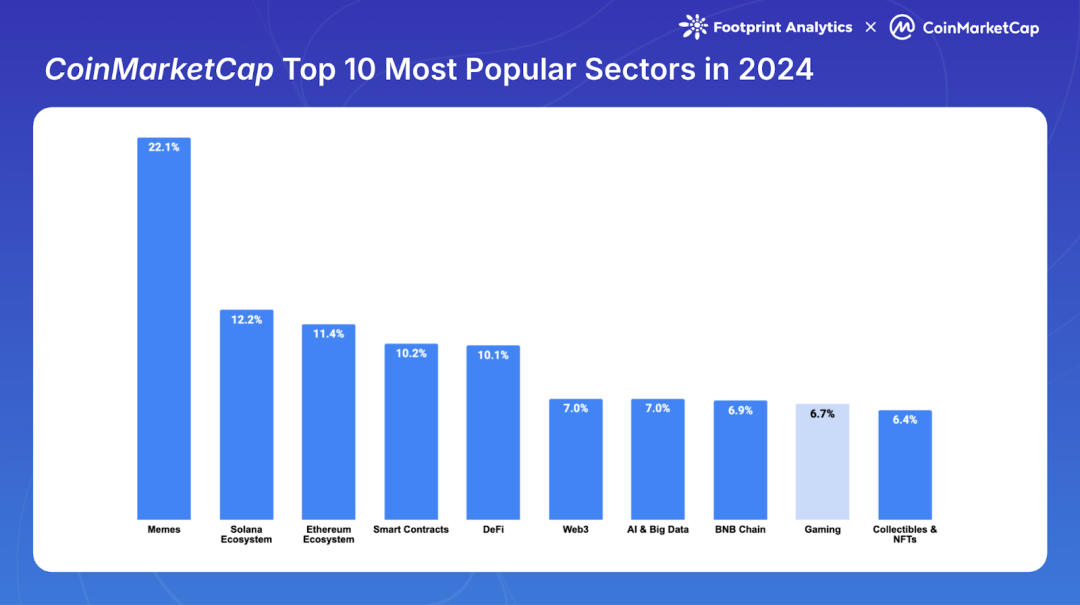
This poor performance extends to community attention. Among the most followed sectors on CoinMarketCap, Web3 games accounted for only 6.7% of the views in the top ten sectors, ranking ninth, as the focus throughout the year was primarily on Meme coin-related projects.
Trading Volume Analysis
The key indicators for the Web3 gaming sector in 2024 showed mixed results, with trading volume increasing but the number of transactions continuing to decline.
Trading Volume Trend
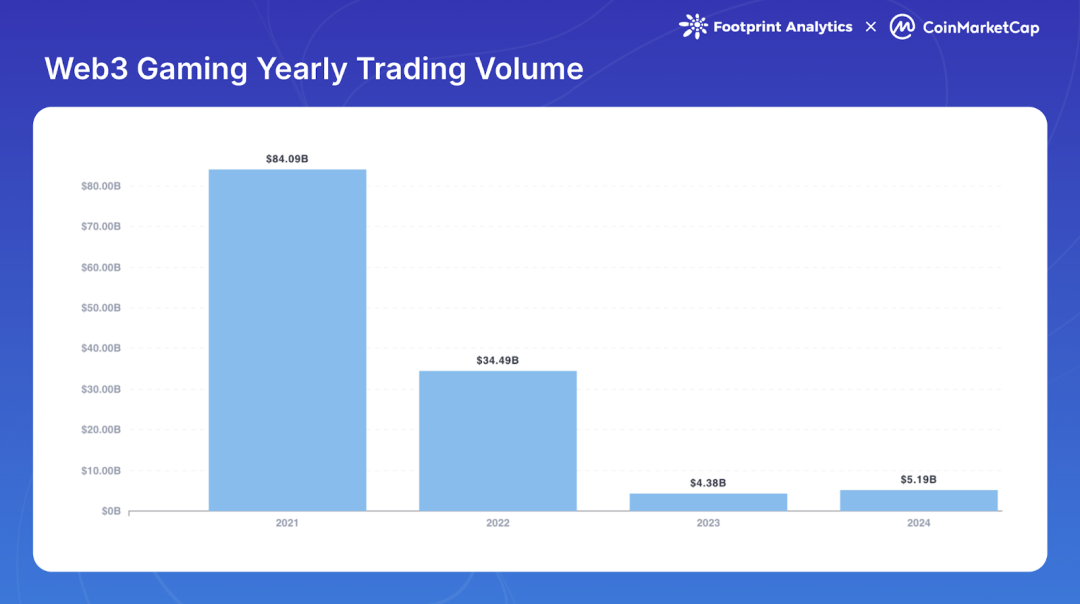
In 2024, the total trading volume for Web3 games reached $5.2 billion, an increase of 18.5% compared to 2023. While this reversed the downward trend since 2021, the trading volume remains significantly below the previous cycle's peak. The 2024 data is only 6.2% of the 2021 peak ($84.1 billion) and 15.1% of the 2022 trading volume ($34.5 billion).
Transaction Count Trend
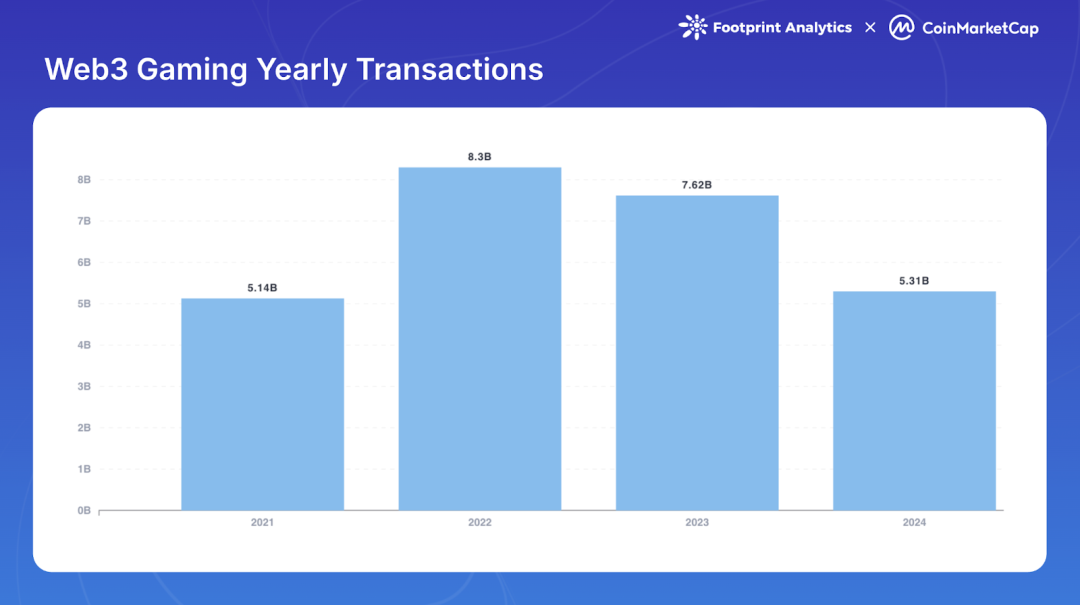
In 2024, the total number of transactions reached 5.3 billion, a decrease of 30.3% compared to the previous year. This level is comparable to the 5.1 billion transactions in 2021 but fails to reverse the downward trend that began in 2022.
User Engagement
Daily Active Users (DAU) saw significant growth throughout 2024, increasing from an average of 1.6 million in January to 6.6 million in December, a year-on-year increase of 308.6%. This growth surpassed the previous cycle peak of 1.8 million DAU set in November 2021. Although this data may include some bot activity, the growth still demonstrates significant user engagement in the industry.

Ecosystem Development
Public Chain Competition and Evolution
Major Public Chain Performance Analysis
In 2024, there were significant changes in the dominance of different public chains in the Web3 gaming sector, with each chain showing different advantages in trading volume, transaction count, and user engagement.
Trading Volume Distribution by Chain
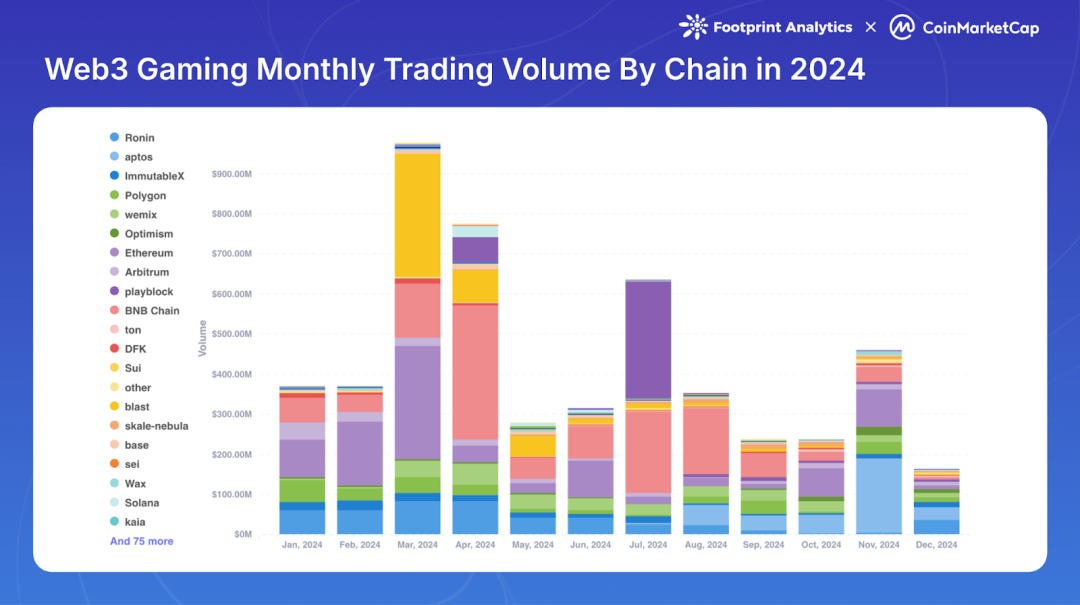
The BNB Chain maintained its dominant position in trading volume, achieving $1.2 billion in trading volume (23.1% market share), followed by Ethereum with $920 million (17.6%). Blast and Ronin accounted for 9.2% and 9.0% of the market share, respectively.
Transaction Count by Chain
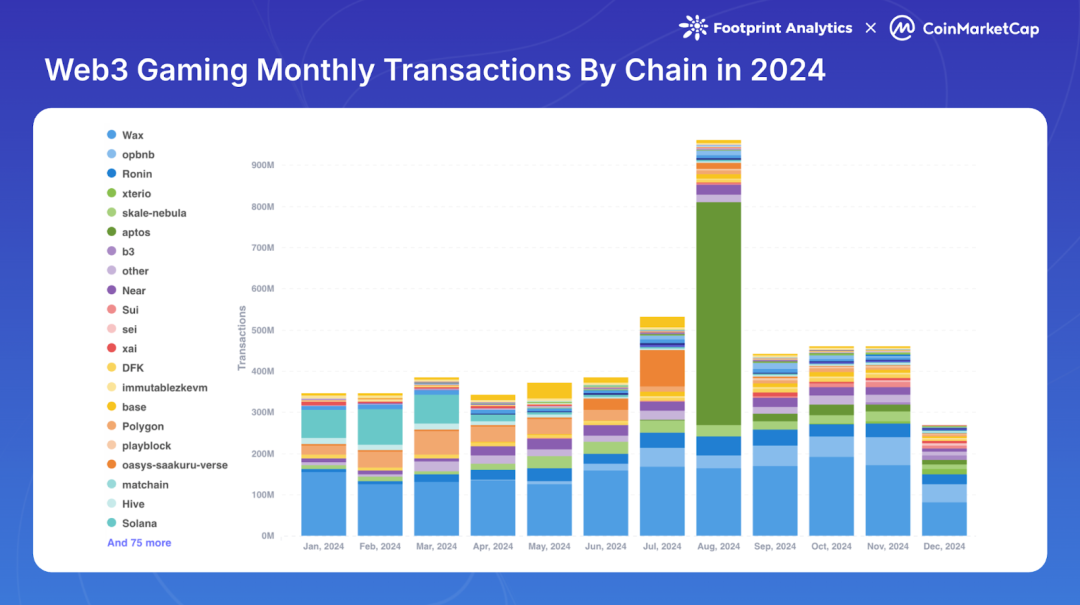
Despite the overall decline in transaction counts by 30.3%, certain public chains showed strong performance. WAX led with 1.8 billion transactions (33.6% of the total). Aptos emerged with its "tap-to-earn" model through the Telegram game Tapos, reaching 620 million transactions (11.6%), with 540 million transactions occurring in August alone. Ronin and opBNB maintained transaction counts of 321 million and 318 million, respectively.
User Count by Chain
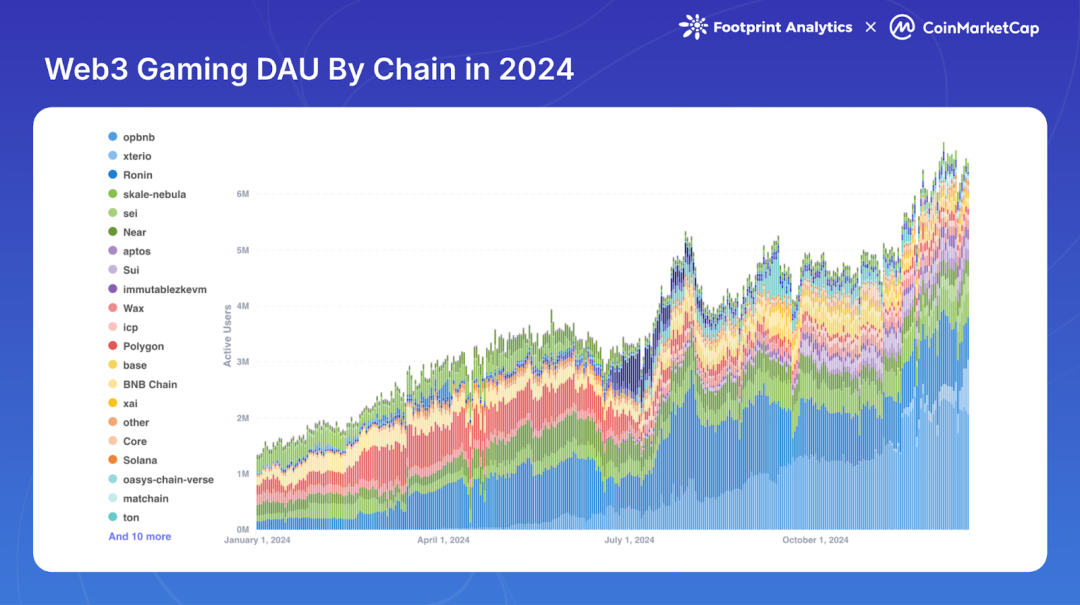
User activity across chains showed significant growth, especially in the second half of 2024. opBNB stood out in user engagement, with an average of 2.2 million daily active users in December, surpassing long-time leader Ronin (1.1 million). Nebula, as a SKALE Layer 2, ranked third with an average DAU of 458,000. Public chains like NEAR, Sui, and Sei entered the top ten in DAU, showcasing the expanding competitive landscape of the ecosystem and users' willingness to try new platforms.
The diversification trend in chain usage indicates a maturing ecosystem, with different public chains finding their own positioning for various gaming experiences and user preferences. Major networks are no longer just providing basic blockchain facilities but are evolving into comprehensive platforms for game developers. The $2 billion ARB Game Catalyst program from the Arbitrum Foundation, the $50 million STRK token distribution plan from the Starknet Foundation, and significant grant programs from Sui and Xai all demonstrate how each chain is strategically incentivizing to attract and retain quality gaming projects.
Technological Infrastructure Improvements
Capacity Enhancement
Blockchain processing capabilities have significantly improved, with the current network's transaction processing capacity increasing more than 50 times compared to four years ago. This growth is attributed to the rise of Ethereum Layer 2 and Layer 3 networks, including Immutable zkEVM, Avalanche L1-based chains, Oasys, SKALE, Arbitrum Orbit, and other high-throughput blockchains like Solana, Sui, and Aptos.
Dedicated gaming chains have also made significant progress. Ronin announced its Layer 2 plan, Ronin zkEVM, in June 2024, allowing Ronin developers to create their own zkEVM Layer 2. Immutable zkEVM has taken a strategic step towards greater accessibility by removing deployment whitelists and enabling permissionless deployment. Additionally, Avalanche completed its most significant upgrade, "Avalanche9000," since its mainnet launch in 2020, focusing on addressing barriers to customized L1 builds and improving interoperability.
Gas Fee Reduction
In March 2024, Ethereum's "Cancun" upgrade (also known as "Proto-Danksharding" or "EIP-4844") marked a significant milestone, drastically reducing fees on Layer 2 networks. The impact was substantial, with gas fees dropping from several dollars to mere cents or even lower, eliminating one of the biggest friction points faced by blockchain game developers and players.
Improved Cross-Chain Interoperability
The Chainlink Cross-Chain Interoperability Protocol (CCIP) saw significant development in 2024, enabling developers to create games that can interact with multi-chain assets. This improvement greatly enhanced the interoperability of in-game items.
The adoption of standardized formats for digital assets, particularly ERC-721 and ERC-1155, became more widespread. These standards ensure that in-game NFTs can be recognized and used across various games and platforms, simplifying asset transfer and interaction.
2024 also witnessed the significant rise of decentralized platforms supporting cross-chain gaming. Platforms like Portal, Fractal ID, and Web3Games provided the necessary infrastructure for seamless asset transfer and interaction between different blockchain ecosystems.
Project Development
2024 was a pivotal year for the development of Web3 games. In addition to traditional gaming companies entering the space, the ecosystem saw several important game releases. Highly anticipated games like Off The Grid and MapleStory Universe entered early access, while Illuvium finally launched officially. Pirate Nation successfully completed its token generation event (TGE) and launched a successful "play-to-airdrop" campaign.
Active Game Analysis
As of November 30, 2024, the total number of blockchain games reached 3,602, an increase from 2,997 in January. However, the active game metrics showed some challenging trends. Out of the total number of games, only 1,361 (37.8%) remained active on-chain, meaning 2,241 games (62.2%) were inactive. Furthermore, despite the increase in total games, the number of active games actually decreased from 1,387 in January.
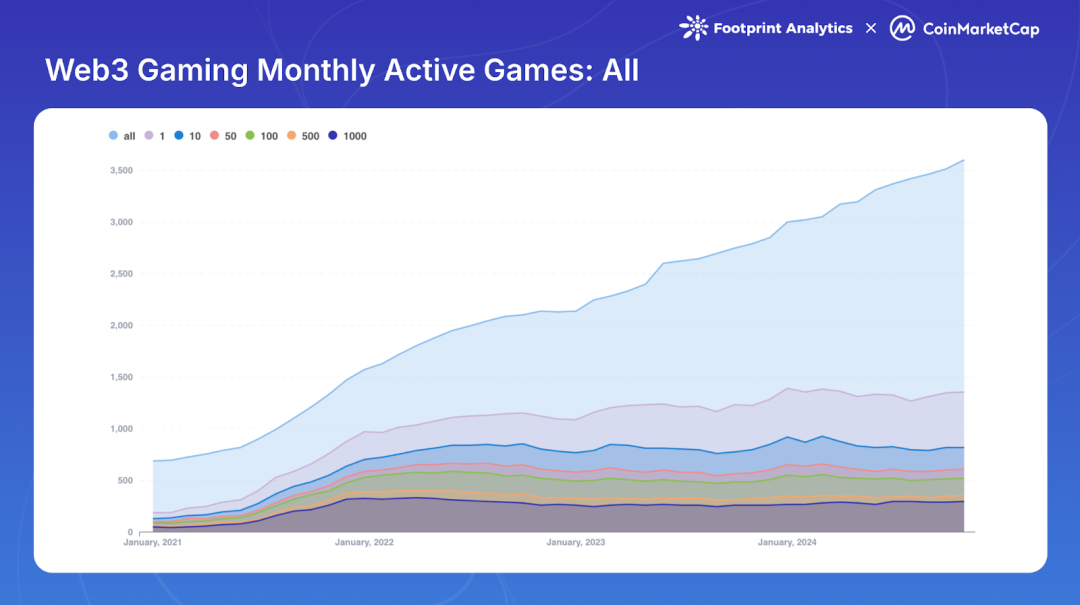
A deeper analysis of user engagement metrics reveals further market concentration. The number of games with over 100 monthly active users (MAU) dropped from 586 in June 2022 to 522 by the end of 2024. In November 2024, 161 games (4.5% of the total) achieved over 10,000 MAU, with 96 games (2.7% of the total) surpassing 100,000 MAU.
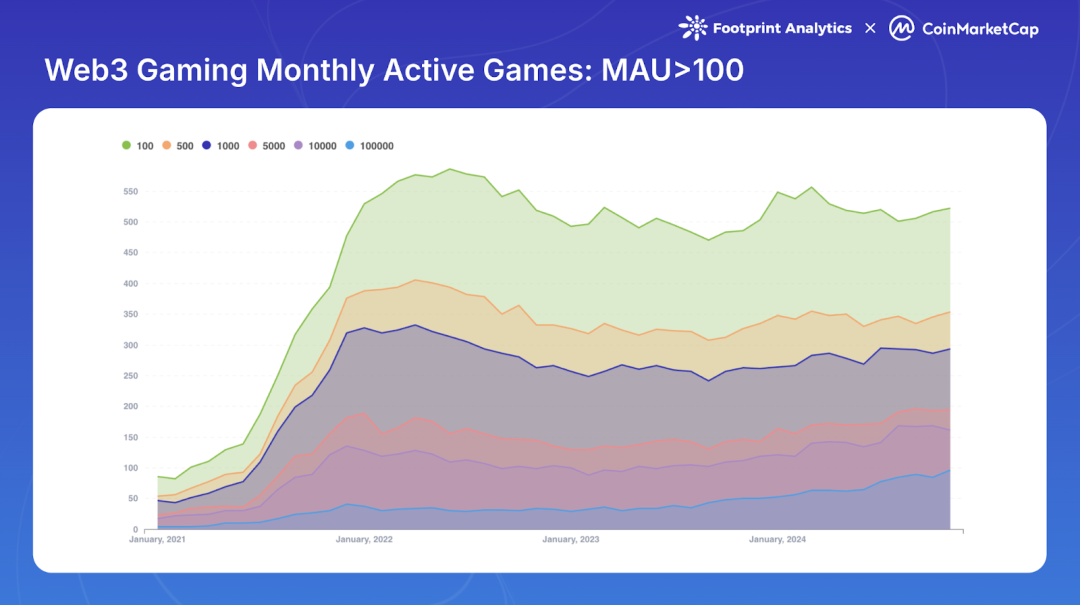
This trend of user concentration indicates that the market is maturing, with successful games attracting larger audiences. This phenomenon is influenced by several factors, including intense competition, rapid iteration strategies, and the "winner-takes-all" effect created by leading games in the ecosystem.
Innovation Landscape
Cross-Platform Gaming Trends
Mobile gaming emphasized accessibility and seamless user experience, establishing itself as the primary platform for Web3 games in 2024. The mobile-first approach has influenced how developers design blockchain games, focusing on intuitive interfaces and simplified onboarding processes. In 2024, mobile games accounted for 29.4% of newly released Web3 games.
Social platforms, particularly Telegram, have become powerful catalysts for the adoption of Web3 games, accounting for 20.9% of newly released Web3 games. Telegram's success stems from its large user base, simplified in-app experience, and ability to bypass traditional app store restrictions. The platform's influence peaked in the third quarter of 2024, with 11 games surpassing 10 million MAU. Notably, TON successfully converted this vast user base into on-chain participants, generating spillover effects in Web3 gaming, Meme coins, and DeFi sectors. This success prompted multiple blockchain networks beyond TON to compete for Telegram traffic, with Aptos, Sui, Core, and others launching or supporting Telegram-based games.
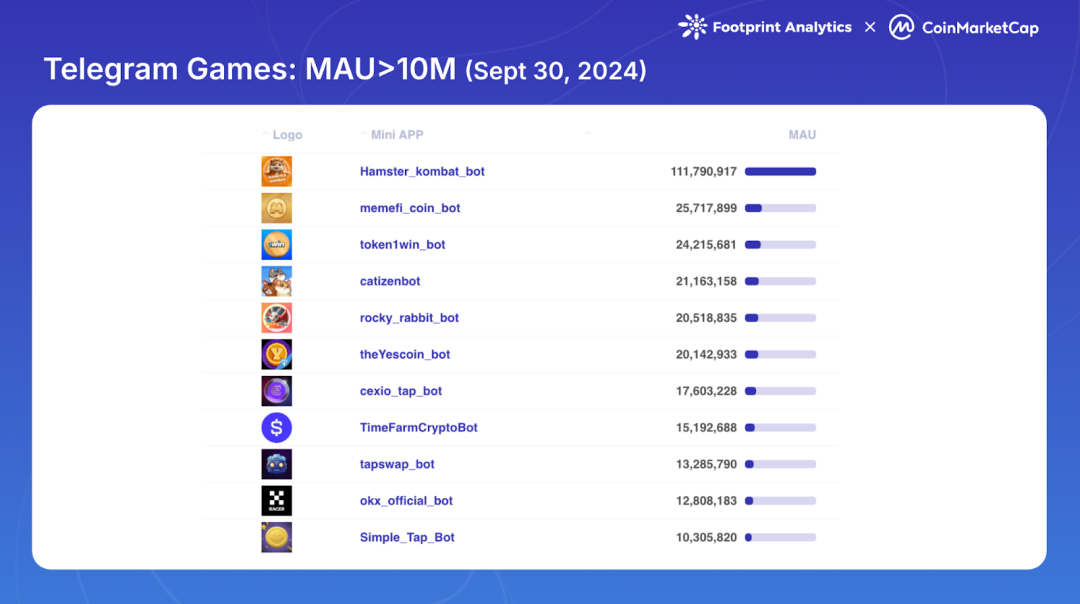
Similarly, Line announced plans in December 2024 to launch 20 mini dApps, marking a growing interest from mainstream messaging platforms in integrating blockchain gaming.
The console gaming sector remains relatively undeveloped in Web3 gaming, with major manufacturers like Microsoft and Sony maintaining a cautious stance. However, new approaches are beginning to emerge to bridge this gap. Some developers, such as Gunzilla Games with Off The Grid, have chosen to separate core gameplay from blockchain features to align with traditional console gaming expectations. At the same time, blockchain platforms are starting to develop their own Web3 gaming handhelds, such as Sui's SuiPlay0X1 and Solana's Play Solana Gen1 (PSG1), potentially creating a new category of dedicated Web3 gaming devices.
Traditional Gaming Companies Entering the Space
2024 marked a significant shift in traditional gaming companies' attitudes toward blockchain gaming, with major studios moving from experimental actions to strategic development.
Ubisoft launched Champions Tactics: Grimoria Chronicles on the Oasys Layer 2 HOME Verse in October. This tactical RPG incorporates a range of NFT-based features while maintaining traditional gaming elements.
Square Enix strengthened its blockchain segment through strategic investments and partnerships. In addition to investing in the gaming platforms Elixir Games and HyperPlay, the company announced it would bring its Symbiogenesis game to HyperPlay.
Sony Group's involvement signifies a major push toward blockchain gaming, both through investments and infrastructure development. While supporting double jump.tokyo Inc.'s $10 million Series D funding, Sony also announced the launch of Soneium, a Layer 2 network aimed at connecting Web3 innovations with consumer applications in gaming and entertainment.
AI Integration into Game Development
As artificial intelligence revolutionizes various industries in 2024, the Web3 gaming sector has become a significant beneficiary of AI innovations, opening new opportunities for game development and player experiences.
AI has transformed in-game interactions and content generation. Game studios are leveraging AI to create more complex non-player characters (NPCs) that can adapt to player behavior and generate personalized quests based on individual gaming history and preferences. This personalization enhances player engagement by making the gaming experience more relevant and tailored.
In development, AI has significantly streamlined the creative process. Developers are using AI tools to automatically generate game environments and assets, drastically reducing production time and costs. This enables smaller teams to create high-quality games that can compete with larger studios.
AI has also enhanced the operational aspects of Web3 games. The technology is used to automate game testing processes and monitor on-chain transactions to guard against potential fraud or cheating, which is particularly important in games with complex economic systems. Additionally, AI algorithms are helping to optimize game economies and token models, addressing one of the major challenges in Web3 game design.
Investment Landscape
Annual Financing Event Overview
In 2024, Web3 games raised $910 million through 220 financing events. Although the amount raised decreased by 7.3% compared to 2023 and was significantly lower than the boom periods of 2021-2022 (which were $3.2 billion and $2.7 billion, respectively), the number of financing events increased by 48.7% compared to 2023, indicating sustained investor interest, despite the smaller scale of individual transactions.
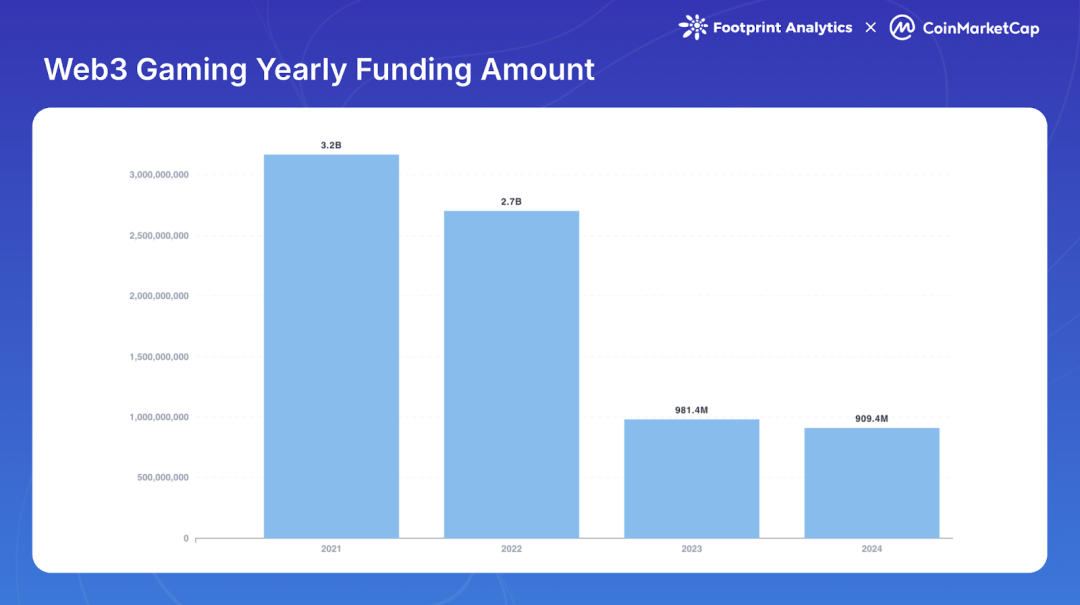
This year showed a clear trend toward early-stage investments, with 76 early-stage deals (34.6% of total events) compared to only 20 Series A or later financing rounds (9.1%). This trend suggests that while new projects continue to attract initial funding, many projects from the 2021-2022 boom period face challenges in securing follow-up financing.
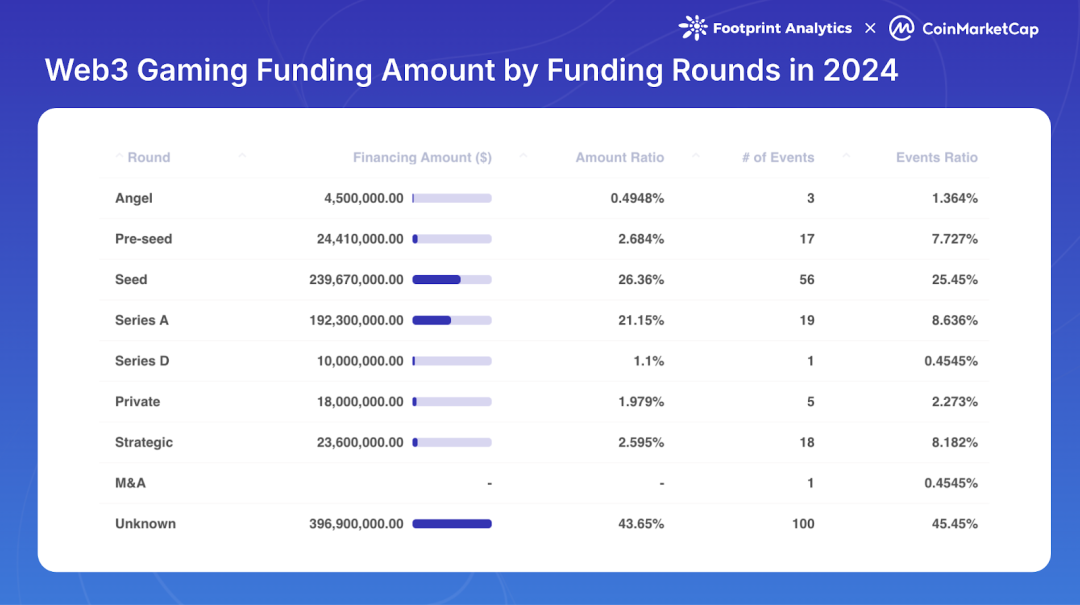
Among investors, Animoca Brands maintained its leading position, completing 38 investments, a 192.3% increase from 2023, participating in 17.3% of all financing events in 2024. Spartan Group and Big Brain Holdings followed closely with 22 and 15 investments, respectively, with the top ten investors collectively completing 152 investments.
Major Financing Events
In 2024, seven projects raised over $20 million in single events. Azra Games led with $42.7 million in Series A funding, focusing on bringing console-level gaming experiences to mobile platforms.
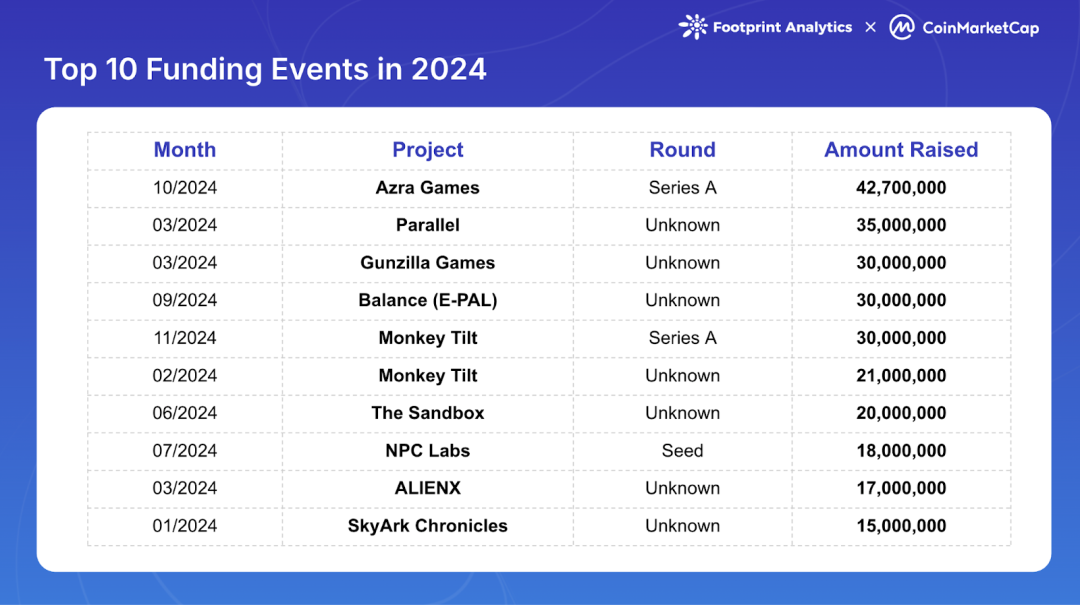
In terms of cumulative funding, Monkey Tilt raised $51 million through two rounds of financing, positioning itself as a platform for a "gaming - entertainment - gambling" hybrid model. Gunzilla Games secured four rounds of funding from notable investors, including VanEck, Coinbase Ventures, Delphi Ventures, and Avalanche's Blizzard Fund, demonstrating strong investor confidence.
Strategic Investment Trends
As the industry transitions from the frenzy of 2021-2022 to maturity, the focus has shifted to fewer but higher-quality projects, with investors becoming more selective in their approaches.
Funding is increasingly targeting game infrastructure and development tools, rather than just the games themselves. Notable examples include NPC Labs raising $18 million in a seed round to build Web3 games on Base, and Alliance Games raising $5 million in a Series A round for AI-driven decentralized infrastructure. This trend reflects growing investor interest in foundational technologies that can support multiple games and platforms.
Platforms and multi-chain development have attracted significant attention, particularly projects building cross-chain gaming ecosystems. Seeds Labs raised $12 million for its flagship product Bladerite on Solana, while B3 launched Open Gaming Layer, showcasing investor interest in expanding cross-chain gaming capabilities.
Additionally, new game categories received significant investor attention in 2024, especially Telegram-based games and gambling projects, despite facing regulatory challenges.
Industry Evolution and Future Outlook
The Web3 gaming industry experienced a significant evolution in gaming models in 2024. The previously dominant "play-to-earn" model has given way to more sustainable approaches. Telegram-based "tap-to-earn" games demonstrated unprecedented user acquisition capabilities, while the "play-to-airdrop" strategies of Pirate Nation and Pixels provided new methods for user acquisition. At the same time, mature projects are shifting to a "play-and-earn" model, placing gameplay above financial incentives.
However, the field still faces ongoing challenges. Technical barriers remain significant, particularly in achieving seamless blockchain integration without compromising the gaming experience. Regulatory uncertainty, especially surrounding gambling features and token classification, continues to impact development decisions.
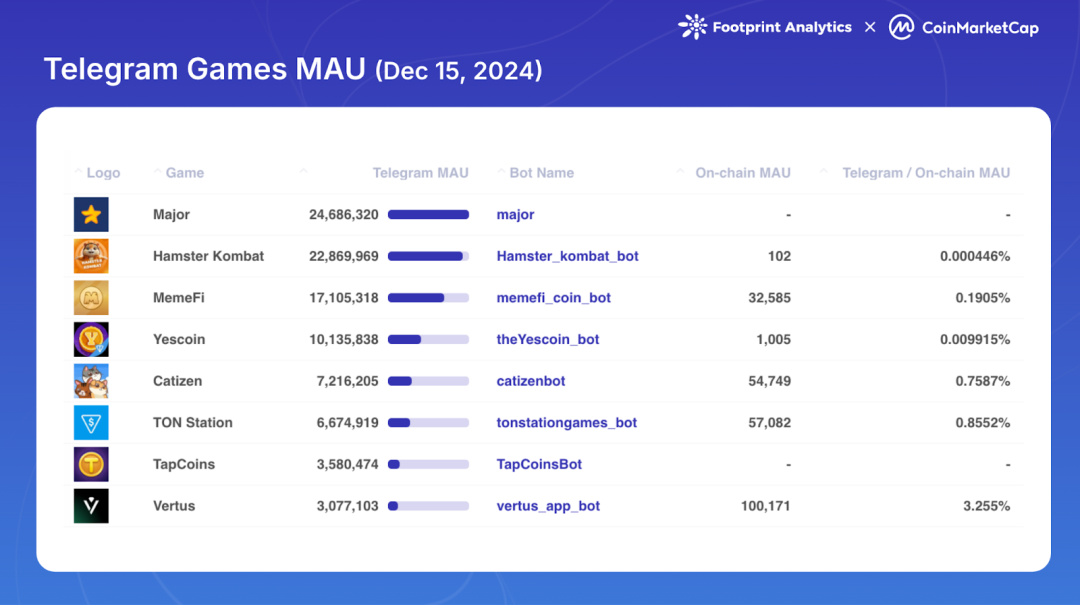
Most critically, maintaining on-chain engagement has become a fundamental issue. This is particularly evident in the performance of Telegram games: the monthly active users of Hamster Kombat dropped from over 100 million in September to 22.9 million by mid-December, with only 0.0004% of users participating in on-chain gaming activities. While other Telegram games show higher conversion rates, most still fall below 1%. Notably, these metrics particularly reflect on-chain gaming activity, as the core gameplay of most Telegram games remains off-chain, with users potentially being more active in other sectors like Meme coins or DeFi. This highlights the ongoing challenge of converting platform users into active blockchain gamers.
2025 Outlook: Redefining Relevance
As Web3 games seek to re-establish their position in the crypto landscape, several key trends emerge as potential catalysts for transformation:
Social platform integration stands as the most promising path toward mainstream relevance. The remarkable success of Telegram games demonstrates the power of meeting users where they are, with platforms like Line and TikTok poised for action. This approach may ultimately address the user acquisition challenges in the field by leveraging existing social networks rather than building communities from scratch.
AI integration is set to evolve from a marketing feature to a fundamental driver of innovation. In addition to enhancing game development and NPC interactions, AI could address core challenges in economic design and user retention that the field has traditionally struggled to compete with against conventional gaming experiences.
Achieving sustainable growth through integration may ultimately determine the relevance of the field. Success may not come from competing with traditional games or other crypto sectors, but rather from seamlessly integrating with them. This means focusing on how blockchain can enhance rather than define the gaming experience, developing more complex token economics, and placing user experience above crypto-native features.
In summary, the role of Web3 games in the crypto ecosystem may not be about dominance, but about integration. By cleverly connecting traditional gaming, social platforms, and blockchain technology, Web3 games are poised to create genuine innovative value. This evolution will not only help the industry break through the current limitations of being "just another crypto vertical" but is also likely to become a key force in reshaping the future of the gaming industry.
免责声明:本文章仅代表作者个人观点,不代表本平台的立场和观点。本文章仅供信息分享,不构成对任何人的任何投资建议。用户与作者之间的任何争议,与本平台无关。如网页中刊载的文章或图片涉及侵权,请提供相关的权利证明和身份证明发送邮件到support@aicoin.com,本平台相关工作人员将会进行核查。


