Original author: Mika, youtube
Original translation: zhouzhou, BlockBeats
Editor's Note: This conversation mainly discusses how LucaNetz and his team faced tough challenges in the early days of Pudgy Penguins, including financial difficulties, investor rejections, and community distrust. It also covers the Pudgy Penguins ecosystem, tokens, and future developments. Additionally, it touches on the reasons for choosing Solana over other chains and expresses the intention to change the Solana ecosystem by promoting cultural phenomena.
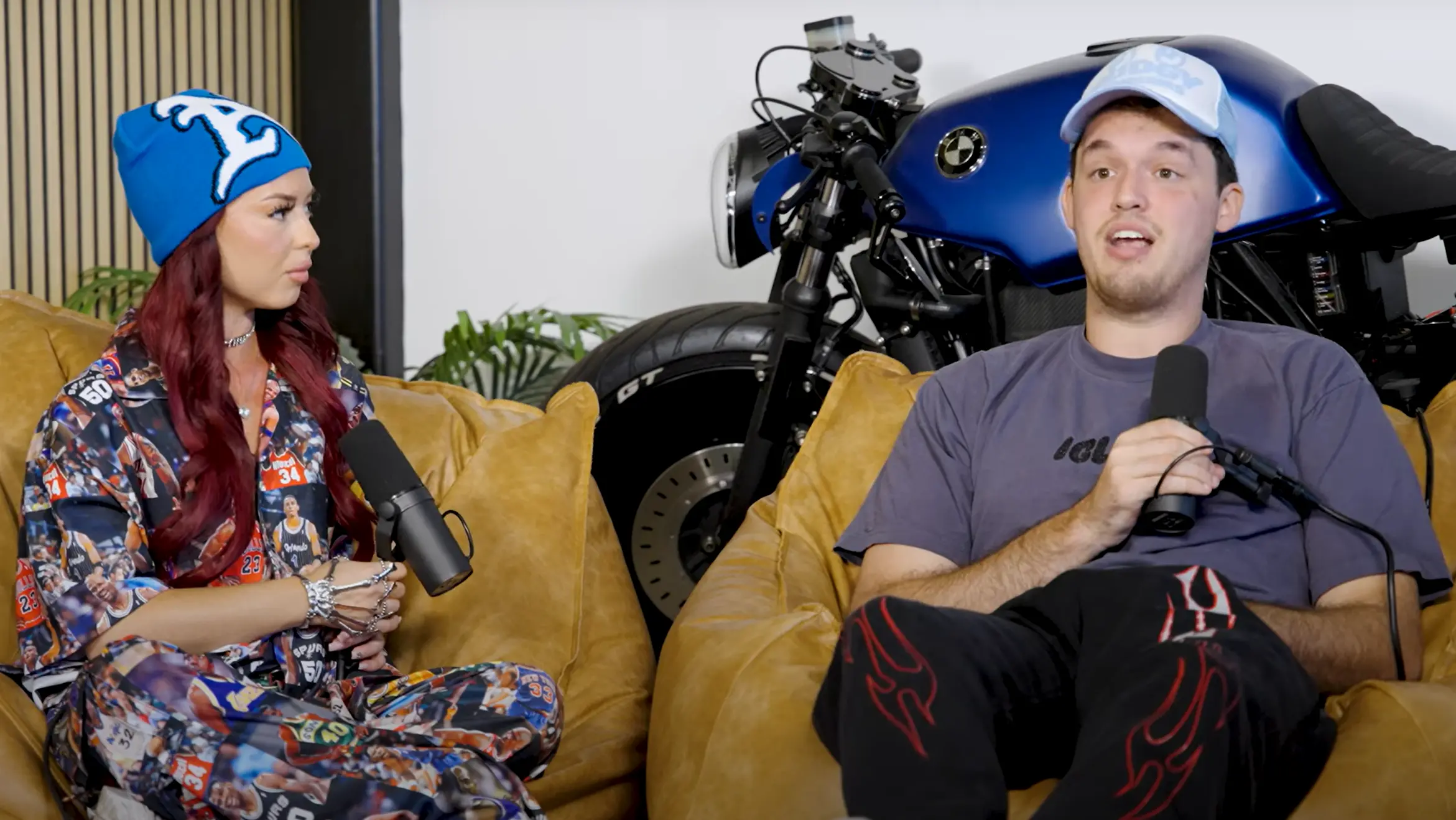
The following is the original content (edited for readability):
Host: LucaNetz is like Kobe in the Web3 crypto space. Everyone is asking, how can I be like LucaNetz? How can I become the best in the world? How can I become a legend?
LucaNetz: To be honest, I’m just taking the credit. A few days ago, before we announced PENGU and other projects, I talked with the team. I said that I have a group of the most amazing people around me, and this is not my credit.
What I’m good at is communication, being a good community leader, and so on. But all the behind-the-scenes work you see is the result of Peter, Lorenzo, Vadon, Jennifer, and other team members. There are a total of 60 people on the Pudgy team, and all of this is their credit; I’m just taking a bit of honor.
Host: Luca, I knew you before the team had 60 people. How did you manage everything? This industry can feel overwhelming and really tough. Can you give some advice on how you stay focused? After all, you’ve become the "Kobe" and "LeBron" of this industry for a reason.
LucaNetz: We are very ambitious, just like your metaphor of "Kobe" and "LeBron." This is our biggest advantage, and some people see it as a weakness, which I can understand. We have a strong competitive spirit and want to be the biggest and the best. We feel we deserve such achievements, and our community deserves it too. Over the past few years, we have worked hard to prove ourselves, and now it’s time to stand out.
Years ago, when we entered this industry, we had the mindset of proving ourselves. We invested millions of dollars, bet our reputations, and put in blood, sweat, and even tears. Friends have betrayed us, and we’ve experienced various traps and deceptions. We gritted our teeth and weathered those storms, going through every possible trial.
We are so eager for success, not just for ourselves and the company, but for the community. I really hope to bring something better to the community; that’s what I want the most.
You know, if you’re not familiar with the story of the penguins, they were actually ridiculed and oppressed at first. Many stories about penguins are somewhat similar to my experiences. We have been underestimated, ignored, and even laughed at since we were young, becoming a joke—at least that’s how I feel. Maybe it’s not that exaggerated because my life has been okay, but I always felt that we were somewhat looked down upon, carrying a sense of pressure on our shoulders.
I think the story of Pudgy is similar; it’s just amplified through these penguin NFTs. So I hope these penguins can feel that sense of success when I succeed: I made the right decision, I’m the smartest, I have faith. Even when everyone is questioning and taking sides, the penguins chose the right team. This recognition is more important to me than anything else; I know this value will be reciprocated.
This mindset largely comes from our competitive nature. We all loved sports and competition when we were young. I hate failure and love victory, and our executive team shares the same spirit.
Our time is now; we have all the elements of success, and it’s time to take a leap and prove it to the world. This is the cultural phenomenon of this cycle. We respect and thank those who paved the way, but now is not their time; it’s ours.
What is Pudgy Penguins
Host: This is the Luca I know! You do mention the team’s efforts, but that’s why we call you the "LeBron" or "Kobe" of the crypto Web3 industry. I hope people can share this with their grandmothers, friends, cousins, and siblings. Everyone is asking about meme coins; they see them on TikTok, Instagram, and social media. So, if you were to explain Pudgy Penguins and the entire ecosystem to your grandmother, how would you do it?
LucaNetz: First, you need to understand the mission of Pudgy Penguins. We have two missions: first, to become synonymous with penguins globally. When people think of penguins, I hope they immediately think of Pudgy Penguins; second, to become the mascot and representative of cryptocurrency.
The way we aim to achieve these two goals is by building a positive, uplifting brand that benefits others, creating products that people love, and generating memories and emotional connections around the characters that can impact people’s lives. This is a brand that can make people feel positive energy. Through this brand value, we aim to become the global synonym for penguins and a representative in the cryptocurrency space.
If we achieve these two points, it would undoubtedly be a great thing for the entire industry. Especially for the IP (intellectual property) industry, which desperately needs something fresh and creative, and Pudgy Penguins is that presence. More importantly, the cryptocurrency space needs such breakthroughs. Cryptocurrency still has a taboo nature, making it feel inaccessible, while Penguins are the only IP that everyone can accept and relate to, regardless of whether you are 5 or 60 years old, regardless of race, gender, profession, or background; everyone loves penguins. They are universally appealing, with no weird or picky characteristics—they are just the cutest penguins, and everyone loves penguins.
The story of penguins is also a microcosm of the most classic "comeback story" in cryptocurrency. All these factors combined make it a true cultural phenomenon. People might ask, is this token an ecosystem token? Or…
Host: Hold on, let’s not talk about tokens yet! The penguins themselves are already special enough. Let’s start from the basics, like NFTs. How do you connect NFTs with IP? Your ecosystem includes not only NFTs but also games and upcoming tokens. Let’s take it step by step; what are these layers?
LucaNetz: Okay, let’s look at this from a funnel perspective; I’ve been thinking about this from the beginning. The top of the funnel is demand, right? So what creates this demand? Is it millions of followers on Instagram? Is it millions of followers on TikTok? Is it billions of views on Giffy every month? Is it toys and coverage of millions of households? In short, the creation of demand and emotional connections starts at the top of the funnel.
Then, as you move down, initially, the middle part of our funnel is "Pudgy World"—from toy buyers or Instagram followers to toy buyers, you will transition to this blockchain-based experience, which is somewhat supported by backend blockchain technology, along with some form of gamified frontend.
Host: You mentioned this blockchain-based experience; can you elaborate on that?
LucaNetz: You will soon see the final version. Basically, with every toy sold, there will be a QR code attached. When you scan the QR code, you will receive three to five digital wearable NFTs. You enter your email and password to access "Pudgy World," and the system will give you a custodial wallet. Then, you can redeem these NFTs by paying a certain fee. Ultimately, for example, you only need to spend $5 at Walmart to buy a toy, follow the instructions, and in about 3 to 4 minutes, you can start collecting these digital assets on the blockchain.
How Pudgy's CTO is Changing the Game
Host: Why is this important? Why would owning these assets on the blockchain be interesting? What’s the point of putting it on the blockchain, especially in the traditional toy industry’s so-called "grab mechanism"?
LucaNetz: Because you can access global liquidity through this, and that can only be achieved on the blockchain. So the importance of this is that if Pudgy World can really succeed, I’m really looking forward to the progress in the coming months. Because we can finally see if this mechanism can truly work, even though it has experienced a year of delays. And I think now is the best time because I believe the popularity of penguins has never been higher.
But the key is that I can spend $5 to buy a toy and unlock three to five digital features worth $2 each. Then I can sell these digital features while keeping my physical toy. In other words, I spend $5 on a toy, and the unlocked digital features are worth $10. I sell them, make back my $5, and still keep the physical toy. This model could fundamentally disrupt the entire consumer goods industry, especially fast-moving consumer goods (CPG) and loyalty reward systems.
If we can create a successful case here, it will change the landscape of the entire industry and alter everyone’s business model. This is what I believe will be the biggest catalyst for bringing in major brands. Retailers, especially Walmart, focus on "value for money." For example, Walmart’s goal is to provide value to customers. If I can go to Walmart with data (millions of dollars of data supporting this theory), I can undoubtedly become the most cost-effective product on their shelves.
Because I can basically explain to Walmart that every customer who buys this product has a reasonable chance of recouping their costs or making a profit. So they buy this toy, and they are almost guaranteed not to lose money. If this idea can really gain acceptance among consumers, the product will definitely sell out quickly, possibly within an hour.
Of course, there are many variables here, such as economic conditions and whether the demand is appropriate. These factors have a higher probability of success in a bull market, and we are indeed in a bull market right now. So I think the chances of success are higher, which is pretty cool. Obviously, there are a series of different variables in a bear market, and I don’t want to think too much about those situations.
Host: Let’s go back to those features; you mentioned these NFTs are used as features. Can you give everyone a more intuitive understanding? Are they like Fortnite skins, or are they similar to other trading and profit models?
LucaNetz: I think it’s more like digital collectibles, similar to buying a Michael Jordan basketball card. I believe it’s more appropriate to compare it to baseball cards or basketball cards. This is a better analogy because, you know, the difference between basketball cards and Pudgy Penguins NFTs clearly lies in brand recognition and emotional connection, etc. But essentially, digital collectibles have advantages over physical collectibles. Why? Because digital collectibles don’t have insurance issues, forgery issues, friction in transactions, or transportation and storage problems, as the nature of NFTs themselves provides these advantages.
For example, Pudgy Penguins NFTs and Michael Jordan basketball cards are essentially the same; they are both collectibles. One is digital, and the other is physical. However, digital collectibles have many characteristics that physical collectibles lack, such as being digitized.
For instance, I collect artwork, but now I have no more space to hang more paintings, so the art I can buy is limited. But I can buy NFTs in unlimited quantities because my wallet can hold an infinite amount of artwork. Plus, my gallery can also be infinite because it’s digital.
This is the difference between physical collectibles and digital collectibles; NFTs inherently possess the attributes of physical collectibles, only they are digitized. So when we first entered this industry, everyone was quite confused, asking what we were doing. My response at the time was: I’m just doing what physical collectibles are meant to do. I just want to make it as good as they are because there isn’t much difference. Everyone is trying to redefine what digital collectibles should be.
What we need to do now is to align these digital collectibles with physical collectibles in terms of brand recognition, brand affinity, emotional connection, etc. This is actually what we have been doing for the past three years: how to make our popularity soar? How to become an internet icon? How to create love and resonance around this brand? And then work backward from there.
Host: I remember seeing Pudgy Penguins NFTs when they were only $60. Now these NFTs are worth $100,000; that’s amazing! But I feel like we’re not there yet; there’s still a long way to go. I have a bigger vision. But looking back at these achievements is still exciting. This is not just the effort of your team but also your vision. After all, achieving these milestones requires a lot of entrepreneurial spirit and business acumen. If you could give everyone a brief overview of how you saved Pudgy Penguins, elevating it from a $60 asset to today’s $100,000, that would be very helpful.
LucaNetz: In short, we spent about $2.5 million to acquire this project three years ago, initially investing $500,000. The day we acquired it happened to be the start of a bear market, so we faced a continuous decline right from the beginning. We went through many tough moments during this process, even coming close to bankruptcy multiple times.
We didn’t take a penny from the community, except for programmable royalties, which were cut by 90% just a month after our acquisition. We simply did our best to do the right thing and create a project that everyone would love. What we tried to do was create value for our holders and community. Although it was tough, we persevered.
Even in the last three months, many people still think, "The penguins are dead; their golden age is over," and they assume I don’t know what I’m doing. In fact, there are many stories in between that I can share with you. We are now in 10,000 retail stores, the most famous being Walmart and Target. We’ve also done significant collaborations, like with Vandy, and recently with Pokémon, which are all very cool.
Our video views on social media have surpassed 50 billion, with 40 billion views just on Giffy. This is massive, so clearly, through MEME dissemination, I believe that apart from Doge, no other crypto-native IP has spread as widely to the ordinary world as we have. We have many necessary conditions, such as a large user base and opportunities for transformation.
I don’t know if you’ve seen the performance of Pudgy Kindness or Kind Pango on TikTok; we changed the usernames of these users. Although the content is simple, we are genuinely changing lives on that channel. For instance, 10 videos brought in 500 million views; it’s truly a beautiful story. I want to do my best to represent this industry well, do things right, improve people’s lives, and set an example worth following. Of course, we are not perfect; we’ve made mistakes, but we will do our utmost to lead this industry.
Misunderstandings About Cryptocurrency
Host: So what do you think is the most common mistake people make when talking about cryptocurrency and the Web3 ecosystem?
LucaNetz: They think it’s their own show, feeling arrogant and looking down from a high place. To be honest, I can only talk about this based on our success. You may agree or disagree, but I believe the community should come first; take care of your community, and they will repay you. You see, we are still here, still doing our thing. We know that as long as we take care of them, they will reciprocate that value. I’m not sure what that return will look like; maybe I know some of it now, but we just want to do our best to take care of them and help them succeed. Some people just see things too arrogantly, thinking, "This is my business; I’m in charge."
Host: But if we step back and look at it from the outside, where do you think outsiders go wrong in their view of the cryptocurrency industry?
LucaNetz: I think they actually have PTSD because every bull market and adoption cycle in cryptocurrency revolves around price increases. But the problem is that retail investors are always the last ones to get in. So in every adoption cycle, assuming a million new users enter, maybe only 50,000 people make money, see the opportunity, and stick around, while the other 950,000 will feel the pain of cryptocurrency until they forget about it, until the trauma fades. But the reality is that 95% of people, from the general public and retail perspective, will ultimately get burned by cryptocurrency. So that’s where the problem lies. You know what I mean? They feel that cryptocurrency isn’t real enough or too abstract.
So much of Pudgy’s work is about how to connect with consumers and retail without focusing on price. They might stumble upon PENGU or Pudgy’s NFTs, but we hope to establish a first impression by letting them engage with actual products, like toys they cuddle with while sleeping, or charms on their backpacks, or social media posts sent to them by their partners, because these things are fun, uplifting, or make them happy. We want these to be their first touchpoints. Then, over time, if they are willing to join and believe in Pudgy Penguin’s vision and movement, they can do other things, but the first step is to align and connect.
Host: How do you view outsiders’ perceptions of cryptocurrency, especially those who have not yet entered the Web3 ecosystem? What misunderstandings do they have about the entire industry?
LucaNetz: I think they actually have PTSD. The problem is that the bull markets and adoption cycles in cryptocurrency always revolve around price increases, but retail investors are always the last ones to get in. So in every adoption cycle, out of every million new users, maybe only 50,000 make money, see the opportunity, and stick around, while the remaining 950,000 will complain about cryptocurrency until they forget about it, until the trauma passes. Like, 95% of people, especially the general public and retail investors, have been hurt in the cryptocurrency market. So that’s the crux of the problem. You understand what I mean? They don’t believe cryptocurrency is real; they feel it’s not tangible enough, or its value isn’t concrete enough.
So one of Pudgy’s tasks is to cater to consumers and the retail market, not focusing on price. They might find PENGU or Pudgy’s NFTs, sure, but we want to attract them through some actual products, like toys they cuddle with at night, charms on their backpacks, or social media posts sent to them by their partners, because these things make them happy, uplift them, or feel interesting. We want these to be their first touchpoints with Pudgy. Then, over time, if they are willing to join and believe in Pudgy Penguin’s vision and movement, they will make more choices. But the key is to first connect and align.
The Journey of Pudgy Through Hell
Host: You mentioned you have a team of 60 people. For entrepreneurs like me who want to enter this industry, can you share how you made this project successful? What was your first step? After you bought the project, what happened next?
LucaNetz: After we acquired Pudgy Penguins, we went through a very tough first 12 months. Initially, we couldn’t rely on royalties to make money. I knew we had to establish a sustainable business model quickly, but I didn’t expect to go bankrupt so soon. In the first month after we acquired the project, the royalty income was $500,000, but in the second month, it dropped to just $20,000. I thought this was insane! It wasn’t because the market volume dropped significantly; it might have decreased by 20% or 30% in trading volume, but the royalty income went to zero, and we were hit hard. You can’t imagine how tough that time was. We had a few people who should still be here now, who were part of our early team, but in the end, they really stabbed us in the back.
Host: What do you do when someone betrays you like that?
LucaNetz: Oh, I really cried. It was just terrible at that time; that kind of betrayal was the most painful. I also had to face some major holders talking behind my back, calling me foolish. We had a few such guys early on who leaked their signed NDAs and spread FUD. You don’t understand? I was working my ass off trying to make this work, and we had no money; the whole team was only taking $1,000 a month in salary. Jennifer, our CLO, who is a Stanford lawyer, could have made $40,000 a month, but she chose to stay, trust our vision, trust that we could make it, trust that we would find a way to get through.
Then I had to join a conference call with 300 VCs to discuss fundraising, and the answer I got was "no." I found it very strange; I had previously built a company worth over a hundred million dollars, so why were you saying no? You invested in projects I couldn’t even understand; I felt utterly insulted.
Host: What do you think the reason is? Why didn’t they have faith in you? Was it because they thought it was a "children’s industry"? They didn’t understand?
LucaNetz: I think they didn’t see the big picture; they were too focused on the micro, thinking this was just an e-commerce or consumer goods company. They didn’t realize that we are a real team, a team with dreams, and I am a founder with dreams. Most VCs don’t do well; I can tell you from an investor's perspective: when you invest, you don’t look at the project itself, but at the team. Investing is about people; the core importance of the team is more critical than the idea or product. All the investments I’ve made that have done well are because the team is strong. The projects I invest in succeed because the team is amazing; that’s the only place worth betting on.
So at that time, we were really struggling. In the end, we had about $200,000 left, and these VCs were still saying "no." Meanwhile, I saw them writing huge checks to other companies, like Moonbirds initially getting $50 million in funding. Do you know how I felt at that time? I thought, "Are you crazy?" I was furious; they didn’t trust us. At that moment, I decided to remember these names on my list; I wanted them to know they missed an opportunity. I have a list, and I know where they put their money; it was really tough because I originally planned to give him $50, but he wouldn’t even give a Mia offer.
Host: I always hear people say, "I wish we had a Luca on our team." Right? I’ve said that I wish I could be like Luca in some companies, especially in the children’s IP field; that’s tough.
LucaNetz: Even so, there are many problems. That wasn’t the hardest part; the hardest part was watching these other NFT projects, some of which were once two Ethereum, and then someone went to 20, 50, 100. When I went to showcase, they would say, "No, it’s fine, doing well, quite cute." That was the hardest part, even the attitude of people.
That was really the hardest part because I was going on Spaces tours, working harder than anyone else. You can’t work harder than us; every physical effort, every meeting, every flight, every conference, they put me in the back row of every meeting until three to six months ago, they still put me in the last row. That was the difficult part; now I won’t accept any treatment below that.
That was really the hardest part; not just investors, almost everyone was downplaying it, except for the community, which I really appreciate. Honestly, I have great respect for them. There was a guy who stood up; we have Spencer here.
Spencer’s NFT fund might be the best-performing in history, right? His biggest investment is Pudgy Penguins. I love that because you know how many big NFT funds there are? They are all buying art pieces that don’t drive the industry at all. Right? Now, if Pudgy can accomplish what we want to do in the coming weeks, we will bring back the NFT market, not those artists.
I respect that; I like it; I’m not belittling it. But the question is, brother, how can you spend $10 million to buy that and not own a single penguin?
I’m telling you this to inspire those who will eventually replace me. I’m at the top now, moving forward.
I will hold this position firmly for a long time, but I want you to know that the person who takes my place, you know? They will push you into oblivion, just like we were at that time. You have to dig deep inside, stay strong, and never let these things affect you. Because, brother, there were days I was really close to breaking down; it was really tough.
I’m sharing this story and background with you on this podcast to inspire you, to encourage you. I know what you see now is interesting and exciting, but I tell you, every bad thing an entrepreneur can experience in a company and business, we’ve gone through, and not just once. So, as a source of motivation for all entrepreneurs and builders, I hope you all can get through it, brother. This is not a victory boast; we still have a lot to prove. So, I’m not saying I’m a "GOAT" level person, you know? But at least we are somewhere.
Why PENGU Will Fill the Last Gap in the Solana Ecosystem?
Host: There’s a lot of content in this industry. We’ve talked about NFTs, now games, and then tokens. So can we talk about games? Let’s talk about tokens. How does it relate to all of this? Give us some key intel, straight up. It’s not a meme coin, and it’s not just a cryptocurrency; just say it.
LucaNetz: I want everyone to define what they think it is. Is it a community coin? A cultural coin? A meme coin? Or a consumer brand token? It’s all of these things. To me, it’s the face of cryptocurrency; do you agree that it’s the most beautiful story in the crypto industry over the past four or five years? It’s the "dark horse" story. I think if it succeeds, it will change the entire industry for the better.
I think it’s hard to argue against that, of course, I’m biased. So everyone can assess for themselves. But you can’t say that Pudgy’s success isn’t a huge victory, a tremendous force pushing the entire industry forward. To me, Pudgy’s success is a significant force driving this field forward. I think it’s easy to understand; many people might think it’s a meme coin with a premium, right?
From a technical and structural perspective, it’s very much like a meme coin. 4 billion views on Giffy, all content is meme-like. So you know, it’s very interchangeable and memeable. I think from this perspective, many people will agree with this narrative. And you know, the prophecy and legend of Penku Man existed before me.
From this angle, I think many people will recognize it as a meme coin. But you know, I want to put that blue penguin in Walmart and Target, at the top of the App Store, in the hands of millions of people, all over social media. I also want to bring it to the big screen; one day I will do all of this.
So, meme coins usually don’t have much action, right? But I firmly believe that this will be the first case of meme coin evolution. I think if Doge had a team like ours behind it, the value of Doge would multiply because Doge could be used in many movies and TV shows. You can’t tell me that the popularity of IP wouldn’t create demand, and demand would make things more valuable. This is a very simple concept; anything with a fixed supply is like this.
This is essentially the supply-demand model. So you’re telling me that millions of fans and hundreds of millions of views daily won’t impact or support this ecosystem and this theory? I think that viewpoint is fundamentally untenable.
Host: So what can the PENGU token do?
LucaNetz: I can’t say specifics; anything that makes sense to you is what it means to you. Buy things, do anything you think you can do. Everything is based on your understanding. We are a smart team, right? But ultimately, it depends on everyone’s participation.
But don’t have expectations for it greater than your local Doge or Pepe. It’s just the same vehicle; any other ideas are unexpected surprises and joys.
Host: Why choose Solana instead of Abstract or other chains?
LucaNetz: Because the initial plan was to build on Abstract, but it wasn’t ready. Cryptocurrency really cares about timing, right? There’s a timing point; I just knew intuitively that it was time to do it. You can’t rush to do something so important for the sake of an unrelated timing point, right?
It will only make the community larger, create more hype and momentum, and make things more grounded. So many people building on Abstract are mainly focused on two things: they believe Abstract can bring Web2 distribution capabilities, and they also believe Pudgy is the best community to engage with cryptocurrency. The first reason still holds, and the second reason has become even more meaningful now because I will soon have thousands of token holders, and soon there will be hundreds of thousands, possibly millions of token holders. Now the "Penguin Legion" is no longer 10,000 people but 500,000, and it may even reach 1 million; it will go multi-chain; it will be a multi-chain project, right?
I believe in a multi-chain future; I think Solana is where we want to go the most. I believe what we bring to Solana is very important for that ecosystem; I think we can do some things from a unified perspective, and I think we can bring everything together. You know, Solana has its PvP, and we stand on its L1, but from our perspective, Pudgy is not the face of Ethereum; it is the face of cryptocurrency, right? For us, I believe in Solana’s ecosystem; I believe in its community; I trust its culture.
If we don’t appear in Solana in this field, I think it would be a huge mistake for us to help open up this new field and lead the direction. It would be a significant loss for us, for our ecosystem, and even for Solana, and I think it fits us.
I believe what we bring is, in my view, the beginning of a cultural phenomenon. I think this is the last piece of the puzzle that Solana is missing. You put a cultural phenomenon on Solana, just like Bored Apes and Punks did, and I think it will make the entire ecosystem better. Based on my interactions with the Solana community, I hope to do something for them; this is a great opportunity for me. Of course, ultimately it will become an SPL token. Eventually, you know it will be a token standard based on Solana; such a token is an SPL token.
Host: SPL token, explain to the audience what it is.
LucaNetz: SPL is one of the native token standards of Solana; there are different types of token standards on Solana, and SPL is the most common. So there’s nothing too complicated; everyone can learn about it.
Host: When is this token plan going to launch?
LucaNetz: Soon, very soon. We don’t plan to wait until the end of the year, nor do we plan to launch immediately. So, as planned, this release might already be live by the time it’s released.
免责声明:本文章仅代表作者个人观点,不代表本平台的立场和观点。本文章仅供信息分享,不构成对任何人的任何投资建议。用户与作者之间的任何争议,与本平台无关。如网页中刊载的文章或图片涉及侵权,请提供相关的权利证明和身份证明发送邮件到support@aicoin.com,本平台相关工作人员将会进行核查。


