Based on Ethereum's Rollup technology, Ethereum Layer 2 has gained higher scalability and performance.
Author: Donovan Choy
Translation: Plain Language Blockchain

1. What is Ethereum-based Rollup
Ethereum loves Rollup, and recently, "Ethereum-based" Rollup has become a trend.
So, what makes Ethereum-based Rollup special? The answer lies in its sequencer.
Current Layer 2 solutions typically rely on a trusted centralized sequencer to order user transactions and then submit these transactions to Layer 1 for settlement. However, Ethereum-based Rollup hands over this execution responsibility to the validators of Ethereum Layer 1. This model is known as "based sequencing."
**The main reasons this approach is superior are twofold: censorship resistance and **interoperability.
Using Layer 1 as a sequencer ensures the same liveness guarantees as Ethereum Layer 1 blocks while avoiding the issues surrounding trusted centralized sequencers.
The second advantage of Ethereum-based Rollup is better interoperability. Advocates of this Rollup, such as Justin Drake, have been emphasizing its benefits in recent months—“synchronous composability.” **This means transactions in Ethereum can be ordered simultaneously across different Layer 2s (or **bridged).
In simple terms, smart contracts on Ethereum-based Rollup can achieve near-instant finality within the same block, calling any other contract on Layer 1 as if they were all on the same chain.
This composability and "money legos" is not a new concept; it has been one of the core attributes promoted in Ethereum's vision from the beginning.
2. Advantages
However, the current fragmented state of Rollup means that transactions between Arbitrum and Optimism are asynchronous, leading to issues with fee uncertainty. The uncertainty in fees arises from different Rollups calculating gas fees at different times rather than completing calculations within the unified 12-second period of an Ethereum block.
Ahmad Mazen Bitar, the technical product lead at Nethermind and an Ethereum ACD developer, explained that besides allowing Ethereum to re-establish seamless interoperability, this model can also bring significant cost savings.
“For example, a user might want to complete a token swap on [Layer1] but also wants to leverage the deep liquidity pools on [Layer2]. With synchronous composability, they can initiate a single transaction from [Layer1], push it to [Layer2] for execution, and then return to [Layer1].”
Currently, the first and largest Ethereum-based Rollup is Taiko, which has seen significant growth in TVL (Total Value Locked) and daily transaction volume this month.
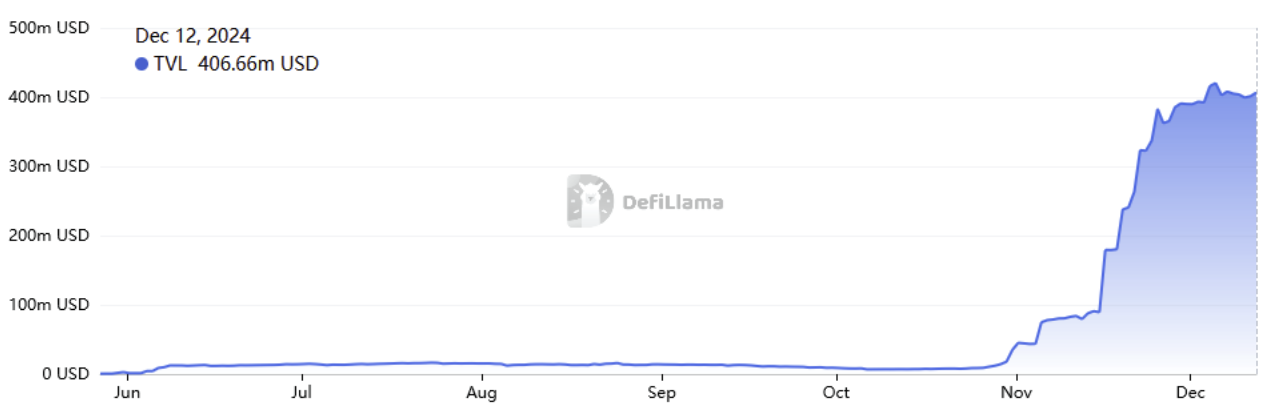
Other early Ethereum-based Rollup projects have also entered early production stages, such as Surge developed by the Nethermind team and UniFi developed by the Puffer Finance team, both of which are forked versions of Taiko.
3. Disadvantages
However, Ethereum-based Rollup is not without its drawbacks. Since the execution (i.e., sequencing responsibility) is handed back to the block validators of Layer 1, Ethereum-based Rollup is constrained by Layer 1's 12-second block time.
Therefore, advantages like synchronous composability may be more challenging to achieve in practice than theoretically. Ethereum-based Rollup must complete real-time proofs within 12 seconds; otherwise, it cannot quickly execute composable transactions.
To achieve this rapid proof, new technological dependencies need to be introduced. However, Brecht Devos, co-founder and CTO of Taiko, is confident in the progress of technology.
For this reason, Taiko recently introduced two zero-knowledge proofs developed by Risc Zero and Succinct Labs, leveraging Intel's SGX Trusted Execution Environment (TEE). This makes Taiko the first multi-proof Rollup that does not rely on a single trusted party.
“With more TEEs coming online and the application of faster, cheaper zkVMs and AVSs, proof technology is advancing rapidly. We believe the momentum for zero-knowledge proofs is very strong, and the goal of completing sub-block delay proofs is not far off,” Devos said in an interview with Blockworks.
Another perceived disadvantage of Ethereum-based Rollup is the potential loss of MEV (Maximum Extractable Value) as a key "revenue" source due to the absence of a centralized sequencer. However, Devos believes there are some clever alternatives to address this issue.
On Taiko, “MEV can also be captured by auctioning 'execution tickets' to Layer-1 block proposers,” Devos told Blockworks.
Thus, while Ethereum-based Rollup defaults to giving sequencing rights to Layer 1 validators, it does not necessarily have to be that way.
Matthew Edelen, co-founder of Spire Labs, an Ethereum Rollup infrastructure provider, shares a similar view. He explained in a recent Bell Curve podcast, “Auctioning is not the only way to allocate sequencing rights. You can auction off 99% of the sequencing rights and allocate the remaining 1% to friends or individual stakers to leave a good impression on L2Beat.”
4. Conclusion
In the long run, MEV may not be that important. This view is based on a simple cost-benefit analysis: Currently, most of the revenue in blockchain comes from congestion fees, whereas MEV revenue accounts for a much smaller proportion, and its share is continuously declining due to the emergence of better MEV solutions.
Therefore, a wiser Rollup revenue model is to leverage the congestion fee network effects brought by synchronous composability rather than relying on MEV revenue.
As Justin Drake explained in The Rollup podcast:
“The current ratio of congestion fees to competitive fees is about 80:20. About 80% of Layer-1's revenue comes from congestion fees, which has been around 3200 ETH daily since EIP-1559; whereas since The Merge, daily MEV revenue has been about 800 ETH. My point is that this ratio will further widen, shifting from 80:20 to something like 99:1.”
In summary, the advantages of Ethereum-based Rollup bring the user experience of Ethereum back to its roots. Ironically, these advantages are precisely the characteristics that blockchain has possessed from the very beginning. Synchronous composability and Layer 1 sequenced transactions have been the norm since the inception of the Bitcoin network.
The transfer of execution layer responsibilities is merely a phenomenon that emerged in recent years due to the centralized roadmap of Rollups (or the multi-chain paths of Polkadot, Cosmos, and Avalanche). Now, Ethereum-based Rollup is ready to set everything back on track.
Article link: https://www.hellobtc.com/kp/du/12/5585.html
Source: https://blockworks.co/news/unpacking-the-based-rollups-debate
免责声明:本文章仅代表作者个人观点,不代表本平台的立场和观点。本文章仅供信息分享,不构成对任何人的任何投资建议。用户与作者之间的任何争议,与本平台无关。如网页中刊载的文章或图片涉及侵权,请提供相关的权利证明和身份证明发送邮件到support@aicoin.com,本平台相关工作人员将会进行核查。


