Author: Kaori, BlockBeats
After a recent correction in the bull market, the price of ETH has once again risen above $3900. Looking back at Ethereum's development over the past year, there are many complex factors and emotions involved. On one hand, the Cancun upgrade was successfully completed, and the spot ETF was officially approved, bringing a new bullish outlook in terms of technology and fundamentals; on the other hand, with Bitcoin, SOL, and BNB continuously breaking historical highs, the price of ETH still hovers around the $4000 mark.
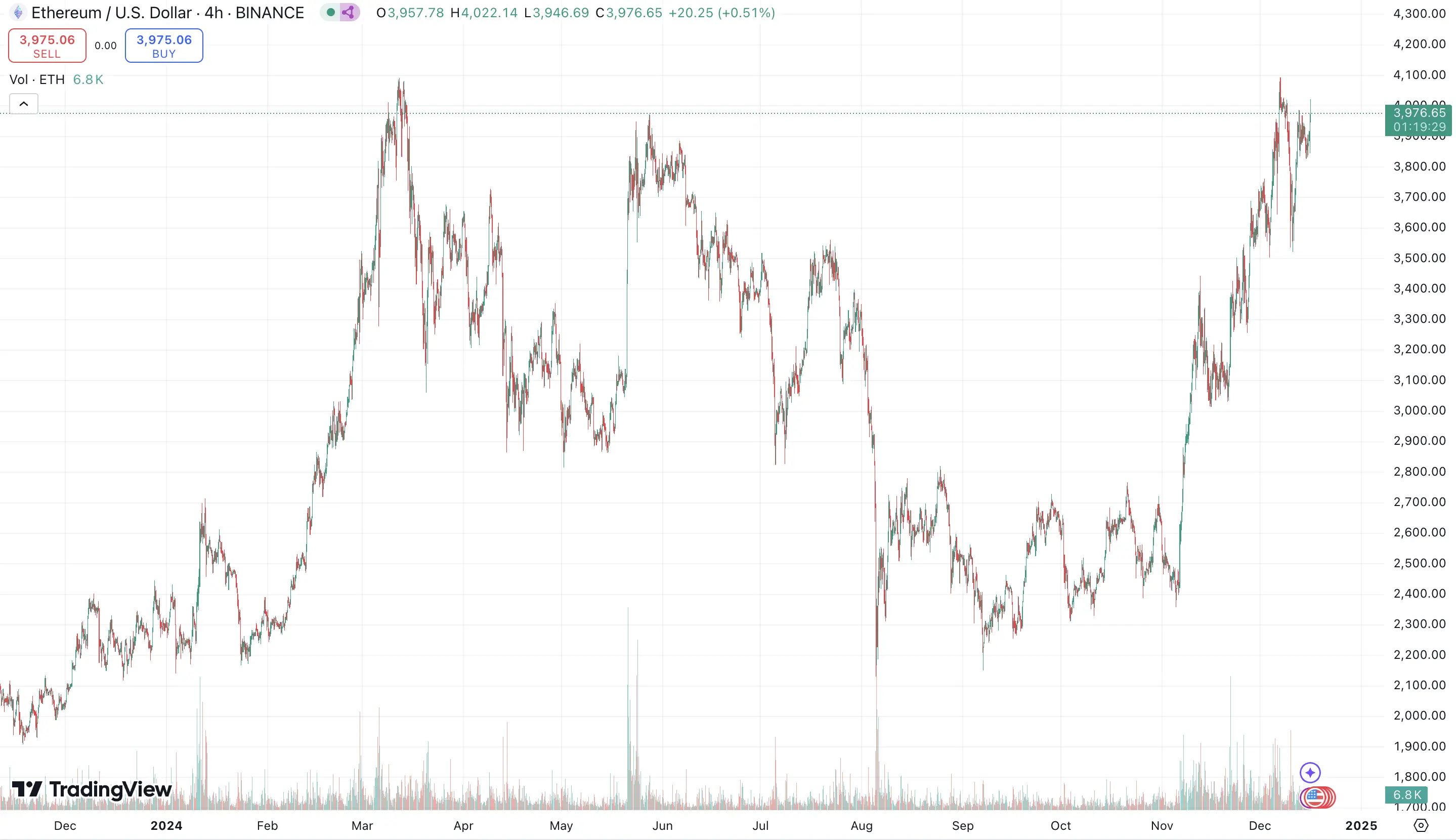
From the price chart of ETH this year shown above, it can be seen that Ethereum has experienced three main phases this year, with the price increases in each phase corresponding to different reasons. At the beginning of the year, the approval of the Bitcoin spot ETF led to a rise in Ethereum's price, which briefly broke through $4100, but by the end of March, it began to decline along with the broader market. Additionally, due to the strong surge of SOL and its ecosystem, Ethereum's ecosystem faced significant liquidity outflows.
In May, after the approval of the Ethereum spot ETF, the price briefly surged, but its demand was not as strong as that of Bitcoin. The initial market reaction to the launch of the Ethereum ETF was negative, as speculative investors who had purchased Grayscale's Ethereum Trust and anticipated its conversion to an ETF took profits, resulting in a $1 billion outflow of funds, which put downward pressure on Ethereum's price. Furthermore, the narrative of ETH being more inclined towards tech innovation products compared to BTC's "digital gold" made it less appealing to traditional markets, and the SEC's prohibition on Ethereum spot ETFs involving staking functions objectively weakened its attractiveness.
Following this, the Ethereum Foundation, the re-staking ecosystem, and the roadmap disputes emerged, leading Ethereum into a dark period.
In November, after the U.S. elections concluded, the pro-crypto Republican Party and Trump brought stronger confidence and liquidity into the entire crypto ecosystem, leading to the third wave of price increases for Ethereum this year. This rise was different from previous ones, as institutional players entered the market openly, and the improvement in liquidity fundamentals indicated what institutions recognize and are optimistic about; Ethereum is destined to continue its original vision as a "world computer."
Improvement in Liquidity Fundamentals
Since December, the Ethereum spot ETF has seen a net inflow of over $2.2 billion for half a month. Nate Geraci, president of The ETF Store, stated on social media that advisors and institutional investors have just begun to pay attention to this area.
In the third quarter of this year, banks such as Morgan Stanley, JPMorgan, and Goldman Sachs significantly increased their holdings in Bitcoin ETFs, with the quarterly holdings nearly doubling. However, their investment scope is not limited to Bitcoin; according to the latest 13F filings, these institutions have also started purchasing Ethereum spot ETFs since then.
Additionally, in the previous two quarters, the Wisconsin Investment Board and the Michigan Retirement System purchased Bitcoin spot ETFs, with Michigan further buying over $13 million worth of Ethereum spot ETFs in the third quarter. This indicates that pension funds, which symbolize a low-risk preference and long-term investment, not only recognize Bitcoin as a digital value storage role but also value Ethereum's growth potential.
At the beginning of the Ethereum spot ETF approval, JPMorgan pointed out in a report that the demand for Ethereum spot ETFs would be far lower than that for Bitcoin spot ETFs. However, the report predicted that the remaining time this year would see the Ethereum spot ETF attract up to $3 billion in net inflows, and if staking were allowed, this figure could rise to $6 billion.
Jay Jacobs, head of U.S. thematic and active ETFs at BlackRock, stated at the "ETFs in Depth" conference, "Our current exploration of Bitcoin, especially Ethereum, is just the tip of the iceberg. Only a very small number of clients hold (IBIT and ETHA), so our current focus is on this area, rather than launching new altcoin ETFs."
In a survey report by Blockworks Research, the vast majority (69.2%) of respondents currently hold ETH, with 78.8% being investment firms or asset management companies. This indicates that driven by yield generation and network security contributions, institutional willingness to participate in ETH staking has reached a critical scale.
Institutions are actively participating in ETH staking, but the level and methods of participation vary. Regulatory uncertainties have led different parties to adopt different attitudes; some institutions are cautious, while others are less concerned, and institutional participants have a high awareness of the operations and risks associated with staking.
Trend Reversal
Since the FTX collapse, Coinbase, Kraken, Ripple, and others have faced severe crackdowns from U.S. regulatory agencies such as the SEC, and many crypto projects have been unable to open accounts with mainstream banks in the U.S. Traditional financial institutional investors who entered during the last bull market due to DeFi have also suffered significant losses. Large funds like Toma Bravo, Silver Lake, Tiger, and Cotu not only faced setbacks on FTX but also invested in some crypto projects that failed to deliver on their grand promises, with funds yet to return.
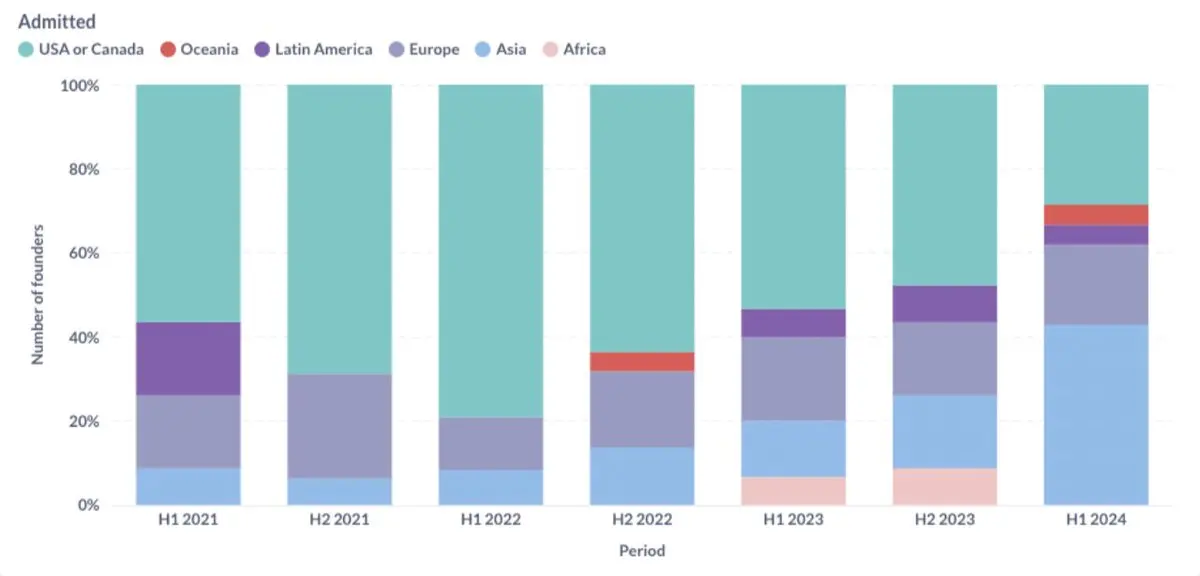
In the second half of 2022, many DeFi projects were forced to relocate outside the U.S. According to Alliance DAO co-founder qw, "Two years ago, about 80% of compliant crypto startups were located in the U.S.; however, this proportion has continued to decline since then, and is currently only about 20%."
But on November 6, with Trump's victory, the green light that the U.S. financial system had been waiting for was finally lit.
Trump Saves the Crypto Space
Trump's victory undoubtedly cleared regulatory clouds for institutional adoption.
By establishing the Department of Government Efficiency, directly gathering a series of Wall Street financial elites such as Musk, Peter Thiel, and Marc Andreessen under his wing, and appointing Paul Atkins as SEC chairman, Trump also appointed PayPal co-founder David Sacks as the "White House Head of Artificial Intelligence and Cryptocurrency Affairs." A series of measures indicate that Trump will create a government with relaxed crypto regulations.
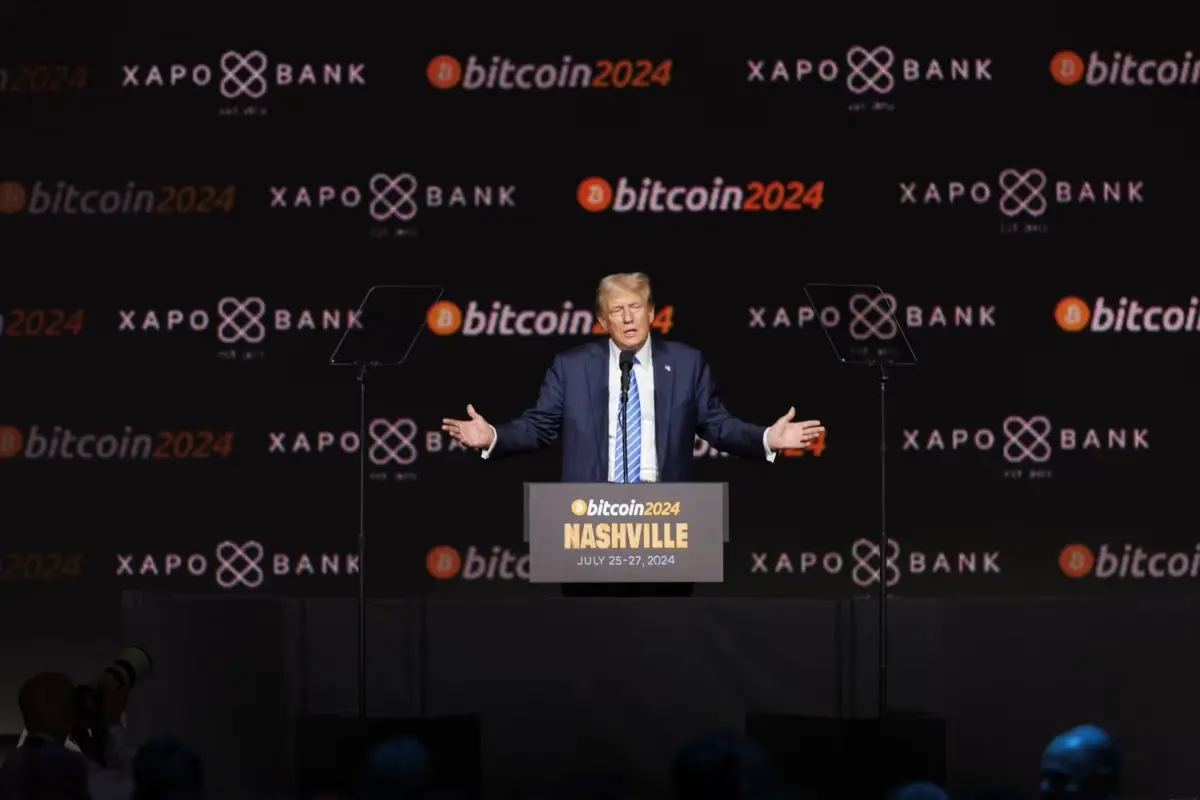
JPMorgan analysts stated that several stalled cryptocurrency bills may quickly gain approval after Trump takes office, including the "Financial Innovation and Technology Act of the 21st Century" (FIT21), which could provide much-needed regulatory clarity for the crypto industry by clearly defining the regulatory responsibilities of the SEC and CFTC. They also noted that as the regulatory framework becomes clearer, the SEC's enforcement strategy may evolve into a more collaborative approach, and its restriction on banks holding digital assets under "Staff Accounting Bulletin No. 121" (SAB 121) may be repealed.
High-profile lawsuits against companies like Coinbase may also be eased, settled, or even withdrawn. Regulatory notices sent to companies like Robinhood and Uniswap could be reconsidered, thereby reducing the litigation risks for the broader crypto industry.
In addition to departmental and legislative reforms, Trump's team is also considering significantly reducing, merging, or even eliminating major banking regulatory agencies in Washington. Insiders revealed that Trump's advisors asked potential candidates for banking regulatory agencies whether some personnel from the Department of Government Efficiency could be used to abolish the Federal Deposit Insurance Corporation (FDIC). Trump's advisors also inquired about potential candidates for the FDIC and the Office of the Comptroller of the Currency. Furthermore, they proposed plans to merge or completely reform the FDIC, the Office of the Comptroller of the Currency, and the Federal Reserve.
As policy dividends gradually unfold, larger-scale institutional funds in the U.S. are expected to return to the crypto market.
DeFi Renaissance in Progress
Family offices, endowment funds, pension plans, and other more stable capital sources will not only invest in Ethereum spot ETFs but will also re-enter the previously validated DeFi space.
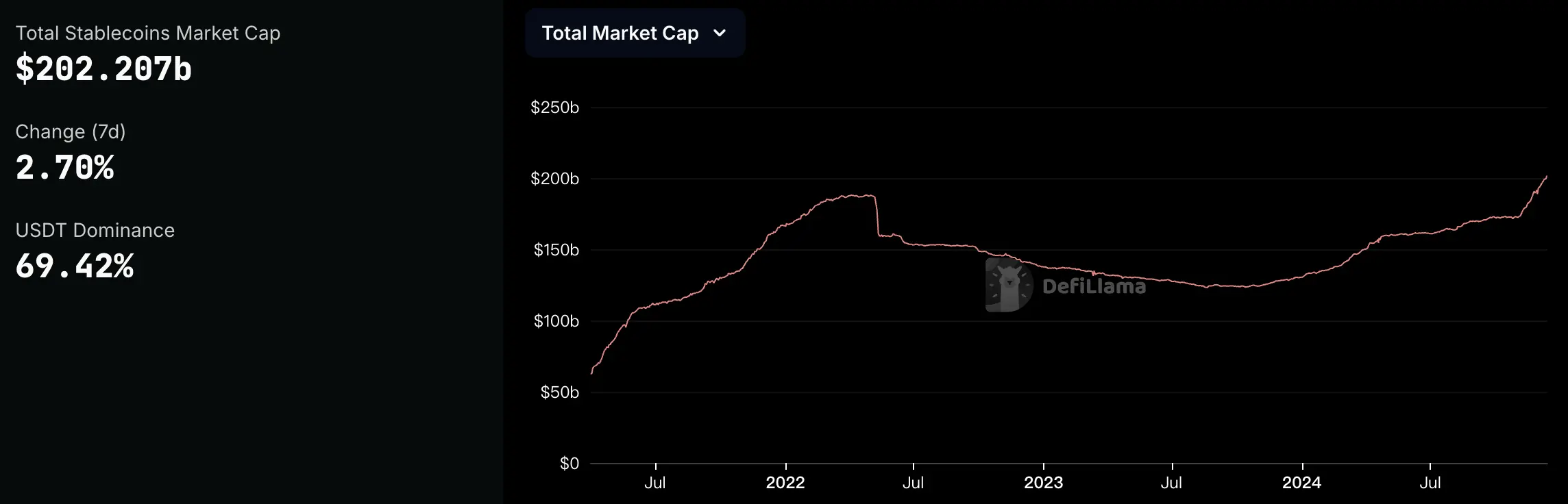
Compared to 2021, the total supply of stablecoins has reached an all-time high, and in the month following Trump's victory, the total amount of stablecoins has increased by nearly $25 billion, with the current total market value of stablecoins reaching $202.2 billion.
As the leading U.S. publicly traded crypto company, Coinbase has not only contributed politically this year but has also made strides in the DeFi space. On one hand, it serves as the largest crypto ETF custodian, and on the other hand, it has launched cbBTC.
Due to cbBTC facing the same custody and counterparty risks as most Bitcoin ETFs, some traditional financial institutions may reassess whether to continue paying fees to hold Bitcoin ETFs and instead participate in the DeFi ecosystem at almost zero cost. This shift could bring inflows to market-tested DeFi protocols, especially as the yields offered by DeFi are more attractive compared to traditional finance.
Another significant DeFi sector in this cycle is RWA. In March of this year, BlackRock entered the RWA space in a high-profile manner by partnering with the U.S. tokenization platform Securitize to issue the tokenized fund BUIDL (BlackRock USD Institutional Digital Liquidity Fund). Capital giants like Apollo and Blackstone, which control vast pools of funds, are also preparing to enter this market, bringing a significant influx of liquidity.
After the Trump family launched their DeFi project, compliant DeFi has been a hot topic of discussion. Established Ethereum blue-chip DeFi projects like Uniswap, Aave, and Lido immediately reacted to Trump's victory, with prices rising and breaking through previous highs, while up-and-coming DeFi projects like COW, ENA, and ONDO also reached new highs in succession.

Meanwhile, Trump's crypto DeFi project WLFI has been frequently trading Ethereum-based tokens, exchanging 5 million USDC for 1325 ETH in multiple transactions. Following this, its multi-signature address purchased 10 million USD worth of ETH, 1 million USD worth of LINK, and 1 million USD worth of AAVE. Recent news of large whales increasing their ETH holdings suggests that both institutions and whale accounts are refocusing on the Ethereum ecosystem.
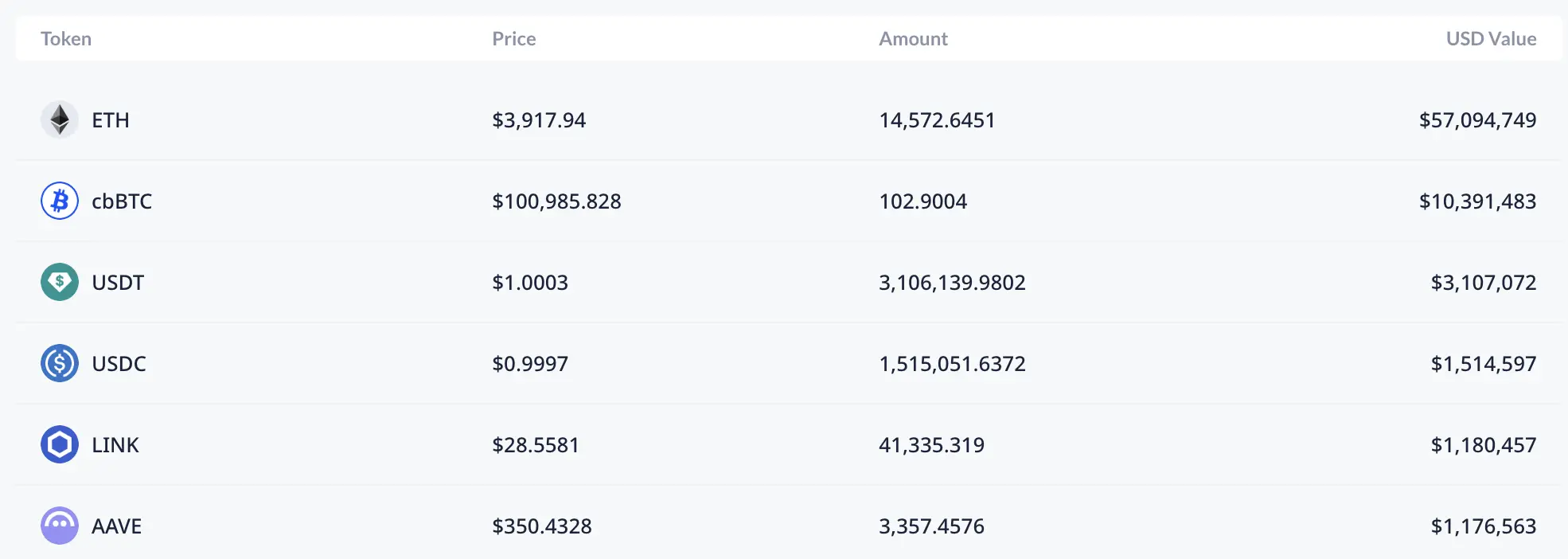
WLFI Multi-signature Address Holdings Information
Recently, the performance of both new and old projects in the DeFi space in terms of price speaks for itself. Currently, the total value locked (TVL) in DeFi is approximately 100 billion USD, while the total value of cryptocurrencies and related assets is around 4 trillion USD, with only 2% of the funds actively engaged in the DeFi space, which remains small compared to the overall cryptocurrency market size. This indicates that under a warming regulatory environment, DeFi still has significant growth potential.
Aave is a typical beneficiary of this "capital return" phase, with its price breaking through before Trump's victory, followed by explosive growth in TVL and revenue: TVL surpassed the historical high of 22 billion USD set in October 2021; the token price rose from a low of 80 USDT earlier in the year, breaking through the March high of 140 USDT in early September and accelerating upward by the end of November; the protocol's daily total revenue exceeded the second-highest peak in September 2021, with weekly revenue reaching an all-time high.
Although Aave recently upgraded to V4, the innovative momentum on a technical level may not be sufficient to support such a large-scale increase. The driving forces of regulation and capital are clearly more important, and this push may even spill over into the NFT sector, which also gained institutional favor in the previous cycle.
The Future of Ethereum
However, Ethereum faced a series of controversies and discussions related to ecosystem development in the middle of this year. With the rise of Solana, new and old public chains began to attract Ethereum's developers and user base, causing the ecosystem to shake, and Ethereum seemed to forget its original goals. As the first blockchain to create smart contracts, Ethereum successfully attracted major institutional investors in the previous cycle through its first-mover advantage. Whether in DeFi, blockchain gaming, NFTs, or the metaverse, all are part of the Ethereum ecosystem, and its original vision as a "world computer" has deeply resonated.
Despite the optimistic improvements in Ethereum's liquidity fundamentals, on the Ethereum side, key on-chain data indicators such as daily transaction counts, gas fees, and active addresses have not shown significant growth. This indicates that Ethereum's on-chain activity has not increased in tandem with its price, and block space remains excessive.
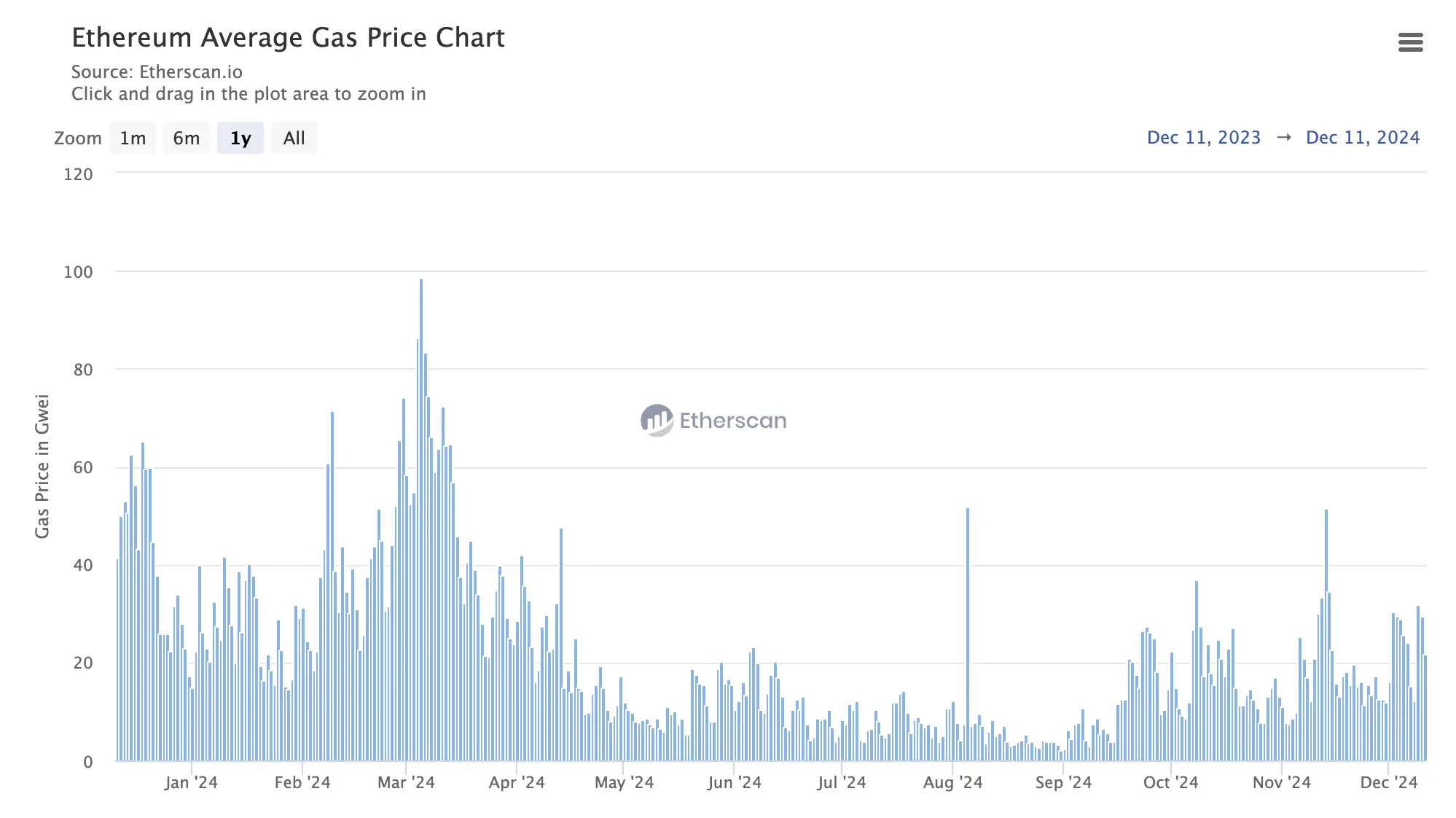
Ethereum Gas Fee Levels
In recent years, Ethereum has focused on building the infrastructure for cryptocurrencies, providing a large amount of cheap block space for the market. This move has improved Dapp access to blocks and reduced transaction costs for L2 scaling solutions. However, due to insufficient market liquidity and low trading demand, Ethereum's vast block space has not been fully utilized.
However, this is not a real problem in the long term. As mentioned earlier, institutional funds are gradually returning and even starting to create dedicated blockchain use cases. For Ethereum, which possesses security and flexible architecture, its advantage lies in B2B applications. It not only has an overwhelming advantage in security but also can accommodate numerous EVM projects, providing developers with an option that is almost "impossible to be fired."
The long-term value of Ethereum will depend on the scarcity of its block resources, that is, the actual and sustained demand for Ethereum block settlement in the world. As institutions and applications continue to flow in, this scarcity will become increasingly prominent, thereby establishing a more solid value foundation for Ethereum. Ethereum is a world computer for institutions; starting with DeFi, institutions will address the issues of excess Ethereum blocks and roadmap disputes in the future.
At the beginning of December, Ethereum researcher Jon Charbonneau wrote a lengthy analysis on why Ethereum needs a clearer "North Star" goal. He also suggested that the ecological strength of Ethereum should be focused on the concept of a "world computer," similar to Bitcoin's "digital gold" and Solana's "on-chain Nasdaq."
Ten years have passed, and Ethereum is no longer in its startup phase. In the next decade, the future of Ethereum is already clear.
免责声明:本文章仅代表作者个人观点,不代表本平台的立场和观点。本文章仅供信息分享,不构成对任何人的任何投资建议。用户与作者之间的任何争议,与本平台无关。如网页中刊载的文章或图片涉及侵权,请提供相关的权利证明和身份证明发送邮件到support@aicoin.com,本平台相关工作人员将会进行核查。


