Author: Chloe, PANews
Tether CEO Paolo Ardoino revealed Tether's latest local artificial intelligence development kit, Local AI, at the Lugano Plan ₿ event in Switzerland on October 26. This new type of AI development kit focuses on user privacy and is supported by peer-to-peer technology.
A standout feature of Local AI is its versatility, allowing developers to run their code on various devices, from low-cost smartphones to high-end smartphones, laptops, or large systems equipped with H100 processors. Additionally, the technology can be applied to multiple devices, including smart refrigerators and car entertainment systems.
In March of this year, Tether announced the establishment of a new artificial intelligence department, "Tether data," aimed at accelerating its entry into the AI field, with the goal of building the next generation of open AI models. Under Paolo Ardoino's leadership, the newly formed AI department, Tether data, focuses on developing "open-source, multimodal AI models." This significant initiative aims to enhance the accessibility and efficiency of AI and demonstrates Tether's commitment to advancing AI and peer-to-peer technology.
Launching Local AI to Break Through the Application Scope of Traditional Computing Devices
At the recent Lugano Plan ₿ event in Switzerland, Ardoino showcased how Local AI transcends the application scope of traditional computing devices. The software development kit (SDK) can ultimately be implemented in smart appliances, including refrigerators and car entertainment systems, highlighting its broad potential applications.
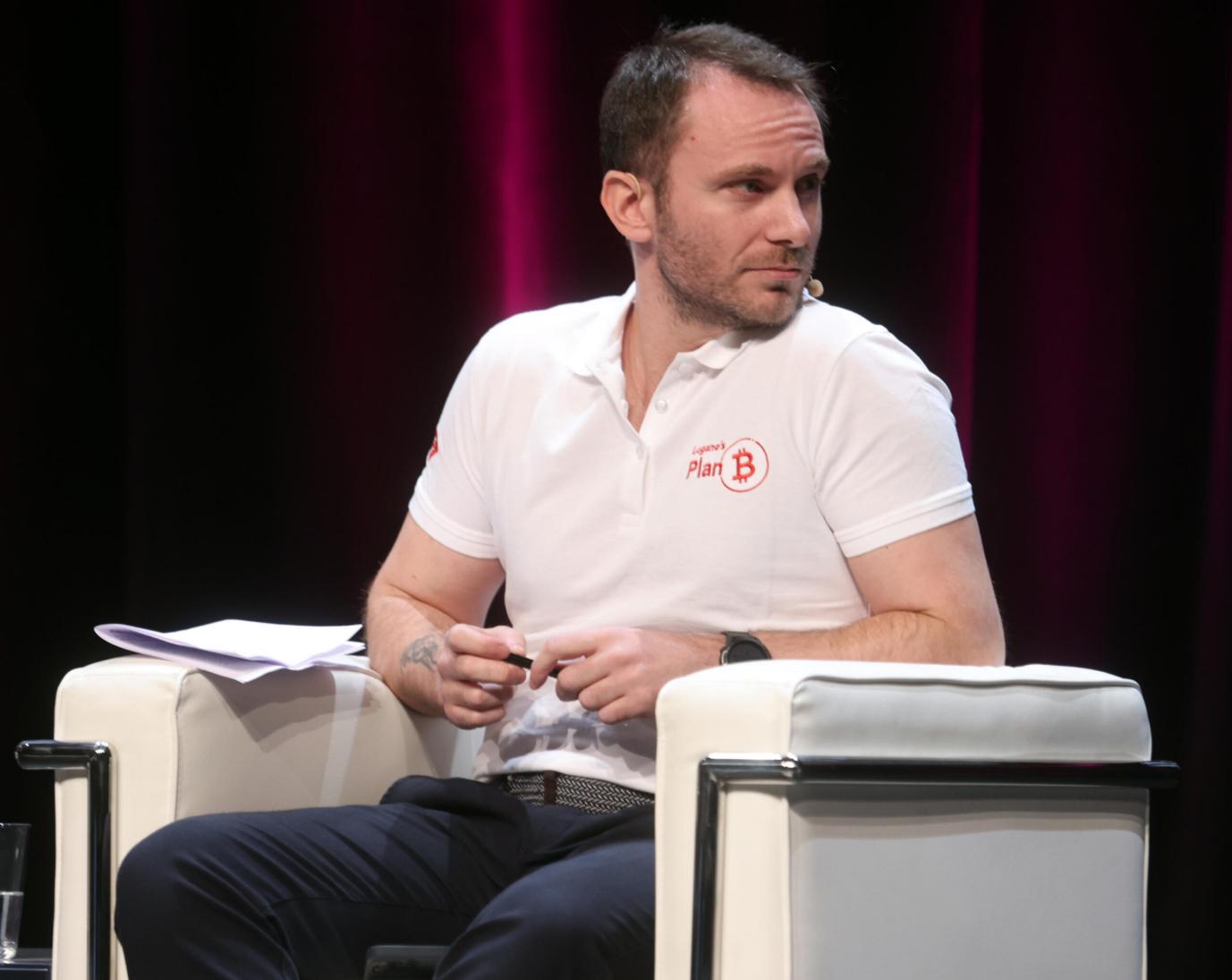
Local AI particularly emphasizes "local" computing, meaning AI computations are completed on the user's own device, utilizing P2P (peer-to-peer) technology to allow direct data exchange between devices.
In traditional network architecture, every image, website, or application is stored on a server, each with its own IP address. When we browse the web, we send requests to the server via its IP address, effectively giving the server control over user ownership.
In a P2P network, every user is responsible for storing all or part of the data. Besides being able to initiate requests to other IP addresses, users also need to handle requests from others, effectively making themselves servers. This is also Tether's goal in promoting AI and peer-to-peer technology.
A key feature of Local AI is its ability to load and store model weights and fine-tuning data within a P2P framework. This approach ensures that users' personal sensitive information remains secure and reduces reliance on central servers. At the Plan ₿ event, Ardoino demonstrated a fully local and privacy-focused translation application that can run on any device, avoiding the sharing of personal data with third parties and being compatible with various models (e.g., Marian and Llama). Additionally, the foundation of Local AI is based on the open-source project "holepunchto/bare," which plays a crucial role in its structure.
Assuming a user is utilizing a translation application developed on the Local AI SDK, the application can directly obtain updated language models from other users, allowing the user's personal device to share optimized translation results directly with other devices. All this information exchange is encrypted and does not require a central server.
Finally, Tether plans to release the Local AI SDK as open-source software after completing comprehensive testing. This move will benefit developers and communities interested in AI and privacy-related technologies and marks Tether's continued expansion of its AI technology products beyond just stablecoin services.
Last Year Acquired Chips to Accumulate Computing Power Capital, This Year Established Department to Expand AI Business
In 2023, Tether's net profit for the year reached $6.2 billion. Last September, Tether made a significant investment in AI hardware, spending $420 million to purchase 10,000 Nvidia H100 GPU chips, each valued at approximately $40,000, accounting for about 2% of Nvidia's total annual shipment of 550,000 H100 GPU chips.
At that time, this transaction was part of Tether's collaboration with Bitcoin miner Northern Data Group, where Northern Data would receive a substantial amount of H100s, and Tether would acquire a 20% stake in Northern Data. Forbes also mentioned that Northern plans to lease these graphics cards to AI startups in need of significant computing power, potentially making Northern Data the largest GPU operator in Europe after Amazon, Microsoft Azure, and Oracle.
In March of this year, Tether announced the establishment of the Tether data department, which will focus its AI business expansion on several key areas. First, it aims to develop open-source multimodal AI models, establish new industry standards, and promote innovation and accessibility in AI technology. In a WIRED interview, Ardoino mentioned, "The concept of decentralization can be applied to different fields, such as AI. We have already seen AI being heavily politicized. We believe it is crucial to have a role independent of traditional tech companies (like Amazon, Microsoft, and Google)."
Secondly, Tether data will seamlessly integrate AI solutions into products on the market, leveraging technology to address real-world challenges. Finally, by actively participating in the broader ecosystem through community contributions, Tether data is committed to advancing the open AI field while showcasing its innovative projects.
With Ample Cash, Tether Targets Amazon, Microsoft, and Google
In June of this year, Tether released a report stating that Tether's profit for the first half of 2024 was $5.2 billion, with total reserves amounting to $118.5 billion. Ardoino took over as CEO last December after serving as CTO for six years. Under his leadership, Tether has made significant investments in energy development, Bitcoin mining, and communication technology to diversify its investments.
Ardoino stated that part of the funds is used to establish a buffer for USDT reserves, while the remaining funds are invested in the company's new venture capital department, Tether Evo. The company has already acquired a majority stake in the neurotechnology startup Blackrock Neurotech, stating, "Brain-computer interface (BCI) technology will become very important in the future. It is also crucial to build brain and computer interfaces that respect personal privacy, ensuring that data remains local and is not collected by a single company operating the platform." Ardoino mentioned in an interview.
Additionally, Ardoino also stated in an interview that AI is another important area for Tether's business expansion. Tether's VC evaluates hundreds of proposals each month, most of which come directly from startups, and has already invested approximately $2 billion in AI and alternative financial infrastructure. For Tether, investing in AI not only signifies technological innovation but also ensures that the company remains at the forefront of technology.
免责声明:本文章仅代表作者个人观点,不代表本平台的立场和观点。本文章仅供信息分享,不构成对任何人的任何投资建议。用户与作者之间的任何争议,与本平台无关。如网页中刊载的文章或图片涉及侵权,请提供相关的权利证明和身份证明发送邮件到support@aicoin.com,本平台相关工作人员将会进行核查。


