Author: Zen, PANews
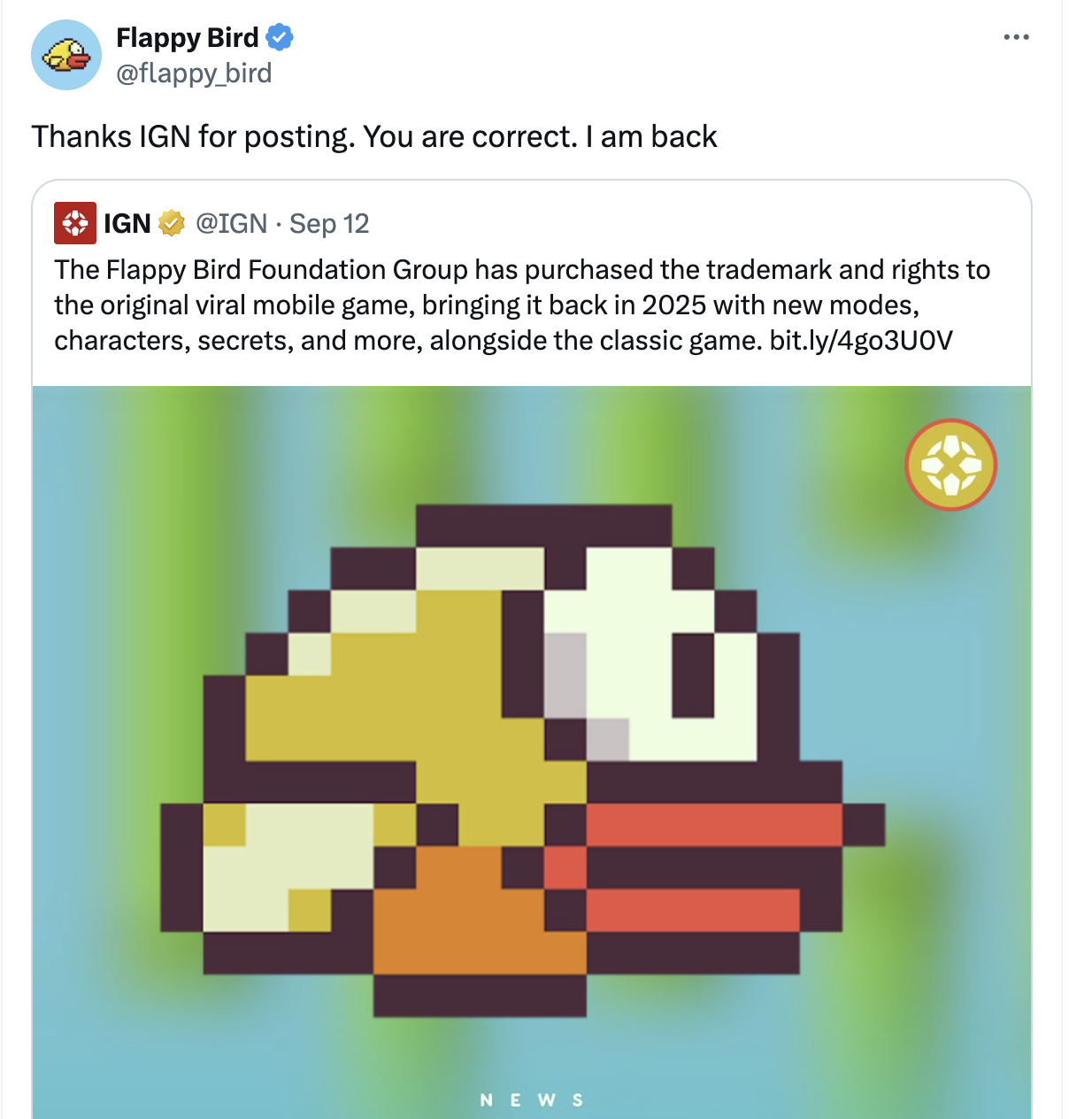
On September 12th, the well-known entertainment and gaming media website IGN announced that the Flappy Bird Foundation has purchased the trademark and copyright of the viral mobile game "Flappy Bird" and will relaunch it in 2025 with new game modes and characters. On the same day, the Flappy Bird Foundation also posted on platform X, saying "I AM BACK!!", but did not disclose specific details about the game. Nevertheless, it immediately attracted attention in the gaming community, with the post quickly surpassing 7 million views, demonstrating the game's influence.
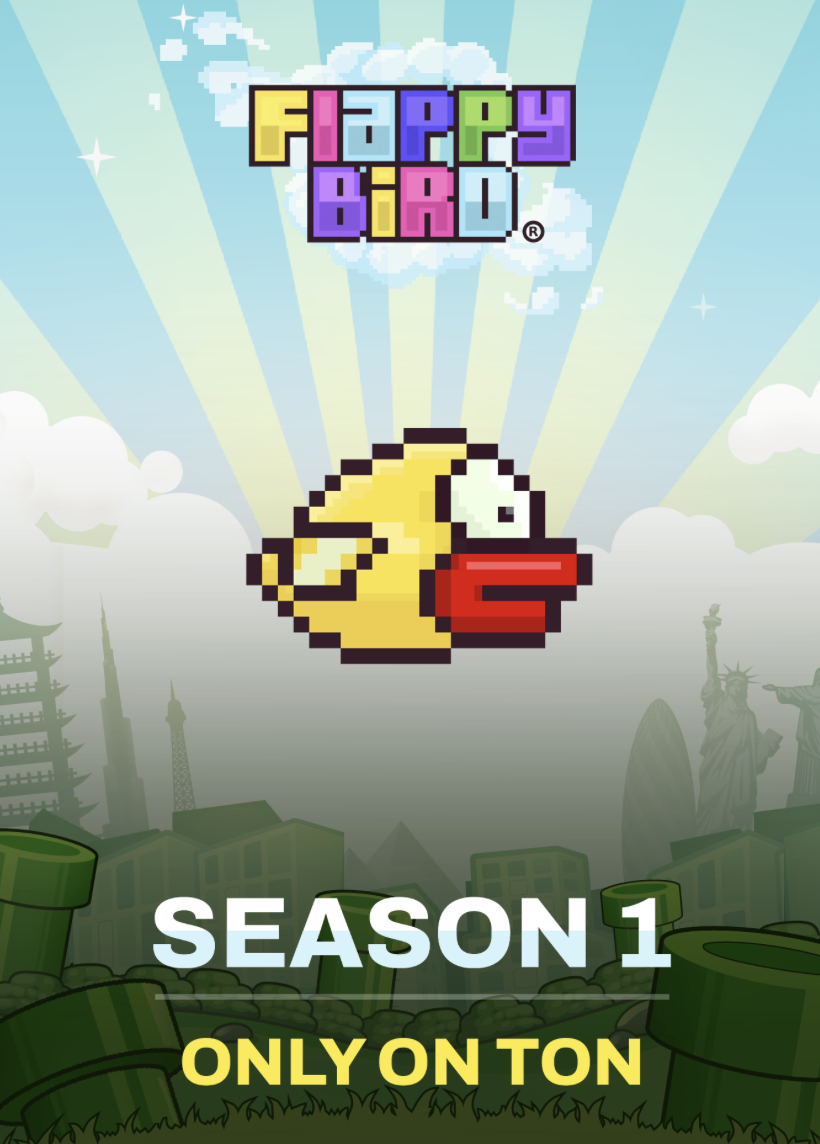
"Official announcement! Flappy Bird has landed on Telegram!" On September 16th, the Flappy Bird Foundation announced on platform X that the new game would officially debut on the popular Ton blockchain network in its Web3 version. However, the public's interest in this announcement had significantly decreased—many traditional players had already learned from social media that the "new Flappy Bird" was highly related to cryptocurrency, which seemed to dampen their enthusiasm.
Controversy Surrounding the "Suspicious" Comeback
During the silent decade, "Flappy Bird" became one of the most cloned games in history. Its return piqued the interest of many old players, with cybersecurity researcher Varun Biniwale being the first to research the new game. In an article subsequently published by Varun, he stated that "the return of 'Flappy Bird' is somewhat suspicious".
The article pointed out that the original developer of "Flappy Bird" had no connection to the new game, and the project's website contained elements of cryptocurrency and "Web 3.0". It also uncovered a seemingly deleted page from the end of last year, which promoted the game as follows: "The legendary Flappy Bird is back, and it will fly higher on Solana than ever before, because it has entered Web3.0." This indicated that the Flappy Bird Foundation had intended to release the game in the Solana ecosystem at the end of last year, rather than on the Ton network as it is now.
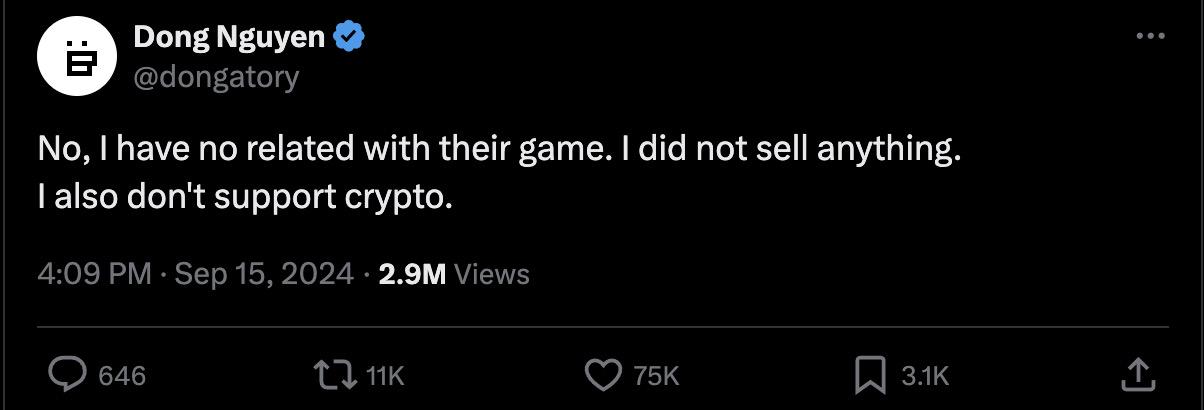
After the news of "Flappy Bird" making a comeback spread, Dong Nguyen, the original developer who had not been posting content on platform X for a long time, clarified after 7 years that he had no connection to the "new 'Flappy Bird'", had not sold anything, and did not support cryptocurrency.
In addition, old players of "Flappy Bird" left community notes on the related content posted by the Flappy Bird Foundation, reminding other players that this new game was not the same as the original game, and their wording was rather sharp. For example, below the announcement of Flappy Bird landing on Telegram, there was a note reminding: "This seems to be a cryptocurrency scam, using fans' nostalgic emotions for the game to sell NFTs."
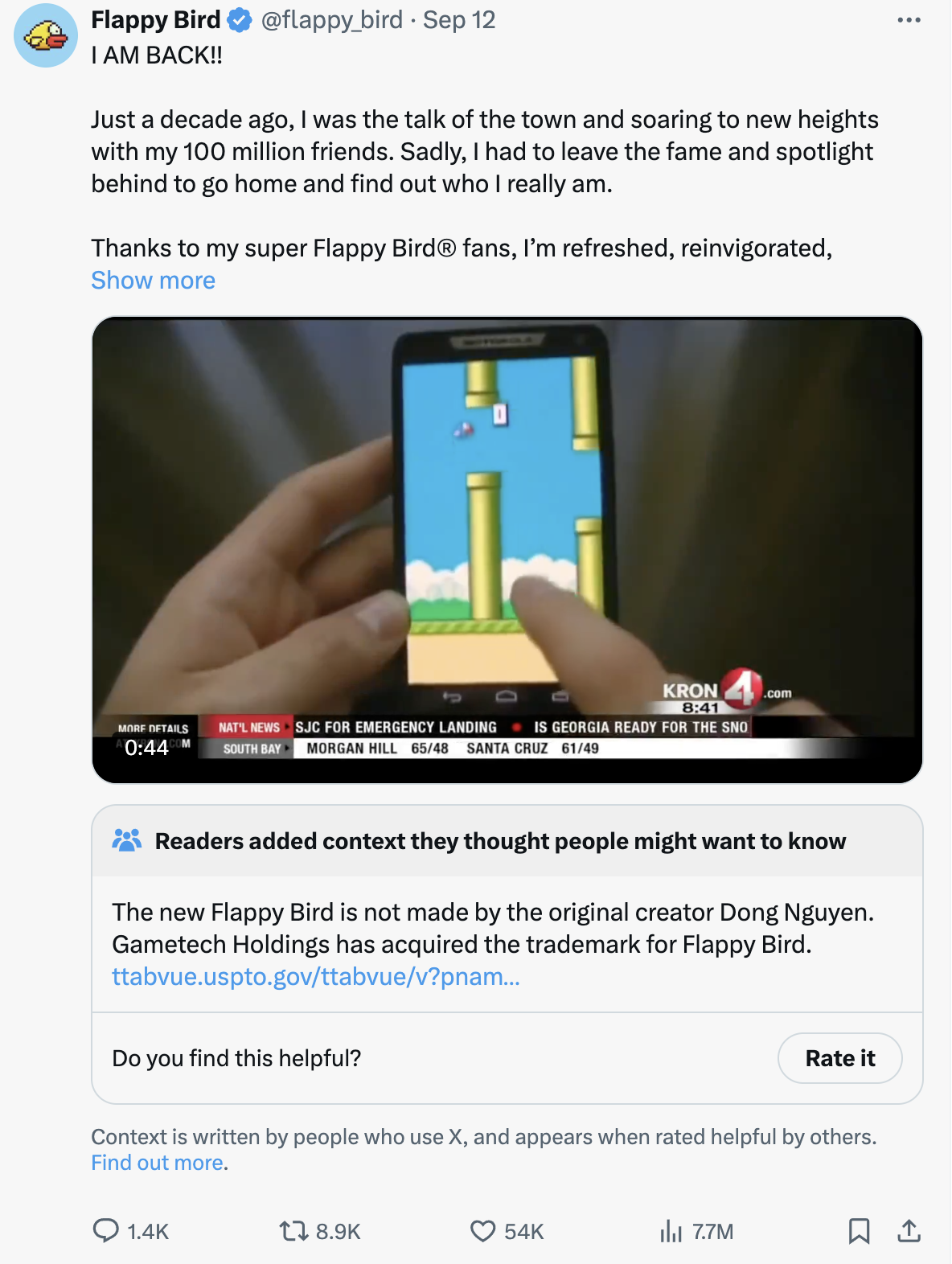
Regarding the trademark issue of the game, according to some court documents from the United States Patent and Trademark Office, a US company named Gametech Holdings filed a lawsuit against Dong Nguyen for the game's trademark. Because "Flappy Bird" had been dormant for too long, the game was considered abandoned, allowing Gametech Holdings to obtain the trademark for the game for free. Nguyen, who was criticized by old players for his inaction, had never attempted to reclaim the trademark. After obtaining the trademark, Gametech Holdings ultimately transferred it to the so-called Flappy Bird Foundation.
How Popular Was Flappy Bird?
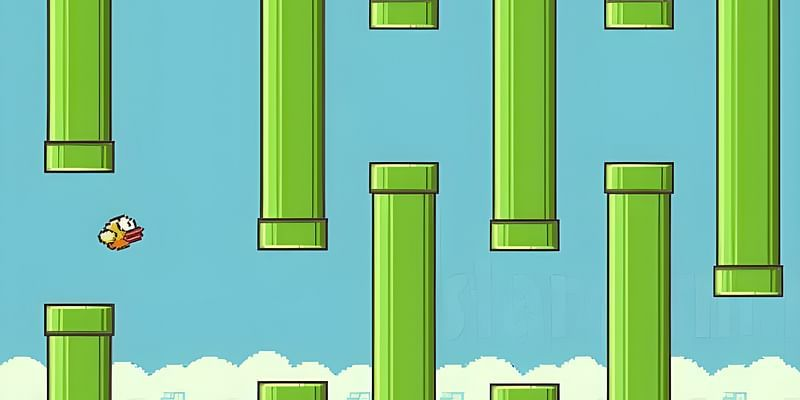
"Flappy Bird" is a casual mobile game released in May 2013, developed by Vietnamese developer Dong Nguyen. The mechanics of this viral game are very simple—players only need to control a bird named Faby by tapping the screen to adjust its flying height to avoid hitting pipes, and their score depends on the number of pipes they pass. Nguyen completed the game in just two to three days.
In early 2014, similar to later WeChat mini-games "Tiao Yi Tiao" and "Yang Le Ge Yang" that quickly became popular, "Flappy Bird" suddenly surged in popularity and became the most downloaded free iOS game in the App Store at the end of January. During this period, "Flappy Bird" was earning $50,000 per day through in-app advertisements and sales.
On February 10, 2014, "Flappy Bird" was removed from the App Store and Google Play. According to Dong Nguyen himself, he felt guilty about the addictive nature and excessive use of the game. Despite its popularity, "Flappy Bird" at the time also faced many criticisms from the public, including but not limited to its high difficulty, allegations of graphics and game mechanics being copied, and its addictive nature.
However, even after "Flappy Bird" was removed, some players were unable to "quit", and phones with the game installed were sold online at high prices. The emergency release of the "clone version" of "Flappy Bird" on the App Store was also well-received, but Apple and Google removed it from the app store for being too similar to the original game.
Airdrop, but Absolutely No NFT Sales!
Perhaps in response to the questioning of "using fans' nostalgic emotions for the game to sell NFTs", the Flappy Bird Foundation has recently emphasized multiple times that the new game "will never have NFTs". The players' concerns are not unfounded. It is understood that the leader behind the Flappy Bird Foundation is game designer Michael Roberts, who is also the founder of the NFT project "Deez", which was launched in September 2021.
According to the Flappy Bird Foundation, players can choose to "integrate Web3" when playing the game on Telegram, but users can also choose to opt out. In addition, the future versions of the game released on mobile platforms will not have encryption features and will remain permanently free.
According to Cointelegraph, the new version of the game will make money through in-app transactions, and its in-app purchase plan "includes buying more energy and items that can change the flight physics". In addition, a spokesperson for the production team behind the new game stated, "The game will also generate revenue from in-game advertisements," and that in-game advertisements are "completely optional for players" and provide benefits such as score multipliers for players.
Currently, the game is running a "Flap to Earn" promotion and promises to airdrop $FLAP tokens in the future, following the successful airdrops of the most popular projects in the Ton ecosystem, Catizen and Hamster Kombat. The entry of the Web3 version of "Flappy Bird" at this time seems to signify taking over the banner. The success of the original game and the accumulated player base indeed provide ample confidence for the subsequent development of the new version.
However, on one hand, well-known traditional game IPs are both a gimmick and a burden, and the resistance of traditional players to Web3 and cryptocurrency is not new. On the other hand, with the appearance of community dissatisfaction after the airdrops of several major projects in the Ton ecosystem, it is also unknown whether users will have the confidence to participate.
免责声明:本文章仅代表作者个人观点,不代表本平台的立场和观点。本文章仅供信息分享,不构成对任何人的任何投资建议。用户与作者之间的任何争议,与本平台无关。如网页中刊载的文章或图片涉及侵权,请提供相关的权利证明和身份证明发送邮件到support@aicoin.com,本平台相关工作人员将会进行核查。


