The cryptocurrency industry needs to return to practical application scenarios and avoid false prosperity.
Written by: Jocy Lin, Founder of IOSG Ventures
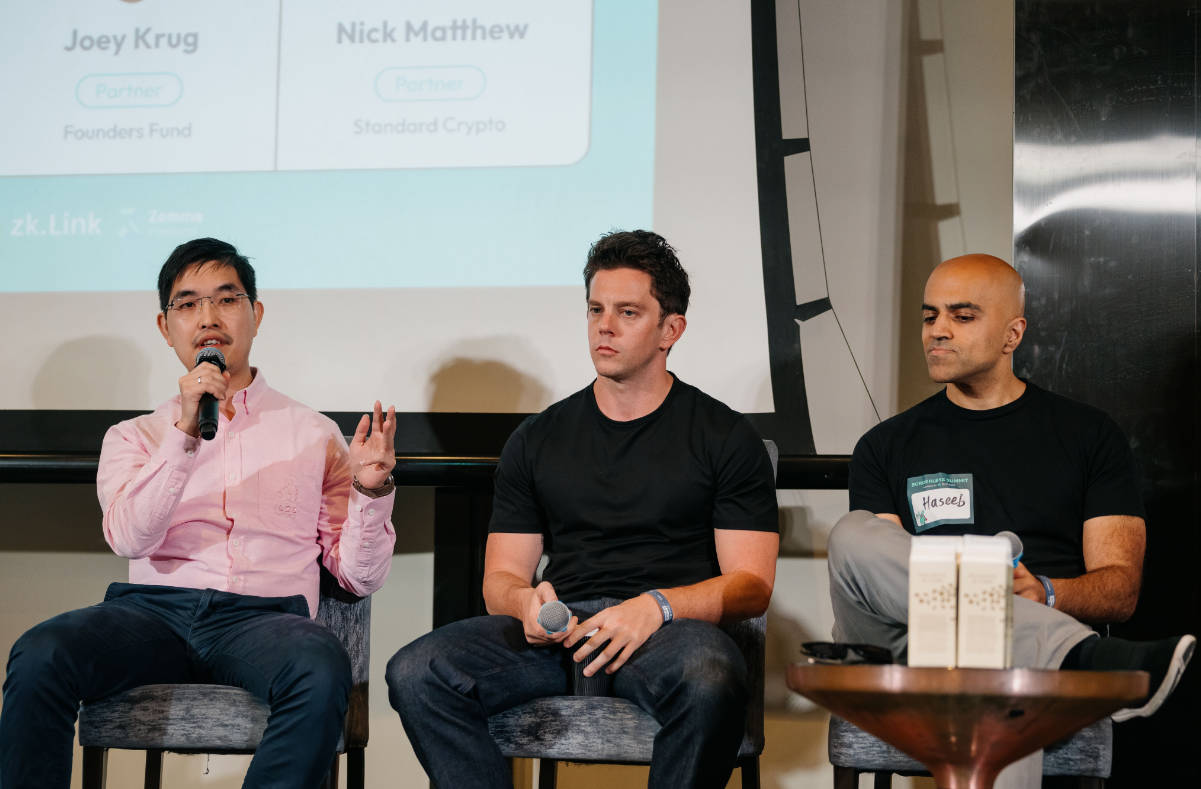
The scale of this Token2049 exhibition has grown significantly, with the number of attendees reaching twice that of last year, surpassing 20,000 people. Even Grab drivers marveled at the fact that the number of participants in cryptocurrency events this week seemed to exceed the number of tourists attending the F1 race. In multiple events, overseas audiences and speakers accounted for more than half of the attendees. There is no doubt that this exhibition may become the most successful and profitable edition in the history of Token2049.
Why are so many American GPs coming to Asia? Why are numerous "top-tier" projects coming from afar? It's because there is a source of fresh capital. Faced with a tight market environment, many top GPs and projects have made special trips to Asia, hoping to achieve their fundraising goals with the help of the Asian community. During this week, many LPs were able to meet with an average of three American GPs every day. Currently, we can see that the new fund size of PM funds has been reduced to $800 million, while the fundraising target of another P fund has been reduced from $800 million to $200 million, and the first fundraising of D funds is expected to be set at $250 million. This clearly indicates that global cryptocurrency funds are facing a new round of fundraising challenges: due to the poor performance of the previous cycle's DPI, fund sizes are generally shrinking, and LPs are becoming increasingly cautious. LPs are influencing the VC GP market, and the VC market is demanding and selecting early-stage entrepreneurs more strictly. The problem of entrepreneurs' difficulty in raising funds is becoming more prominent, while the listing requirements of exchanges such as Binance will also be further increased.
Funds that surged in the first half of the year (some achieving three valuations in the same financing round) are now being asked by LPs to reflect on their performance. Funds and major holders who were frantically buying OTC/engaging in secondary trading at the beginning of the year have begun to doubt this industry. The volatility and reflexivity of the cryptocurrency industry are awe-inspiring. The fundraising market is getting worse, even very bad, and most active investment deals are only happening at low valuations and in new directions.
Projects with valuations around $100 million that have not completed TGE have abandoned their plans to list on Binance due to the difficulty, while infrastructure projects with valuations between $300 million and $500 million are still undergoing difficult fundraising (basically, they can be said to be indiscriminate towards investors). As for projects that have completed TGE, if their initial distribution strategy is not good, the FDV has dropped by an average of 80% compared to the valuation of the last round of VC. Projects with liquidity on Binance are still hoping for a turnaround in the bull market, while projects not listed on Binance have already started planning new projects or the next phase of work.
The industry's confidence has been severely damaged, and support for innovation is in jeopardy.
In this industry, everyone is busy, some fabricating false data and revenue to deceive exchanges and investors, while others are constantly engaging in academic discussions in the technical community but forgetting that good infrastructure is for gaining applications and users. Exchanges have become the biggest winners because of their excellent revenue model, providing the best working environment and income levels in the short term, but making it more difficult for startups to attract top talent. This is somewhat similar to the prosperity of the 2049 conference, where under the prosperous times, there are few discussions on how to attract real users and revenue, as well as stable and sustainable business models.
The performance of altcoins may be worse than expected, forcing industry participants to re-examine innovation and real use cases. The interests of VCs, exchanges, project parties, and retail investors are not aligned, and all parties have become the ones harmed by the market, with complete lack of trust and cooperation among the four parties. Without reform, the industry will only walk into a dead end, unable to attract new money, talent, and users. Even if Bitcoin succeeds, the entire Web3 industry will still fail.
Here, I advocate for adjustments to the utility and unlocking clauses of tokens. The investment lock-up period for traditional IPOs only requires 6 months to a year, while for investments in super-early-stage seed round companies in crypto, the overall lock-up period is as long as 3 to 4 years. Most project tokens have no utility, and while there are market makers willing to make markets and adjust prices in the first half year after listing, project parties/exchanges do not care about the price after that, nor do they take responsibility for the retail investors who bought in from VCs and the secondary market. After numerous instances of harm and losses, more people will lose confidence in and support for innovation.
If everyone is waiting for a big rebound in the bull market but not thinking about the application scenarios that will bring in real users, they will fall into a situation of reaping no rewards. Those who have enjoyed the early industry dividends do not understand the suffering of the world. The largest 16-letter fund in the United States has its own way, and a hundred billion-dollar fund over a ten-year cycle allows them to live well without the need to cooperate with any institutions/market forces, while most successful founders do not care about young entrepreneurs like they did 5 or 10 years ago. But the industry is currently at a very difficult stage, and we need these successful forces to show us the way and bring faith to everyone, so that more people can persist and see the dawn of the next bull market.
Where should Ethereum go from here?
Ethereum is undergoing unprecedented scrutiny. Since the ETF was launched, it has been experiencing net sales/fund outflows of over $1.2 billion. A huge crisis of trust is emerging among Ethereum's core researchers/EF, developer community organizations, Consensys-related commercial companies, and external investors. Vitalik Buterin needs to better guide different participants and set goals, as Ethereum has become a very large decentralized business entity in the entire cryptocurrency market and even in the traditional market. There has never been such a business entity in history, and the test for the entire Ethereum community and Vitalik Buterin will become increasingly severe, to the point of a "break or make" situation. After "The Merge" transition to PoS, due to the significant reduction in ETH issuance and the existence of a burning mechanism, Ethereum has actually entered a 20-month deflationary period. Due to the low performance of L1 transactions in the past few months, L1 gas prices have been in the single digits for a long time, leading to Ethereum returning to an inflationary trend, and the total supply may return to the level at the time of "The Merge" in the near future.
About 5 years ago, when we visited the Ethereum official website, we could still see a list of several other L1 competitors at the bottom, in a completely open and transparent manner to let everyone understand Ethereum's shortcomings or problems. Today's Ethereum is stronger than ever before, but how to make this network more open and diverse is a problem that we urgently need to solve.
Emphasizing our position, IOSG continues to be optimistic about Ethereum in our investment strategy, as we have not found a more successful technical ecosystem than Ethereum. The overall TVL of the Ethereum ecosystem has grown from about $34 billion a year ago to $88 billion, with a growth rate of 159.5%; this significant growth further demonstrates the potential for Ethereum to drive new innovative projects in the future.
The cryptocurrency industry needs to return to practical application scenarios and avoid false prosperity.
The latest data on monthly active users of MetaMask shows a significant decline from the peak of the bull market, from 30 million to 1 million, marking a significant decline. The activity of users on EVM-compatible L1/L2 chains has also dropped by more than 50%. This liquidity dispersion has led to a wide dispersion of applications, developers (asset issuers), and users. Developers and users are rapidly moving to chains with subsidies and memes, and the liquidity between different chains and L2s is too fragmented, and high-performance chains have not brought high-performance applications.
The scale of real users brought by airdrops and incentives is relatively limited, and people have begun to feel disgusted with the customer acquisition strategy of airdrops. Third-party research shows that after the airdrop ends, the user churn rate is as high as 80%, which is not beneficial to founders and projects. Taking Friendtech as an example, it was a project that had a significant impact on the market before, but after the subsequent token launch and without maintaining the price, all users abandoned the application. The restaking track has also encountered similar bottlenecks, with TVL leaving or moving to new protocols after the airdrop ends.
Western funds are not optimistic about TON and Web2 platforms. Many believe that there are still some underlying issues with Russia and the TON chain, and they are not optimistic but have not answered the question of whether to invest or not. However, it is obvious that in this difficult period, TON has brought new vitality to the cryptocurrency market. Of the approximately 900 million monthly active Telegram users, there are roughly 3 million genuine gamers. The customer acquisition cost for each TON user is about $0.7. It is highly probable that TON will bring new users from Web2 to Web3, and this model will also be used in the growth of new L1/L2 platforms. It can be expected that these platforms will specifically allocate a budget to subsidize this user growth. At the same time, an opportunity can be seen. After the strategic deployment of cryptocurrency financial ETFs in the United States is completed, they will begin to consider integrating and penetrating Web3 applications of technology companies. A one-stop experience for users, with no awareness of the chain, will become the new standard.
In the gaming sector, we have had discussions with several gaming funds, including Bitkraft and Makers Fund, which have transitioned from Web2 to Web3. Their positions and performance in Web3 have not been as good as expected. Compared to the more mature Web2 gaming industry, they are still more willing to raise new Web3 funds from LPs and are still interested in the emerging gaming paradigm of Web3. The gaming track has become exceptionally difficult, and participants with long-term visions are all thinking about "what's next" after listing. Most native cryptocurrency gaming funds are having a hard time. In the past two years, 90% of GameFi projects have experienced a price drop after listing (compared to the valuation of the last round of VC investment). It seems that 3A games, full-chain games, and Degen game community platforms are all being abandoned by retail investors. However, Pirate Nation, which Paradigm invested in at the beginning of the year, and Small Brain, which recently completed fundraising, still have a good community base. The gaming track has become exceptionally difficult, and all participants are losing confidence. Cryptocurrency gaming, with a more difficult mode, is forcing participants to leave or create more innovative products and fun games. However, we are still continuing to look for teams that have faith in gaming and consensus in the crypto market.
In a conversation with a person responsible for listing at a leading exchange, I learned that their current internal principle and consensus is to look for long-term entrepreneurs. Some founders who falsified data in the past chose to cash out and lie low after a successful listing, leaving a pile of debts to the community. Long-term visionary entrepreneurs, on the other hand, are committed to growth and finding more reliable and sustainable business scenarios at any stage.
At the same time, at this 2049 event, I also saw more founders transitioning from traditional AI to Web3 entrepreneurship. Computing represented by @gensynai and @hyperbolic_labs, as well as Web2 type All in players represented by @SchellingAI, and platforms like http://Title.xyz dedicated to creating Midjourney artistic style image/video generation models, AI+Consumer+DePin is becoming a new track that industry funds are actively betting on. More talent will definitely bring better efforts and growth to the industry. Stay optimistic and move forward positively!
I call on more successful beneficiaries of the industry to pay more attention to the root problems currently facing the industry, support the construction of public goods, and create a better business innovation environment for these long-term entrepreneurs. IOSG will take the lead in setting an example, providing support from 0 to 1 for early-stage entrepreneurs in the industry, and will continue to reflect and iterate on its investment thesis, guiding entrepreneurs to think about new business models and customer acquisition methods.
免责声明:本文章仅代表作者个人观点,不代表本平台的立场和观点。本文章仅供信息分享,不构成对任何人的任何投资建议。用户与作者之间的任何争议,与本平台无关。如网页中刊载的文章或图片涉及侵权,请提供相关的权利证明和身份证明发送邮件到support@aicoin.com,本平台相关工作人员将会进行核查。


