This article's Hash (SHA1): b7909e85230c846f01fdf480d00fe25080ede1dc
Number: Chain Source Technology PandaLY Security Knowledge No.033
On September 18, 2024, the Federal Reserve announced a 50 basis point (bp) cut in the benchmark interest rate, a decision that has attracted widespread attention in the global financial markets. Behind this rate cut is the dual pressure of falling inflation and slowing economic growth. Over the past two years, the Federal Reserve has repeatedly raised interest rates to curb inflation, but with changes in the macroeconomic environment, loose monetary policy has once again become an important tool to deal with financial market volatility.
The impact of the rate cut is not limited to traditional financial markets, but also has a significant impact on mainstream assets in the cryptocurrency field, such as Bitcoin, Ethereum, and cryptocurrency exchange-traded funds (ETFs). These first-tier crypto assets, as market focus, may receive direct capital inflows. However, along with this opportunity, there is also the potential for increased market volatility and speculative risk. In contrast, decentralized finance (DeFi) and other derivatives will also gain certain development space against the backdrop of the rate cut.
1. Background and Impact of the Federal Reserve's Rate Cut

Background of the Federal Reserve's Rate Cut
The Federal Reserve's rate cut is an important tool of macroeconomic policy, usually used to deal with economic slowdown or financial market turmoil. By lowering the benchmark interest rate, the Federal Reserve hopes to stimulate borrowing and consumption behavior of businesses and consumers, thereby promoting economic recovery. On September 18, 2024, the Federal Reserve decided to lower the benchmark interest rate by 50 basis points (bp), marking a significant shift in monetary policy.
Inflation pressure: From 2022 to 2023, global high inflation prompted the Federal Reserve to take aggressive tightening measures. However, as the economy slowed down, monetary policy began to ease.
Financial market volatility: Tightening led to liquidity tightening in the market, causing sharp fluctuations in high-risk assets such as cryptocurrencies. The Federal Reserve's rate cut attempts to alleviate this situation and restore market confidence.
Changes in the global economic environment: Against the backdrop of international trade uncertainty and geopolitical tensions, global economic growth has slowed, and the Federal Reserve's policy is closely related to the global economic situation.
Widespread Impact of the Rate Cut on Financial Markets
The impact of the rate cut on financial markets is extensive, especially through the following channels:
Lower borrowing costs: Businesses and consumers can more easily obtain cheap credit, prompting increased investment and consumption, thereby boosting the overall economy.
Currency depreciation pressure: Rate cuts often accompany the depreciation of currencies such as the US dollar, which may lead to capital shifting to other safe-haven or high-return assets, such as cryptocurrencies.
Stock market rebound and capital inflows: The news of a rate cut usually stimulates a rebound in the stock market and attracts more funds into high-risk, high-return markets, such as the technology sector and the crypto market.
Potential Impact of the Rate Cut on the Crypto Market
Like traditional financial markets, the cryptocurrency market will also react to the Federal Reserve's rate cut policy. In particular:
Capital inflows into the crypto market: In a low-interest rate environment, more investors may choose to invest capital in high-return crypto assets, especially those with rapid growth potential projects.
Increased volatility: With more capital flowing into the cryptocurrency market, it may drive short-term price increases. However, the resulting price fluctuations may also lead to a more unstable market.
Benefits to mainstream assets: Mainstream assets such as Bitcoin, Ethereum, and cryptocurrency ETFs will directly benefit from the rate cut, as investors may turn to these assets to hedge against inflation and seek high returns. In contrast, the return on traditional financial assets may decline.
2. Crypto Market Response and Opportunities and Risks of Mainstream Assets
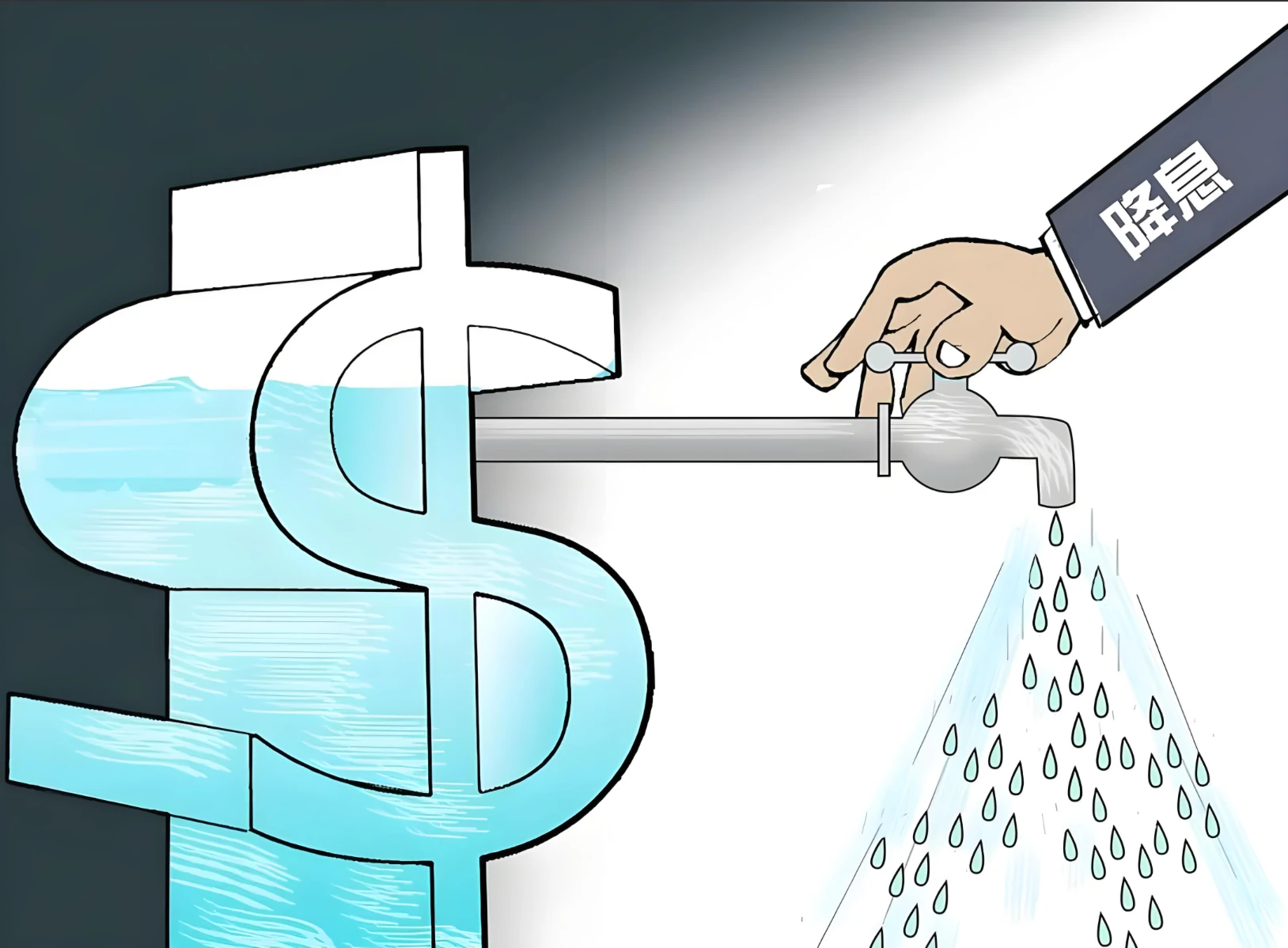
How the Rate Cut Drives Capital Inflows into Mainstream Crypto Assets
After the rate cut, the low-interest rate environment increased liquidity in the market. The low returns in the traditional financial system prompted investors to seek higher-yield opportunities, bringing capital inflows to mainstream crypto assets such as Bitcoin, Ethereum, and cryptocurrency ETFs.
Opportunities for Bitcoin and Ethereum: In a low-interest rate environment, Bitcoin and Ethereum, as major crypto assets, usually attract more capital inflows. This process may further enhance the liquidity of these mainstream assets and drive their prices up.
Attractiveness of Cryptocurrency ETFs: As a compliant investment tool, cryptocurrency ETFs provide investors with a new way to access the crypto market. Against the backdrop of the rate cut, the attractiveness of cryptocurrency ETFs may be enhanced, attracting more investors to participate.
Opportunities Brought by Increased Market Liquidity
Rate cuts usually mean that more capital will flow into high-growth areas in a short period of time, which may bring a series of opportunities for mainstream crypto assets:
Capital injection into the market: More capital inflow can drive the market infrastructure construction of mainstream crypto assets, such as technical upgrades and security enhancements of trading platforms.
Asset innovation and applications: Abundant funds can drive the innovative applications of assets such as Bitcoin and Ethereum, enhancing market diversity and user experience.
Risks Brought by Increased Market Speculation
However, increased market liquidity also comes with certain risks:
Speculative capital flows: A large influx of capital into the mainstream crypto market may lead to short-term price increases, but it may also intensify market speculation. When the Federal Reserve tightens monetary policy again, funds may quickly withdraw, leading to increased market volatility.
Bubble risk: With more funds flowing into crypto assets, some immature projects may be excessively hyped, forming price bubbles, ultimately causing greater impact on the market.
3. Security Challenges Brought by the Rate Cut
Increase in On-Chain Attacks:
Increased market liquidity and active funds will bring more opportunities for on-chain attacks, especially on Web3 platforms. The following are the main security challenges:
Price manipulation attacks: During sharp price fluctuations, DeFi protocols are particularly vulnerable to price manipulation attacks. Attackers manipulate price oracles, causing smart contracts to make incorrect price judgments, leading to arbitrage or attacks.
Liquidation attacks: During the market volatility brought by the rate cut, collateral involved in DeFi protocols may be frequently liquidated, and hackers may deliberately trigger large-scale liquidation events through complex liquidation strategies, affecting the normal operation of the platform.
Risks of Liquidity Pools and Asset Freezing:
With intensified capital inflows, liquidity pools in Web3 platforms may face higher pressure. Rapid inflow and outflow of funds in liquidity pools may lead to the following risks:
Depletion of liquidity: In a highly volatile market, the risk of liquidity pool funds being exhausted increases. The platform may freeze users' assets due to insufficient liquidity, causing users to be unable to withdraw funds in a timely manner.
Amplification of smart contract vulnerabilities: With the concentration of market funds, if there are vulnerabilities in the smart contracts on the platform, attackers may use the influx of a large amount of funds to conduct large-scale attacks, causing significant losses.
Increase in Cryptocurrency Scams:
The market frenzy brought by the rate cut has also attracted more cryptocurrency scams, including the following common types of scams:
False airdrops and investment platforms: Scammers may take advantage of the market's optimistic sentiment to impersonate well-known projects and conduct false airdrop activities, attracting investors to transfer funds into scams.
Phishing attacks: Users, in their eagerness to participate in the market, are susceptible to falling into traps of phishing websites or fake trading platforms, leading to the leakage of private keys or wallet information, resulting in fund theft.
Case Study: Bitcoin Price Volatility Event in 2023
2023 witnessed dramatic price fluctuations in the Bitcoin market. When the Federal Reserve announced a rate cut, the price of Bitcoin surged, attracting a large influx of funds into the market. However, the rapid market surge also brought about severe price fluctuations and related security challenges. Some trading platforms froze user assets due to liquidity pressure, while phishing attacks and fake investment platforms also increased, resulting in losses for many investors.
These risks also apply to the current market, especially with a large influx of funds into mainstream crypto assets. Immature technology and excessive hype may lead to project bubbles, which could have a significant impact on the market when the monetary policy changes and the bubble bursts.
4. Increase in Scams and Phishing and Response Strategies
Scams in Market Sentiment Fluctuations:
When the market experiences increased liquidity and rising prices, investors are prone to making irrational investment decisions due to Fear of Missing Out (FOMO). This provides opportunities for scammers:
Posing as popular projects: Scammers may impersonate popular projects related to the rate cut's favorable impact, using high returns as bait to lure investors into fake DeFi or NFT projects.
False social media activities: Using social media to spread false giveaways or airdrop information, scammers impersonate well-known figures (such as Tron's founder, Justin Sun) to entice investors.
How to Counter Scams and Phishing?
To address this phenomenon, Web3 users should take the following measures:
Strengthen security awareness: Users must increase vigilance against fraudulent activities, avoid participating in any activities that require transfers or sharing of private keys, especially false airdrop activities on social media.
Enable two-factor authentication: Users should enable two-factor authentication (2FA) for their cryptocurrency accounts to enhance account security.
Use secure Web3 wallets and browser extensions: Choose reputable and verified wallets and browser extensions, such as MetaMask, and avoid using tools of unknown origin.
Case Study:
Following the announcement of the Federal Reserve's rate cut, the crypto market experienced increased liquidity, and multiple fraudulent projects emerged. A scam project called "BitProfit" rapidly expanded on social media. They claimed to have partnered with a well-known Bitcoin investment platform to launch a high-yield investment plan related to the rate cut, promising users annual returns of up to 25%. The scammers impersonated a popular Bitcoin investment platform associated with the rate cut's favorable impact, even forging the social media account of Ethereum's founder, Vitalik Buterin, to promote a false airdrop activity, luring investors to transfer funds to their controlled wallet address.
In just two weeks, the scammers attracted over 200 investors, defrauding them of over hundreds of thousands of dollars in Bitcoin and Ethereum. Once the funds entered the scammer's address, users were unable to retrieve their funds, and the scammers subsequently deleted all associated social media accounts, causing the project to disappear rapidly.
5. Response Strategies for Web3 Developers and Enterprises
Security Upgrades for Smart Contracts:
With funds flowing into the Web3 ecosystem, Web3 developers need to comprehensively upgrade the security of smart contracts. In addition to routine code audits, developers should use more diverse tools for dynamic monitoring and testing, promptly fixing potential vulnerabilities that could be exploited. For example, enhancing security protection for oracles to prevent oracle manipulation and reduce the risk of contracts being maliciously triggered. Use automated tools to detect malicious behavior and abnormal fund flows, ensuring that contracts remain secure and stable even with a large influx of funds.
Strengthening Security Infrastructure:
Against the backdrop of rapid capital flow and market volatility, Web3 platforms must invest in strengthening security infrastructure to address potential on-chain attacks and speculative behavior. Firstly, platforms should enhance on-chain monitoring to track fund flows in real-time and prevent possible attacks. Secondly, enhance distributed protection measures, such as distributed node protection, to reduce the risk of attacks due to single points of failure. Additionally, Web3 projects should collaborate with third-party security companies to reduce the attack surface through timely vulnerability fixes and smart contract upgrades.
6. Global Policies and Long-term Development of Web3
1. Compliance and Regulatory Pressure
With the increased liquidity brought about by the Federal Reserve's rate cut, global regulatory agencies may further strengthen their oversight of the Web3 ecosystem. This intensified regulation will mainly manifest in the following aspects:
- Strengthening compliance requirements
To address the risks brought about by increased liquidity, regulatory agencies may introduce stricter compliance requirements. Especially for Know Your Customer (KYC) and Anti-Money Laundering (AML) measures, these will become standard compliance configurations for platforms. Platforms must establish a comprehensive customer identity verification system to ensure the authenticity of user identities and monitor transaction activities to prevent illegal fund inflows.
- International regulatory challenges
Differences in regulatory policies between different countries and regions will be a major challenge for global Web3 projects. For example, the EU may enforce strict data protection regulations, while other countries may focus on tax and anti-fraud measures. Developers and enterprises should closely monitor these policy changes and make corresponding adjustments based on local regulations. Achieving cross-border compliance requires not only technical support but also legal expertise.
- Optimization of compliance processes
To adapt to evolving compliance requirements, Web3 platforms need to continuously optimize their compliance processes. This includes implementing real-time compliance monitoring systems, enhancing data transparency and traceability, and conducting regular compliance audits. This can help identify potential compliance issues in a timely manner and avoid penalties due to non-compliant operations.
2. Long-term Policy Trends and Web3 Security Challenges
While the rate cut by the Federal Reserve has brought short-term opportunities for capital inflows, in the long run, macroeconomic uncertainty may still pose a threat to the Web3 ecosystem:
- Long-term macroeconomic uncertainty
Long-term macroeconomic uncertainty may lead to frequent adjustments in monetary policy, such as potential future interest rate cycles. This economic volatility will affect the liquidity of capital, thereby impacting the financing and operations of Web3 projects. Platforms need to develop contingency plans to ensure stable operations in the event of liquidity tightening.
- Continuity of Web3 security challenges
With the intensification of regulatory pressure and hacker attacks, the security challenges faced by Web3 platforms will become more complex. Regulatory agencies' demands for data privacy and security are increasing, and platforms need to continuously upgrade their security measures to defend against various cyber attacks. Meanwhile, the evolving tactics of hackers require platforms to strengthen the monitoring and fixing of potential vulnerabilities.
- Enhancing security capabilities
To address these security challenges, Web3 platforms and users need to continuously enhance their security capabilities. Platforms can enhance their security by implementing multi-layered security measures, such as smart contract audits, real-time monitoring systems, and user education. Meanwhile, users should remain vigilant, regularly update passwords, and use measures such as two-factor authentication to protect their personal assets.
- Anticipating future policy trends
Looking ahead, policy trends will have a profound impact on the development of Web3. Developers and enterprises need to closely monitor policy dynamics and make strategic adjustments quickly when policies change. Additionally, communication with policy makers and industry associations can help grasp policy trends and promote the formulation of regulations favorable to the development of Web3.
In conclusion, changes in global policies and economic environments have a significant impact on the development of Web3. Web3 projects and users need to be fully prepared in terms of compliance, regulation, economic volatility, and security to ensure sustainable development in a complex environment.
Conclusion
The 50bp rate cut by the Federal Reserve has not only had a profound impact on traditional financial markets but has also brought new opportunities and risks to the Web3 ecosystem. In this context, Web3 platforms, developers, investors, and users must maintain a high level of security awareness, especially in the face of intensified market volatility and accelerated fund flows. By enhancing contract security, strengthening infrastructure construction, and closely monitoring global policy changes, the Web3 ecosystem can maintain robust development and address potential challenges in the ever-changing macroeconomic environment.
Chain Source Technology is a company focused on blockchain security. Our core work includes blockchain security research, on-chain data analysis, and asset and contract vulnerability rescue. We have successfully recovered multiple cases of stolen digital assets for individuals and institutions. At the same time, we are committed to providing project security analysis reports, on-chain tracing, and technical consulting/support services for industry institutions.
Thank you for reading, and we will continue to focus on and share blockchain security content.
免责声明:本文章仅代表作者个人观点,不代表本平台的立场和观点。本文章仅供信息分享,不构成对任何人的任何投资建议。用户与作者之间的任何争议,与本平台无关。如网页中刊载的文章或图片涉及侵权,请提供相关的权利证明和身份证明发送邮件到support@aicoin.com,本平台相关工作人员将会进行核查。


