Recently, as part of its multi-chain expansion strategy, Alchemix officially announced the launch of its services on the Arbitrum network.
According to the official information released, during the initial launch on Arbitrum, Alchemix imposed limits on deposit amounts, specifically setting the USDC deposit limit at $100,000, while the stETH deposit limit was set at 200 ETH. This restrictive measure can be seen as a cautious start aimed at ensuring the stable operation of the platform and the safety of user funds.
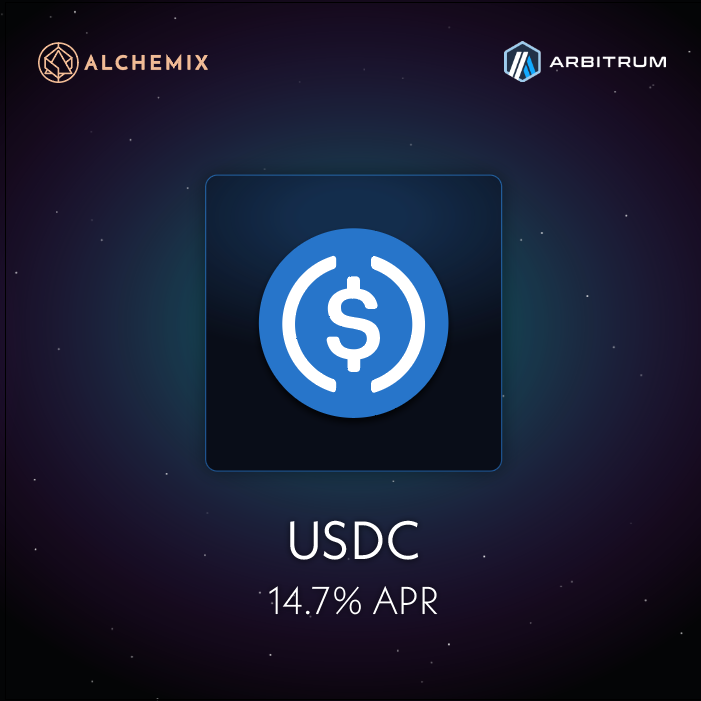
In addition, Alchemix has also demonstrated its plans for future development by announcing the addition of jUSDC as part of its services in the near future. The realization of this plan is awaiting the upgrade of the jUSDC contract by JonesDAO. This indicates that Alchemix is not only focused on the quality and stability of its existing services, but also actively exploring new partnerships and asset types to provide more diversified DeFi services.
This article systematically outlines the operational mechanism of Alchemix and interprets how this decentralized overcollateralized lending platform continues to advance in the decentralized finance field.
With innovative multiple mechanisms, Alchemix has improved the security and efficiency of the platform
Alchemix Finance is a future income-backed synthetic asset protocol and community DAO. The protocol provides progress on various liquidity mining strategies through synthetic tokens. These tokens represent the replaceable debt of the underlying collateral in the Alchemix protocol, which must be proposed by the depositors of the collateral. Alchemix currently provides alUSD, a stablecoin partially pegged to the US dollar, as collateral for borrowing, as well as alETH for borrowing against ETH.
Alchemix represents an innovation in the decentralized finance (DeFi) world, providing overcollateralized lending services through a platform based on Yearn's financial technology. The uniqueness of this platform lies in the fact that users' overcollateralized funds are not just statically stored, but are passively invested in Yearn and other DeFi protocols, with the profits used to automatically repay the borrowers' debts and interest. This means that as long as the collateralized assets generate sufficient returns, users' positions can avoid liquidation, thereby reducing investment risks to a certain extent.
Alchemix's lending mechanism requires users to maintain a collateralization ratio of 200%, meaning that if a user pledges $100 worth of DAI on the platform, they can borrow $50 worth of alUSD. This 1:1 stablecoin value ratio provides users with a safety cushion to maintain the stability of borrowing value in market fluctuations. Users can adjust their borrowing ratio flexibly by increasing collateral or repaying debts to maintain the liquidity and flexibility of their funds.
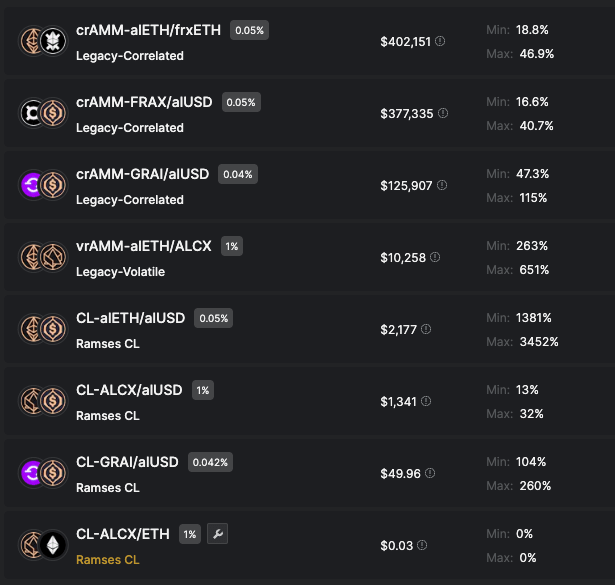
Through its unique debt repayment mechanism, Alchemix mitigates the risk of extreme market fluctuations. By directly pegging its stablecoin alUSD to DAI, Alchemix has freed itself from the traditional financial system's reliance on the value of the US dollar, achieving a more stable and self-sufficient economic model. This strategy not only provides users with a more stable borrowing environment, but also contributes new solutions to the stability of the DeFi field.
One of Alchemix's core features is its automatic debt repayment system. After users deposit DAI, the platform provides an equivalent amount of alUSD to users in the form of liquidity mining. This portion of alUSD represents the user's borrowing, as well as future income. Subsequently, the DAI deposited by the user is invested in platforms such as Yearn, with most of the profits used to repay the user's debt. This model not only provides users with an automated debt management method, but also greatly increases the efficiency of fund utilization.
Through this innovative lending and automatic debt repayment mechanism, Alchemix provides users with a new way of fund management, allowing them to effectively manage and reduce borrowing risks while enjoying the high returns brought by DeFi.
Introducing the innovative gameplay of Transmuter, Alchemix ensures the stability of the stablecoin's value
Alchemix has introduced an innovative concept, Transmuter, which is the core feature that sets it apart from other DeFi protocols. This mechanism allows all assets transmuted through Transmuter to achieve a 0-slippage 1:1 equivalent exchange, maintaining a stable ratio between DAI and alUSD. This not only simplifies asset management, but also provides users with a safe deposit environment without worrying about market fluctuations.
Alchemix has achieved a series of advantages through its Transmuter mechanism:
- Elimination of liquidation risk: Due to the stable 1:1 ratio between DAI and alUSD, the value of users' collateral assets in the protocol remains stable, theoretically eliminating the risk of liquidation.
- Free repayment operations: The 1:1 pegging of DAI and alUSD allows users to repay directly using collateral assets, increasing the flexibility of repayment and eliminating lock-up periods.
- Stability of asset value: Alchemix uses Chainlink oracles to guard against extreme market conditions, ensuring that the 1:1 exchange rate between DAI and alUSD is not affected by market fluctuations.
The operation of Transmuter is based on several key steps:
- The DAI deposited by users is used as collateral and invested in platforms such as Yearn to generate profits. A portion of these profits is automatically used by Transmuter to repay the user's debt.
- If the user has not borrowed alUSD, the profits provided by Transmuter (DAI) will increase the user's borrowing capacity.
- alUSD holders can also participate in the Transmuter mechanism by exchanging DAI to destroy alUSD, thereby maintaining the stable ratio between DAI and alUSD.

Transmuter also provides a unique mechanism that allows users to quickly exchange when their positions generate additional DAI, accelerating the exchange process between DAI and alUSD, ensuring the stability of the ratio between the two. This design not only improves the liquidity of funds, but also enhances the efficiency of the entire protocol and the user experience.
Overall, through the Transmuter mechanism, Alchemix provides a flexible and secure lending platform. Its automatic debt repayment and market fluctuation prevention mechanisms have largely addressed the challenges faced by traditional lending. This innovative alchemy not only enhances the stability of the DeFi ecosystem, but also provides users with more control and security.
The launch of the new V2 version has attracted attention to Alchemix's further market performance
Market demand has prompted Alchemix's continuous evolution, and its V2 version has introduced a series of new features aimed at enhancing the diversity and liquidity of the project. One significant improvement in the V2 version is the expansion of the stablecoins that can be used as collateral, including USDT and USDC, significantly deepening the liquidity of alUSD. In addition, V2 also introduces new synthetic assets, such as alETH and alBTC, allowing users to leverage BTC and ETH in the DeFi ecosystem with lower risk, while ensuring that the underlying collateral is not subject to liquidation risk.
Alchemix's core mechanism—repaying current debts with future income—has been further developed in V2. This model allows users to mint al-tokens, releasing future appreciation income instantly, thereby achieving a new type of lending experience. This approach is referred to as a "future checkbook," where the interest generated by users' deposits is automatically used to repay debts, enabling the advance of future income.
Through its governance token $ALCX, Alchemix provides the community with opportunities to participate in project governance and share profits. The distribution mechanism of ALCX is designed to consider long-term incentives and project sustainability, including pre-mined tokens and phased release through DeFi protocols. It is worth noting that the Alchemix team chose not to conduct initial fundraising, but instead distributed tokens by adding the ALCX/ETH SLP pool on SushiSwap, ensuring the initial scarcity of ALCX in circulation and increasing demand for it.
Alchemix's token economic strategy has resulted in low circulation and high demand for ALCX in the short term, driving up the token price. The high demand not only boosts the token price, but also enhances the attractiveness of the staking pool, allowing participants to enjoy a higher annualized percentage yield (APY), which in turn promotes more participation and investment, forming a positive feedback loop.
Overall, Alchemix V2 not only enhances the platform's functionality and flexibility, but also provides users with new financial management tools and investment opportunities through its unique lending model and token economic strategy, further driving innovation and development in the DeFi ecosystem.
免责声明:本文章仅代表作者个人观点,不代表本平台的立场和观点。本文章仅供信息分享,不构成对任何人的任何投资建议。用户与作者之间的任何争议,与本平台无关。如网页中刊载的文章或图片涉及侵权,请提供相关的权利证明和身份证明发送邮件到support@aicoin.com,本平台相关工作人员将会进行核查。


