For those who want to immigrate, it is now possible to obtain Hong Kong residency by investing in these financial assets.
By Aiying
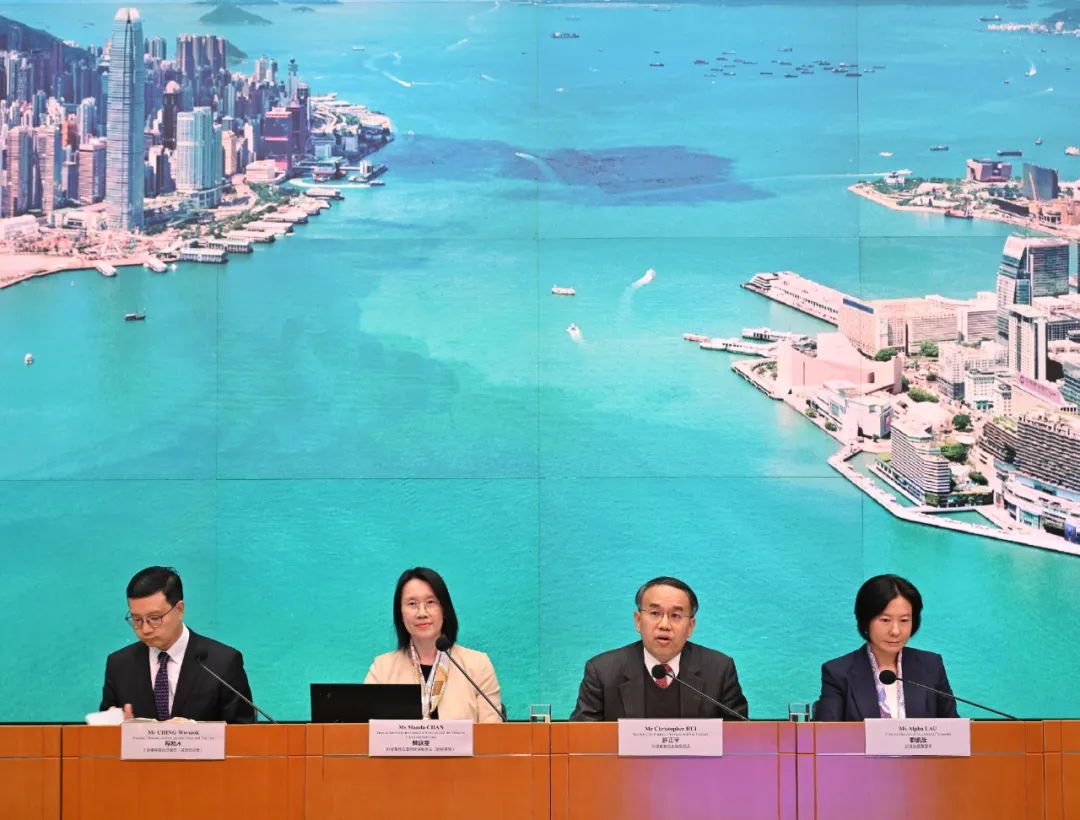
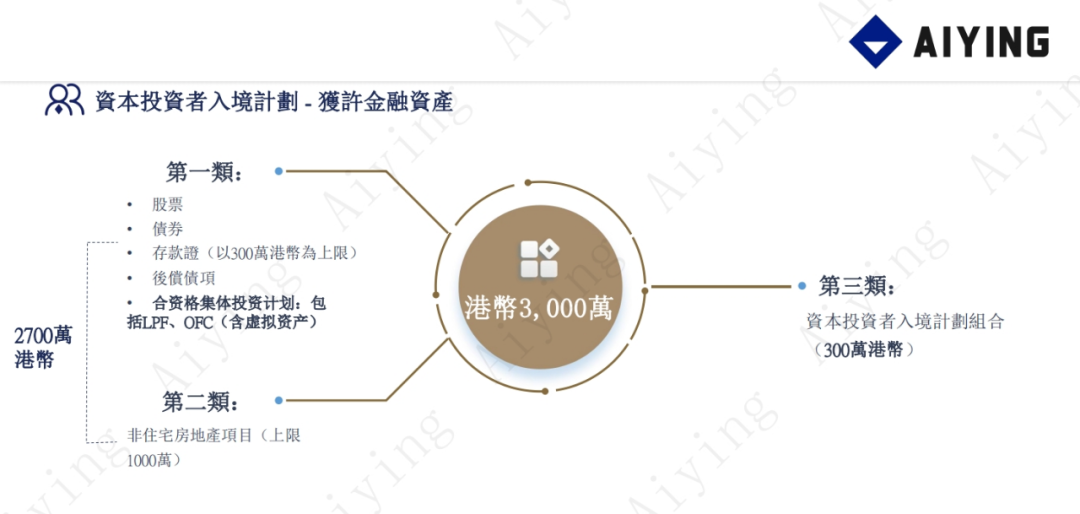
The recent Hong Kong government policy address announced a "New Capital Investment Entrant Scheme" with a minimum investment threshold of 30 million Hong Kong dollars, of which applicants must invest at least 27 million Hong Kong dollars in permissible financial assets and non-residential real estate, and invest 3 million Hong Kong dollars in the new "Capital Investment Entrant Scheme Investment Portfolio" to support the development of innovation and technology industries and other key industries. This means that for those who want to immigrate, it is now possible to obtain Hong Kong residency by investing in these financial assets.
The range of permissible investment assets has become a highlight. According to the published "List of Permissible Investment Assets," ownership of Limited Partnership Funds (LPF) and open-ended fund companies (OFC) managed by Hong Kong No. 9 companies are recognized as eligible investment assets. 2024 Hong Kong Common Cryptocurrency Fund Forms (1) Limited Partnership Fund (LPF)
From the list of eligible collective investment schemes under the "New Capital Investment Entrant Scheme," we can also see virtual asset-related investment targets such as Southern Eastern British Bitcoin Futures ETF (BTE087), Samsung Bitcoin Futures Active ETF (BTF010), and Southern Eastern British Ethereum Futures ETF (BTE088).
This decision by Hong Kong is expected to further enhance the competitive advantage of local funds and elevate the status of No. 9 companies. Although the LPF regulations do not explicitly require investment managers to hold a No. 9 license, when conducting asset management business in Hong Kong, a No. 9 license is still required according to the Securities and Futures Ordinance. Based on the consultations received by Aiying in the past two years, the No. 9 license (including VA) is currently the first stop for most exchanges or private fund management industry to go global, and the number of successful establishments has also significantly increased.
Today, we will share the application conditions and process for the No. 9 license in Hong Kong:
Introduction to No. 9 License Function
The Securities and Futures Commission (SFC), Hong Kong's financial regulatory authority, provides various types of licenses for regulating different businesses in the financial market. Among them, the No. 9 license is specifically for companies providing asset management services.
I. Basic Qualification Requirements for Applying for a Hong Kong No. 9 License (Securities Trading License) for Companies
The following are the basic conditions and requirements:
Legal Entity and Business Structure
Registered legal entity: The applying company must be a legal entity registered in Hong Kong or another jurisdiction.
Business structure and operations: The company's business structure and operations should be suitable for engaging in asset management business.
Management Team
Responsible Officers (ROs): At least two responsible officers with relevant experience (virtual assets) and professional qualifications are required.
Professional qualifications: Responsible officers and key management personnel should have relevant professional qualifications and sufficient industry experience.
Financial Requirements
Capital requirements: Must meet specific minimum capital requirements.
Financial soundness: The company must demonstrate long-term financial soundness and proper financial management.
Compliance and Internal Controls
Compliance framework: Establish a compliance and internal control framework to ensure business compliance with SFC regulations and requirements.
Internal audit and risk management: Effective internal audit and risk management mechanisms should be in place.
Legal and Regulatory Compliance
Anti-money laundering and counter-terrorist financing (AML/CFT): Effective anti-money laundering and counter-terrorist financing policies and procedures must be established.
Other legal and regulatory requirements: Compliance with other legal and regulatory requirements related to business operations is necessary.
Investor Protection
Client asset protection: Measures to protect client assets, such as segregating client funds and company funds, are required.
Transparency and disclosure: Clear business and risk disclosures must be provided to clients.
Ongoing Compliance
Regular reporting: License holders need to regularly report on business and financial conditions to the SFC.
Supervision and review: Regular supervision and reviews by the SFC are required.
These requirements are aimed at ensuring that applying institutions have appropriate management, financial, and compliance foundations to engage in asset management business.
II. Detailed Process for Applying for a Hong Kong No. 9 License (Asset Management License) Generally Includes the Following Steps:
Step 1: Preparatory Work
Determine business scope: Clearly define the company's scope of asset management business.
Assess compliance requirements: Understand and evaluate compliance requirements as stipulated by the Securities and Futures Commission (SFC) in Hong Kong.
Assemble management team: Ensure the presence of suitable responsible officers and management teams that meet SFC's professional qualification requirements.
Step 2: Prepare Relevant Documents
Business plan: Prepare a detailed business plan, including company structure, business scope, risk management strategies, etc.
Financial reports: Prepare financial reports and budgets to demonstrate the company's financial soundness.
Compliance policies and procedures: Develop compliance policies and internal control procedures, including anti-money laundering policies, client asset protection measures, etc.
Step 3: Submit Application
Fill out application form: Complete the license application form provided by the SFC.
Submit documents: Submit the application form and all necessary supporting documents to the SFC.
Step 4: SFC's Review Process
Preliminary review: The SFC conducts a preliminary review of the submitted application materials.
Queries and supplementary information: The SFC may request supplementary information or raise queries regarding the application.
Interview: In certain cases, the SFC may request interviews with responsible officers of the applying company.
Step 5: Approval and License Issuance
Approval decision: The SFC makes a decision after completing the review.
License issuance: If the application is successful, the SFC will issue the No. 9 license.
Step 6: Ongoing Compliance and Reporting
Regular reporting: License holders are required to regularly report on business and financial conditions to the SFC.
Compliance checks: Regular internal compliance checks are necessary to ensure ongoing compliance with SFC regulations.
The entire application process may take several months to a year, depending on the application quality and the SFC's review speed. To ensure a smooth application process, it is advisable to seek professional legal and compliance advice throughout the entire process.
III. When applying, a series of key documents and information need to be prepared, including:
When applying for a No. 9 license (asset management license) in Hong Kong, a series of key documents and information need to be prepared. These documents and information are intended to demonstrate to the Securities and Futures Commission (SFC) of Hong Kong that the applying company complies with relevant business, financial, and compliance requirements. They mainly include but are not limited to the following categories:
1. Company organization and business-related documents
Business plan: Detailed description of the company's business model, market strategy, target customer base, products and services range, etc.
Company articles and business registration certificate: Showing the company's registration status and legal structure.
Organizational chart: Clearly displaying the company's organizational structure, including major business departments and management levels.
2. Information on Management Team and Responsible Officers
Resumes and qualifications of Responsible Officers (ROs): Demonstrating their relevant professional qualifications and industry experience.
Resumes of management team members: Showing the professional backgrounds and business capabilities of team members.
3. Financial Documents
Recent financial statements: Demonstrating the company's financial condition and soundness.
Proof of capital: Demonstrating that the company meets the SFC's minimum capital requirements.
4. Compliance and Risk Management Documents
Internal control and compliance manual: Including the company's compliance policies, operational procedures, and risk management measures.
Anti-money laundering (AML) and counter-terrorist financing (CFT) policies: Showing how the company complies with relevant laws and regulations.
5. Client Asset Protection Mechanism
Client fund and asset management policies: Explaining how the company segregates and protects client funds and assets.
6. Other Supporting Documents
Lease agreement for office premises (if applicable): Demonstrating the physical location of business operations.
Opinion letters from professional advisors (if applicable): Such as opinion letters from legal advisors or accountants, supporting the accuracy and completeness of the application documents.
When preparing these documents, the focus is on demonstrating that the company can comply with all of the SFC's regulations and has the professional capabilities and compliance framework to engage in asset management business.
IV. Minimum Capital Requirements for License Application
The capital requirements for a Hong Kong No. 9 license (asset management license) are as follows:
Liquid capital: Asset management companies holding a No. 9 license are typically subject to the condition of not holding client assets. Based on this condition, the company will be exempt from the minimum paid-up capital requirement but will need to maintain at least HK$100,000 in liquid capital.
This means that while the company is exempt from the minimum paid-up capital requirement, it still needs to maintain a certain amount of liquid capital to ensure it can meet operational and compliance needs. This requirement is to ensure that the company has sufficient funds to address various risks and financial obligations in business operations.
V. VA9 Asset Management License Upgrade (Virtual Assets)
The capital requirements for a Hong Kong No. 9 license (asset management license) are as follows:
Subject to acceptance of the Securities and Futures Commission's "Standard Terms and Conditions Applicable to Licensed Corporations Managing Portfolios Investing in Virtual Assets" and other or potential conditions, it is permissible for the managed fund scope to include:
Funds with stated investment objectives to invest in virtual assets; or
Funds intending to invest 10% or more of their total asset value in virtual assets.
Assess whether the company meets the following relevant requirements:
Company responsible personnel have experience in managing virtual assets and high-risk, high-volatility investments;
Company traders have experience in virtual assets and high-risk, high-volatility investments;
Company risk control personnel have experience in virtual assets and high-risk, high-volatility investments;
Company compliance personnel have experience in virtual assets and high-risk, high-volatility investments;
Company operations personnel have experience in virtual assets;
Company information technology personnel or outsourced suppliers have experience in virtual assets;
The company has a clear direction for establishing funds and has clear investment strategies, etc.;
The company has contacted relevant suppliers for the proposed establishment of funds;
Relevant fund suppliers, including trading platforms, custodian platforms, fund administration, auditors, etc., have experience, qualifications, licenses (if applicable), and can meet regulatory requirements;
The company has sufficient internal control measures and arrangements with suppliers to protect client virtual assets;
The company has sufficient risk control and internal control measures to address risks related to virtual asset investments; and
The company has sufficient computer security systems to address related risks, etc.
免责声明:本文章仅代表作者个人观点,不代表本平台的立场和观点。本文章仅供信息分享,不构成对任何人的任何投资建议。用户与作者之间的任何争议,与本平台无关。如网页中刊载的文章或图片涉及侵权,请提供相关的权利证明和身份证明发送邮件到support@aicoin.com,本平台相关工作人员将会进行核查。


