Coinbase CEO Brian Armstrong recently made a bold claim that memecoins can be the gateway to mass adoption. However, a recent study by Chainplay and Storibles suggests that users’ experiences with memecoins, especially those endorsed by politicians, have been underwhelming.
In fact, 21% of first-time investors quit crypto after witnessing the value of politician-endquartered memecoins plummet. As of Feb. 19, a majority of investors in TRUMP, LIBRA and CAR memecoins were at a loss, sparking allegations of scams. Similarly, buyers of less high-profile memecoins are said to have exited the crypto space after disappointing experiences.
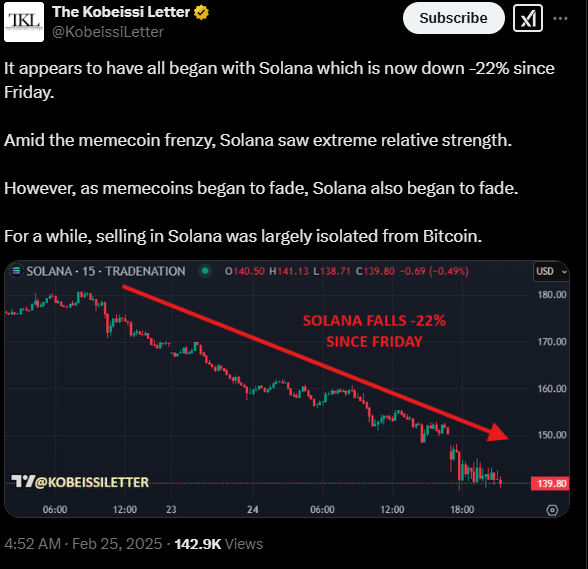
While there’s no concrete evidence that the decline of president-endorsed memecoins or memecoins in general is undermining the crypto industry, falling trading volume on Solana’s decentralized exchange (DEX) has been linked to waning investor interest in memecoins. Solana is the launch platform for Pump.fun, a memecoin launchpad that has seen significant user activity decline in recent weeks.

In a post on X prior to the release of the Chainplay and Storibles study findings, Armstrong acknowledged that some memecoins are not just silly or offensive but may also be fraudulent. Still, Armstrong, whose crypto platform’s “commitment” to free-market principles ensures Coinbase users have access to memecoins, is adamant that these coins have a role to play in bringing the “next billion users on-chain.”
Some experts agree with Armstrong’s views but assert that memecoins are in fact a double-edged sword. They might help onboard new users but may not sustain long-term adoption. One expert, Victor Young, founder of Analog, also sees the volatility of memecoins as another double-edged sword.
“On-chain events—such as a sharp drop in Solana’s total value locked (TVL) following high-profile token collapses—demonstrate that meme coin volatility can spill over and destabilize entire blockchain ecosystems,” Young said.
Arthur Breitman, Tezos co-founder, said the collapse of memecoins tends to wash out participants, ultimately hurting liquidity. Commenting on the possibility that governments and regulators may take action to protect vulnerable users, Breitman said:
“Memecoins are a product of regulatory overreach, they promise nothing and deliver nothing, or entertainment at best. I doubt we’ll see them being meaningfully curbed anytime soon.”
The Tezos co-founder said the onus is therefore on prospective memecoin investors to screen out fraudulent tokens, and one effective way to do this is by avoiding anything with “highly concentrated ownership.” These sentiments are echoed by Young, who also advises prospective investors to evaluate the liquidity of a memecoin’s DEX and to be cautious of tokens that rely on celebrity or political endorsements.
Young, meanwhile, agrees with Armstrong’s view that the crypto industry’s long-term success hinges on building sustainable and valuable products.
“For memecoins to evolve into a credible asset class, the industry must couple the cultural appeal of memes with genuine utility—be it through governance, decentralized finance integrations or educational initiatives,” the Analog founder said.
Similarly, strong regulation and investor education are crucial for new investor protection and market stability, he added.
免责声明:本文章仅代表作者个人观点,不代表本平台的立场和观点。本文章仅供信息分享,不构成对任何人的任何投资建议。用户与作者之间的任何争议,与本平台无关。如网页中刊载的文章或图片涉及侵权,请提供相关的权利证明和身份证明发送邮件到support@aicoin.com,本平台相关工作人员将会进行核查。