Author: @Web3_Mario
Abstract: Last week, the cryptocurrency market experienced a significant pullback, which was generally attributed to Federal Reserve Chairman Powell's so-called "hawkish rate cut," raising concerns in risk markets about inflation and economic recession. However, according to the author's analysis, this may only be a secondary factor causing capital panic. The real impact stems from Trump's strong pressure on Congress regarding the short-term spending bill initiated with Musk last Wednesday, even threatening to eliminate the debt ceiling rules, which triggered a risk-averse sentiment among investors.
Powell may be unfairly blamed; macro data is insufficient to trigger market panic over monetary policy risks
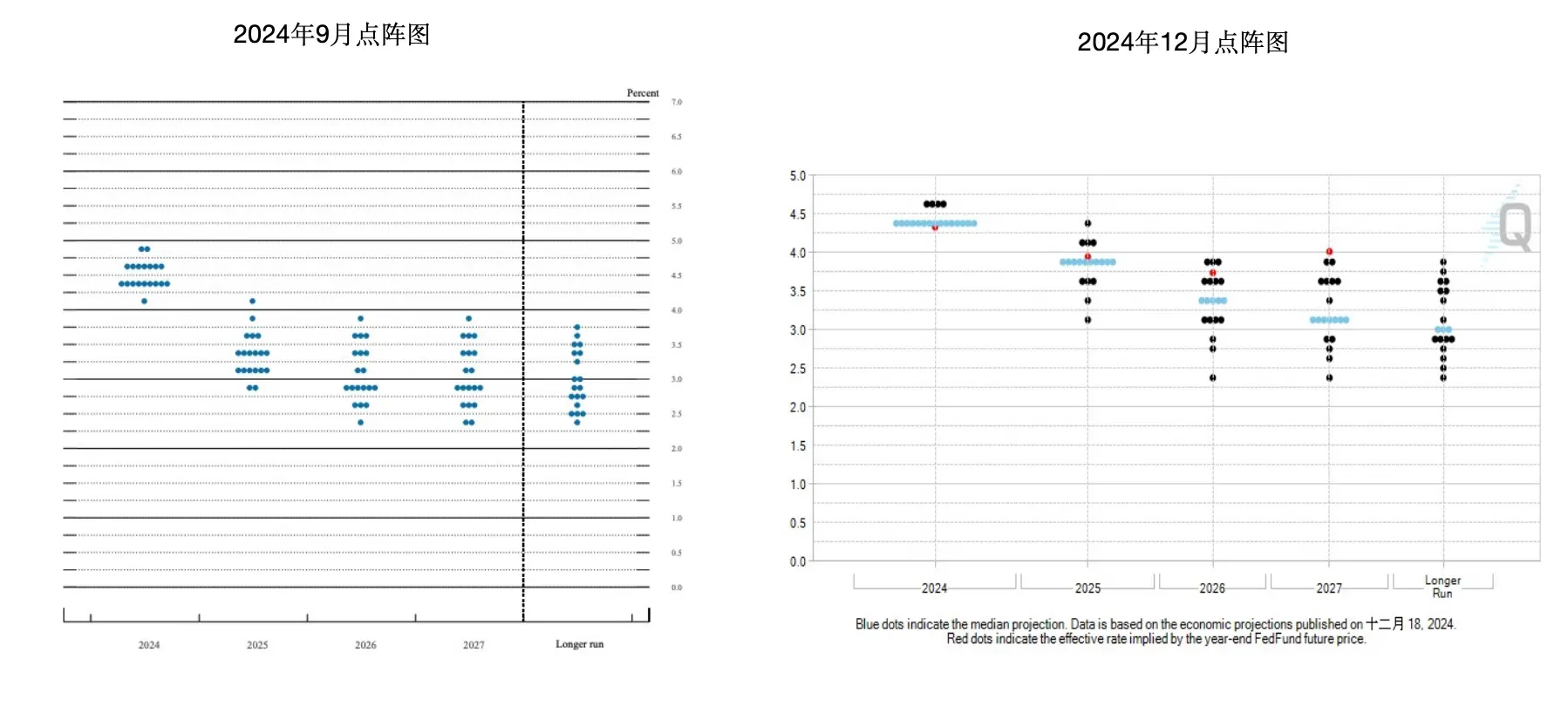
The FOMC's interest rate decision early last Thursday met market expectations, concluding with a 25 basis point reduction. The market generally attributed the decline in risk markets to two factors. First, the dot plot indicated a lack of consensus among committee members, with Cleveland Fed President Mester leaning towards keeping rates unchanged. Additionally, the median target rate for 2025 was raised to 3.75%–4.00%, compared to the previous median target rate of 3.25%–3.5% in the September dot plot, reducing the expectation of rate cuts from four times to two. To briefly explain, the dot plot is a graphical tool used by the Federal Reserve to express policymakers' expectations for future interest rate paths. It is part of the Summary of Economic Projections (SEP) released during FOMC meetings, typically published four times a year, mainly used to observe the internal policy consensus of the Fed.

In addition, during the subsequent Q&A session, some of Powell's remarks were interpreted by the market as hawkish guidance, mainly encompassing two aspects: first, he seemed to express concern about the inflation outlook for the coming year; second, he did not provide a positive response regarding the establishment of Bitcoin reserves. However, after reading the full text, it seems that Powell's concerns about inflation risks do not stem from changes in certain macro indicators but rather from the uncertainty associated with Trump's policies. At the same time, his outlook on the future economic prospects also revealed sufficient confidence.
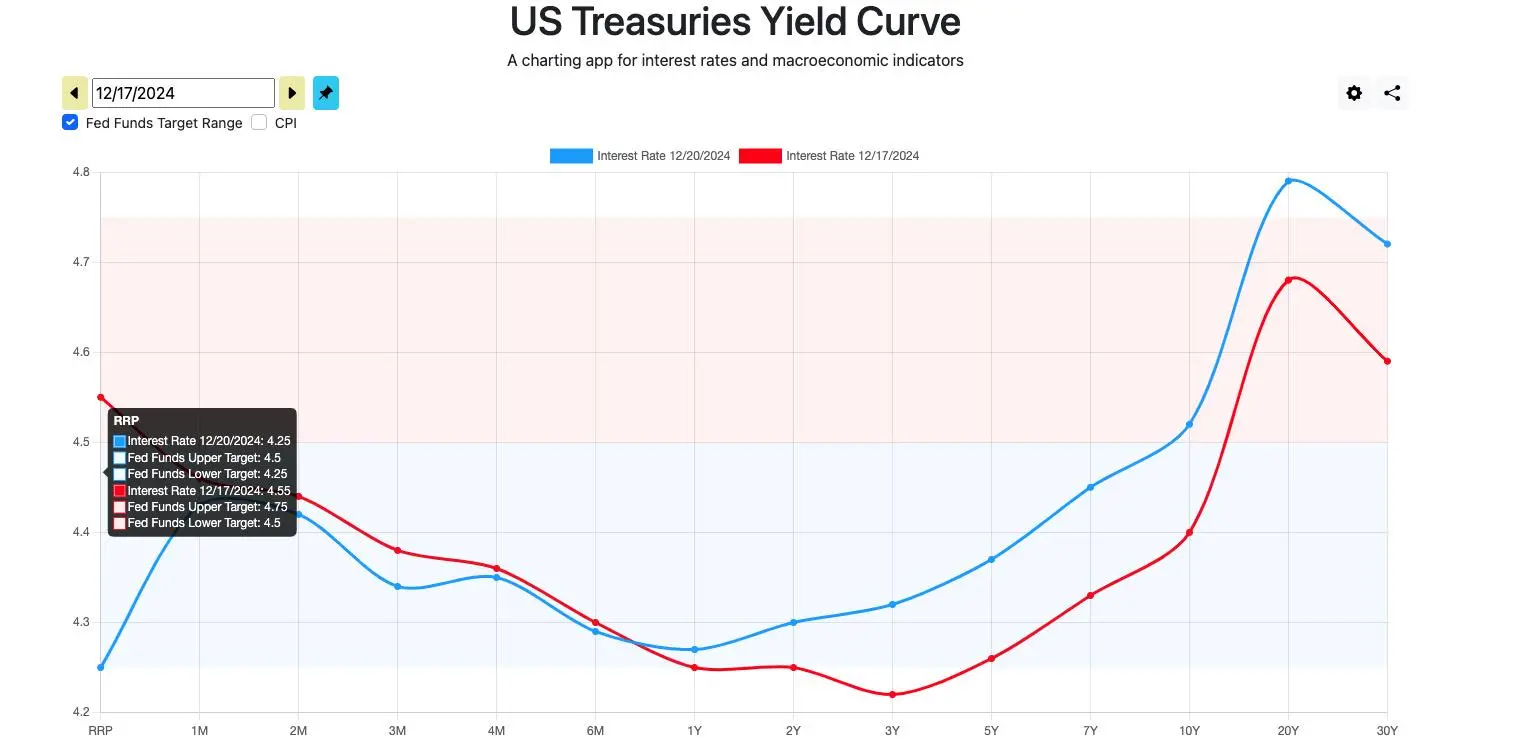
Now, let’s look at why this is the case. First, we examine the changes in the U.S. Treasury yield curve before and after the Fed's decision and related announcements. It can be seen that long-term rates indeed rose, but the impact on the one-year yield was not significant, indicating that the market has more concerns about the long-term economic outlook, but at least the risks are not expected to materialize in the short term.

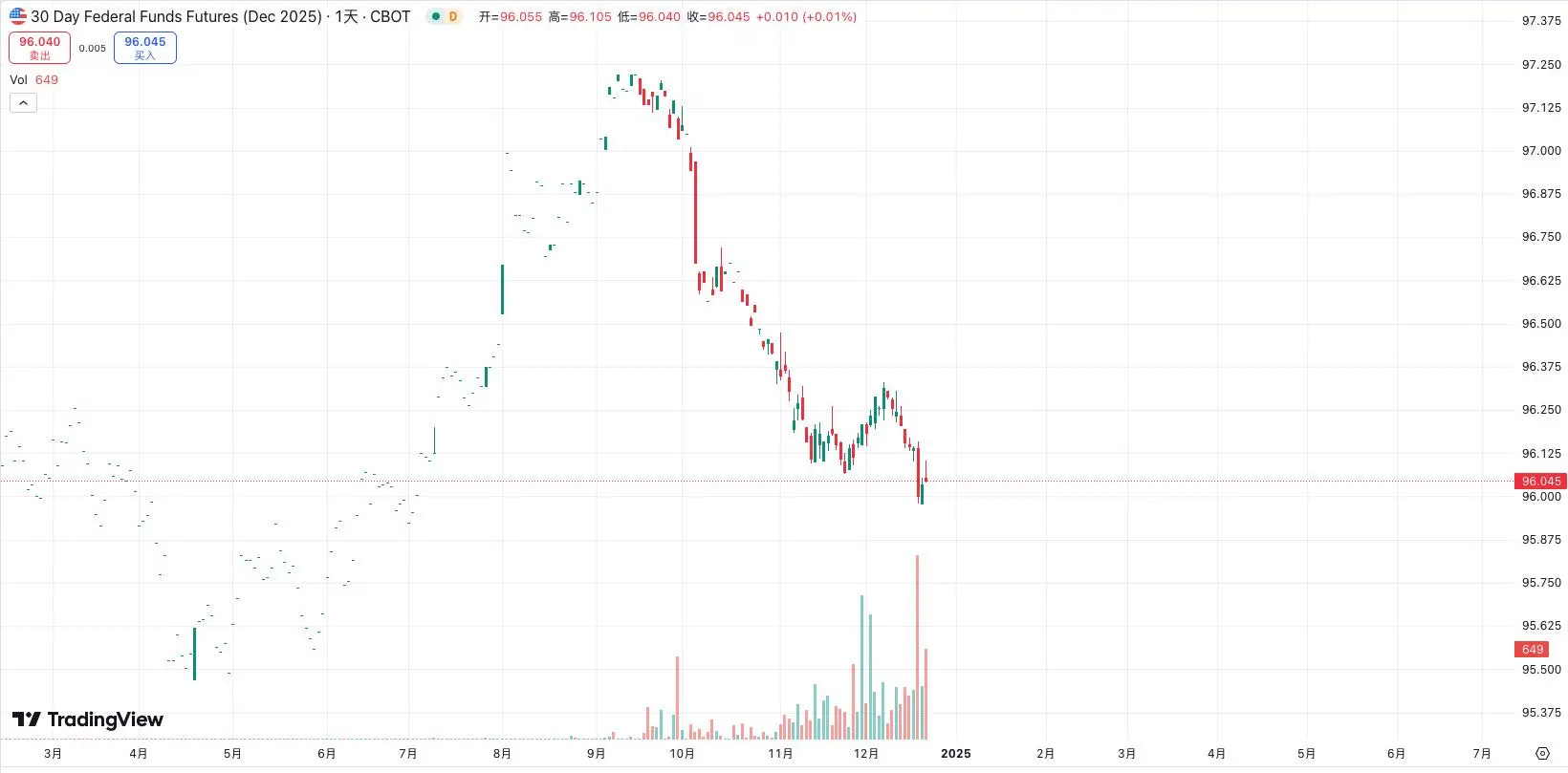
From the prices of 30-day federal funds futures contracts expiring in December 2025, it can be seen that the market had already reacted to the prospects of two future rate cuts as early as November. Therefore, attributing the pullback mainly to the risks of the Fed's future rate decisions seems insufficiently justified. Additionally, the implied rate is calculated by subtracting the current futures price from 100.

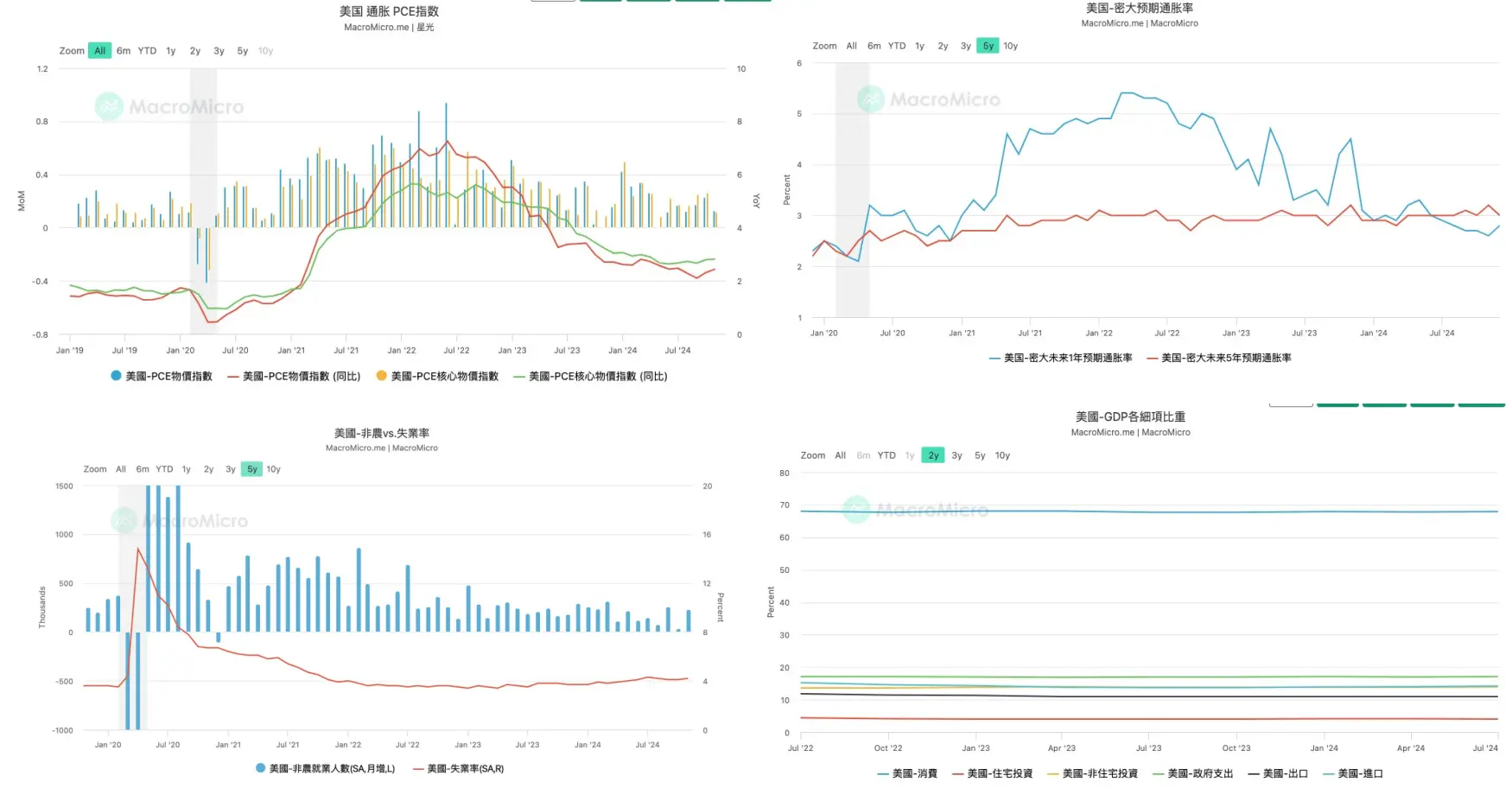
Next, let’s look at several macro data points: the PCE index, non-farm payrolls, unemployment rate, and GDP growth details. It can be observed that the U.S. PCE index has not shown a significant increase over the past period, whether from the year-on-year PCE or the core PCE year-on-year growth rate, both remaining below 2.5. Meanwhile, the University of Michigan's expected inflation rate has remained stable, and the unemployment rate has not shown a significant increase. Additionally, non-farm payrolls in November also showed growth compared to previous months, indicating a strong employment market. Considering Trump's tax cuts and the overall GDP growth stabilizing without significant declines in any specific area, there is no macro data to support the judgment of a resurgence in inflation or an economic recession in the coming year. This indicates that Powell's concerns still stem from the uncertain effects of Trump's policies.

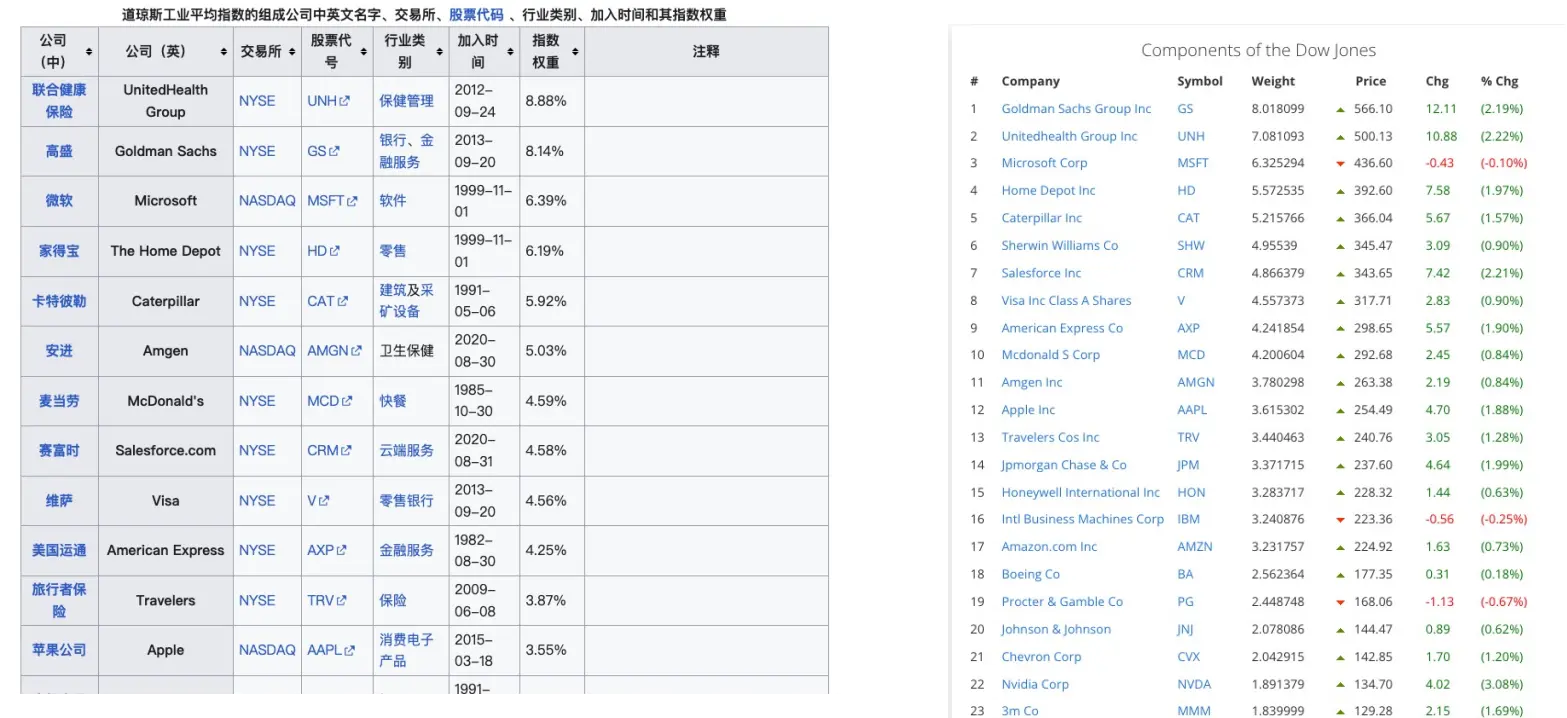
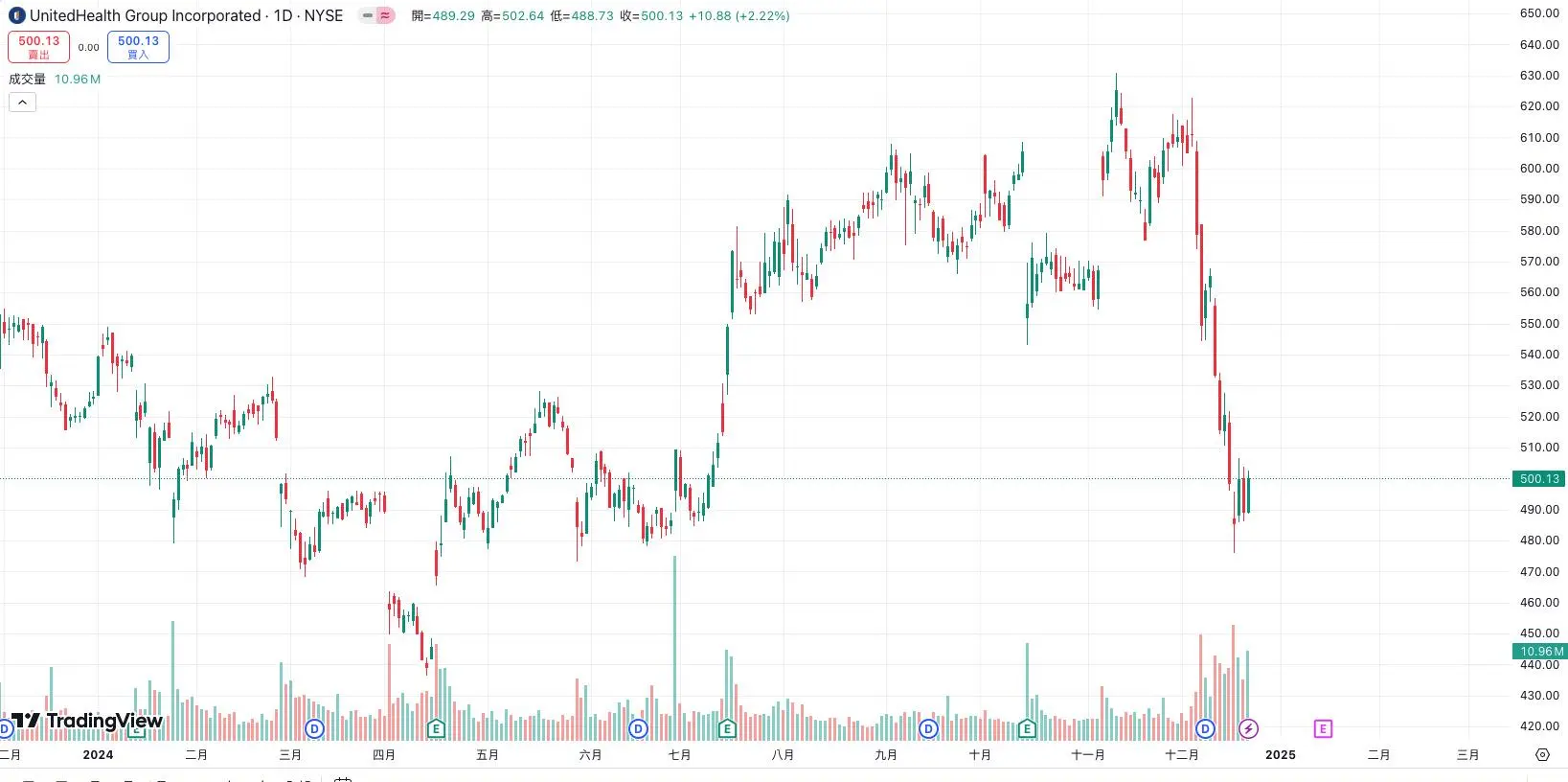
To clarify another point, the Dow Jones index has recorded a historic consecutive decline. Some friends believe this reflects market pessimism about the future of U.S. industrial development. However, upon further investigation, it appears that the main reason for this impact is not systemic risk but rather a significant downward revision by UnitedHealth Group. First, the Dow Jones Industrial Average (DJIA) is a price-weighted index, meaning that the price of each component stock affects the index based on its absolute stock price rather than its market capitalization. This means that higher-priced stocks will have a greater weight in the Dow. As of November 2, 2024, UnitedHealth Group had the highest weight in the Dow at 8.88%. In the latest individual stock weights, UNH's weight has dropped to 7.08%, with its stock price falling from 613 on December 4 to the current 500, a decline of 18%. Other high-weight stocks have not seen such declines. Therefore, the primary reason for the Dow's decline is the single-point risk from the high-weight stock UNH, rather than systemic risk. So what happened to UNH? The main trigger was that UNH's CEO, Brian Thompson, was shot multiple times outside the Hilton Hotel in Manhattan, New York, on December 5, and died after being taken to the hospital. The shooter, Luigi Mangione, had a good social background, and the interrogation process revealed that his actions stemmed more from the exploitation of the American public by UNH in healthcare, which sparked widespread sympathy and ignited the long-standing contradiction of high healthcare costs in the U.S. This aligns with Trump's healthcare reform policy direction, and the resonance between the two led to a sharp drop in stock prices, which will not be elaborated on here.


Of course, regarding the small episode about Bitcoin reserves, the author believes that Powell's attitude is not particularly important. As he himself stated, the decision to advance this proposal lies with Congress, not the Federal Reserve. Meanwhile, considering the establishment and management framework of U.S. oil and gold reserves, the former is managed by the Department of Energy, while the latter is managed by the Treasury Department. Of course, the management process will involve collaboration with other departments, such as the SEC, CFTC, and the influence of Fed policies. However, in this process, these departments play more of a collaborative role.
So why did the market react so violently? The author believes the main reason lies in Trump's strong pressure on Congress regarding the short-term spending bill initiated with Musk last Wednesday, even threatening to eliminate the debt ceiling rules, which triggered a risk-averse sentiment among investors.
Trump's Overwhelming Power Threatens Permanent Elimination of the Debt Ceiling, Casting a Shadow Over the Traditional U.S. Dollar Credit System, Leading to Risk-Averse Trading
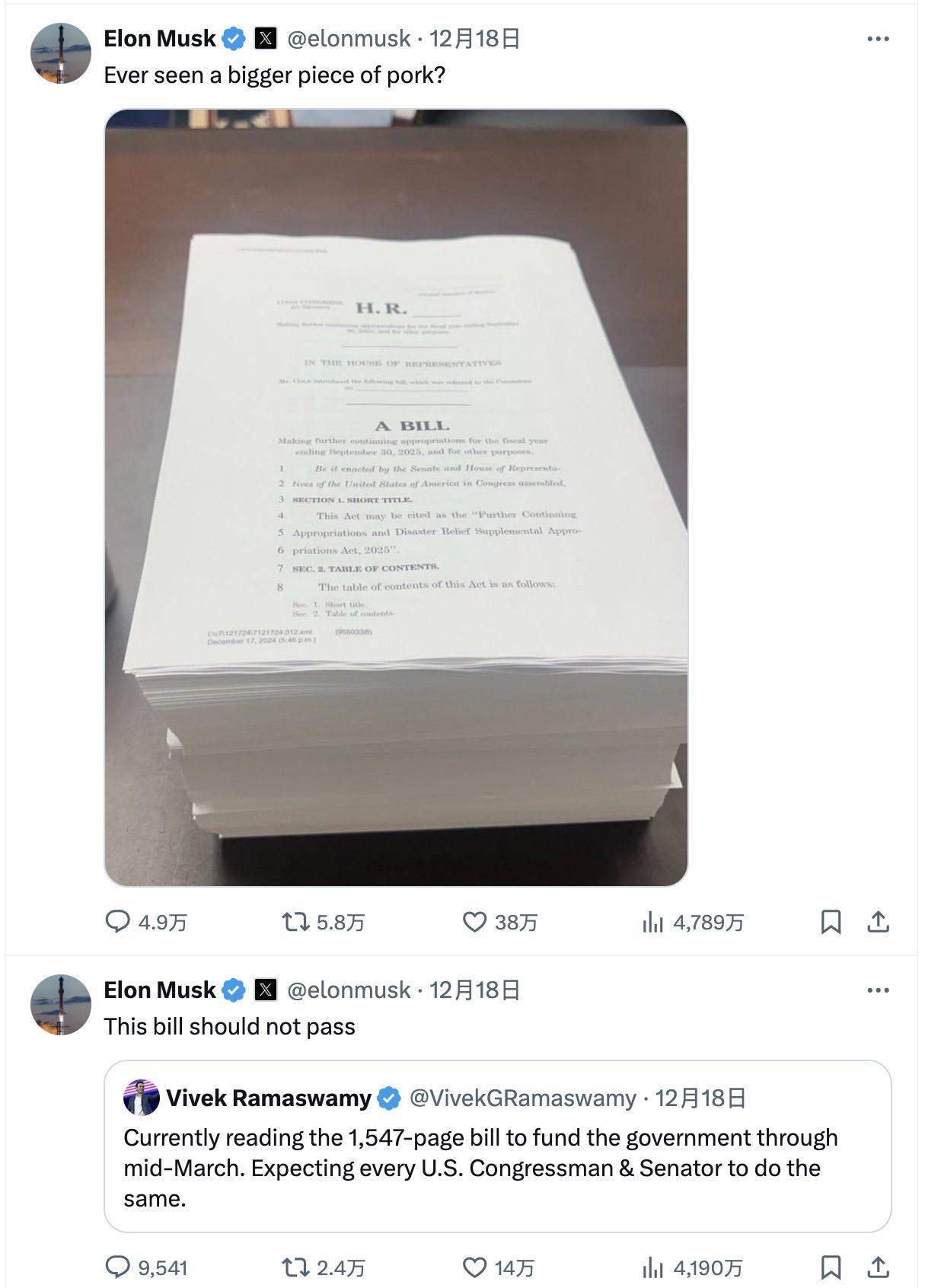
It is unclear how many people noticed the recent political maneuvering in the U.S. Congress regarding short-term spending. On Tuesday, December 17, House Speaker Mike Johnson had reached a short-term agreement with the Democrats to extend government funding until March of next year to avoid a government shutdown. At the same time, to ensure the bill's passage, Johnson made some concessions to the Democrats and attached several bipartisan-supported proposals. However, on December 18, Musk began to vehemently criticize the proposal on X, claiming that it severely infringed on taxpayers' rights, leading to its swift rejection.

Meanwhile, the entire process also received support from Trump, who claimed on True Social that Congress needed to abolish the absurd debt ceiling rules before January 20, when he officially takes office, as he believed these debt issues were caused by the Biden administration and should be resolved by him. Subsequently, the Republican Party quickly revised the new spending bill, not only removing some compromise expenditures but also adding proposals to abolish or suspend the debt ceiling. However, this proposal failed to pass in the House on Thursday (December 19), with 174 votes in favor and 235 votes against, raising the risk of a government shutdown. Ultimately, on December 20, the House finally passed a new temporary spending bill, just hours before the deadline, which removed the proposal to amend the debt ceiling.
Although the new spending bill was passed, avoiding a partial shutdown of government departments, the author believes that Trump's expressed attitude towards the elimination of the debt ceiling has clearly raised market concerns. We know that Trump holds more power than any previous U.S. president, especially having absolute influence in the House of Representatives. The new congressmen will be sworn in and officially take office on January 3, which will significantly increase the likelihood of passing the elimination of the debt ceiling. Therefore, let's analyze the potential impacts of this situation.
The U.S. debt ceiling refers to the maximum legal amount that the federal government can borrow, established for the first time in 1917. This limit is set by Congress to restrict the growth of government debt. The purpose of the debt ceiling is to prevent excessive government borrowing, but it is not an effective means of controlling the debt level; rather, it is the upper limit of what the government can legally borrow. In addition to establishing fiscal discipline, the debt ceiling is also a crucial weapon in the bipartisan struggle, often used by the opposition party to attack the ruling party's spending bills, thereby creating risks of government shutdowns to gain more negotiation leverage.
Of course, the U.S. debt ceiling has been suspended multiple times, usually through legislative means, with Congress passing bills to suspend the applicability of the debt ceiling. Suspending the debt ceiling means that the government can continue to borrow without being constrained by the established limit until the deadline specified in the bill or until the debt reaches a new level. Some typical cases are as follows:
- 2011-2013: In 2011, the U.S. faced a severe debt ceiling crisis. At that time, Congress and President Obama engaged in intense negotiations on how to raise the debt ceiling, ultimately reaching an agreement to temporarily raise the debt ceiling and implement some budget cuts. Additionally, to avoid a government default, in October 2013, Congress passed a bill that suspended the debt ceiling and allowed the government to borrow until February 2014. At that time, the U.S. debt level was approaching the limit, and suspending the debt ceiling avoided the risk of government default.
- 2017-2019: In 2017, Congress again passed a bill to suspend the debt ceiling, allowing the government to continue borrowing until March 2019. This bill also included other fiscal matters and was linked to agreements on budgets and government spending. This suspension helped the U.S. government avoid a potential default.
- 2019-2021: In August 2019, Congress passed a two-year budget agreement, which not only raised the spending limit but also suspended the debt ceiling, allowing the government to borrow more money until July 31, 2021. This suspension enabled the government to continue borrowing without being constrained by the debt ceiling, ensuring the normal operation of the government and avoiding a government shutdown and debt default.
- 2021: In December 2021, to avoid a U.S. government default, Congress passed a temporary adjustment bill for the debt ceiling, raising the limit to $28.9 trillion and allowing the government to borrow until 2023. This adjustment was made at the last moment before the deadline in October 2021, avoiding the risk of debt default.
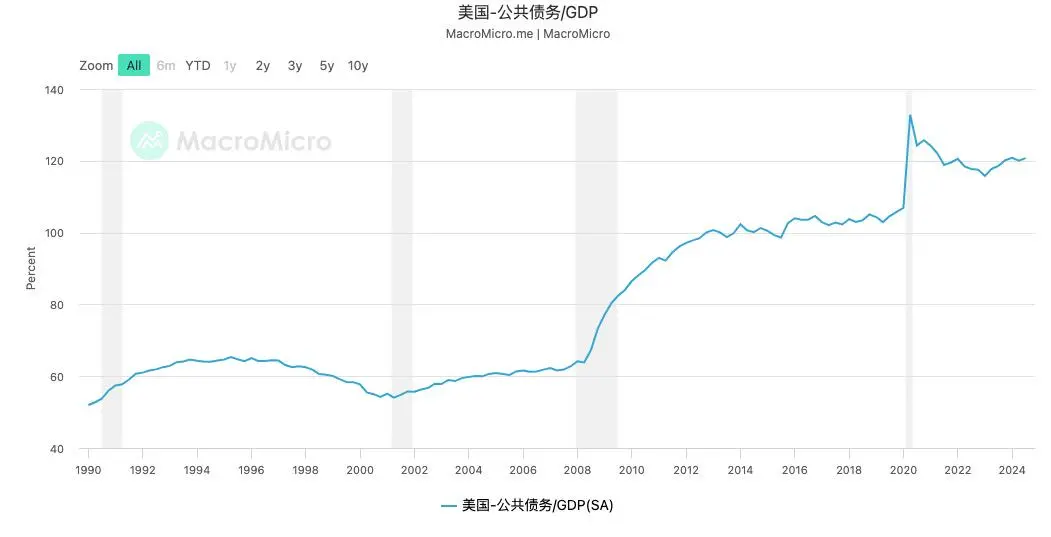
It can be seen that each suspension of the debt ceiling was in response to specific events, such as the financial crisis in 2008 and the pandemic in 2021. However, why does the current proposal to eliminate the debt ceiling have such an impact? The core issue lies in the current scale of U.S. debt. The ratio of U.S. public debt to GDP has reached a historical high, exceeding 120%. If the debt ceiling is eliminated at this time, it means that the U.S. will not be bound by any fiscal discipline for a considerable period, which could have unpredictable effects on the dollar's credit system.

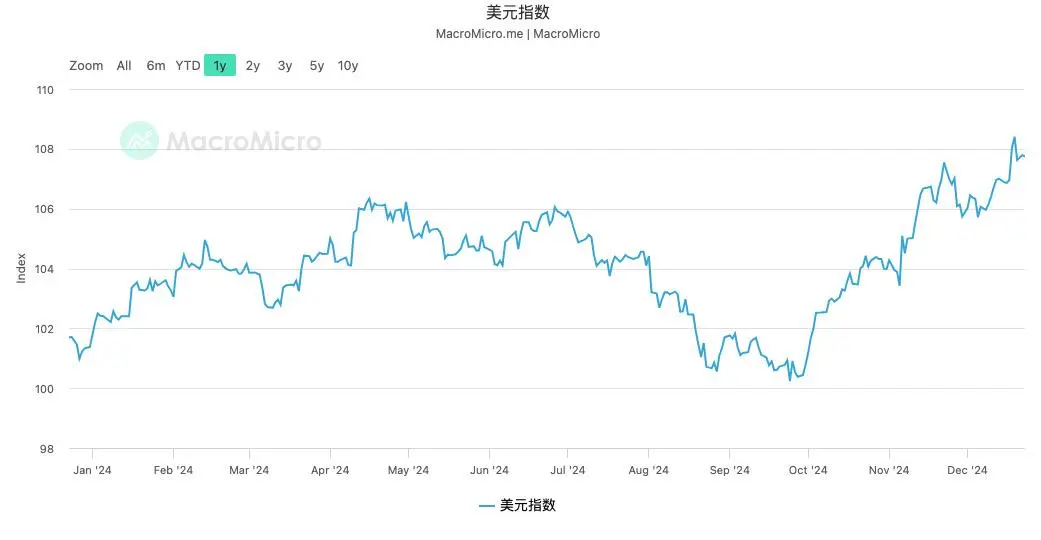
So why does Trump need to do this? The reason is simple: to navigate the short-term risk of a debt crisis. We already know that reducing taxes and lowering public debt are two of Trump's most important goals. However, while tax cuts can stimulate economic vitality, they inevitably lead to a decrease in government revenue in the short term. Of course, the resulting fiscal gap could potentially be compensated by increasing tariffs, but considering that manufacturing countries can respond by lowering exchange rates, this explains why the dollar index has remained strong during the current rate-cutting cycle. The core issue is that countries are preparing for potential trade wars. Meanwhile, the potential decline in domestic companies' earnings due to reduced fiscal spending also casts a shadow over economic growth potential. Therefore, to get through this painful policy implementation period, Trump certainly hopes to resolve this issue once and for all. Thus, eliminating the constraints of the debt ceiling and relying on continued borrowing to navigate the fiscal crisis seems very appropriate.

Finally, let's look at why this could impact cryptocurrencies. The core issue lies in the blow to the narrative surrounding Bitcoin reserves. We know that in the recent core narrative of cryptocurrencies, the establishment of Bitcoin reserves by the U.S. to address the debt crisis is a significant aspect. However, if Trump directly eliminates the debt ceiling rules, it would indirectly undermine the value of that narrative. In previous analyses, we have noted that the current cryptocurrency market is in a phase of seeking new value support, making it understandable that profit-taking and risk aversion would arise. Therefore, I believe that in the coming period, observing the Trump team's governance will take precedence over other factors and requires continuous attention.
免责声明:本文章仅代表作者个人观点,不代表本平台的立场和观点。本文章仅供信息分享,不构成对任何人的任何投资建议。用户与作者之间的任何争议,与本平台无关。如网页中刊载的文章或图片涉及侵权,请提供相关的权利证明和身份证明发送邮件到support@aicoin.com,本平台相关工作人员将会进行核查。