As I walked out of the gate of Stanford 71 and got into the taxi to go home, this phase of Token2049 finally came to an end. The reason I say "phase" is because only the "social" part has been completed, and with the social part comes even more arduous long-tail tasks.
Yes, this is a short essay about Token2049, which is different from what you might imagine. Right now, I really don't want to write a single word, but if I don't write it out, I feel incomplete. After returning home, I had two bowls of instant noodles, a roujiamo, and a box of grapes. This should be the cheapest meal I've had in the past four days, but it tasted especially sweet.
My role in this Token2049 has been constantly changing. Sometimes I'm the organizer of the conference, sometimes I'm a partner of the project, sometimes I'm a distinguished guest of the exchange, and sometimes I'm just a laborer promoting the project. But when I returned home, I realized that these are all my roles online. Only the present moment in front of the computer is the real me.
This Token2049 is different from the past. In the past, I was just a spectator, judging everything that happened in the event from a god-like perspective. But this time, I became a part of the matrix. If Token2049 is a matrix, whether it's the project party, the capital, the KOL, the exchange, or the spectators, they are all interconnected parts.
Many people may not know that there were almost no "retail investors" participating in Token2049. The ticket price of over a thousand dollars is not meant for ordinary users. Those who paid for the tickets are often industry insiders who feel resentful. This also means that Token2049 itself is a large social stage, a stage for project parties to showcase to the capital, exchanges, and KOLs, but not directly to the users.
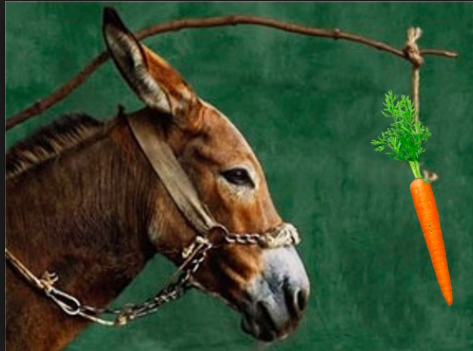
The glamorous appearance of the exhibitors is actually a whip on the project parties, while the capital, exchanges, and KOLs are the carrots in front of the donkey. It looks very close and tempting, but no matter how hard you try, it's almost impossible to bite, because Token2049 is not a place where deals can be directly made. Ultimately, further negotiations are needed. But can we do without Token2049?
The answer is no. There are barriers between people's interactions, and these barriers are easily removed when face to face. This is why the KOLs were easily won over during Token2049. There's nothing that a glass of wine and a lady can't solve. If it can't, then another glass of wine and another lady will do.
Many people think this way. In reality, between toasting and exchanging cups, although everyone is like brothers, once sober, they will do what they need to do. Token2049 is also a shackle placed on the project parties. If you don't host the evening event, your voice won't reach the users. It's not easy to achieve the financing you want, and the exchanges you want to cooperate with won't easily agree.
Indeed, some are happy while others are worried. The top projects on the stage can talk freely. They have enough funds to present themselves better and enough ability to attract higher-level attention. But this is only a small part. Most project parties find it difficult just to survive. "Deals" are the focus of this Token2049. Market liquidity is already poor. If deals cannot be made, can they survive until liquidity returns? No one knows. But making deals is often the most difficult, because most of the people who come to participate are also confused.
If we were to talk about the biggest "spenders" at 2049, it should be the project parties. After all, the project parties need to spend money on booths, promotion, and hospitality. But where does the project parties' money come from? This is where the VCs come in. I say VCs are suffering, and many people may not believe it, but this time, VCs are really suffering. When I had hotpot with a few VCs and market makers, they all said that they are the real "retail investors".
You may think that I only interact with Chinese VCs and market makers, but you are wrong. Even some well-known overseas VCs are not doing well. The shackle on their heads is the exchange. The more top-tier the VC is, the harder it is to bypass the constraints of the exchange. It may seem like a fantasy, but it's true. "Book profits" is the sword of Damocles hanging over the VCs.
The more you spend, the more you lose. This has become the consensus among VCs. They are often locked in for two or three years, forcing some VCs to consider some unorthodox methods. There are indeed some VCs who are doing real work. It's actually the accelerators and incubators that I think are doing well. This has been proven to be effective in Web2 and will not be wrong in Web3. Therefore, accelerators and incubators between VCs and project parties have a strong appeal, especially those backed by top public chains or ecosystems. They often have a smooth journey. Therefore, in the near future, a batch of projects that can stand out in the face of scarce liquidity will emerge from high-quality accelerators.
Market makers are slightly better off. Even in a PVP environment, top market makers can survive, but smaller market makers find it difficult. In order to maintain profits, they also have to step in. A veteran who didn't want to reveal his name described it this way: market makers and exchanges are like "bandits" and "seated bandits". At first, it didn't feel that way, but upon careful consideration, it's true.
At this point, some may think that exchanges are indeed at the top of the food chain. Projects have to consider the exchanges' opinions, and VCs have to consider the exchanges' opinions. It seems like they are unrivaled, but in reality, exchanges also have their own difficulties. "Consumption" is a pain point that exchanges cannot escape. This consumption includes user consumption, internal consumption, and industry consumption.
User consumption is probably the most headache-inducing issue for exchanges. If a high-quality project is listed, users may not necessarily thank the exchange, but attribute it to the efforts of the project party and market makers. If a project has good reputation but poor performance, both the project party and the exchange will face criticism. Not to mention if a project has both poor reputation and performance, that's a nightmare. Therefore, exchanges also have headaches. After all, users are the real core. The continuous consumption of this core is the most frightening. But the cost of compensating for user consumption is often higher than the cost of acquiring new users.
In addition to user consumption, there is internal consumption. The feeling of too many monks and too little meat is a pain in the hearts of every frontline worker. If my difficulty level in the past four days is 5, then their difficulty level is at least 20 or higher. Sometimes, not only do colleagues not help, but they also create difficulties. On one hand, they worry that there won't be enough voices in the market, and on the other hand, they worry that the voices in the market won't be pleasant. They have to carefully attend to the KOLs they have paid a high price for, and ask them every now and then, "Have you eaten? Have you had fun?"
The industry's consumption is also something that everyone tries to avoid discussing. Today, I poach from your home, tomorrow, my home is poached by another, and the day after tomorrow, their home is poached by mine. You may think I'm only talking about the staff, but in this era of rapid information dissemination, KOLs are also a battleground. Only by controlling the discourse can one be more composed.
From this perspective, KOLs are the top layer of the industry. Project parties need KOLs for promotion, VCs are willing to organize events for KOLs, and exchanges hope to use KOLs for input and output. They are truly the winners in life. But in reality, "not making money" is the voice of the majority of KOLs. Some people always say, "Look at how much money so-and-so makes from an advertisement," or "so-and-so makes a fortune from leading trades," or "so-and-so earns a lot from rebates."
Indeed, some "KOLs" make money, but these are not the ones needed at Token2049. Because what Token2049 needs are people who can speak out in the market and within the industry, and more people to spread the "spirit of the conference." Of course, the so-called "not making money" is different from what most people imagine. When I say "not making money," I mean not making money from the side business of KOLs. And the side business is the most profitable part. Unfortunately, being "exploited" is the mainstream for KOLs at present.
KOLs are often the weaker party in the hands of the project parties. There are too many examples of this. Despite some KOLs helping with the promotion of some project parties, many times they are not in control. They have to ensure that they survive long enough, gain enough attention, and maintain their output. So you see, the ones who continue to post after socializing every day are often hardworking KOLs, but this kind of diligence doesn't necessarily bring in money. The reason for not making money is often due to being too diligent and unwilling to compromise. Therefore, balance is what KOLs need to master the most.
After all is said and done, everything is interconnected and mutually constrained. This is the truth behind Token2049. What you are doing and how well you are doing it is not as important, because the hotspots in the race are not determined by the project parties, but are built by capital. And the money stacked by capital needs enough users to foot the bill, and the end users are the exchanges. The acquisition of users by exchanges cannot be achieved without one KOL after another, but KOLs and project parties are in a love-hate relationship.
I could talk about a lot of serious content, such as race analysis, project analysis, and industry analysis, but all of this is just superficial. When it comes back to the fundamental industry, both you and I are just going with the flow. We don't have much choice, whether it's for our own pockets or our dreams. We have to push forward even if it means breaking our heads, even though we all know that the road ahead may be very rough. But don't even think about stepping back, because if you stop, you might be trampled by the torrent.
Being tired is the truth of Token2049. Everyone is tired and has no choice but to be tired. If you're not tired, you might not have to go through the exhaustion. You might think I'm only talking about the foot soldiers, but the big shots at the top are the same. Being forced to do business is the reality. Every family has its own difficulties. There are things that you clearly don't like, and you're clearly tired, but you still have to do them. That's the essence of Token2049.
In the end, English is a hurdle that every cryptocurrency enthusiast cannot cross. If you do cross it, you will find that the world is not quite the same. But if you can't cross it, you can only watch me ramble on without any help.
This post is sponsored by @ApeXProtocolCN | Dex With ApeX
免责声明:本文章仅代表作者个人观点,不代表本平台的立场和观点。本文章仅供信息分享,不构成对任何人的任何投资建议。用户与作者之间的任何争议,与本平台无关。如网页中刊载的文章或图片涉及侵权,请提供相关的权利证明和身份证明发送邮件到support@aicoin.com,本平台相关工作人员将会进行核查。


