Original author: Paradigm data researcher Storm
Compiled by: Odaily Planet Daily Wenser
Editor's note: Network congestion has always been a focus of attention for many players in the on-chain ecosystem. The network congestion of Solana once led to about three-quarters of transactions being unable to be processed, but this phenomenon is not unique. Many EVM ecosystems, including the Base chain, have similar problems. Based on this, Paradigm data researcher Storm has analyzed and explained this phenomenon. The following is his sharing.
The dilemma of low-cost blockchain network: Monopoly of network resources
Approximately 68% of the Base chain network has been taken over by a single protocol with questionable utility.
Due to its low usage cost and the problem of mispricing storage, the current situation of the Base chain is that a few users monopolize most of the network resources. This has a greater or lesser impact on every low-cost blockchain.
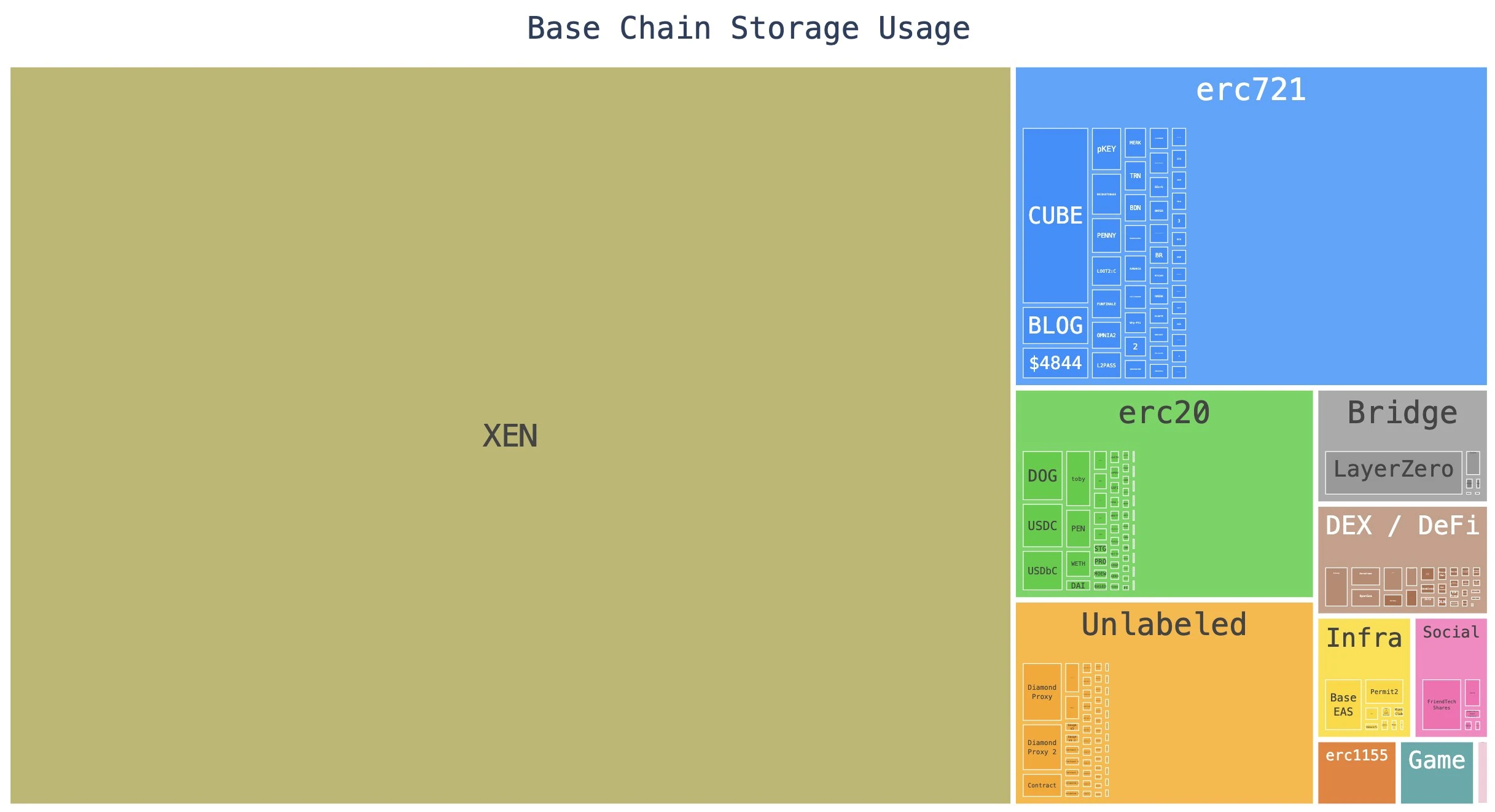
The above figure shows the current usage status of Base. The size of each rectangle = the state used by each type of contract. (Note: The method of generating this chart is similar to the previous research on ultra-high-resolution expansion of Ethereum).
What are the existing problems?
Problem one:
Due to the existence of XEN, 0.3% of Base users monopolize 67.8% of the blockchain network resources.
Problem two:
The state is permanent. Nodes on the Base network now need to permanently store and propagate this garbage data related to XEN.
Problem three:
Storage abuse may continue until Gas pricing is redesigned.
What impact does this have on blockchain expansion?
Whether it is expanding the blockchain network by 100 times or 1000 times, it requires effective utilization of computing resources. Inefficiently consuming the majority of blockchain network resources in this way is not feasible.
How bad is it?
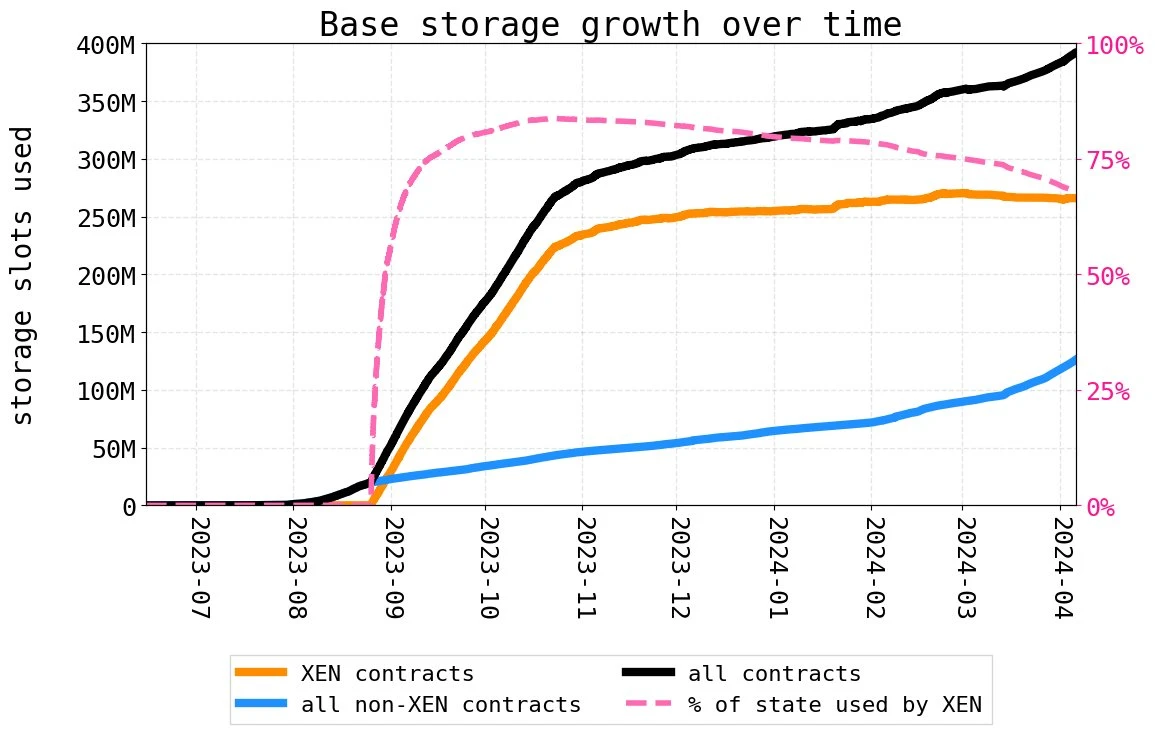
From an absolute perspective, the problem is still relatively small. The size of contract storage on the Base chain is only about 50 GiB (in comparison, the contract storage size on Ethereum is about 245 GiB). Over time, the severity of this problem is gradually decreasing. The share of XEN peaked in October, accounting for about 85% of network resources.
Has the problem been solved?
So far, there have been no effective measures to prevent future network resource abuse. Nothing can stop the emergence of one or ten new protocols similar to XEN, filling the network state with garbage data, especially as network fees continue to decline.
Is Base the only one with problems?
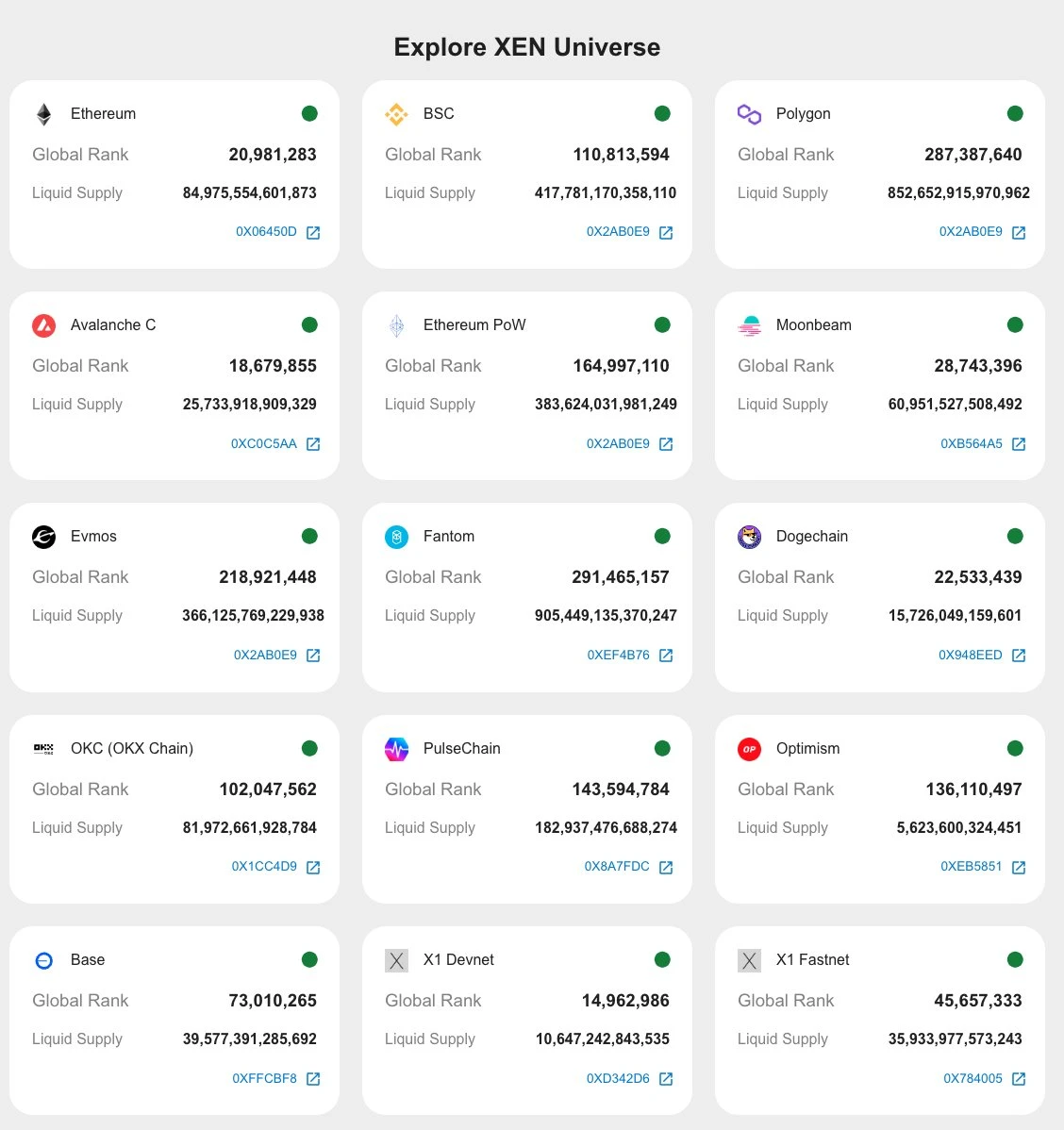
Not at all. XEN has a deep impact on every major EVM chain. For example, XEN is now the largest smart contract on Ethereum. In the past year, its usage accounted for 8.8% of all Ethereum network resources, and now the proportion has dropped to 3.5%.
Is XEN an isolated case?
XEN is just one example in a broad sense. When low-cost computing resources are combined with speculative activities, these resources will be used in unexpected ways. Cases such as blobscriptions, gas tokens, and Solana's ORE mining can all be classified as such activities.
What can we do?
In short, storage needs to be repriced to reflect the true burden it brings to the network. There are many ways to do this, and the impact on ordinary users varies. But fundamentally, pricing storage is difficult.
Why is pricing storage so difficult?
Most operations in transactions are easily priced because they occur instantly. However, storage activities are different.
Once you pay the storage fee, the data will be "permanently" stored by the network. Therefore, this is like pricing for a lifetime subscription plan. Sooner or later, every blockchain network will have to face the storage problem of this garbage data. I have been modeling some potential fixes, but it is still a work in progress.
免责声明:本文章仅代表作者个人观点,不代表本平台的立场和观点。本文章仅供信息分享,不构成对任何人的任何投资建议。用户与作者之间的任何争议,与本平台无关。如网页中刊载的文章或图片涉及侵权,请提供相关的权利证明和身份证明发送邮件到support@aicoin.com,本平台相关工作人员将会进行核查。


