Original Title: 《First quarter profit of US$4.5 billion, Tether enters Bitcoin mining, AI and education》
Author: Nina Bambysheva, Forbes
Translation: Luffy, Foresight News
During the time when FTX and other industry giants were falling, most areas of the cryptocurrency world were in collapse. However, in the midst of this storm, Tether stood out, showing a thriving trend.
Tether's stablecoin USDT market value soared to $111 billion, three times that of its closest competitor, USDC issued by Circle, headquartered in Boston. Due to the higher interest rates of US Treasury bonds (which make up most of the reserves supporting its stablecoin), Tether's business is enviable because its source of funds is essentially free. Unlike traditional banks, customers who deposit hard currency into Tether in exchange for USDT do not receive any interest.
In just the first quarter of 2024, Tether reported unaudited company "financial performance" of $4.5 billion and net assets of $11.4 billion. In 2023, the company reported a net profit of $6.2 billion, likely making it the most profitable company in the cryptocurrency field today. In comparison, the largest cryptocurrency exchange in the United States, Coinbase, had a full-year revenue of $3.1 billion and a profit of $95 million in 2023, with a net income of $1.2 billion in the first quarter of 2024, mainly due to the rise in cryptocurrency prices. Thanks to its partnership with Circle, approximately 20% of Coinbase's 2023 profit came from interest earned from the reserves supporting the stablecoin USDC.
With ample funds, Tether is now focusing on growth beyond stablecoins. Last month, the company, based in the British Virgin Islands, announced a strategic reorganization, opening three new departments in addition to stablecoins: Bitcoin mining, artificial intelligence, and education.
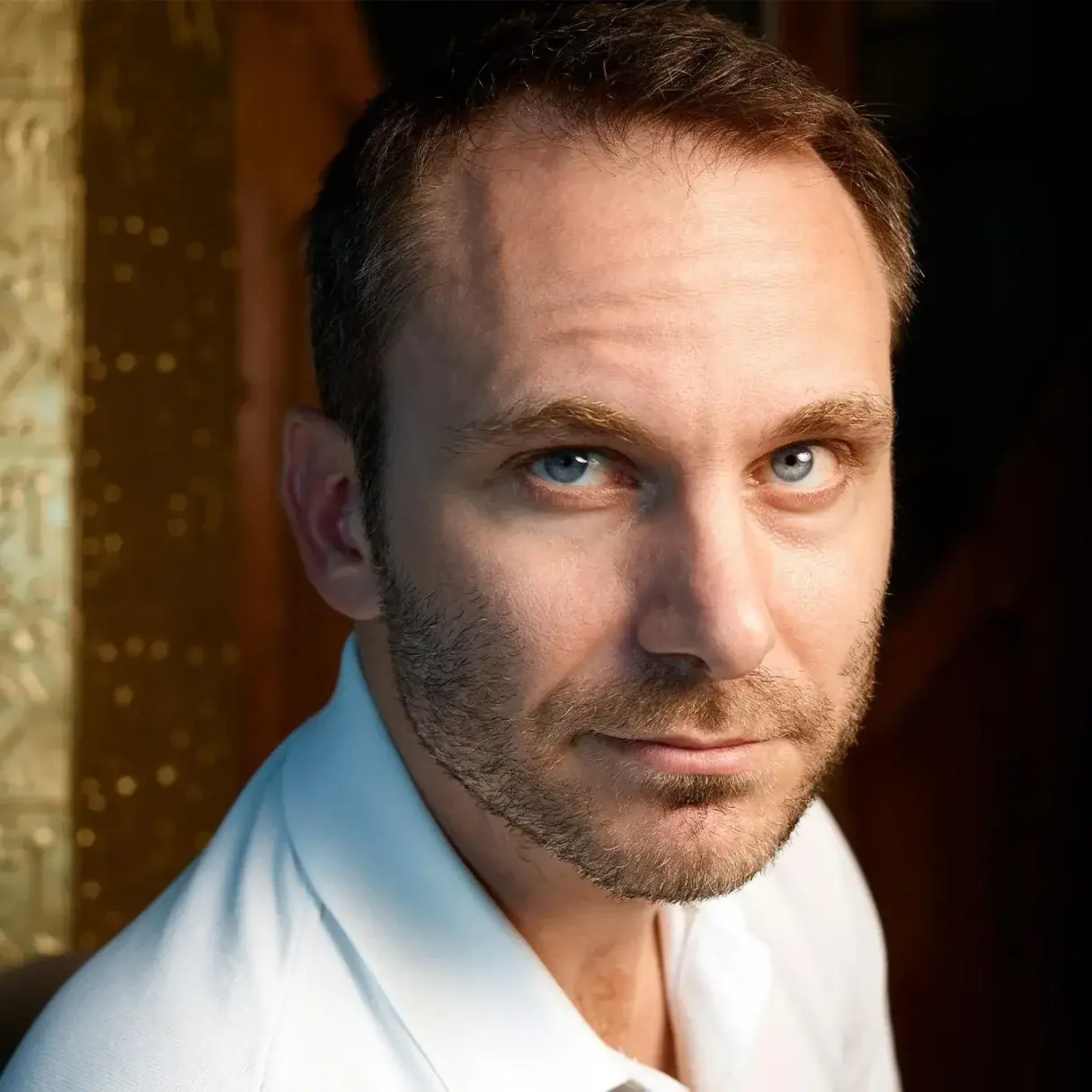
Paolo Ardoino, CEO of Tether
Paolo Ardoino, the newly appointed CEO of Tether, said, "The concept of cryptocurrencies eliminating intermediaries can be applied to many other fields," a position he has held as the company's Chief Technology Officer and spokesperson since 2017.
Tether's expansion plans are not just cautious business diversification, but also a philosophical issue. "We feel that 90% or even more of technology is built for the best case scenario, but no one builds technology for the worst case scenario," said the 40-year-old Ardoino. "If a disaster happens, I'm not saying it will definitely happen, but anything can happen, and we are not prepared for it."
Cryptocurrency historians will remember that Bitcoin was created by Satoshi Nakamoto in response to the 2008 financial crisis, when there was widespread skepticism about the stability and reliability of the existing global financial system. Ardoino believes that Tether will play an important role in creating what he calls sovereign technology that empowers people.
Ardoino said, "Having a flexible currency is a good thing, but if you only have a flexible currency and everything else is centralized, it will be destroyed quickly. One of our mottos is 'built for the apocalypse.'"
Paolo Ardoino grew up on a family farm in northern Italy. He started programming at the age of eight and later studied computer science and mathematics at the University of Genoa. After graduating in 2008, Ardoino became a military project researcher at the electronics and information technology company Selex Communications, focusing on high-availability elastic networks and encryption technology.
To seek opportunities outside of Italy, he moved to London around 2013 and soon after founded Fincluster, a startup company that builds cloud-based financial applications for consultants, fund managers, and institutions in London, Milan, and Lugano. In October 2014, one of his clients introduced him to Giancarlo Devasini, the Chief Financial Officer of Tether and its sister cryptocurrency exchange, Bitfinex. Devansini invited Ardoino to help expand the Bitfinex platform, which was becoming increasingly popular.
Ardoino was soon appointed as the Chief Technology Officer of both companies, and due to the low profile of Devasini and CEO Jean-Louis van der Velde, Ardoino became the spokesperson for Tether. According to Forbes' billionaire rankings, these three, along with Chief Legal Officer Stuart Hoegner, later became billionaires.
In December of last year, Ardoino officially took over Tether, while retaining his position as Chief Technology Officer of Bitfinex. He is also responsible for the strategic direction of Holepunch, a technology platform that allows developers to create serverless applications, launched by Tether, Bitfinex, and infrastructure platform Hypercore.
Ardoino stated that Tether's ownership structure has not changed. Chief Financial Officer Devasini remains the largest shareholder of the company, and former CEO van der Velde is still involved as an advisor. However, this has not stopped Ardoino from planning a new direction for Tether. Last month, the company announced a reorganization into four departments to develop its expanding business focus:
The Finance Department, responsible for managing USDT and overseeing the upcoming digital asset tokenization platform;
The Data Department, responsible for strategic investments in emerging technologies, including artificial intelligence and peer-to-peer platforms;
The Computing Power Department, focusing on Bitcoin mining and energy-related businesses;
The Education Department, supporting education and leadership programs.
Tether has made progress in each of these areas. Last year, the stablecoin giant participated in a $1 billion investment in a Bitcoin mining business called "Volcano Energy" in El Salvador, which will be powered by solar and wind energy. Tether also established its own Bitcoin mining operation in Uruguay. In September of last year, Tether revealed that it had spent $420 million to purchase 10,000 Nvidia H100 graphics processing units (GPUs) from the German-listed Bitcoin miner Northern Data. These GPUs are typically used by artificial intelligence companies looking to process large amounts of data. In exchange, Tether received a 20% stake in the company, which plans to rent out these chips to AI startups. Another novel investment by Tether was in April, when it spent $200 million to acquire a majority stake in Blackrock Neurotech, a biotechnology company based in Salt Lake City that manufactures brain implant chips, aimed at enabling people with neurological diseases or paralysis to "eat, drink, operate robotic arms, and send emails through thought."
According to Ardoino, Tether's staff doubled last year to about 100 people, and he personally interviews every applicant. "I don't want yes-men," Ardoino said. "I want people to tell me what they think about Tether, and what we've done right and wrong."
In the area of Bitcoin mining, Ardoino's goal is to capture a 5% market share, which would place it among the top global miners. "If you think of Bitcoin as the ultimate form of money, built for the end of the world, then you wouldn't want most of Bitcoin mining to be concentrated in one country. So, the way to achieve this goal is to invest in different regions," he explained. "We start from South America and plan to expand to different regions globally to ensure the decentralization of Bitcoin mining."
"In terms of the competition for Bitcoin mining, the key is how much capital you can invest. They have already invested about $500 million. With that kind of funding, you can go a long way," said HC Wainwright analyst Kevin Dede. Adam Sullivan, CEO of the publicly traded company Core Scientific, added, "They are now the largest investors in the Bitcoin mining space. This is natural for them, as it is the real driver of their business growth." Sullivan pointed out that, given Tether's large holdings of digital assets, the recent surge in Bitcoin prices has boosted its profits. If Bitcoin prices continue to rise, mining Bitcoin will expand profits.
However, despite making significant progress in Bitcoin mining, Tether will face greater challenges in entering the field of artificial intelligence. In addition to striking deals with companies like Northern Data, Tether is also seeking internal development, building large-scale models and integrating AI capabilities into existing products. Job postings for AI engineers and AI research directors are listed on Tether's website. "I believe that AI can play a bigger role and will not be influenced by the political biases of a minority elite running the world's largest AI projects," Ardoino said. He was referring to most of the companies currently driving AI development, including Microsoft, OpenAI, and Google. "We believe that AI should be free from intermediaries, just like currency should be free from intermediaries."
Rob Toews, a partner at Radical Ventures, expressed skepticism about Tether's move into AI. "Acquiring GPUs and renting them out to AI companies is a more accessible strategy to enter, but I find it hard to imagine Tether becoming a reliable competitor in the field of building multimodal AI models."
Through its education department, Tether will offer courses and workshops covering blockchain technology as well as AI, coding, and design. The company has already partnered with the Georgian Digital Industry Academy and Thailand's largest local exchange, Bitkub, to carry out several programs. Ardoino stated, "Education is the cornerstone of this journey and is crucial for promoting economic prosperity and sustainable development."
Given the chaotic history of cryptocurrencies and Tether's lack of audited financial statements, there is reason to be concerned about the source of the company's new investments. According to the company's financial evidence, most of its first-quarter profit of $4.52 billion came from the returns on its Bitcoin and gold positions. Ardoino insists that Tether's investments come from its profits, not its customer reserves.
Austin Campbell, a part-time professor at Columbia Business School and a consultant for blockchain companies, said, "If people think they are starting to use customer reserves to invest in these things, Tether could quickly fall." "I've always said that the problem with Tether is not how much they hold now, but how much they might hold in the future, because they are not restricted."
Campbell also warned that Tether's dominant position in stablecoins is far from guaranteed in the long term: "With the introduction of stablecoin regulations and the regularization of regulation, Tether will have to start complying with these regulations locally, or leave those jurisdictions."
Tether's dominant position has already been challenged. According to data from DefiLlama, although USDT still holds a 69% share in the stablecoin market, its transaction volume is relatively lagging. According to analysis by payment giant Visa and enterprise blockchain data platform Allium Labs, Circle's USDC had a transaction volume of 178.6 million transactions in April 2024, surpassing USDT's 173.9 million transactions.
Furthermore, a recent report from Standard & Poor's Global Ratings shows that the new bipartisan stablecoin bill proposed by Senators R-Wyo and DN.Y. in April will limit the issuance of stablecoins by institutions without a banking license to a maximum of $10 billion, which could stimulate competition from traditional banks.
Ardoino stated, "We believe all of these investments are crucial for Tether… We believe these investments can change the lives of people in emerging markets and developing countries. We hope to be leaders in human evolution."
免责声明:本文章仅代表作者个人观点,不代表本平台的立场和观点。本文章仅供信息分享,不构成对任何人的任何投资建议。用户与作者之间的任何争议,与本平台无关。如网页中刊载的文章或图片涉及侵权,请提供相关的权利证明和身份证明发送邮件到support@aicoin.com,本平台相关工作人员将会进行核查。


