Author: Deep Tide TechFlow
From April 5th to 26th, Ethglobal held a hackathon event called Scaling Ethereum 2024.
The event brought together some of the top thinkers and experts in the Ethereum ecosystem, providing rich Web3 resources (such as mentors, partners, and software) to enable teams to accomplish great things in just over two weeks.
Here are the 8 projects that made it to the final round of the competition.
Monadic DNA: Privacy protection for personal genetic data

Monadic DNA is an illustrative example that demonstrates what a new paradigm of respecting the privacy of personal genomic services might look like.
We envision a future where people own their own genomic data without needing to disclose it to any provider and still be able to enjoy the benefits of this rapidly developing field.
Once someone obtains the original DNA file from a provider, the Monadic DNA portal allows them to upload the data and receive a DNA passport.
In the background, the original data is processed (and then discarded), with some of the data stored as a secret on the Nillion network. The actual DNA passport returned to the user contains an identifier, some useful hash values, and metadata about the secret stored on the Nillion network.
Off-chain computation-based on-chain proofs provide an open, scalable paradigm for respecting anonymity and privacy in medicine.
SignKaleidoscope: Visualizing signature paths through dynamic graphics
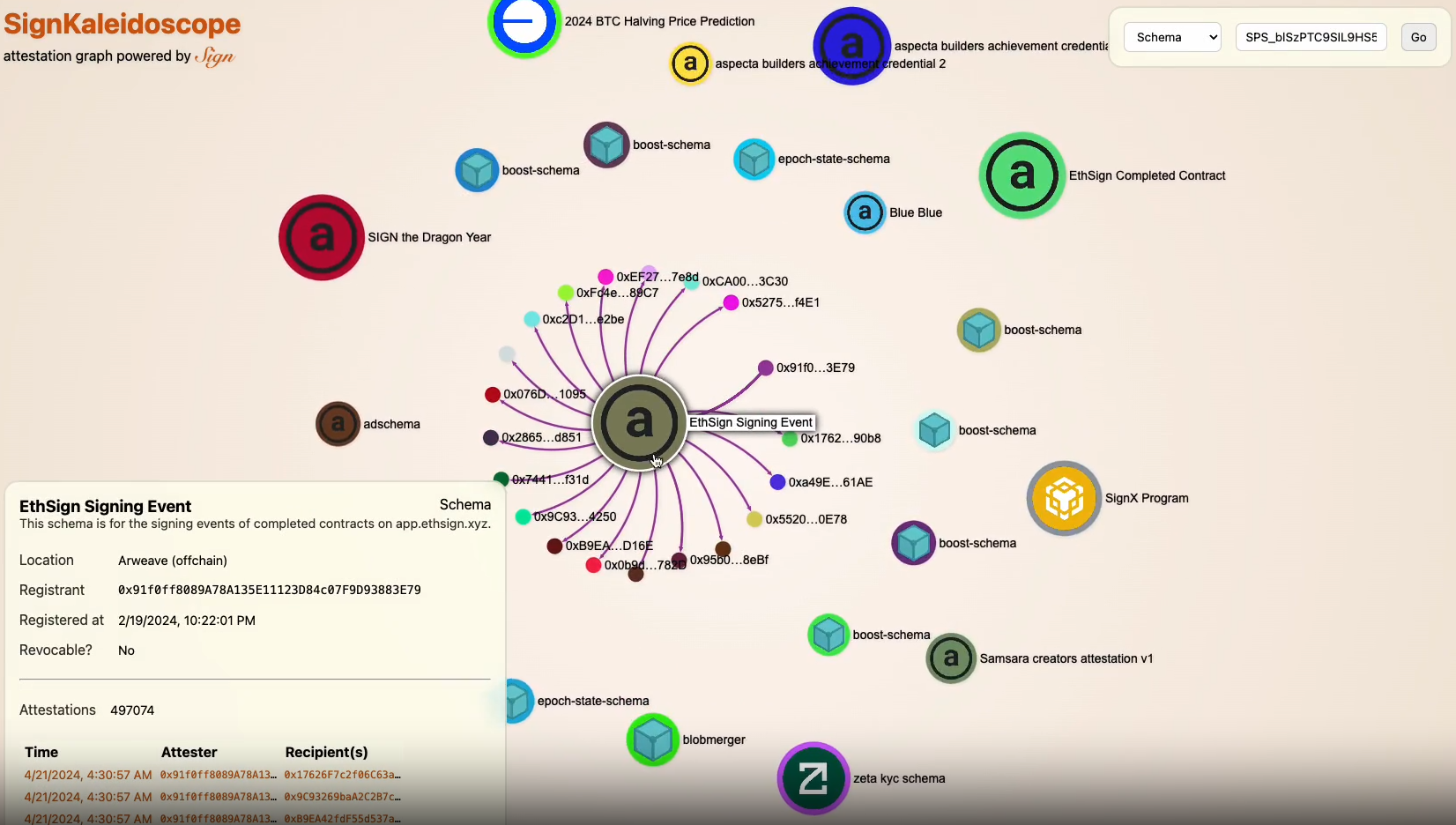
SignKaleidoscope is a Sign Protocol browser with interactive graphic visualization capabilities.
Explore accounts, patterns, and proofs by clicking on nodes and edges in the chart, using the search field, or navigating links in the overlay for detailed information. Drag to pan the chart and scroll to zoom in and out. When new entities are discovered, nodes and edges will automatically appear and connect in the chart.
EthereumL10nService: Decentralized translation network with AI and human verification
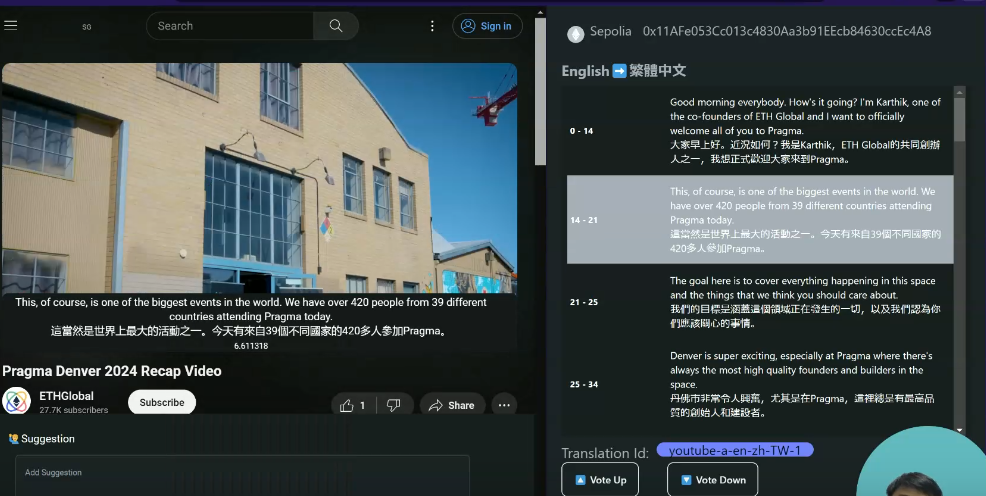
In order for Ethereum to reach the next billion users, we need to break the language barrier. Only 16% of the population speaks English, yet over 60% of the content is in English.
Therefore, the project is establishing an incentive network for AI translation agents and human verifiers.
In the project demo, it translated videos from the Pragama Denver Playlist on YouTube. It utilized OpenAI Whisper for ASR to convert ASR to the original English transcript, then prompted OpenAI LLM to provide the final translation (Traditional Chinese) in vtt format.
The vtt subtitle file is uploaded to IPFS for decentralized AI processing and execution; then through a Chrome extension, we can see the translated subtitles, and end users can provide feedback by voting in favor or against, similar to StackOverflow. These votes will use the user's wallet to create cryptographically proven evidence and send it back to our server.
This way, we can avoid abuse and further calculate incentive distribution based on contributions.
TxFusion: Executing multiple transactions in one call and signature
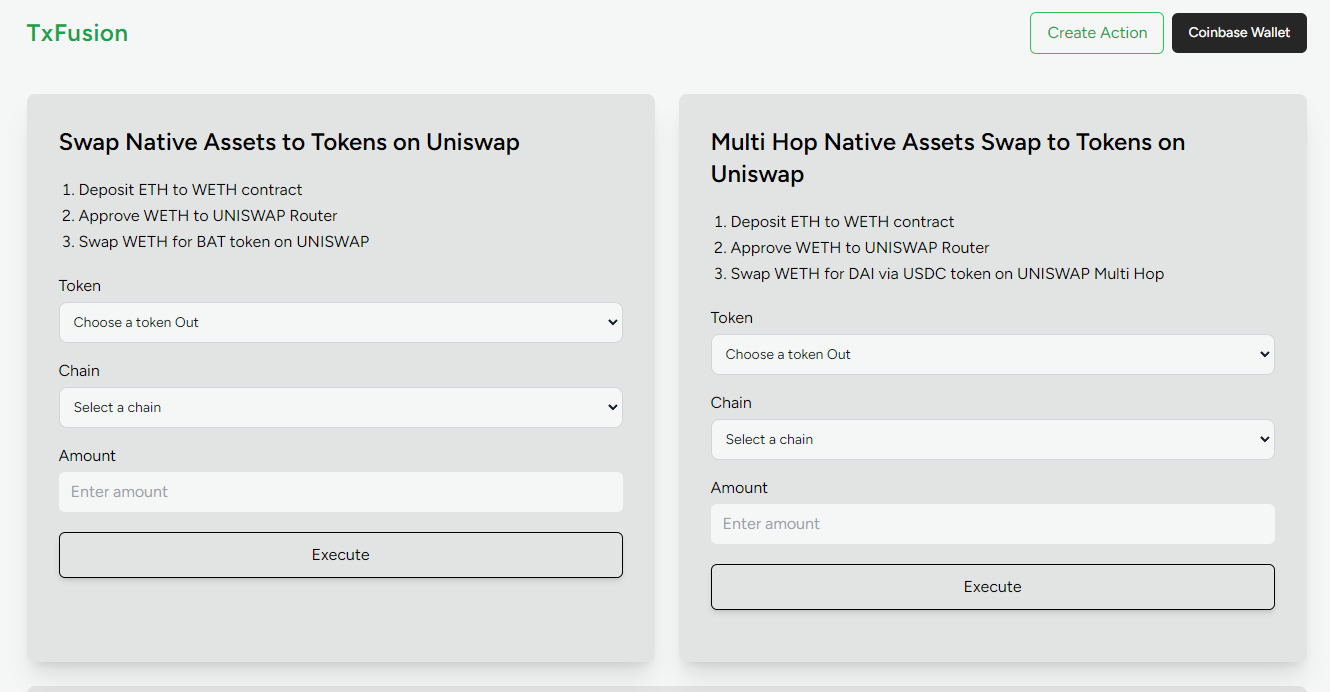
TxFusion is a platform designed to simplify and improve the user experience of managing multiple DEFI transactions. It utilizes the new EIP5792 standard, introducing a new wallet method called wallet_sendCalls. This method allows users to create batch transactions, enabling them to execute multiple operations through a single call and signature.
DeFi users often face the complexity of managing a large number of transactions across various protocols such as Uniswap, Compound, and Aave. This process can be time-consuming and cumbersome, leading to a less than ideal user experience. Executing multiple transactions also requires more gas fees.
The project addresses this challenge by providing a unified platform to simplify the execution of multiple DeFi transactions.
forge flamegraphs: Solidity development optimization tool
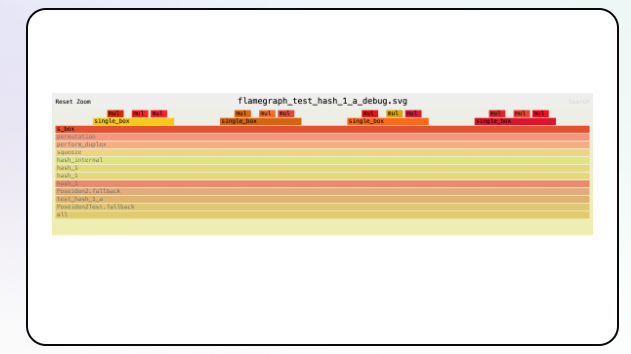
When we have some reliable code and want to optimize it, the tools currently available to help are limited. There is no open-source Solidity Profiler that is actively maintained and compatible with Foundry or Hardhat. This makes the gas optimization process very time-consuming and, of course, requires a lot of skill.
For these reasons, only experienced Solidity developers are good at gas optimization because they are better at guessing and drilling down into which part will produce more gas.
Flamegraphs are used to analyze system software and find performance bottlenecks. We have built a forging plugin that can parse low-level debugging traces to generate folded stack traces graphically, providing a clearer view of which areas should be optimized, thus lowering the development threshold.
CreateToolBelt: Smoother deployment of smart contracts
CreateToolBelt is a comprehensive toolkit designed to address the multiple challenges developers face when deploying contracts on the Ethereum blockchain.
The suite consists of three main components: Create2Deployer, Create2SafeDeployer, and Create3Deployer.
Create2Deployer allows for deterministic contract deployment using the CREATE2 opcode, enabling developers to deploy contracts to predictable addresses. We have enhanced this with Create2SafeDeployer, which takes a novel approach to prevent frontrunning by utilizing the first 20 bytes of the salt linked to msg.sender, ensuring that only the deployer can execute in the expected manner. Finally, Create3Deployer extends these capabilities to multiple blockchains, allowing deployment to the same address on different chains using only the deployer's address and salt, which is a groundbreaking step for developers handling interdependent contracts across multiple platforms.
ChainSweep: Full-chain version of the blockchain "Minesweeper" game
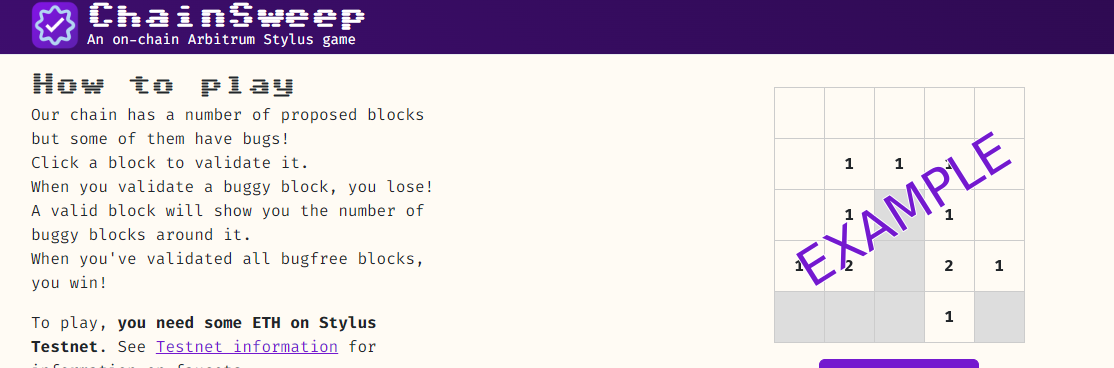
The game is a blockchain implementation similar to the popular "Minesweeper" game.
In the blockchain domain, you must verify blocks and avoid including faulty blocks. When you click on a defective block, you lose. When you verify that all blocks are error-free, you win.
The game runs entirely on-chain (Arbitrum Stylus testnet). Every move you make is a separate transaction.
The crucial information in the game is the exact locations of the errors (fields that should not be clicked). If the smart contract selects these locations and stores them on the chain, winning the game by finding the errors using a block explorer or other tools would be trivial. To prevent this, the contract only stores fields that have been publicly revealed so far. When a player makes a new move, the smart contract regenerates potential error allocations consistent with the moves made so far on the field. This makes the game still unpredictable.
BlobFusion: Making blob space affordable for everyone
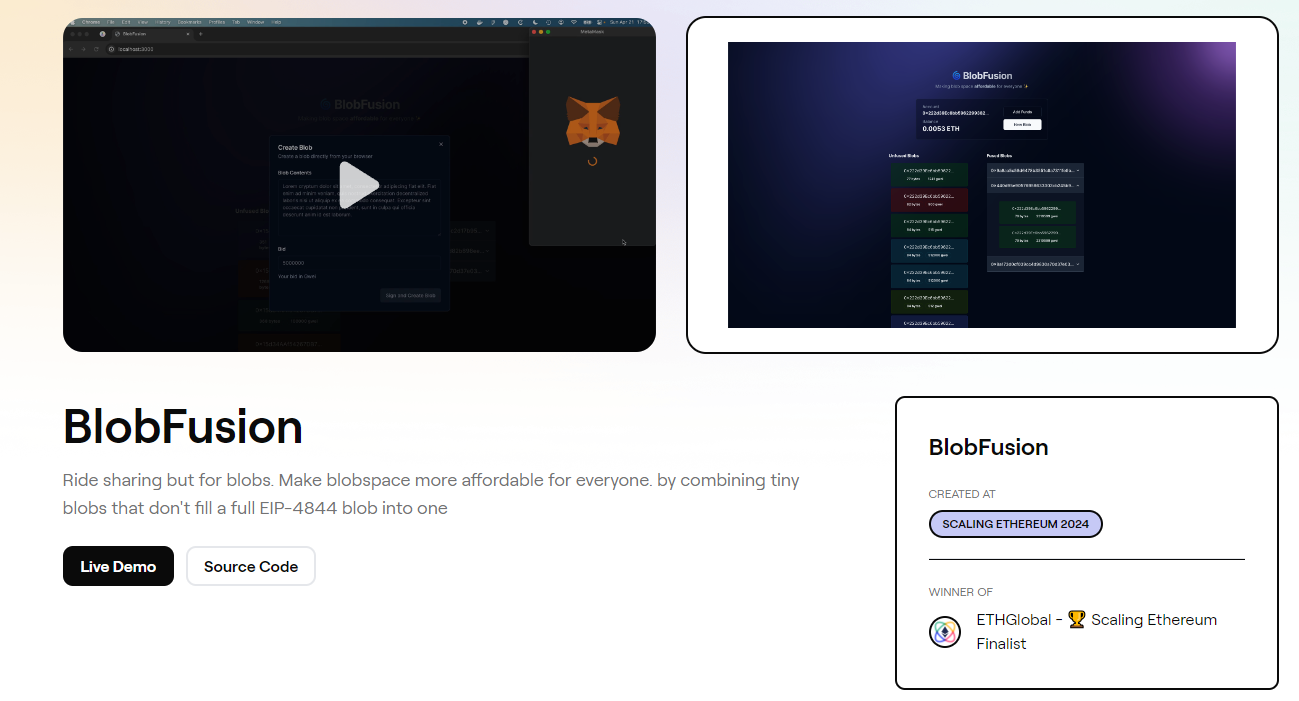
A month ago, Dencun launched and brought us EIP-4844 and blob.
The issue is: you always have to submit a complete 128KB blob. If your data is less, you still need to submit 128KB. This takes up unnecessary space and costs a lot of money.
BlobFusion allows you to share blobs with others by packing smaller blobs into a regular blob. This is to maximize blobspace efficiency (=beneficial to the network) and cost (=beneficial to users).
How it works?
- User sends some ETH to the Arbitrum smart contract
- Server indexes the transaction and allows the user to submit a blob
- User sends the server a signed blob along with the fee they are willing to pay
- Server saves the blob to the database
- Server periodically attempts to construct a blob that meets all conditions (e.g., shared cost of the blob, total of all bids, etc.)
免责声明:本文章仅代表作者个人观点,不代表本平台的立场和观点。本文章仅供信息分享,不构成对任何人的任何投资建议。用户与作者之间的任何争议,与本平台无关。如网页中刊载的文章或图片涉及侵权,请提供相关的权利证明和身份证明发送邮件到support@aicoin.com,本平台相关工作人员将会进行核查。


