Persistence one ($XPRT) is one of the first Cosmos application chains to enable IBC, CosmWasm, and Liquidity Staking Module (LSM). By continuously focusing on POS and liquidity staking-related products, it has built a liquidity staking and restaking framework for the Cosmos ecosystem.
On December 5, 2023, the Cosmos community voted to allocate 600,000 ATOMs to pSTAKE for liquidity staking growth. pSTAKE shares 15% of its liquidity staking income with the Cosmos Hub.
Persistence
Ecosystem
The Map of Zones visualization data shows the influence of Persistence in the Cosmos ecosystem:
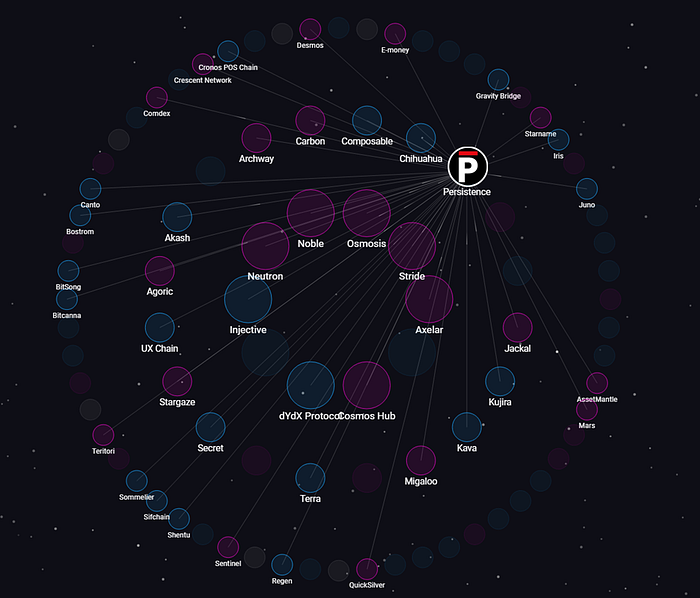
According to official website data, Persistence's ecosystem TVL is $14.78 million, with an IBC trading volume of $15 million in the past 30 days and an average transaction cost of less than $0.005.

Map of Zones data shows that Persistence.one has established 121 channels with 44 other zones in the Interchain network. This indicates that it is a highly interconnected node capable of interacting with many other zones through multiple channels.
74.7% of the network token ($XPRT) is staked, and a higher staking rate usually indicates a higher level of security and participation in the network. The staking annualized return rate is 16.7%.
Persistence's infrastructure consists of 6 nodes and 100 validators, collectively ensuring the decentralization and security of the network.
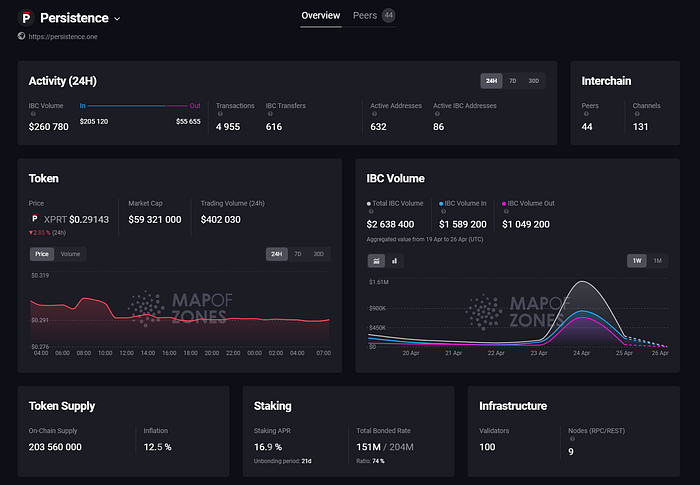
In the above ecosystem data, IBC (Inter-Blockchain Communication) is a core protocol in the Cosmos ecosystem used to achieve interoperability between different blockchains. Through IBC, independent blockchains can seamlessly transfer tokens and other data types, making it possible to build cross-chain applications. The IBC transaction volume reflects the scale of value inflow and outflow from the Persistence chain to external sources.
In the past 24 hours, Persistence's IBC transaction volume was $260,800, with 4955 transactions, including 616 IBC transactions. There were 932 active addresses, with 86 active IBC addresses. Importantly, the inflow through IBC has consistently exceeded the outflow, indicating an increasing amount of value flowing into Persistence for staking.
The staking platform pSTAKE is an important product for the Persistence chain and the Cosmos ecosystem.
Technical Support
Persistence supports the CosmWasm framework, allowing developers to write secure, interoperable smart contracts in Rust. Additionally, DApps developed using the CosmWasm framework can run cross-chain through IBC, providing convenient, secure, and efficient technical support for liquidity staking.
Persistence is connected to 54 Cosmos application chains through IBC for trustless communication, transfer, staking, and restaking of tokens, laying the ecological foundation for liquidity staking and restaking in the Cosmos ecosystem.
Interchain Accounts (ICA) are used to implement ICA Liquid Staking. Interchain Accounts allow an on-chain account to perform operations on another chain, enhancing the efficiency and flexibility of staking and restaking.
Liquidity Staking
Cosmos Ecosystem Staking and Network Security
In the Ethereum ecosystem, the threshold for validator nodes is staking more than 32 ETH. Platforms like Lido enable users to stake small amounts of ETH, aggregating these staked funds and allocating them in 32 ETH units to validator node operators, thereby promoting an increase in the number of Ethereum validator nodes and enhancing the security and decentralization of the Ethereum network.
In the Cosmos ecosystem, liquidity staking involves two roles—validators and delegators.
Delegators, or stakers, can choose the validator node to delegate to when staking.
Validators run hardware and Cosmos SDK-based blockchain applications to achieve consensus with other validators, propose and validate new blocks on the chain.
If a validator engages in negative behavior, the delegators to the validator node will be subject to corresponding penalties. In cases of improper behavior by the validator, including accidental or malicious prolonged offline activity, the staked deposit of the delegators will be destroyed or reduced by 0.1%. In cases of extremely malicious behavior, such as double-signing violations, where the validator signs more than once for a given block height, the staked deposit will be reduced by 5%.
It is evident that the essence of liquidity staking in the Cosmos ecosystem is to prevent malicious behavior through economic incentives and potential penalties. Validators and delegators share responsibility in maintaining network efficiency and security while receiving token rewards.
pSTAKE Staking
pSTAKE ($PSTAKE) is part of the investment portfolio of Binance Labs and Coinbase Ventures.
pSTAKE provides a streamlined staking process for the Cosmos ecosystem. Users only need to select the token to stake and the chain they are on to begin staking.
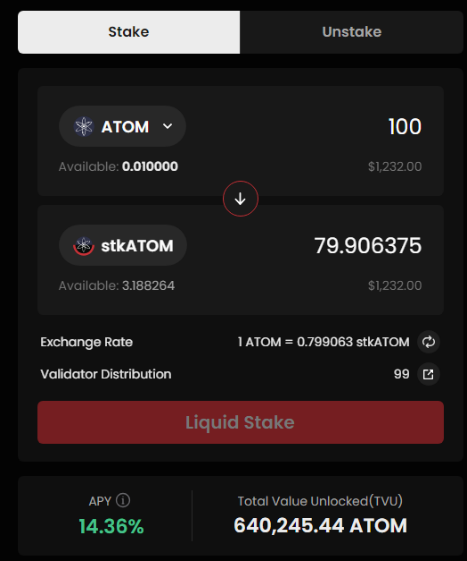
After staking, the pSTAKE protocol issues the corresponding staking equity tokens to the wallet. For example, staking ATOM can yield stkATOM.
Automatic Compounding
Taking stkATOM as an example, the user's daily staking income is in ATOM, a portion of which is automatically reinvested for further earnings. As the earnings are reinvested, each stkATOM corresponds to an increase in staked ATOM, allowing users to receive more ATOM when unstaking. Therefore, the user's staking income is reflected in the growth ratio of stkATOM/ATOM.
Unstaking
When unstaking, users need to wait for 21-25 days, or they can pay a 1% fee for instant unstaking. When unstaking, the corresponding stk assets are destroyed.
Staking Yield
The assets supported by pSTAKE for staking and the current yield situation are as follows:
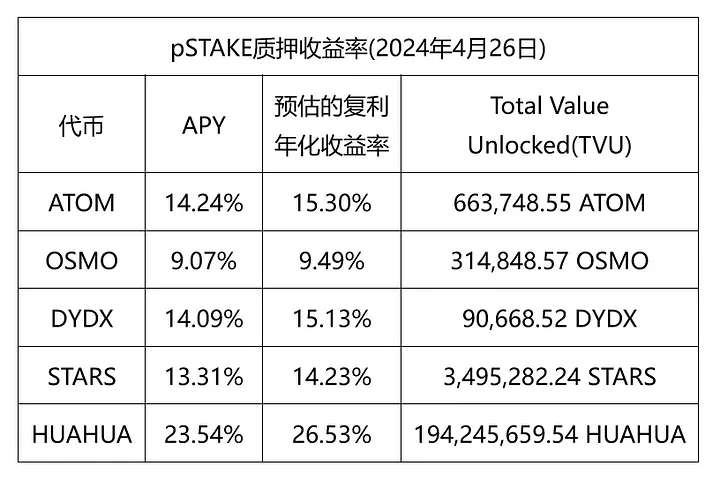
The estimated compounded annualized yield is calculated based on the current day's yield rate remaining constant.
Notes
pSTAKE currently supports staking of ATOM on the Cosmos Hub, OSMO on the Osmosis chain, DYDX on the dYdX chain, STARS on Stargaze, HUAHUA on Chihuahua, and the five tokens minted on the Persistence chain.
When users choose to stake native chain tokens, the pSTAKE staking process involves two steps: crossing assets to the Persistence chain through IBC and then utilizing the liquidity staking module of the Persistence chain to stake the assets.
Therefore, on pSTAKE, regardless of staking assets from any chain, it is necessary to hold a certain amount of the base token of the Persistence chain—$XPRT as GAS. Of course, the GAS on the Persistence chain is very low.
Staking Derivatives
Persistence and even the Cosmos ecosystem have launched more stk asset derivative products.
For example, in DEX products, stkATOM can be directly exchanged for ATOM without unstaking or paying a 1% fee. Additionally, the combination of stk assets and native assets can be used to provide liquidity in DEX, yielding higher returns. For example, in Dexter under Persistence, the expected annualized return rate for stkDYDX+DYDX is 45.82%.
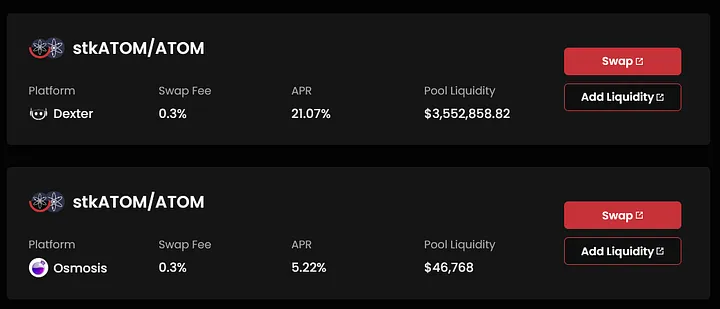
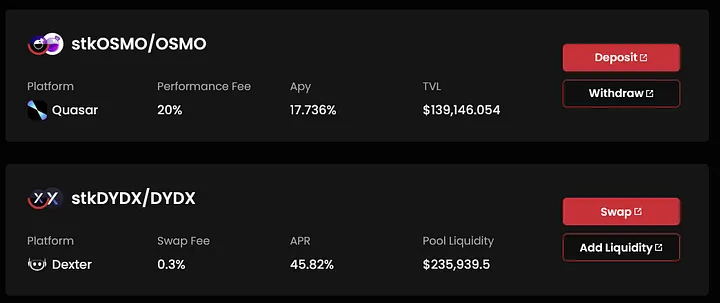
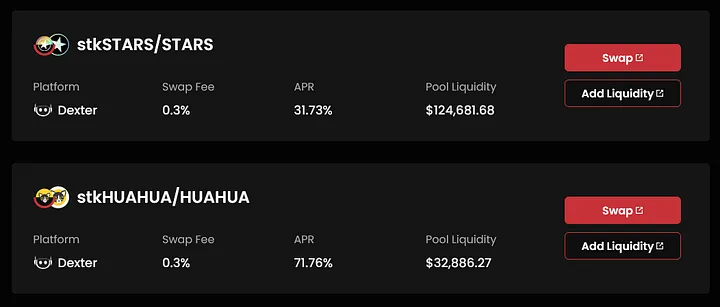
$XPRT Staking
As an independent blockchain, Persistence also requires staking to enhance network security.
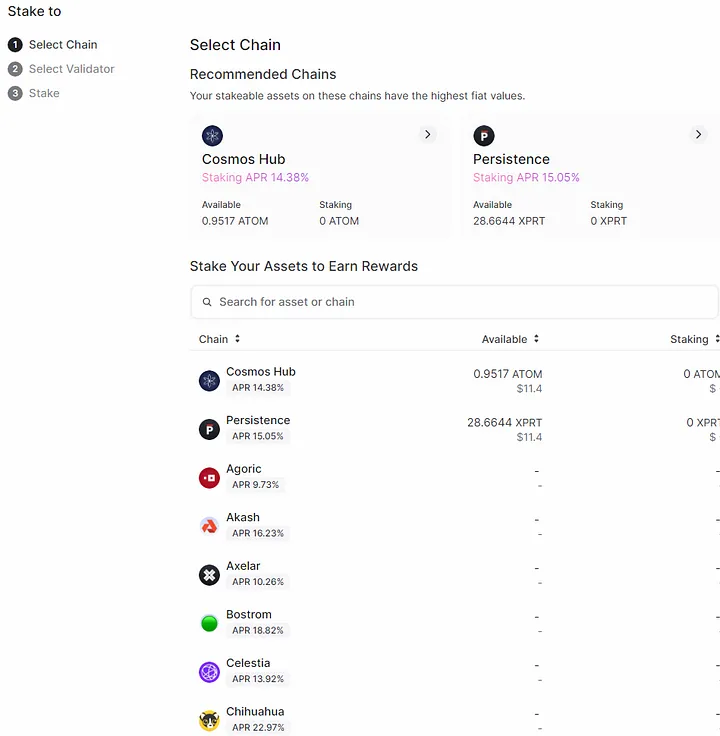
Staking $XPRT can be easily done on the Persistence official website or the Keplr wallet.
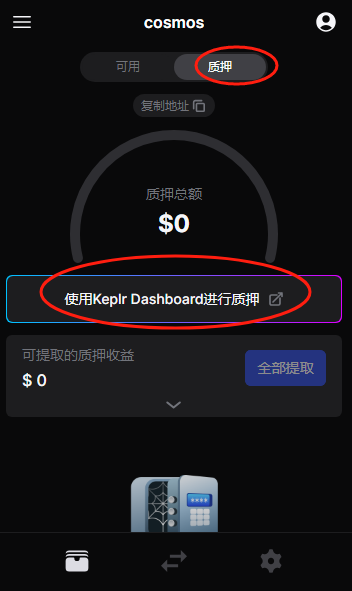
After selecting the Persistence network, users can choose the validator node they want to stake $XPRT with.
Staking Security
As a liquidity staking platform, Persistence is an important cornerstone of security in the Cosmos ecosystem.
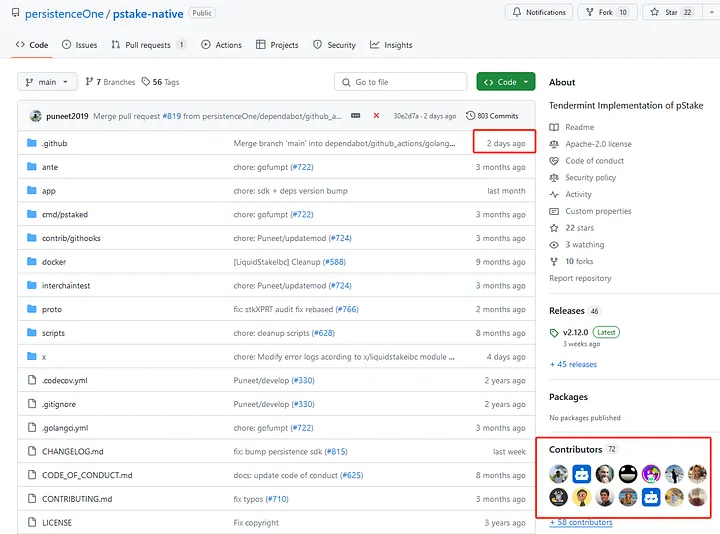
Both Persistence and pSTAKE are open-source programs, providing a level of security. The pSTAKE program has contributions from 72 developers, with the most recent code commit being 2 days ago.
Furthermore, Persistence and pSTAKE collaborate with multiple security institutions to provide comprehensive support for the security of staking and restaking. These security institutions include:
- Well-known blockchain and crypto security and audit institutions: Halborn, PeckShield, Certora, Hexens, and Notional
- Global security research and consulting company: Trail of Bits
- Smart contract and related security audit and consulting institutions: Solidified, ConsenSys Diligence, Oak Security
- Leading DeFi bug bounty platform: Immunefi
- Blockchain security real-time monitoring and alert network: Forta
Restaking
According to the Persistence blog, the project team is building the Restaking infrastructure in Cosmos, allowing users to deposit liquidity staking tokens (stkATOM, stTIA, stkDYDX, etc.) into Persistence through pSTAKE, Stride, and Quicksilver. This enables them to restake their assets and secure additional chains while earning additional rewards.
The Persistence restaking module supports staking requests for various assets, including staking equity tokens, stablecoins, LP tokens, and more.
Restaking Alliance
The Persistence restaking module is developed based on the Alliance module. Alliance is an open-source Cosmos SDK module built by Terraform Labs, enabling assets to be staked from one blockchain to another, creating mutually beneficial relationships through cross-chain staking.
For example, after staking corresponding assets on Persistence, the stakers of stkATOM and stTIA join the Persistence restaking asset alliance. Stakers of stkATOM and stTIA can receive restaking rewards, as well as $XPRT.
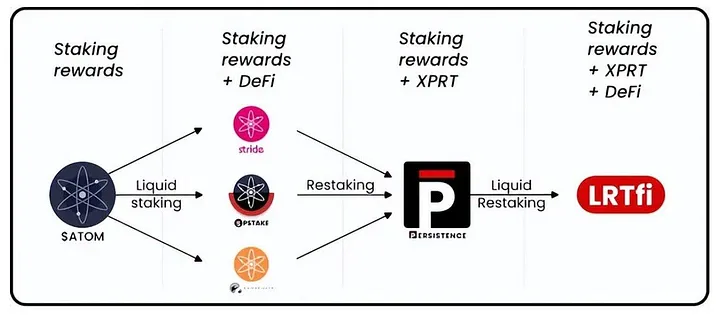
The restaking alliance shares staking rewards, with stakers of various assets allocated rewards based on the asset's reward weight. The reward weight for $XPRT is 1, and the reward weight for other assets is determined and adjusted through decentralized governance.
For example, assuming the reward weights for stkATOM and stTIA are 0.4 and 0.2, if the restaking asset alliance only includes $XPRT, stkATOM, and stTIA, the reward distribution for these three asset stakers would be:
$XPRT: 1/(1+0.4+0.2)=62.5% stkATOM: 0.4/(1+0.4+0.2)=25% stTIA: 0.2/(1+0.4+0.2)=12.5%
This reward allocation mechanism for the restaking asset alliance forms a community of interests, promoting security and decentralization within the Cosmos ecosystem.
Restaking Yield Source
The tokens used for restaking will be locked and proportionally minted into native tokens, which will be staked by the module to validators in the role of delegators.
For example, tokens staked such as stkATOM and stTIA will be locked by the Persistence restaking module and proportionally minted into $XPRT. These $XPRT will be staked to validators, and the staking rewards obtained will be distributed to the stakers of stkATOM and stTIA.
This is the source of restaking yield for Persistence, further strengthening the security and liquidity of the Cosmos ecosystem.
Conclusion
Persistence provides an effective and secure economic infrastructure for liquidity staking and restaking in the Cosmos ecosystem. Through its liquidity staking products, Persistence is gradually deepening its influence in the Cosmos ecosystem, bringing higher security, asset liquidity, and ecosystem participation to the system.
Through innovative restaking solutions, Persistence has established an economic alliance for restakers. This alliance forms a cross-chain community of interests for restakers, enhancing mutual security and increasing the decentralization of the restaking alliance within the Cosmos ecosystem.
免责声明:本文章仅代表作者个人观点,不代表本平台的立场和观点。本文章仅供信息分享,不构成对任何人的任何投资建议。用户与作者之间的任何争议,与本平台无关。如网页中刊载的文章或图片涉及侵权,请提供相关的权利证明和身份证明发送邮件到support@aicoin.com,本平台相关工作人员将会进行核查。


