Koreans not only trade cryptocurrencies but also trade US stocks.

CN
11 months ago

As the infrastructure and platforms supporting the US stock market continue to improve, new user groups may enter the market.

Author: Heechang : : FP, Four Pillars Co-Founder

Translated by: Deep Tide TechFlow

Streamlined Version

Korean investors currently hold over $100 billion in US stocks. Since January 2020, trading volume has increased 17 times.

The current infrastructure for Korean investors trading US stocks has many limitations, including high fees, lengthy settlement times, and slow withdrawal processes, creating opportunities for tokenized or mirrored on-chain stocks.

In the issuance space, Backed Finance holds a 90% market share, but its total locked value (TVL) is only $18 million, which is minuscule compared to the traditional stock market. Additionally, @injective recently released a white paper on iAssets, proposing a new on-chain stock model.

Each tokenized/mirrored project is issued on different networks, from L2 to L1, and even private L1s. Interoperability protocols like @LayerZero_Core and chain abstraction protocols like @UseUniversalX will play a key role.

As the infrastructure and platforms supporting the on-chain US stock market continue to improve, more Korean traders will enter the market, representing a huge opportunity.

Boredom in the Korean Market Leads to Crypto Trading

What investment opportunities are available in Korea? They include stocks, real estate, bonds, funds, cryptocurrencies, etc.

  • Real estate prices are high.

  • The yields on bonds/funds are only slightly higher than savings accounts.

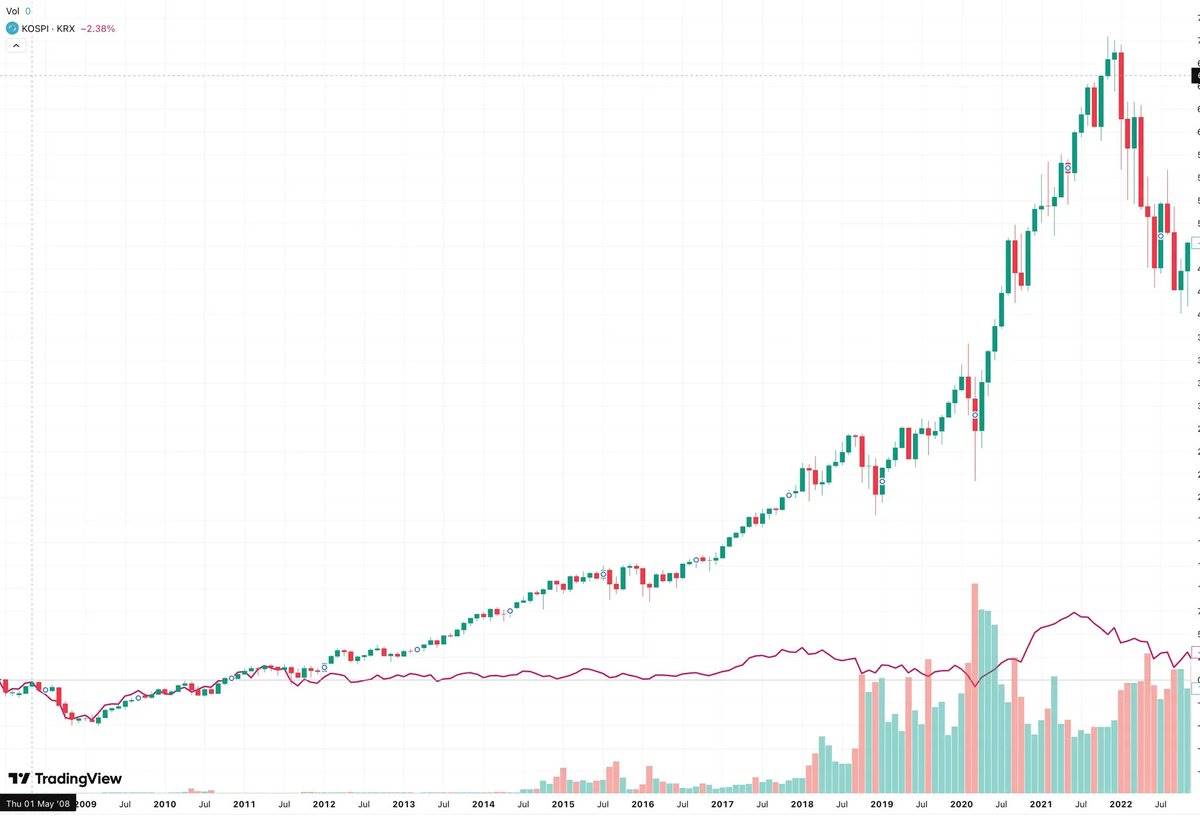
  • The Korean stock market index KOSPI is jokingly referred to as "Box-PI" because its chart has shown almost no growth over the past 20 years. People often say, “국장 탈출은 지능 순” (“Smart people don’t trade Korean stocks”). Imagine if ETH's price remained unchanged for 20 years; who would still invest in it?

*The candlestick chart is the Nasdaq index, with the magenta line at the bottom representing the KOSPI index since 2008.

Source: NAS100 and KOPSI

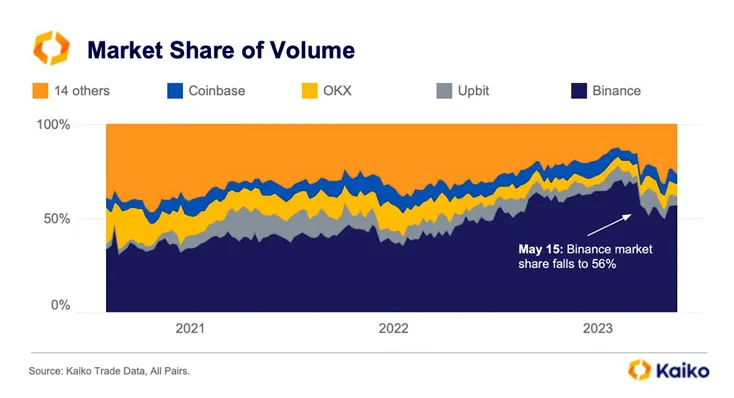
From this, we can see where traders are heading. Korea has a population of 50 million, accounting for 0.6% of the global population, yet its cryptocurrency trading volume accounts for 10% of the global total. Every token issuance project views Korea as an important market.

Source: Anthony Pompliano's "The State of Crypto Market Structure"

In the absence of alternatives, the trading volume and interest in cryptocurrencies will not disappear. However, anything related to cryptocurrencies, blockchain, tokens, and altcoins is viewed as a scam.

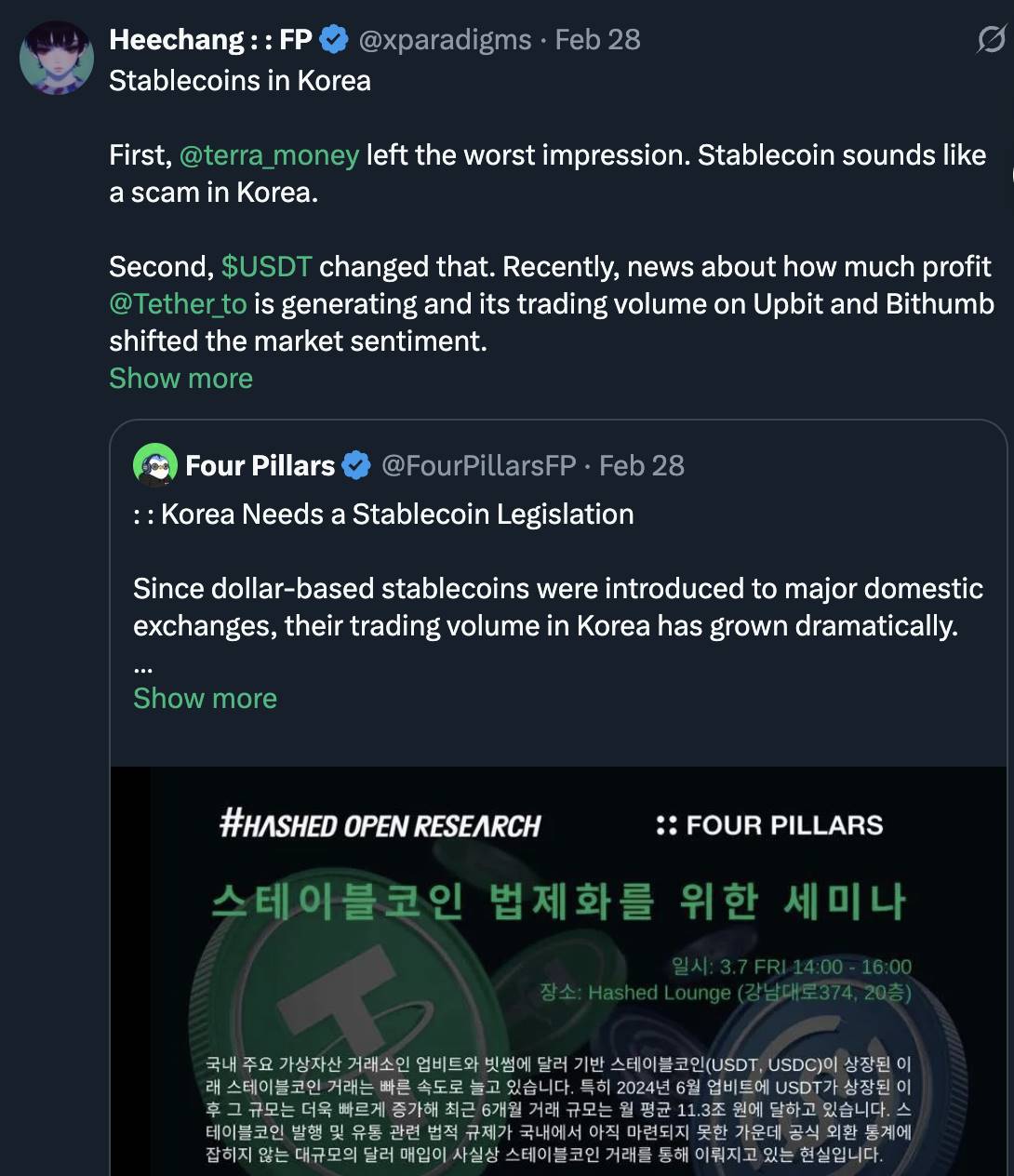
Case 1: @terra_money left the worst impression. People believe stablecoins are scams. (Recently, sentiment has changed somewhat, and we (@FourPillarsFP @FourPillarsKR) are working to accelerate this shift.)

Source

Case 2: The token projects led by Korea from 2021-2022 were simply scams. Retail investors saw large institutions issuing tokens, but these projects were just empty promises. They were even worse than meme coins.

(Not) Trading Cryptocurrencies but Trading US Stocks

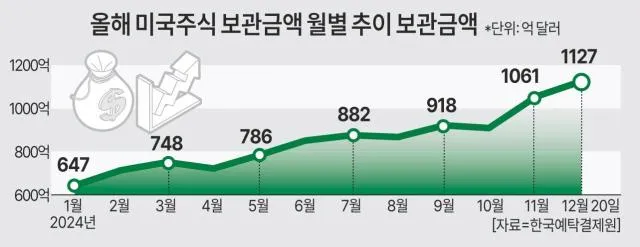
According to data from the Korea Securities Depository, by the end of 2023, the value of US stocks held by Korean investors reached $111.181 billion, a 70% increase from the beginning of the year ($67.609 billion). This milestone marks the first time holdings have surpassed $100 billion. Koreans hold $12.9 billion in Tesla stocks, $12.9 billion in Nvidia stocks, $4.8 billion in Apple stocks, and more.

The market has shown significant growth, with trading volume (total buys and sells) increasing by 20% year-on-year and trading value increasing by nearly 80%. Compared to 5 trillion won in January 2020, this has grown 18 times in five years. Notably, 96% of the outflow of foreign stocks is caused by domestic investors.

Source: “Individual Investors Escape the Korean Stock Market” - “Western Ants” Hold Over 160 Trillion Won in US Stocks | Asia Economy

What Can Cryptocurrency Projects Do—Issuing Tokens and Interoperability

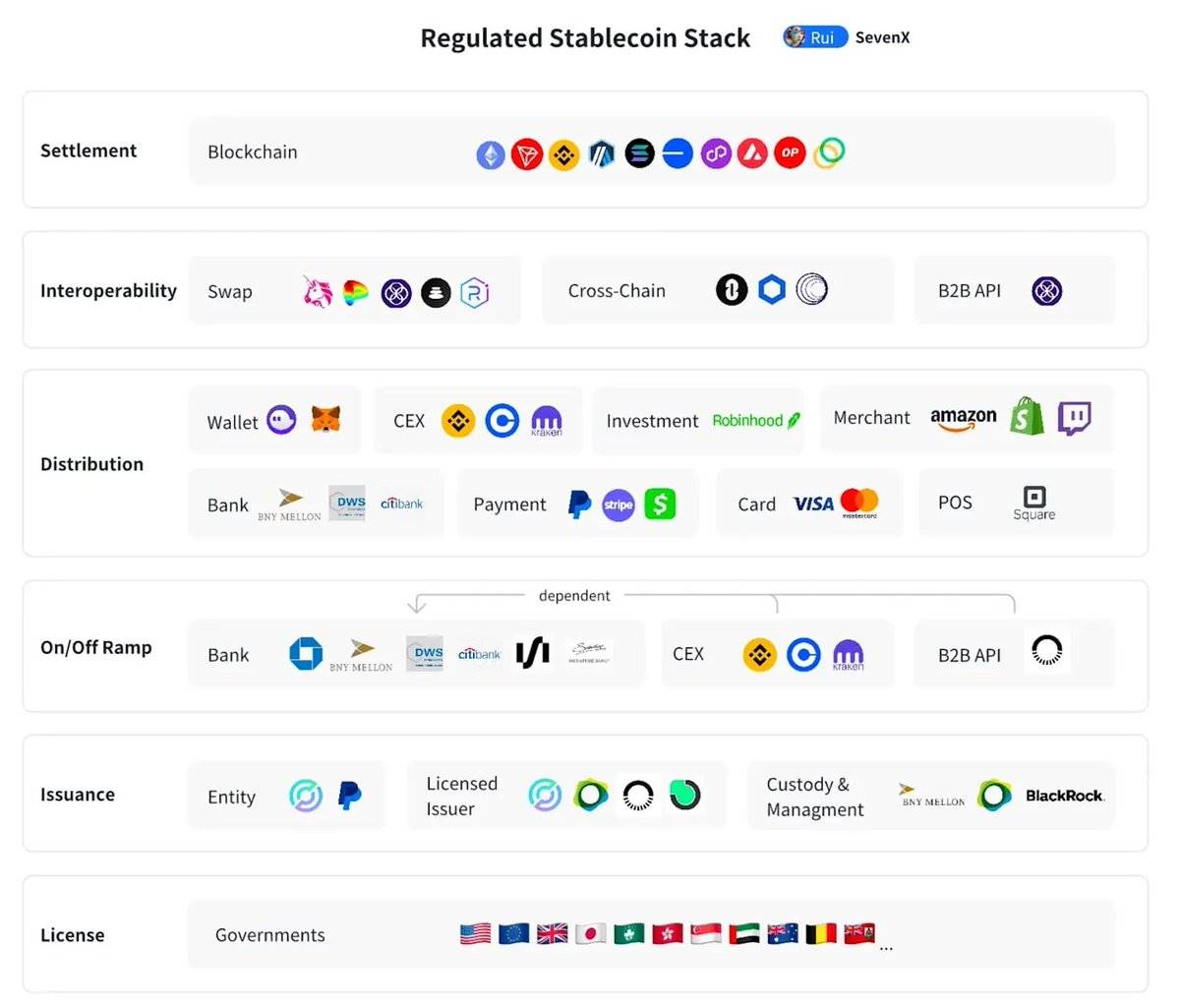
Drawing from Rui's "Regulated Stablecoin Stack" framework proposed at sevenx and applying it to tokenized/mirrored stocks, two core infrastructure components are crucial:

  • Issuance of stocks

  • Interoperability of these assets

3.1 Issuance—Current Market Size is Small, Attention Needed on Injective's iAsset

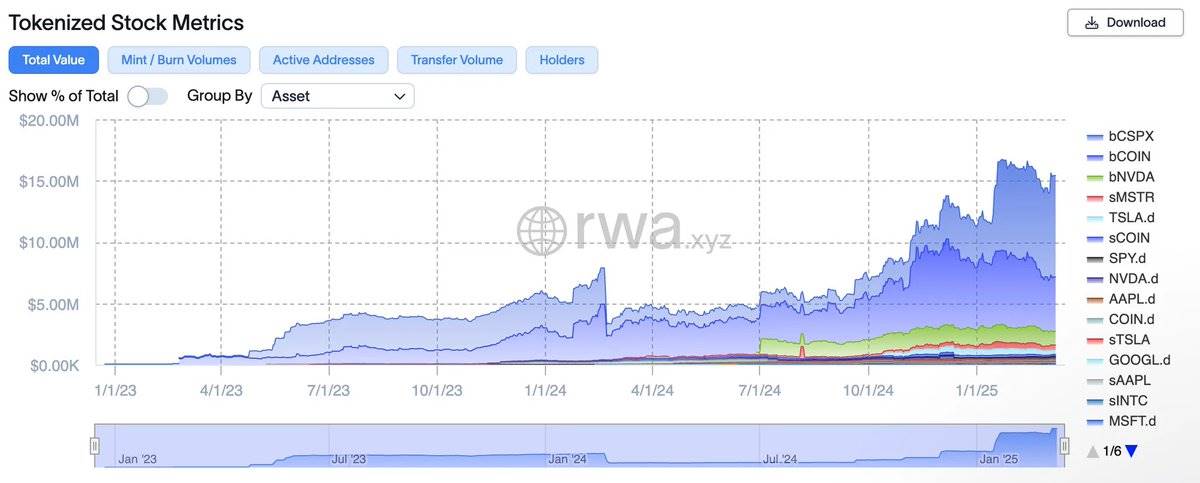
The market size for tokenized stocks in cryptocurrency is small. The total value of tokenized stocks peaked at around $17 million. Compared to the traditional stock market, this figure is negligible, as the market capitalization of individual companies often reaches billions or even trillions of dollars. Moreover, most of the value is concentrated in a few assets, such as Backed Finance's bCSPX (tokenized S&P 500 index) and bCOIN (tokenized Coinbase).

Source: RWA.xyz | Stocks

The number of issuers of tokenized stocks is limited:

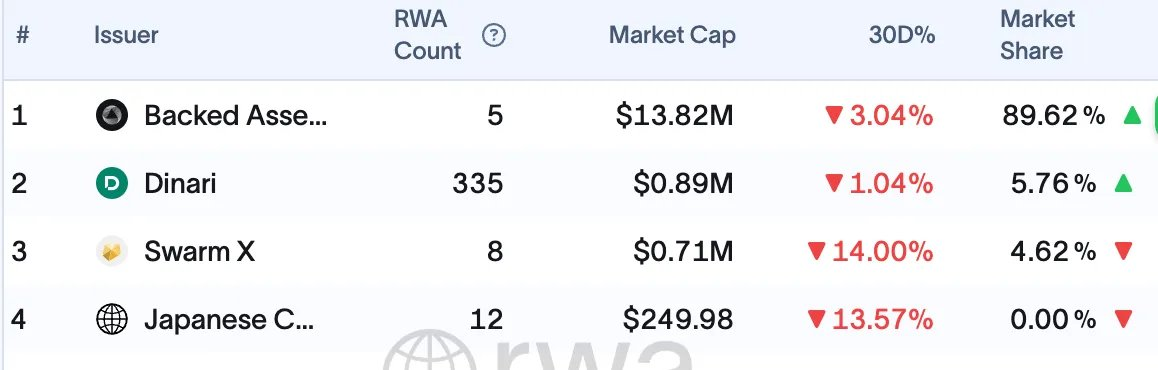
  • Backed Finance leads with a market cap of $13.82 million, accounting for about 90% of the market share.

  • Other issuers like Dinari ($890,000), Swarm X ($710,000), and a Japanese company ($249.98) have significantly smaller market caps.

The total market cap of all issuers is less than $16 million.

Source: RWA.xyz | Stocks

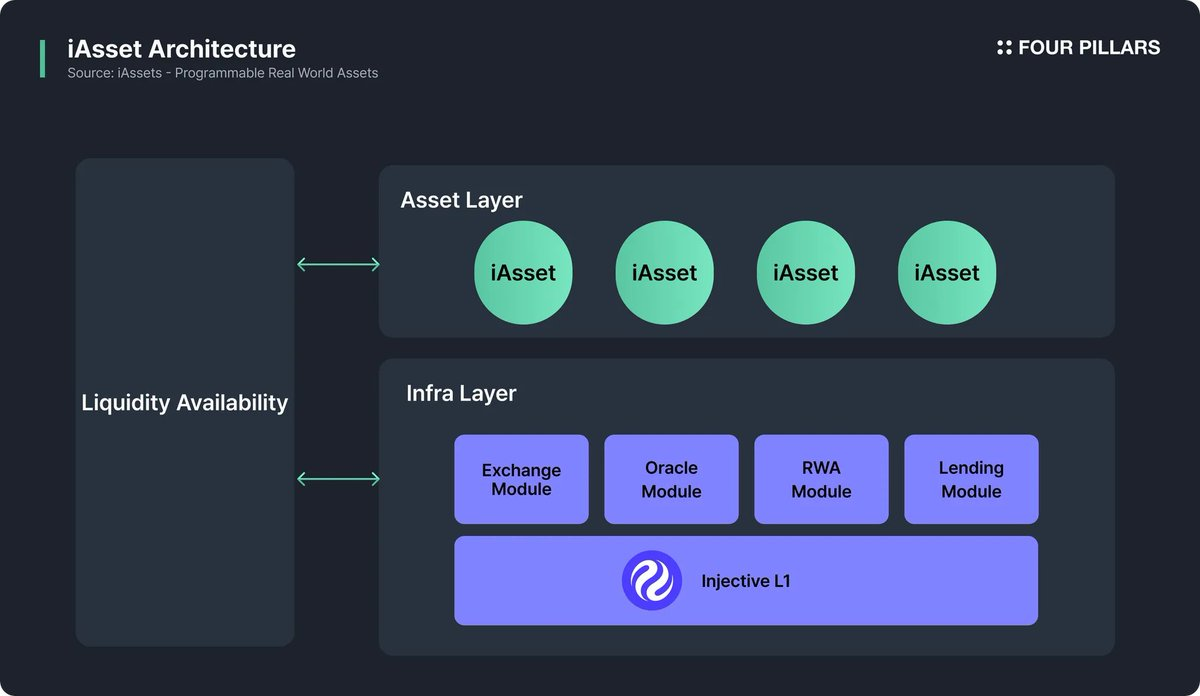
Recently, Injective introduced a concept called iAssets, aimed at overcoming the inefficiencies of traditional finance and early DeFi models. Unlike traditional tokenized assets, iAssets do not require pre-locked collateral but operate as composable on-chain tools.

What is "No Pre-Financing"? In traditional finance, the tokenization of real-world assets typically requires users to lock a large amount of collateral in advance. For example, if a user wants to mint synthetic stocks, they must deposit and lock a certain amount of collateral.

Source: iAssets_Paper.pdf

Unlike traditional tokenization methods, iAssets do not require excessive collateral or locked capital. They leverage Injective's shared liquidity network to dynamically allocate liquidity based on real-time market demand. (Four Pillars will soon release a detailed article)

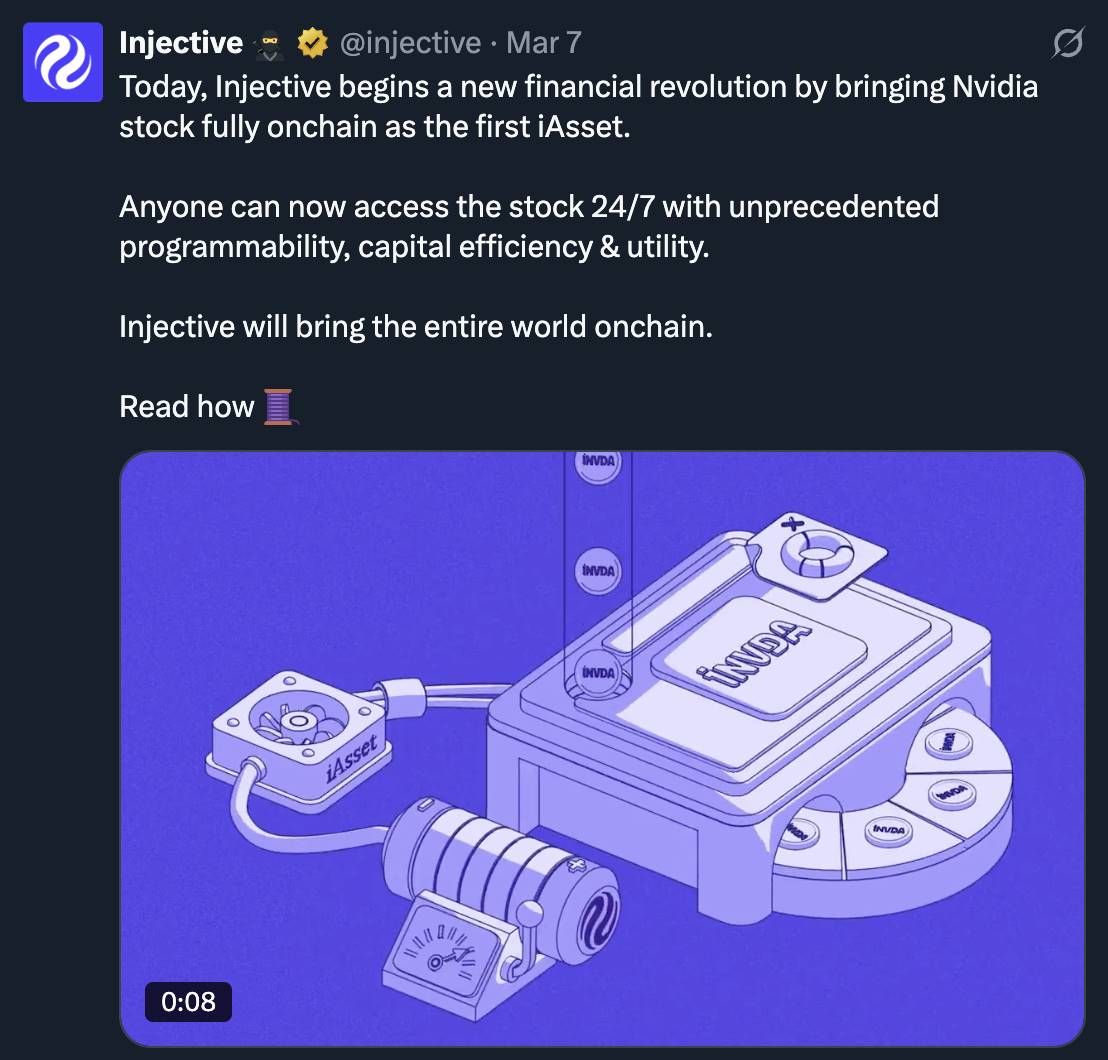
iNVDA is now tradable, and iTSLA and other stocks will soon be available for on-chain trading on Injective.

Source

3.2 Interoperability—LayerZero and Chain Abstraction Will Address Decentralized Issuance

The number of projects issuing tokenized assets is increasing, with major fintech companies/institutions also participating:

  • @OndoFinance is launching its own L1

  • @noble_xyz L1 is issuing more RWA tokens

  • @coinbase is considering issuing its $COIN stock on Base

  • The CEO of @RobinhoodApp @vladtenev publicly advocates for the tokenization of real-world assets to democratize private market investments traditionally limited to accredited investors. (They may launch their own private L1)

  • Apollo is launching its on-chain private credit fund, Apollo Diversified Credit Securitize Fund (ACRED), which will be available on Solana, Link, Ethereum, Aptos, Avalanche, and Polygon.

These tokens will be issued across more than 30 or even hundreds of networks. I believe two providers will address the "fragmentation" issue:

  • @LayerZero_Core - OFT and DVN: OFT is doing what stablecoins once did for fiat currencies. It liberates the constraints of being isolated in a single environment. OFT will allow tokenized assets to be sent and managed across different networks. However, how about security? DVN can be customized, allowing issuers to handle cross-chain interactions. For example, Ondo Finance and Tether run their own DVN for their tokens.

  • @ParticleNtwrk and @UseUniversalX: Ultimately, assets will be issued in a decentralized manner. Some will be issued across chains like Ethereum, Solana, Monad, L2s, Sui, etc. This will provide users with a fragmented experience. I believe UniversalX may be the best platform. Tokenized stocks, funds, and indices will be issued in a decentralized manner, and Particle Network and UniversalX seem to be in the best position.

With this infrastructure, users will be able to trade stocks on-chain without crossing different networks.

Growing Stronger and Embracing Regulation

However, tokenized and mirrored stocks are still in the early stages. Building infrastructure that supports multiple assets and large-scale trading takes time. However, there is potential to attract new retail traders interested in more cost-effective stock trading.

For Koreans trading US stocks, the current system involves high fees, lengthy settlement times, and slow withdrawal processes. As the infrastructure and platforms supporting the US stock market continue to improve, new user groups may enter the market.

If this market grows significantly, the Korean government will intervene in regulation. I hope this field can develop enough to warrant such regulation.

Sources

Koreans' Holdings of US Stocks Exceed $100 Billion | Korea Economic Daily

[Global Economic Editorial] Korean Investment in US Stocks Grew 18 Times in 5 Years - Global Economic

iAssets_Paper.pdf

免责声明:本文章仅代表作者个人观点,不代表本平台的立场和观点。本文章仅供信息分享,不构成对任何人的任何投资建议。用户与作者之间的任何争议,与本平台无关。如网页中刊载的文章或图片涉及侵权,请提供相关的权利证明和身份证明发送邮件到support@aicoin.com,本平台相关工作人员将会进行核查。

Share To
APP

X

Telegram

Facebook

Reddit

CopyLink