5 Big Data Analysis: Is the market at a stage bottom range?

CN
1 year ago

Some tokens that lack enthusiasm, narrative, and fundamentals, and are continuously facing large unlocks, find it difficult to attract funding attention and may face the predicament of continued decline.

Written by: 1912212.eth, Foresight News

Since the market dropped from its peak in December 2024, it has been fluctuating for several months, with many players suffering heavy losses amid the endless downward trend and volatile market. Market noise has also seen severe divergence between bulls and bears. The macro environment is unstable, with Trump waving the tariff stick, the Federal Reserve's interest rate cuts still far off, market liquidity tightening, and pessimistic sentiment spreading in the community.

So, how is the progress in the crypto market? If Bitcoin still has room for further upward movement, could this be a phase of market bottom?

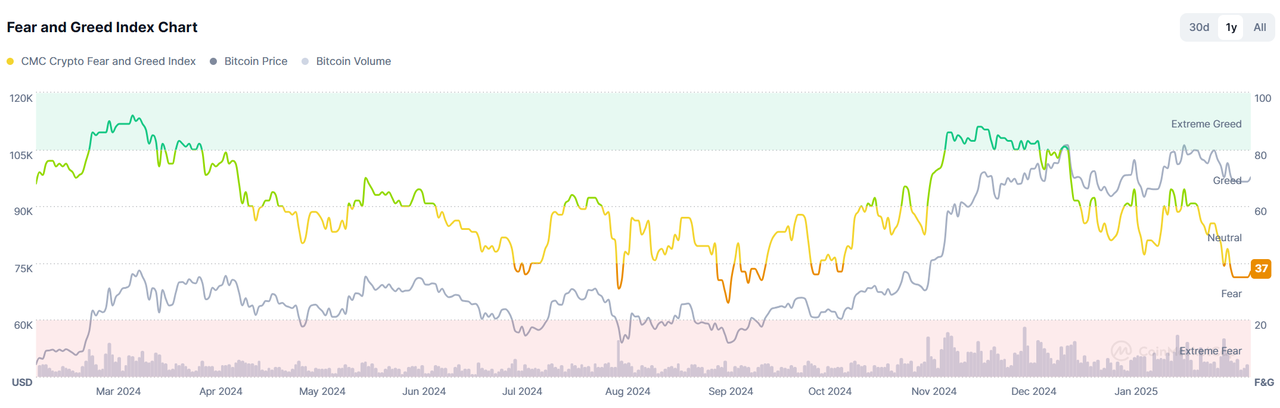
1. Fear Index Below 40 Since February This Year

The CMC Fear and Greed Index is used on CoinMarketCap to measure the overall sentiment of the cryptocurrency market. The index ranges from 0 to 100, with lower values indicating extreme fear in the market and higher values indicating extreme greed. This index helps investors understand the emotional state of the market, allowing them to plan their buying and selling decisions. Additionally, it provides reference information on whether the market is undervalued (extreme fear) or overvalued (extreme greed).

As shown in the image, from July to early October 2024, the market saw the fear index drop below 40 multiple times (fear), followed by a FOMO sentiment in November of that year, where the index briefly exceeded 80, and then the market experienced a pullback. Currently, the fear index has once again dropped below 40 since early February this year.

A lower fear index often indicates that the price of coins may be at a phase of market bottom.

2. Bitcoin's 7-Day Average Funding Rate Down 85% Compared to Last December

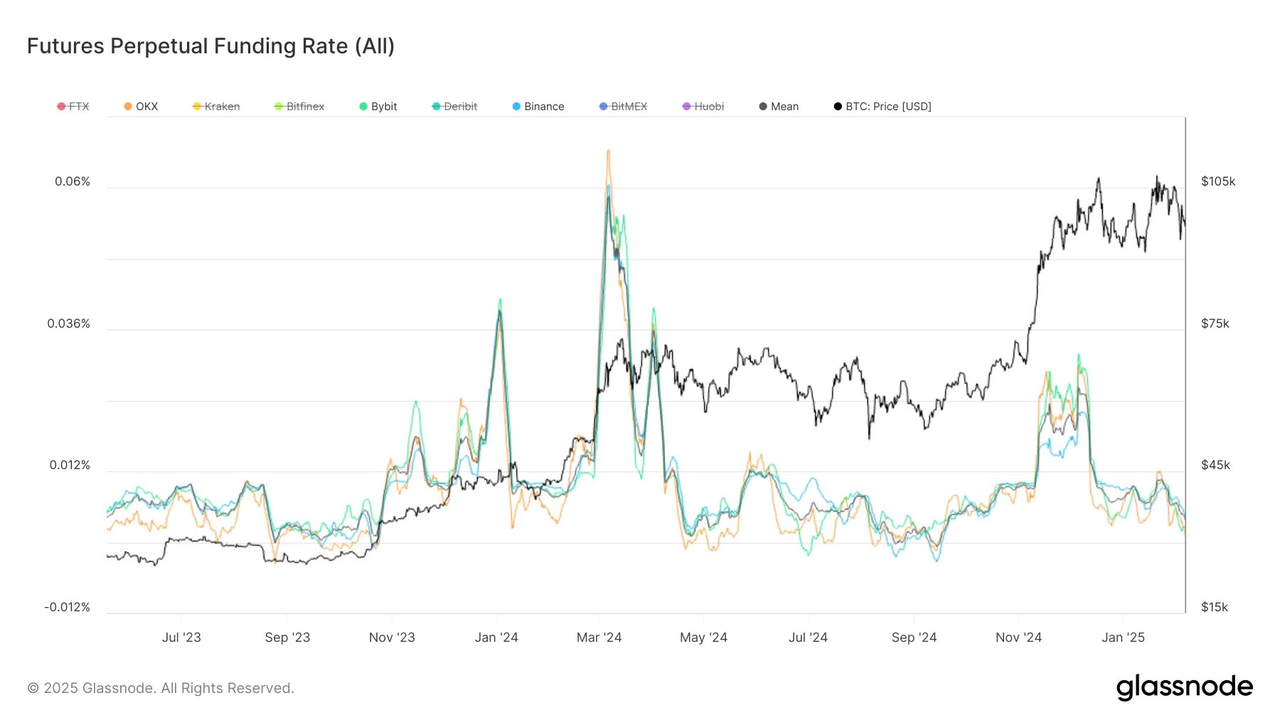
The 7-day average funding rate of perpetual contracts can serve as an important indicator for observing market sentiment. When the market is booming, the funding rate tends to remain high, often indicating the peak of the market cycle. Conversely, a low funding rate typically indicates a market bottom.

As shown in the image, in March 2024, Bitcoin's 7-day average funding rate exceeded 0.06%, indicating that the market was willing to pay high costs for long positions, reflecting extreme FOMO sentiment, which became the highest point of Q1 that year. Between November and December 2024, the funding rate remained above 0.03%, and Bitcoin briefly broke the $100,000 mark. However, before the market took off, Bitcoin's 7-day average funding rate had once shown negative rates from May to October that year.

As of the time of writing, the funding rate has dropped to 0.004%, an 85% decrease from the peak in December. Market sentiment is in a pessimistic state.

3. ETH Profit Ratio Hits 4-Month Low

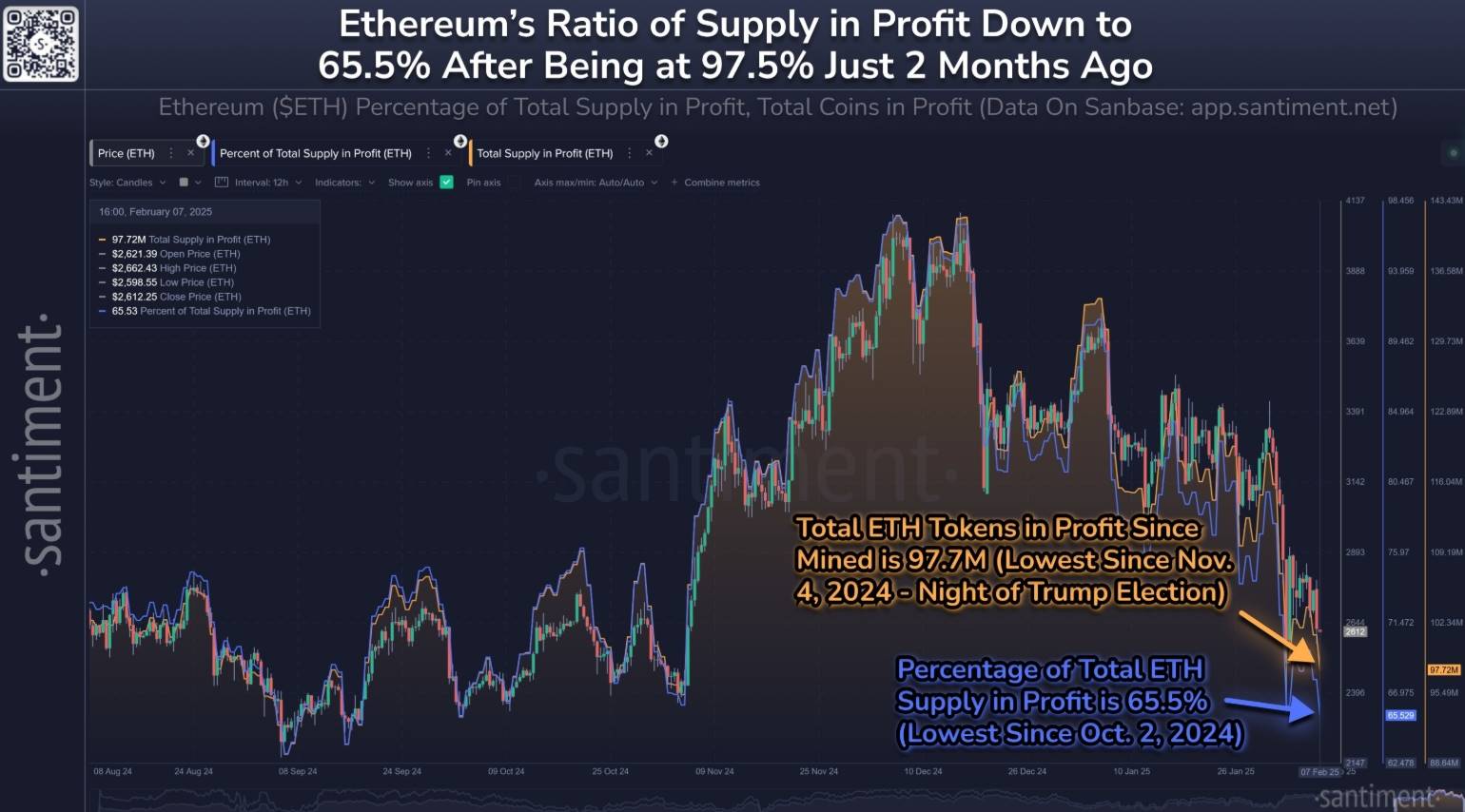
Ethereum's market capitalization has dropped 36% from its local peak seven weeks ago, leading to a sharp decrease in the number of profitable ETH. From daily closing data, the current ETH profit ratio has reached a 4-month low, and the number of profitable tokens has also fallen to a 3-month low.

As the second-largest cryptocurrency by market capitalization, Ethereum has underperformed compared to other major coins, and market sentiment has significantly turned negative. Despite the current atmosphere filled with panic (FUD) and retail investors continuously selling off, Ethereum may see a rebound once the crypto market stabilizes.

4. Bitcoin Miners Surrender Again Since Early February This Year, Mining Difficulty Rises

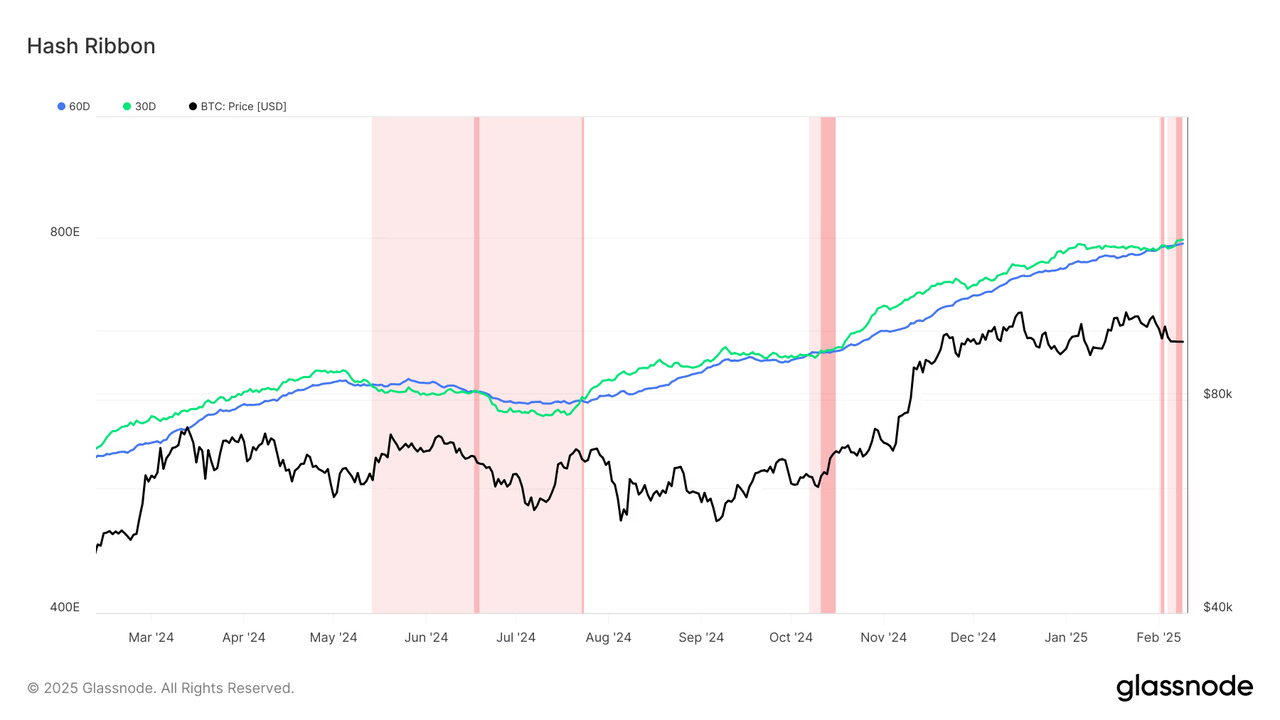
The surrender of Bitcoin miners is often seen as an important reference indicator for market bottoms. Miner surrender means that the profit from mining a Bitcoin is lower than the cost. Historical data shows that the times when Bitcoin miners surrender often coincide with market bottom phases.

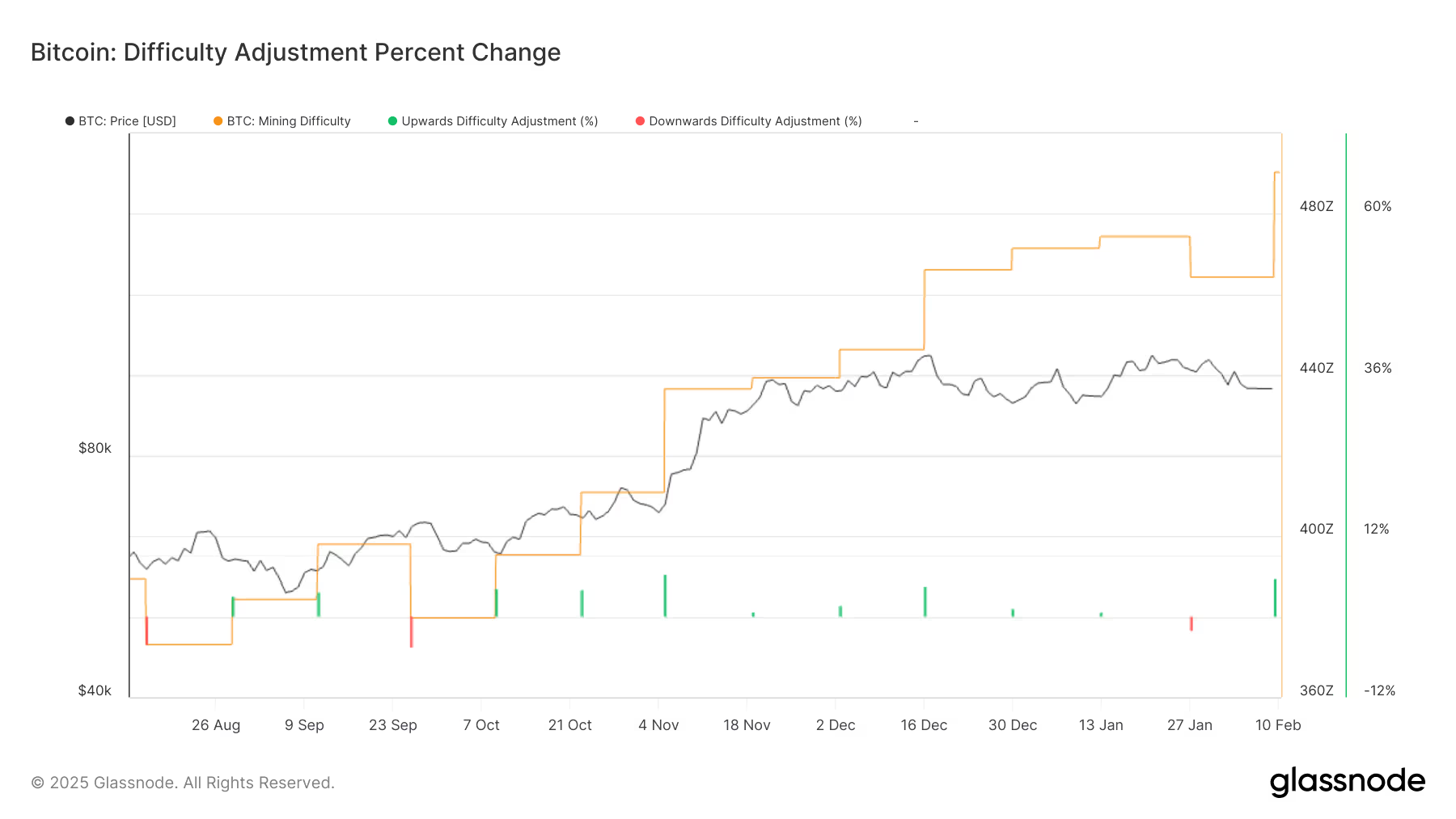
The image shows that since 2024, Bitcoin miners have surrendered in June and October of this year. In 2025, Bitcoin miners began to surrender for the first time since February.

At the same time, the difficulty of Bitcoin mining has recently reached a historical high of 114.7T. A new high in difficulty usually indicates that miners still have confidence in Bitcoin's long-term value; otherwise, they would not continue to invest computing power. This may have a somewhat positive impact on market sentiment.

5. Stablecoin Market Cap Increased Over the Past Month

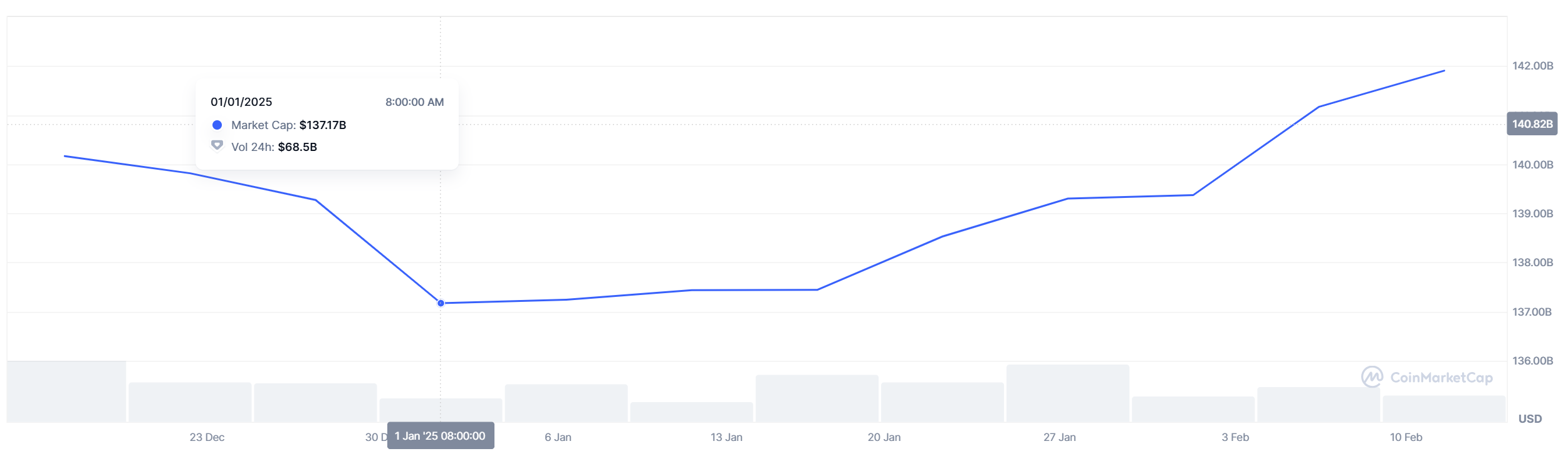
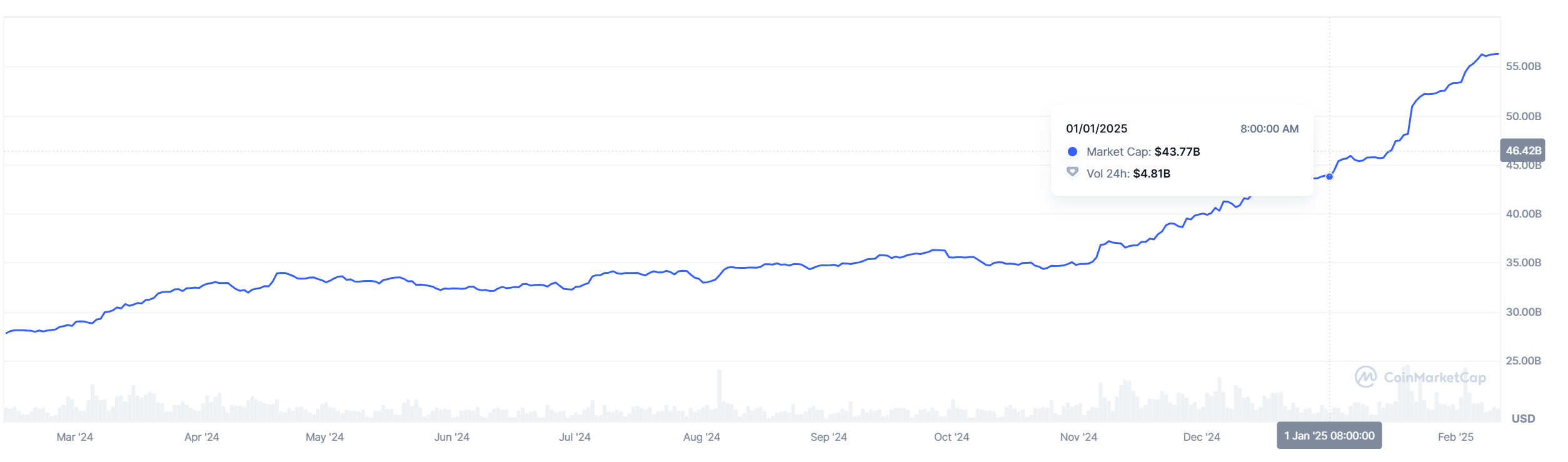
Stablecoin data is one of the important reference data for observing market capital inflows. Over the past month, according to DefiLlama, the market cap of USDT increased by 3.4% ($4.676 billion), while USDC surged by 22.73% ($10.396 billion).

From January 1, 2025, the market cap of USDT has risen from $137.17 billion to the current $141.9 billion, an increase of $4.73 billion.

The USDC data increased from $43.77 billion to the current $56.28 billion.

Summary

The above five data points may suggest that the market is possibly at a phase of bottom. However, it is difficult to predict when the market will exit this bottom phase. Investors should note that even if some tokens are currently at the bottom, those that lack enthusiasm, narrative, and fundamentals, and are continuously facing large unlocks, may find it difficult to attract funding attention and could face the predicament of continued decline.

免责声明:本文章仅代表作者个人观点,不代表本平台的立场和观点。本文章仅供信息分享,不构成对任何人的任何投资建议。用户与作者之间的任何争议,与本平台无关。如网页中刊载的文章或图片涉及侵权,请提供相关的权利证明和身份证明发送邮件到support@aicoin.com,本平台相关工作人员将会进行核查。

Share To
APP

X

Telegram

Facebook

Reddit

CopyLink