Author: Alex Liu, Foresight News
Event Timeline and Token Price: The Birth of a Surge Myth

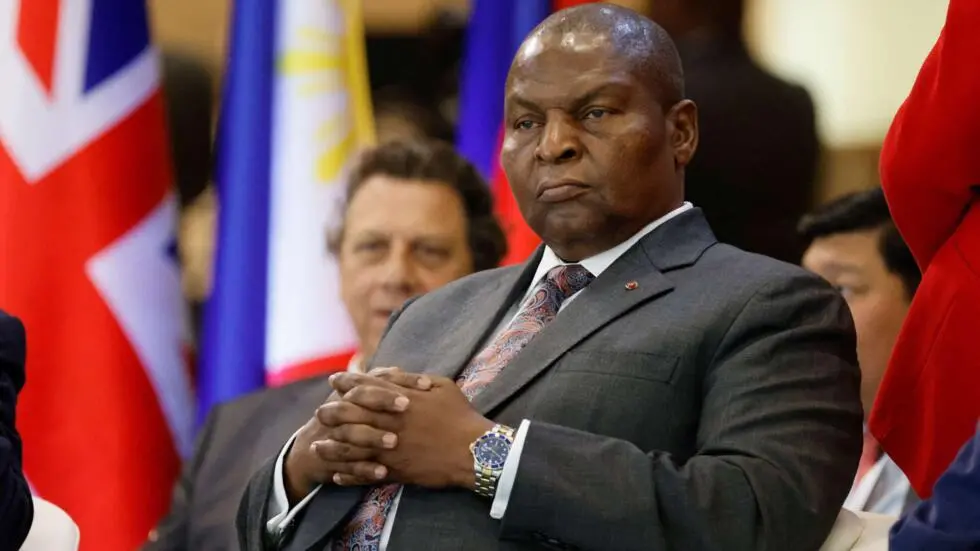
In the early hours of February 10, 2025, Central African Republic President Faustin-Archange Touadéra released a video through his official X account, announcing the launch of the state-supported meme coin CAR and revealing the contract address. The statement claimed that CAR is an "experiment to promote national development, unite the people, and enhance international influence." The president also emphasized his long-term optimism about the potential of cryptocurrency as the second global leader to designate Bitcoin as legal tender.

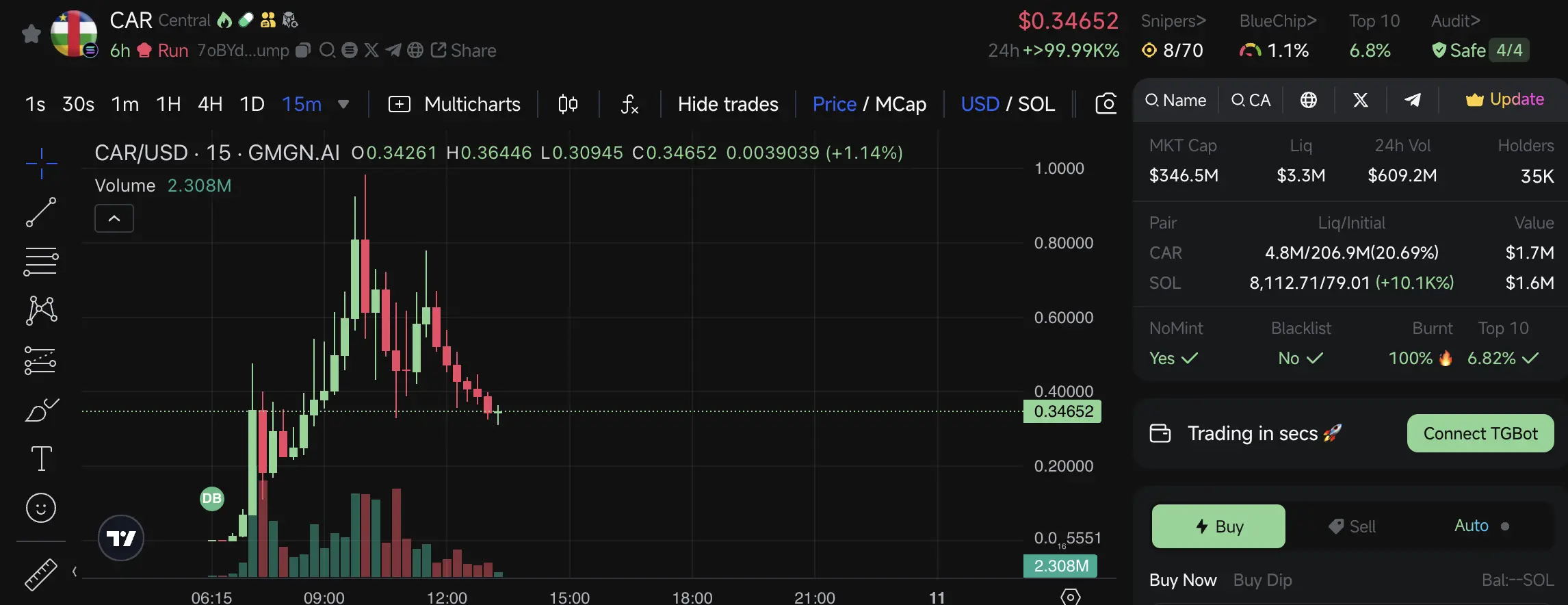
Following the announcement, the price of the CAR token skyrocketed. On-chain data showed that the token's market cap briefly surged to $700 million and is currently stabilizing around $300 million. During this surge, a trader purchased 46.57 million CAR tokens with 25 SOL (approximately $5,000) just one second after the president released the contract address, selling part of it within three hours for a total profit exceeding $12 million, with a return rate as high as 2,450 times.

The Central African Republic and the President's Crypto Background: From Bitcoin Legalization to Meme Coin Controversy
The Central African Republic has a population of about 5.5 million, a GDP of around $5.5 billion, and a per capita GDP of only about $1,000. As of 2017, the Central African Republic had the lowest per capita GDP in the world (measured by purchasing power parity). In 2019, its Human Development Index ranked second to last globally, just above Niger. According to Wikipedia, research indicates that the Central African Republic is one of the unhealthiest countries in the world and one of the least suitable for young people.
Since 2022, the Central African Republic has designated Bitcoin as legal tender, becoming the second country in the world after El Salvador. President Touadéra has consistently positioned himself as a supporter of cryptocurrency, believing it can drive "leapfrog development" in economically lagging countries. However, the country has faced criticism for its weak infrastructure and poor policy implementation, and the legalization of Bitcoin has not significantly improved its economic plight.

The launch of the CAR token has been described by the president as "a new chapter in the national experiment," but controversy soon followed. After the video was released, two AI deepfake detection tools (including Deepware) indicated that there is an 82% probability that the video is synthetic, and the project domain was registered only three days prior through Namecheap (currently blocked from access), which does not comply with government operational norms.
Additionally, the statement was released at local midnight and used English instead of the official language, French, further raising suspicions.
Token Economics and Controversy Focus: Centralization Risks and Liquidity Issues

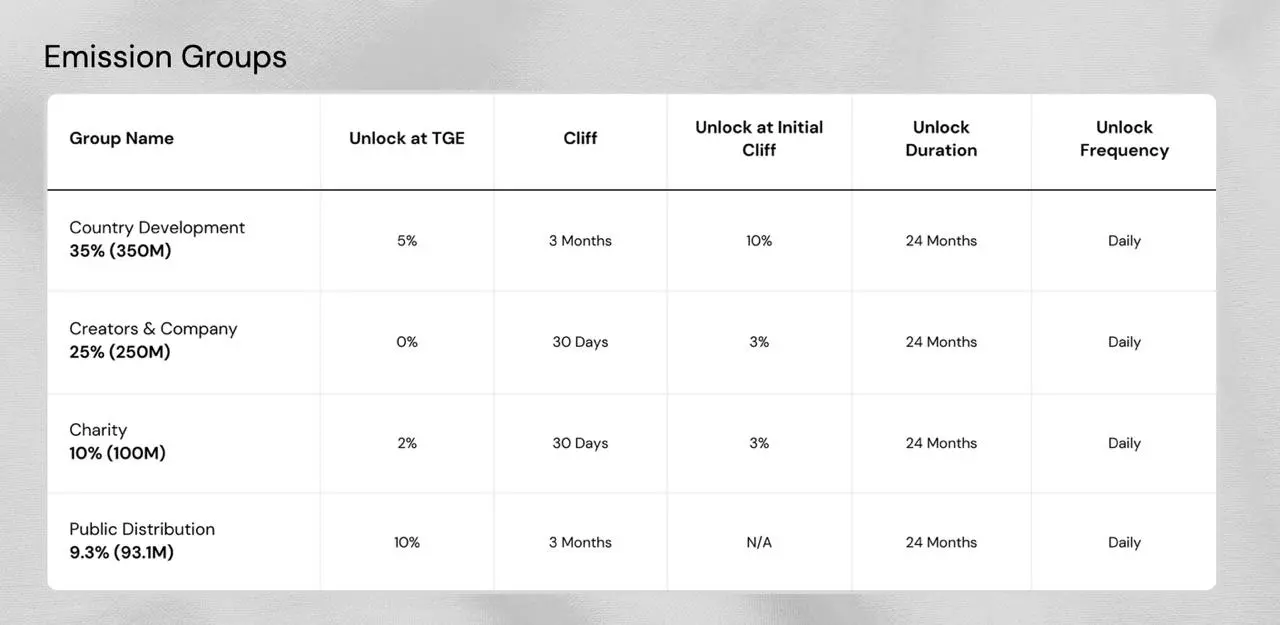
According to the CAR token whitepaper, its total supply is 1 billion tokens, with the distribution plan as follows:
- 35% for national development;
- 25% allocated to creators and businesses;
- 20.7% for liquidity pool (though on-chain data shows it has not yet been injected);
- 10% for charity;
- 9.3% for public distribution.
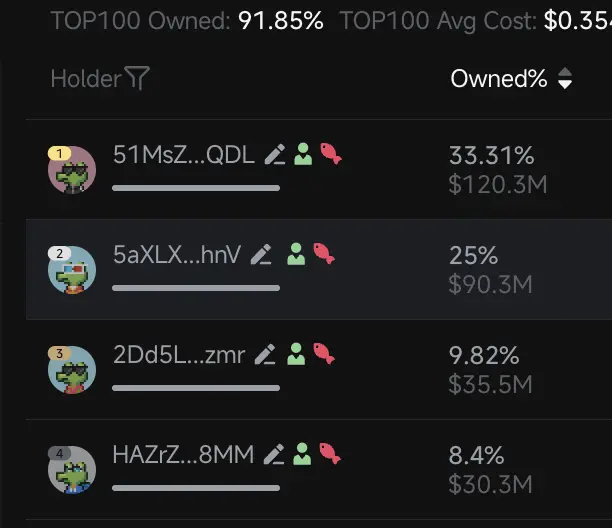
However, the on-chain distribution of tokens reveals centralization risks: the largest wallet holds 33.31% of the tokens, the second-largest wallet holds 25%, and the top four addresses collectively control over 70% of the supply. Although the president claims that the tokens have been locked through Streamflow and distributed as planned, concerns about liquidity and token concentration continue to worry the market.

Derivative Thoughts: The Challenges of Crypto-Politicization and Trust Reconstruction
The CAR incident is not only a carnival in the crypto market but also reflects the complexity of the intersection between cryptocurrency and political power. Meow, co-founder of Jupiter, tweeted after the event escalated that the team had contacted the developers who deployed the CAR token and verified some information through on-chain transactions. For example, the developers redeployed the initially revocable contract and destroyed 0.06924 SOL to prove ownership of the deployer address.
However, meow also admitted that while some aspects can be verified on-chain, the team cannot confirm whether the CAR token truly received official support from the Central African Republic presidential office, nor can they verify the accuracy of the token economics. This further highlights the trust crisis behind the event.
The trust crisis and technological competition have become core issues. The proliferation of deepfake technology has lowered the threshold for fabricating authoritative statements, and the president's X account video was flagged by AI detection tools as "82% likely to be synthetic," raising doubts about whether "national endorsement" in the crypto world can still be easily trusted. In the future, the cat-and-mouse game between AI detection tools and hackers may become normalized, and how investors make judgments in the face of indistinguishable information will pose a significant challenge.
Furthermore, the speculative frenzy in a regulatory vacuum is concerning. Cases like Trump's launch of the TRUMP coin indicate that endorsements from political figures can be misused as tools for market manipulation. The dramatic rise and fall of the CAR token once again prove that the unregulated crypto market can easily become a playground for speculators, with ordinary investors often becoming the last ones to take the hit.
Finally, the dilemma of crypto experiments in emerging markets is also worth pondering. The Central African Republic attempts to break through its economic predicament through cryptocurrency, but its weak infrastructure and governance capabilities may make this vision difficult to achieve. The failure of Bitcoin legalization has already exposed similar issues, and whether the launch of the CAR token will repeat this mistake remains to be seen.
The co-founder of Jupiter urges investors to remain vigilant, emphasizing that "the legitimacy of the token requires official secondary confirmation." (However, CAR has already shown to be certified by Jupiter, appearing on its token Strict List.)

Conclusion
The dramatic rise of the CAR token is both a continuation of the wealth creation myth in the crypto market and a reflection of the abuse of technology and the lack of trust. In this new era where political narratives and decentralized ideals intertwine, investors need to view the halo of "national endorsement" with a more rational perspective, and the synchronized evolution of regulation and technology may be the ultimate answer to this game.
免责声明:本文章仅代表作者个人观点,不代表本平台的立场和观点。本文章仅供信息分享,不构成对任何人的任何投资建议。用户与作者之间的任何争议,与本平台无关。如网页中刊载的文章或图片涉及侵权,请提供相关的权利证明和身份证明发送邮件到support@aicoin.com,本平台相关工作人员将会进行核查。