Author: Babywhale, Techub News
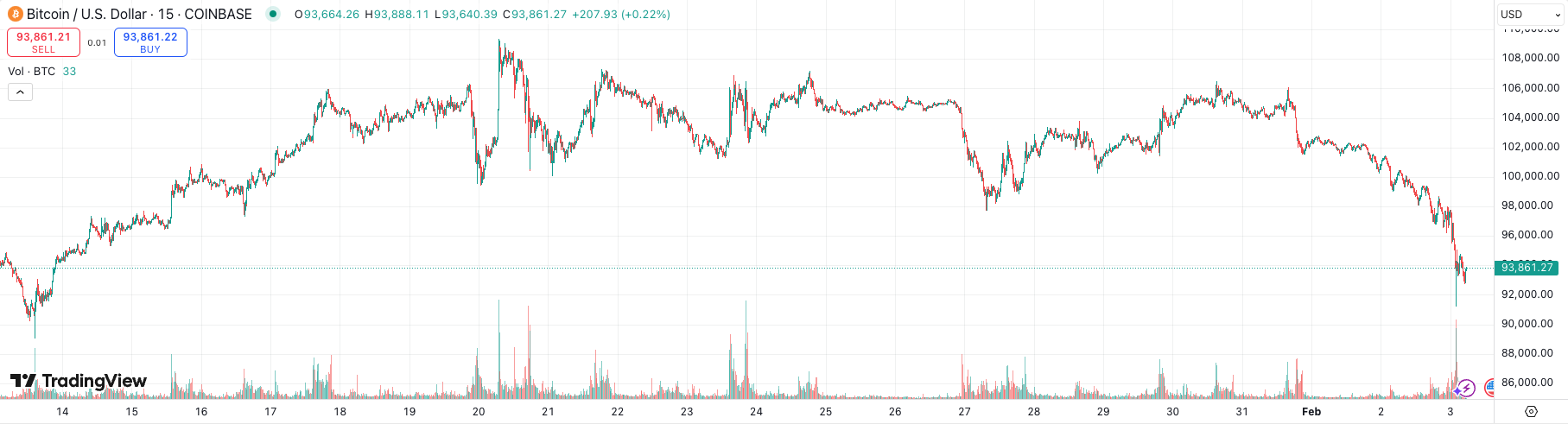
A week ago, due to DeepSeek leading investors to expect a potential decrease in future demand for the AI chip industry chain, stocks in the US market, including Nvidia and AMD, began to decline from the night session. Recently, Bitcoin, which has been following the trends of the US stock market, was also dragged down. This morning during the Asian trading session, coinciding with the US night session, Bitcoin continued its downward trend after a slight drop over the weekend, possibly influenced by the US government's announcement on Saturday to impose a 25% tariff on imports from Mexico and Canada, and a 10% tariff on imports from China, falling to around $91,000 around 10 AM Hong Kong time.

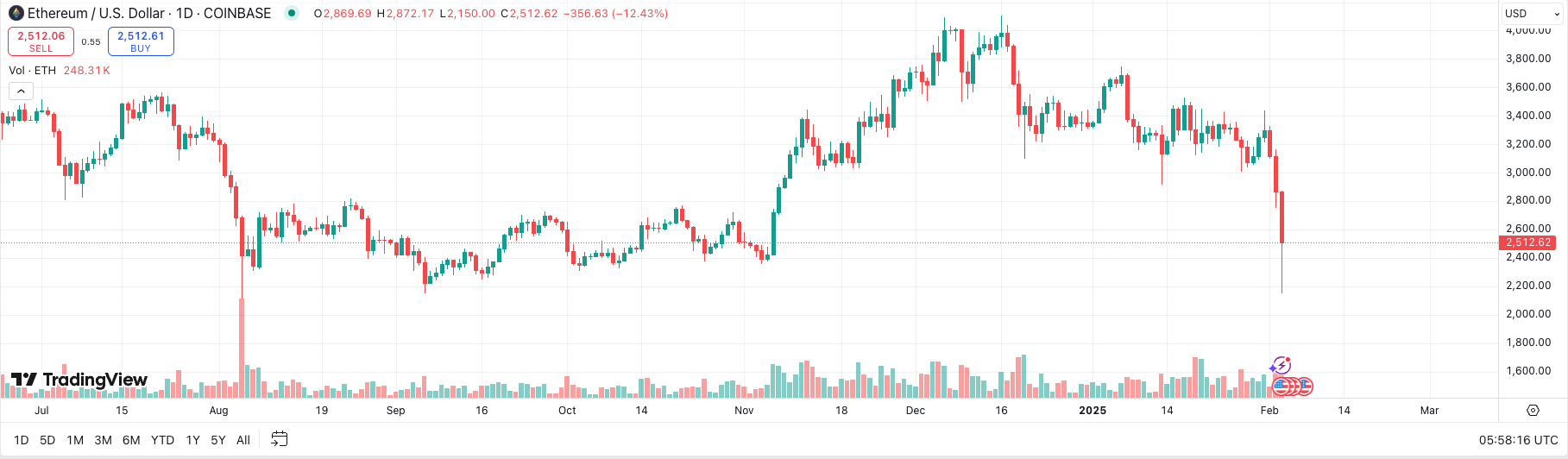
In fact, the drop in Bitcoin this morning was not significant, but most tokens, including Ethereum, experienced a cliff-like decline, with Ethereum's maximum drop in the past three days being about 40%, hitting a low of around $2,100 this morning, while many altcoins set new lows since the bear market of 2022.

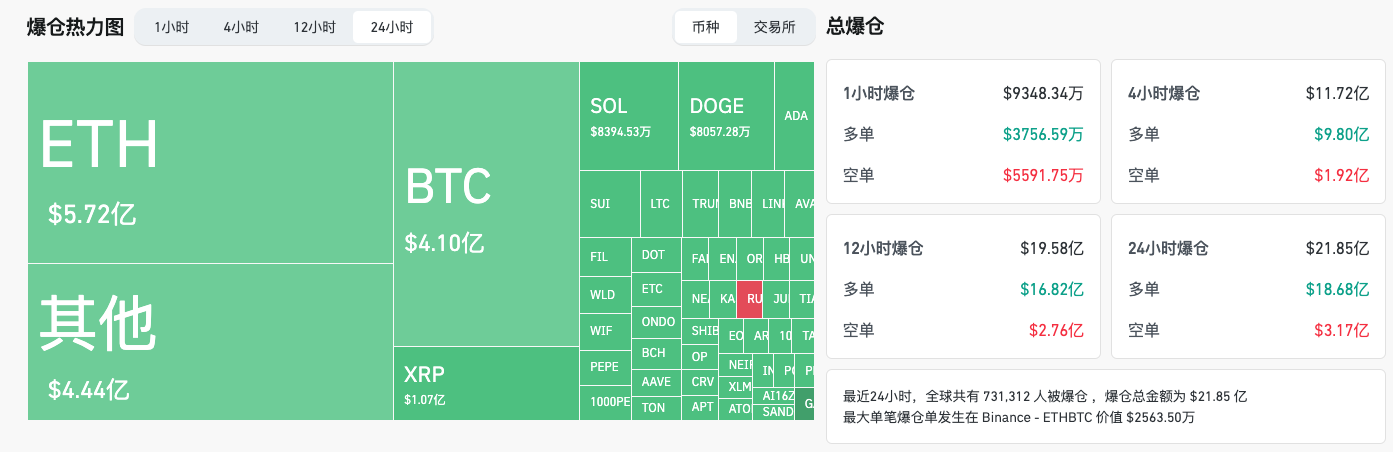
The contract market was even more tumultuous. According to Coinglass data, based on today's lowest point, the liquidation amount in the cryptocurrency contract market exceeded $2 billion within 24 hours, with over 700,000 people liquidated. This figure even surpassed the liquidation funds caused by market panic after the unexpected interest rate hike by the Bank of Japan last year, marking at least the highest 24-hour liquidation amount in nearly two years.

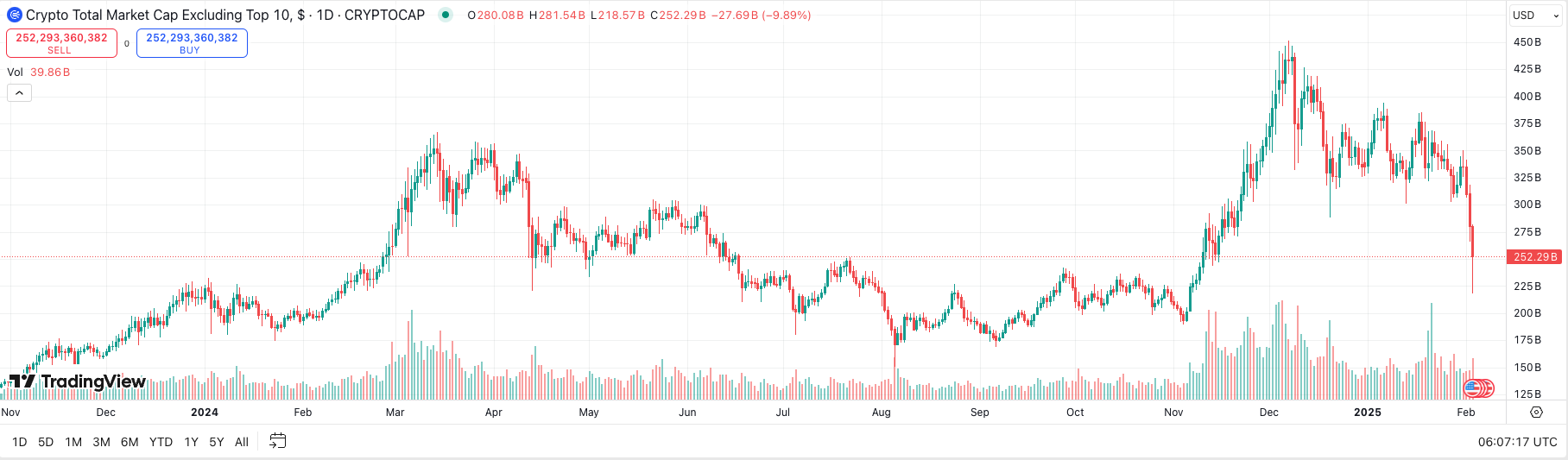
The total market capitalization of cryptocurrencies, excluding the top ten by market cap, fell to around $220 billion this morning, reaching levels seen from August to October last year.

"The Last Drop" or "The Beginning of a Bear Market"?
In last Monday's analysis article, I pointed out that after Bitcoin's multiple attempts to break through the $106,000 to $107,000 range failed, we had reason to guard against short-term pullback risks. After Bitcoin dropped to around $98,000 last Monday, it quickly rebounded, touching around $106,000 again, leading many investors to start anticipating the "Spring Festival red envelope market" that has been realized for several consecutive years.
However, just like Bitcoin's rapid drop after rebounding to the $70,000 level at the end of July and early August last year, repeated failures to break through a certain high point are likely to lead to a swift decline.
In the middle of last week, the Federal Reserve announced to hold steady, maintaining interest rates, and removed the statement about achieving sustained progress in reducing inflation from its announcement, leading the market to expect that the Fed might not cut rates in the first half of the year. This news caused risk asset markets to rise instead of fall. This also provides a good explanation for last Monday's decline:
Many investors were puzzled by the sharp drop triggered by DeepSeek's emergence, believing that DeepSeek's introduction would allow many companies to use less computing power to train models, thus aiding the promotion and development of AI, which would be beneficial for Nvidia's chip designers in the long run. However, the capital market often fears uncertainty more than certain bad news. This is also one of the reasons why Bitcoin was able to quickly recover its losses last week. The brief drop was due to uncertainty, while the subsequent reversal felt more like "even bad news is predictable."
But this time, I want to remind that the uncertainty surrounding the Federal Reserve's future policy path and Trump's aggressive strategy will have a significant impact on the global economy. Originally, Trump's team announced that he would not initiate the process of raising tariffs at the beginning of his term, but the current reality is that the expected implementation time of this strategy has been significantly advanced, and the impact of increased tariffs on the US economy remains uncertain, making the Fed's next moves unpredictable.
The unpredictability of two events that could determine the direction of the capital market has made the market extremely fragile, and any subsequent minor fluctuations could trigger market volatility beyond expectations. Although I still believe it is too early to assert a bull or bear market, risk factors are rapidly accumulating in the short term. Even if a large number of policies supporting Web3 development are proposed in the near future, and even if multiple states in the US quickly support government investment in Bitcoin, it may still not offset the impact of macroeconomic uncertainty.


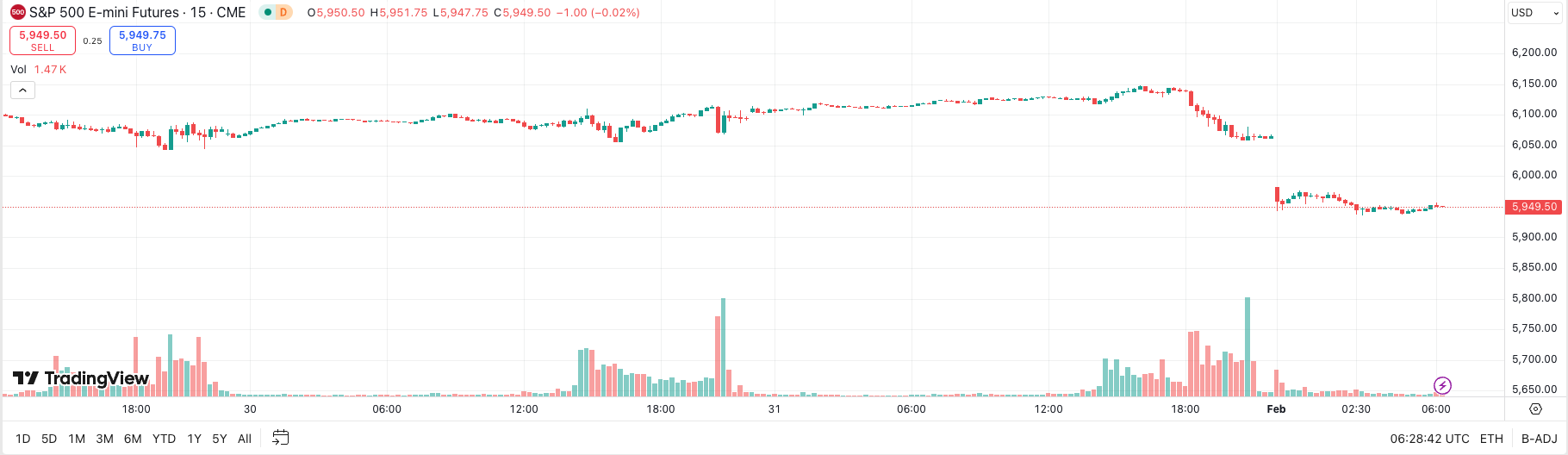
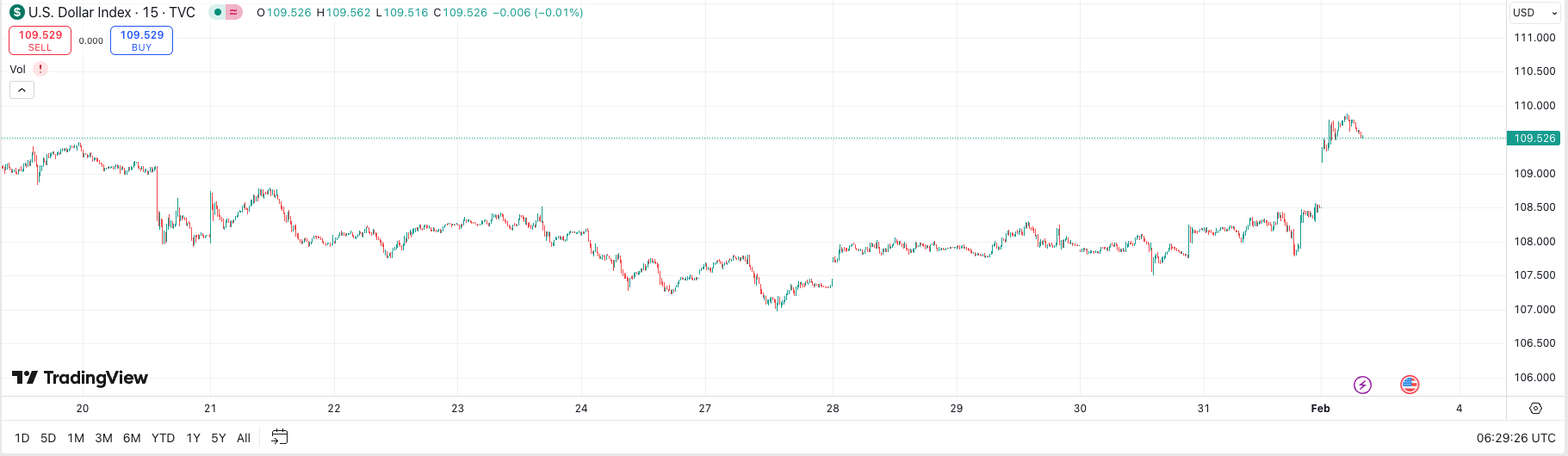
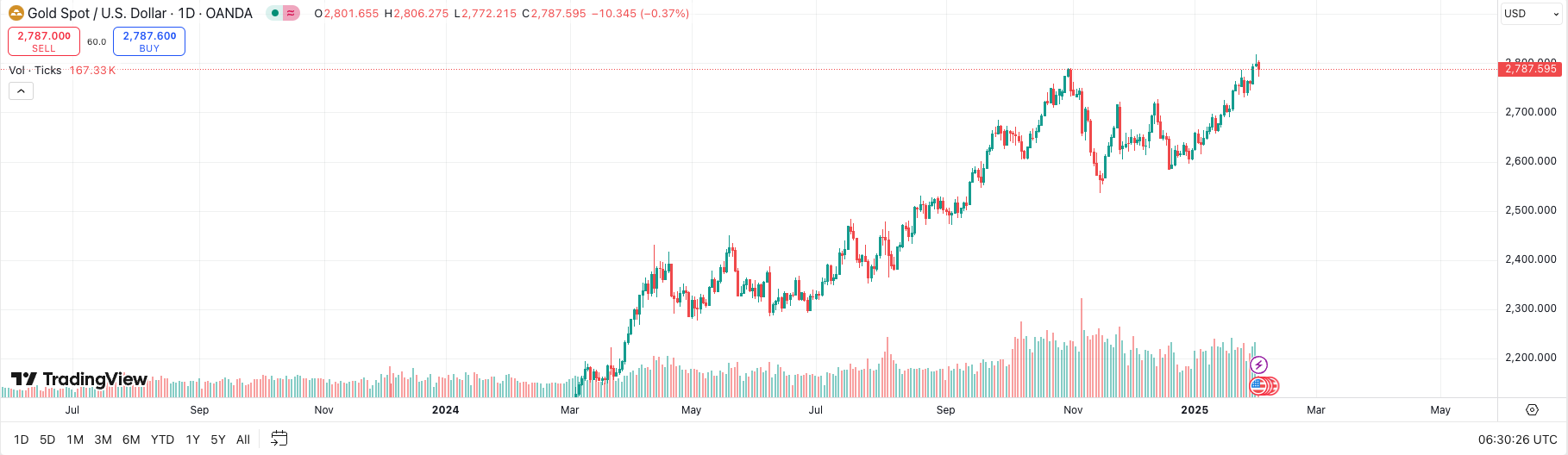
Whether it is the gap down opening of the S&P 500 index futures this morning in Hong Kong time, the gap up opening of the US dollar index, or the recent new highs in gold prices, all indicate that a large amount of capital is choosing to seek refuge. The potential for Crypto to bring excess returns comes with the risk of significant losses that many cannot bear. I suggest that in a market environment with high uncertainty, it is best to watch more and act less.
免责声明:本文章仅代表作者个人观点,不代表本平台的立场和观点。本文章仅供信息分享,不构成对任何人的任何投资建议。用户与作者之间的任何争议,与本平台无关。如网页中刊载的文章或图片涉及侵权,请提供相关的权利证明和身份证明发送邮件到support@aicoin.com,本平台相关工作人员将会进行核查。