Research: 2024 Overall Situation and Regulatory Trends of Virtual Currency Crimes in China

CN
链捕手
Follow
1 year ago

Author | Sun Jun Lawyer Team

In early January 2025, on January 10, the Ministry of Public Security held a special press conference in Beijing. Zhang Ming, the spokesperson for the Ministry, introduced that fraud groups are continuously updating and upgrading their criminal tools by utilizing new technologies such as blockchain, virtual currency, and AI intelligence. In response to the severe and complex criminal situation involving virtual currency and other online fraud, public security agencies will deepen the implementation of special actions such as "Cloud Sword," "Cutting Off Flow," and "Removing Nails," and will maintain a high-pressure crackdown. Following this, on January 13, at the National Prosecutors' Conference, the Supreme People's Procuratorate emphasized that procuratorial organs will increase efforts to punish money laundering crimes and legally combat criminal activities that illegally transfer assets abroad using virtual currency.

It is evident that despite the strict regulatory and crackdown attitude towards virtual currency platform trading and investment in recent years, related illegal financial activities have shifted from offline to online and from domestic to overseas, developing in a more concealed manner. At the same time, due to the anonymity and statelessness characteristics of virtual currency, it has rapidly evolved into a new type of criminal tool. Against this backdrop, crimes involving virtual currency have become the most typical issue in the current field of cybercrime.

As the end of the year approaches and we welcome the new year, our team has specially written this article to summarize and organize the overall situation of virtual currency-related crimes in China in 2024, the latest dynamics of national regulation and crackdown on illegal virtual currency activities, and the latest trends in the legal attribute recognition of virtual currency in practice.

I. Overall Situation of Virtual Currency Crimes in 2024

Regarding virtual currency crimes occurring in 2024, due to the proximity of the year and the fact that many cases are still in the trial stage, overall data has not yet been published. However, our team conducted a search on the Westlaw platform using keywords such as virtual currency, criminal, and judgment, resulting in a total of 401 criminal judgments, including 386 first-instance judgments and 15 second-instance judgments. This article provides a preliminary analysis of the overall situation of virtual currency crimes in 2024 based on these cases. We apologize for any inaccuracies in the data statistics and result analysis.

Image

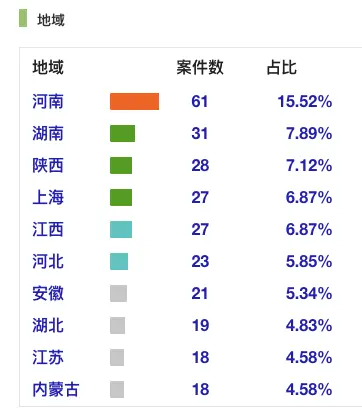
From the retrieved case data, Henan Province had the highest number of cases in 2024, followed by Hunan Province and Shaanxi Province, and then Shanghai, Jiangxi, and Hebei Provinces.

Image

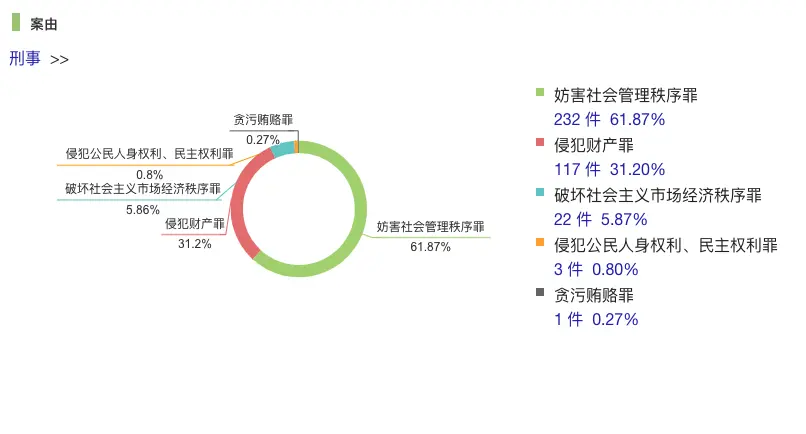
In terms of case causes, compared to previous years where ICO activities were rampant, virtual currency crimes were largely concentrated in the field of disrupting the socialist market economic order, with the main charges being illegal absorption of public deposits, fundraising fraud, and organizing and leading pyramid schemes. In 2024, virtual currency crimes are more concentrated in the field of crimes that disrupt social management order, with particularly prominent criminal behaviors concentrated in crimes that disrupt social management order, accounting for as high as 61.87%. Additionally, property infringement crimes remain a high incidence area for virtual currency crimes, accounting for 31.2%.

Image

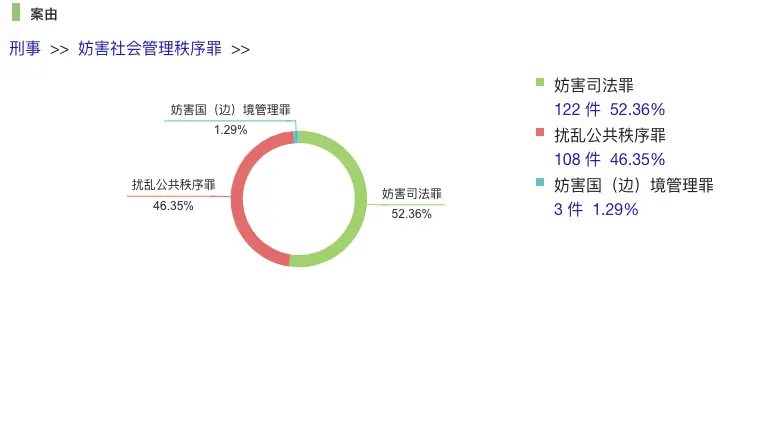
Among the crimes that disrupt social management order, specifically, cases involving obstructing justice accounted for the highest proportion, with a total of 122 cases, accounting for 52.36%, and all these 122 cases involved concealing or disguising criminal proceeds and the crime of benefiting from criminal proceeds.

Image

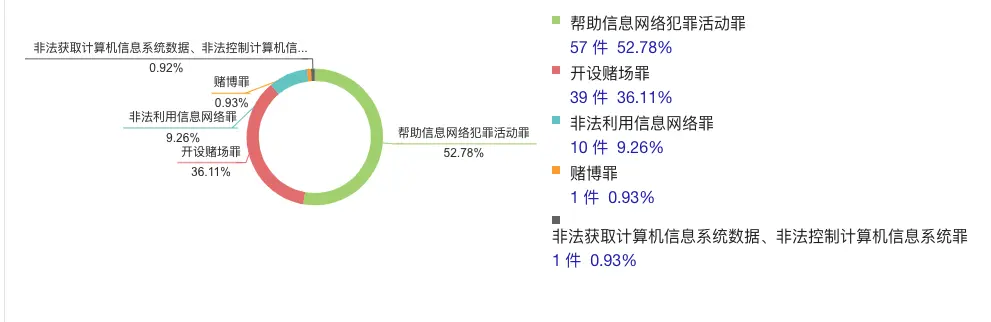
Furthermore, among the crimes that disrupt social management order, cases involving disturbing public order ranked second, with a total of 108 cases, including 57 cases of assisting information network crime activities, 39 cases of operating gambling houses, 10 cases of illegally using information networks, 1 case of gambling, and 1 case of illegally obtaining computer information system data and illegally controlling computer information systems.

Image

II. Latest Dynamics of Regulation and Crackdown on Illegal Virtual Currency Activities in 2024

In 2024, China mainly strengthened its focus and crackdown on criminal activities using virtual currency as a tool in the fields of foreign exchange violations and money laundering crimes. The following will combine new regulations and typical cases in relevant illegal crime fields in 2024 to understand how virtual currency is utilized to engage in illegal foreign exchange, money laundering, and other criminal activities, as well as the key points of criminal establishment in judicial practice.

(A) Engaging in Illegal Foreign Exchange Activities Using Virtual Currency

On December 11, 2023, the Supreme People's Procuratorate and the State Administration of Foreign Exchange jointly issued 8 typical cases punishing illegal foreign exchange crimes, mainly involving illegal business operations (illegal buying and selling of foreign exchange), fraudulently purchasing foreign exchange, and related charges including assisting information network crime activities, fraudulently obtaining export tax rebates, and issuing false VAT invoices. Among them, using virtual currency as a medium to achieve the exchange of RMB and foreign exchange has become a frequently occurring and particularly prominent mode of illegal foreign exchange activities in recent years. Additionally, to better coordinate development and security, ensure the facilitation of cross-border trade and investment, prevent and curb illegal foreign exchange activities, and maintain the order of the foreign exchange market, on December 27, 2024, the State Administration of Foreign Exchange issued the "Management Measures for Reporting Bank Foreign Exchange Risk Transactions (Trial)." Article 3 explicitly lists illegal cross-border financial activities involving virtual currency as foreign exchange risk transaction behaviors and requires banks to monitor and report risks related to domestic and foreign institutions and individual clients involved in such activities.

In cases of engaging in illegal foreign exchange activities using virtual currency, the perpetrators typically collect RMB from clients domestically and then deposit an equivalent amount of foreign exchange into the client's designated overseas bank account, with funds circulating unidirectionally between domestic and foreign locations. Formally, the parties are not directly buying and selling RMB and foreign exchange, but in essence, they have completed a foreign exchange transaction. Commonly, there are cross-border (offshore) payments, where criminals collude with foreign individuals, enterprises, or institutions, or use bank accounts opened overseas to assist others in cross-border remittance and fund transfer activities. This type of underground bank is also known as a "matching type" underground bank, where funds circulate unidirectionally between domestic and foreign locations without physical movement, usually achieving "two-location balance" in the form of reconciliation. In this model, RMB and foreign currencies do not undergo physical cross-border circulation, so on the surface, funds circulate unidirectionally between domestic and foreign locations. However, such activities essentially belong to disguised foreign exchange trading behaviors, which still pose a threat to the normal order of the foreign exchange market.

With the development of blockchain technology in recent years and the global proliferation of virtual currencies derived from blockchain technology, their economic value has gained widespread recognition, and they are increasingly allowed as a payment tool in many countries and regions, functioning similarly to legal tender. Against this backdrop, using virtual currency as a medium to achieve the exchange of RMB and foreign exchange has become a frequently occurring and particularly prominent mode of illegal foreign exchange activities in recent years.

Typical Case 1:

From February 2019 to April 2020, Zhao organized Zhao Peng, Zhou Kai, and others to provide foreign currency dirham and RMB exchange and payment services in the UAE and domestically. This gang collected dirham cash in Dubai, UAE, while transferring the corresponding RMB into the designated domestic RMB accounts of the other party. They then purchased "Tether" (USDT, a stablecoin pegged to the US dollar) locally with dirham and immediately sold the purchased Tether illegally through domestic gangs to reacquire RMB, thus forming a cycle of funds between domestic and foreign locations. Through the exchange rate difference, the gang could earn over 2% profit on each foreign currency transaction. Investigations revealed that from March to April 2019, Zhao and others exchanged an amount exceeding 43.85 million RMB, with total profits of over 870,000 RMB.

On March 24, 2022, the People's Court of Xihu District, Hangzhou City, Zhejiang Province, sentenced Zhao to seven years in prison for illegal business operations and imposed a fine of 2.3 million RMB; Zhao Peng was sentenced to four years in prison and fined 450,000 RMB; Zhou Kai was sentenced to two years and six months in prison and fined 250,000 RMB.

Typical Case 2:

From January 2018 to September 2021, Chen Guo, Guo Zhao, and others built websites such as "TW711 Platform" and "Fast Platform," using virtual currency Tether as a medium to provide clients with foreign currency and RMB exchange services. Exchange clients placed orders under the website's value storage and payment sections and paid foreign currency to the designated overseas accounts of the website. The website then purchased Tether with the aforementioned foreign currency overseas, which Fan sold through illegal channels to obtain RMB, and then paid the corresponding amount of RMB to the designated domestic third-party payment platform account of the client at the agreed exchange rate, profiting from the exchange rate difference and service fees. The aforementioned website illegally exchanged over 220 million RMB.

On June 27, 2022, the People's Court of Baoshan District, Shanghai, sentenced Guo Zhao to five years in prison for illegal business operations and imposed a fine of 200,000 RMB; Fan was sentenced to three years and three months in prison and fined 50,000 RMB; Zhan was sentenced to one year and six months in prison for assisting information network crime activities and fined 5,000 RMB; Liang was sentenced to ten months in prison and fined 2,000 RMB.

Key Points of Recognition:

China implements strict foreign exchange controls. Engaging in fund exchanges between foreign currencies and the domestic currency without permission from the State Administration of Foreign Exchange constitutes illegal foreign exchange trading. According to the "Regulations on Foreign Exchange Control of the People's Republic of China," "illegal foreign exchange trading" mainly includes four modes: privately buying and selling foreign exchange, disguised foreign exchange trading, buying and selling foreign exchange in reverse, and illegally introducing foreign exchange trading. Article 225 of the Criminal Law states that illegal business operations that violate national regulations and disrupt market order, if the circumstances are serious, shall be sentenced to fixed-term imprisonment of less than five years or criminal detention, and shall be fined not less than one time but not more than five times the illegal income; if the circumstances are particularly serious, they shall be sentenced to fixed-term imprisonment of more than five years and fined not less than one time but not more than five times the illegal income or confiscation of property:…

Additionally, according to Article 4 of the Standing Committee of the National People's Congress's "Decision on Punishing Fraudulent Purchase of Foreign Exchange, Capital Flight, and Illegal Foreign Exchange Trading," and Article 225 of the Criminal Law, the Supreme Court and the Supreme Procuratorate's "Interpretation on Several Issues Concerning the Application of Law in Criminal Cases of Illegal Engagement in Fund Payment and Settlement Business and Illegal Foreign Exchange Trading" stipulates that disguised foreign exchange trading that disrupts the financial market order shall be convicted and punished as illegal business operations. Therefore, circumventing national foreign exchange supervision and indirectly achieving the conversion of foreign exchange and RMB using virtual currency as a trading medium, if the circumstances are serious, constitutes illegal business operations.

From the expression of the criminal law provisions, although the subjective requirement of illegal business operations is not explicitly stated as "for profit," the definition of the criminal act as "illegal business" implies that the perpetrator must have the intention to seek benefits through certain activities. If there is a lack of motivation "for profit," it cannot constitute "illegal business behavior." Therefore, "for profit" should be regarded as one of the subjective requirements for illegal business operations.

In fact, this view has been widely recognized in current theory and judicial practice. The Criminal Second Division of the Guangdong Provincial High Court's research report in 2016 pointed out: "Engaging in the illegal exchange of foreign currency for RMB or vice versa through underground banks without the purpose of profit is merely a simple act of illegal currency exchange. If the exchanger does not seek economic benefits from the exchange itself, it cannot constitute illegal business operations."

Therefore, if the perpetrator does not have the purpose of profit and their foreign exchange activities are solely for personal use, even if used for investment, debt repayment, or other activities, it does not constitute illegal business operations but is merely an administrative violation.

In summary, when making specific determinations, it is still necessary to comprehensively consider whether domestic and foreign operators have a profit motive, whether they engage in continuous business activities, and whether there has been an actual exchange between RMB and foreign currency, along with other relevant subjective and objective factors, to judge whether a crime has been committed.

(B) Engaging in Money Laundering Activities Using Virtual Currency

On August 19, 2024, the Supreme People's Court and the Supreme People's Procuratorate jointly held a press conference to release the "Interpretation on Several Issues Concerning the Application of Law in Criminal Cases of Money Laundering" (hereinafter referred to as the "Interpretation"), which took effect on August 20, 2024. Article 5 explicitly includes the transfer and conversion of criminal proceeds and their benefits through "virtual assets" trading and financial asset exchange methods as part of new money laundering behavior patterns, further clarifying the negative stance on the use of virtual currency for illegal activities and explicitly regulating behaviors that use virtual currency to conceal illegal benefits or engage in unlawful activities.

On January 9, the Chengdu Intermediate Court reported the top ten typical cases of Chengdu courts in 2024, among which the case of Wang and Ma involving fundraising fraud and money laundering ranked first. The case was complex, had a severe social impact, and caused losses of over 1.7 billion RMB to more than 29,000 fundraising participants, making it a typical case of new crimes involving virtual currency and money laundering.

In this case, in 2020, the defendants Wang and others designed a virtual currency called GUCS and the associated software "Wa11et Pro" APP. This virtual currency was publicly traded on two exchanges in April and June 2020. Wang conspired with defendants Yang, Xie, and others to conceal the truth about their locked GUCS coin access and quantity, fabricating that the coin could be continuously produced like Bitcoin through computing power and was linked to the real economy, such as international finance and global public welfare. They extensively promoted the economic value and investment prospects of GUCS in Chengdu, Deyang, Meishan, and other places, developing downlines in a pyramid scheme manner, and arranged for Duan and Wang to manipulate the GUCS coin price through self-buying and selling, deceiving the public into investing and purchasing, resulting in losses of over 1.7 billion RMB for more than 29,000 fundraising participants.

In early October 2020, Wang successively transferred approximately 249 million RMB worth of "Tether" (USDT) obtained from fundraising fraud to defendant Ma. Ma, knowing that the funds were derived from crimes that disrupted financial management order, changed the nature of the virtual currency through investments on overseas foreign exchange platforms and successively transferred a total of over 90 million RMB to multiple bank accounts designated by Wang through bank accounts he actually controlled. Additionally, from December 2020 to January 2021, Ma repeatedly assisted defendant Xie in converting "Tether" into RMB and transferring a total of over 6.04 million RMB to Xie's wife's account. In December 2020, fundraising participants successively reported to the public security organs, and defendants Wang and others were subsequently arrested.

After trial, the Chengdu Intermediate Court found that defendants Wang, Yang, and Xie, with the intent of illegal possession, used fraudulent methods to publicly promote illegal fundraising of virtual currency to unspecified members of the public, with a huge amount involved. Duan and Wang, knowing that Wang and others were committing fundraising fraud, still actively provided assistance, and their actions constituted fundraising fraud. Defendant Wang concealed and disguised the source and nature of the funds obtained from fundraising fraud, while defendant Ma, knowing that Wang and others were engaged in crimes that disrupted financial management order, assisted in concealing and disguising the source and nature of the criminal proceeds, and their actions constituted money laundering. Consequently, Wang was sentenced to life imprisonment for fundraising fraud and money laundering, deprived of political rights for life, and had all personal property confiscated. Ma was sentenced to eight years in prison for money laundering and fined 500,000 RMB. The other defendants were sentenced to fixed-term imprisonment ranging from fifteen years to three years and six months, along with corresponding fines.

After the first-instance verdict, defendants Wang and Ma appealed.

The Sichuan Provincial High Court reviewed the case and ruled to dismiss the appeal, upholding the original judgment. This judgment has become legally effective.

Additionally, in judicial practice, there is a certain dilemma regarding the distinction between money laundering and concealment crimes. It is generally believed that the money laundering crime defined in Article 191 of the Criminal Law and the crime of concealing or disguising criminal proceeds and benefits defined in Article 312 of the Criminal Law represent the relationship between special provisions and general provisions in criminal law. The main difference lies in that the upstream crimes for money laundering include drug crimes, organized crime with a mafia nature, terrorist activities, smuggling crimes, corruption and bribery crimes, crimes disrupting financial management order, and financial fraud crimes, and it requires the perpetrator to have subjective knowledge of the type of upstream crime. The knowledge of upstream crimes can be a general understanding, meaning awareness of the type of upstream crime without needing to know the specific nature and charge. In contrast, the crime of concealing or disguising criminal proceeds and benefits does not limit the type of upstream crime, only requiring the perpetrator to have a general understanding of the situation of illegal proceeds.

III. Latest Trends in Judicial Practice Regarding the Legal Attributes of Virtual Currency in China

For various crimes committed using virtual currency as a tool, a prerequisite for determining whether a crime has been established is the issue of the legal attributes of virtual currency itself, specifically the property attributes of virtual currency. Clearly, if the property attribute of virtual currency is denied, it would not only negate the application of property crimes such as theft and fraud in cases of illegally obtaining virtual currency but would also affirm the establishment of the crime of illegally obtaining computer information system data based on the underlying technical characteristics of virtual currency. It would also deny the application of relevant charges in multiple criminal scenarios, such as illegally absorbing virtual currency from the public or defrauding others of virtual currency in the form of pyramid schemes.

In this regard, although there has been some controversy over the property attributes of virtual currency in past civil and criminal judicial practices, in recent years, as the property value of virtual currency has gained widespread recognition and application abroad, China's judicial practice has gradually shown a trend of recognizing the property attributes of virtual currency.

In this context, in the past year of 2024, there have been several representative cases and important articles published in the "People's Court Daily" reflecting the latest trends in China's judicial practice regarding the legal attributes of virtual currency. The following will summarize these cases.

1. Criminal Case Involving a "Post-00" Issuing Virtual Currency

"Post-00" university student Yang Qichao issued a virtual currency abbreviated as BFF on a public chain abroad, which led to imprisonment due to withdrawing liquidity. The prosecution accused him of issuing fake virtual currency, misleading others to recharge 50,000 USDT, and then quickly "withdrawing investment," resulting in a loss of 50,000 USDT for others, constituting fraud. On February 20, 2024, the People's Court of Nanyang High-tech Industrial Development Zone in Henan found Yang guilty of fraud and sentenced him to four years and six months in prison, along with a fine of 30,000 RMB.

In this case, the defense lawyer argued that according to China's current laws and regulations, virtual currency investment activities are not protected by law, and both parties are engaged in illegal financial activities, so even if the investor incurs losses, they should not be legally protected. The first-instance court's determination was seen as "indirectly supporting the exchange transaction between virtual currency and legal currency," which contradicts national legal provisions.

However, the first-instance court held that "according to relevant policies in China, this virtual currency does not possess monetary attributes, but in real life, due to its stability, it can be traded on many international trading platforms and bring economic benefits, thus its property attributes cannot be denied," and therefore recognized the conversion of the 50,000 USDT involved in the case into RMB value as a sentencing factor. The first-instance judgment also stated, "As for whether the victim later bought or sold the BFF coin, and whether this coin still shows value according to the trading rules of the Bo Bing platform, it does not affect the establishment of Yang Qichao's fraud crime." During the first-instance trial, the judge explicitly required that Luo could not engage in buying and selling before the judgment took effect.

2. Article Published in the People's Court Daily on May 16, 2024, Analyzing the "Criminal Law Property Theory" of Virtual Currency

On May 16, 2024, the People's Court Daily published a theoretical article titled "Analysis of the 'Criminal Law Property Theory' of Virtual Currency," authored by Associate Professor Ye Zhusheng from the School of Law at South China University of Technology. He argued that "recognizing virtual currency as property under criminal law violates the principle of unity of legal order." His reasoning was: "China's civil law and financial policies do not protect activities related to virtual currency, do not encourage, and even crack down on activities related to virtual currency. In civil law, virtual currency activities are generally deemed invalid civil legal acts for violating public order and good customs. If criminal law protects virtual currency as property, it indirectly guarantees the safety of virtual currency transactions, thereby promoting activities such as virtual currency trading, which contradicts the goals of civil law and financial policies."

3. A Service Contract Dispute Case Arising from the Validity of a Virtual Currency Issuance Financing Service Contract Heard by the People's Court of Songjiang District, Shanghai

On November 18, the official WeChat account of the Shanghai High Court published an article titled "What is the End of High Financing from Issuing Virtual Currency?" introducing a service contract dispute case arising from the validity of a virtual currency issuance financing service contract adjudicated by the People's Court of Songjiang District, Shanghai. Regarding this case, the judge stated, "Virtual currency, as a virtual commodity, has property attributes and is not prohibited by law." Based on this, the judge analyzed the reasons why activities related to virtual currency are strictly restricted and deemed illegal financial activities.

4. Article Published in the People's Court Daily on December 5, 2024, on the Criminal Qualification of Illegal Theft of Virtual Currency

In early February 2023, defendants Chen, Jing, Huang, Luo, and others discussed and agreed that defendants Huang and Luo would jointly invest and use contract codes to illegally swipe USTD coins (Tether). On March 20, 2023, around 3 PM, defendants Chen, Jing, Huang, and Luo went to the company where the victim Hu was located in Lianshui County, where Huang and Jing met with the victim Hu to scan the code. Chen was responsible for backend operations, and Luo drove. Using the previously purchased contract codes, they stole a total of 57,307.11 USTD coins from the victim Hu, valued at approximately 393,665.46 RMB. Subsequently, the aforementioned defendants traded some USTD coins, resulting in illegal gains of over 240,000 RMB.

The author points out that the "Notice on Further Preventing and Handling Risks of Virtual Currency Trading Speculation" issued on September 15, 2021, clearly states that virtual currencies do not have the same legal status as legal tender, and activities related to virtual currencies are considered illegal financial activities, with any resulting losses borne by the individuals involved. However, this notice only denies the legal status of virtual currencies as legal tender but does not deny their property attributes.

It is generally believed that as economic property, something must possess value, which includes utility, scarcity, and disposability.

In this regard, the property attributes of virtual currency are reflected in:

  1. The scarcity of virtual currency is evident in its fixed total supply, which is not infinitely available.

  2. Disposability is reflected in the use of asymmetric encryption technology for virtual currencies, which exist within a "wallet" (i.e., an address), and once the address and private key are obtained, the virtual currency can be controlled.

  3. Utility is demonstrated by the fact that virtual currency, as a specific data encoding, must be generated through "mining," which embodies social abstract labor.

  4. Additionally, in real life, virtual currencies can be transferred and traded, yielding calculable economic benefits, thus possessing both use value and exchange value. Therefore, virtual currency has property attributes, and the defendant's act of stealing virtual currency constitutes theft.

Furthermore, the author believes that in this case, the defendant's illegal act of stealing the victim's Tether involves the use of contract codes, which are actually a means for the defendant to gain management access to the server through illegal means, intruding into the computer information system to obtain electronic data, and subsequently transferring possession of the Tether. Thus, virtual currency has a data nature, and the illegal act of stealing virtual currency constitutes the crime of illegally obtaining data from a computer information system.

Therefore, based on the circumstances of this case, the author believes that the actions of the four defendants violate both the crime of illegally obtaining data from a computer system and theft, which constitutes a case of imagined competition. According to the principle of choosing one serious crime for punishment in cases of imagined competition, it should be recognized as theft.

IV. Conclusion

In summary, the author's team has organized and introduced the overall situation of virtual currency-related crimes in China in 2024, the latest dynamics of national regulation and crackdown on illegal activities involving virtual currencies, and the latest trends in the recognition of the legal attributes of virtual currencies in practice. It can be seen that the property value of virtual currencies has been greatly recognized in China's judicial practice, and the current focus of regulation on virtual currency-related crimes is on cracking down on illegal foreign exchange, money laundering, and other criminal activities using virtual currencies as tools.

From this perspective, future crackdowns on such criminal activities will likely be further intensified. In these crimes, whether in terms of the return of victims' legitimate property, recovery, or ordering restitution, confiscation, etc., there is a growing practical demand for the judicial disposal of virtual currencies. In fact, from January 12 to 13, 2025, the Central Political and Legal Work Conference emphasized that the Ministry of Justice should actively study and propose legislative suggestions for key and emerging areas. For example, it should study new issues such as autonomous driving, low-altitude economy, artificial intelligence, virtual currency, and data ownership. Therefore, as a direction for the future improvement of virtual currency legislation, the issue of judicial disposal of virtual currencies is likely to become a focus of future legislation, and the team will conduct an in-depth analysis of this in the next article.

免责声明:本文章仅代表作者个人观点,不代表本平台的立场和观点。本文章仅供信息分享,不构成对任何人的任何投资建议。用户与作者之间的任何争议,与本平台无关。如网页中刊载的文章或图片涉及侵权,请提供相关的权利证明和身份证明发送邮件到support@aicoin.com,本平台相关工作人员将会进行核查。

Share To
APP

X

Telegram

Facebook

Reddit

CopyLink