Key Summary
Fragmented digital identities trap users and businesses in an efficiency dilemma. To address this issue, it is crucial to establish an open and user-centered infrastructure.
The recent MOCA 3.0 vision released by Moca Network specifically targets this challenge. The plan is dedicated to building an open digital identity infrastructure that places user needs at its core, providing a new approach to solving the fragmentation of digital identities.
Leveraging the vast ecosystem resources of Animoca Brands (including over 540 portfolio companies), Moca Network is rapidly advancing its development. Its strategic partnership with SK Planet has already shown significant results, fully demonstrating the immense potential of building a complete ecosystem based on digital identity.
1. Fragmentation of Digital Identity: Missed Opportunities
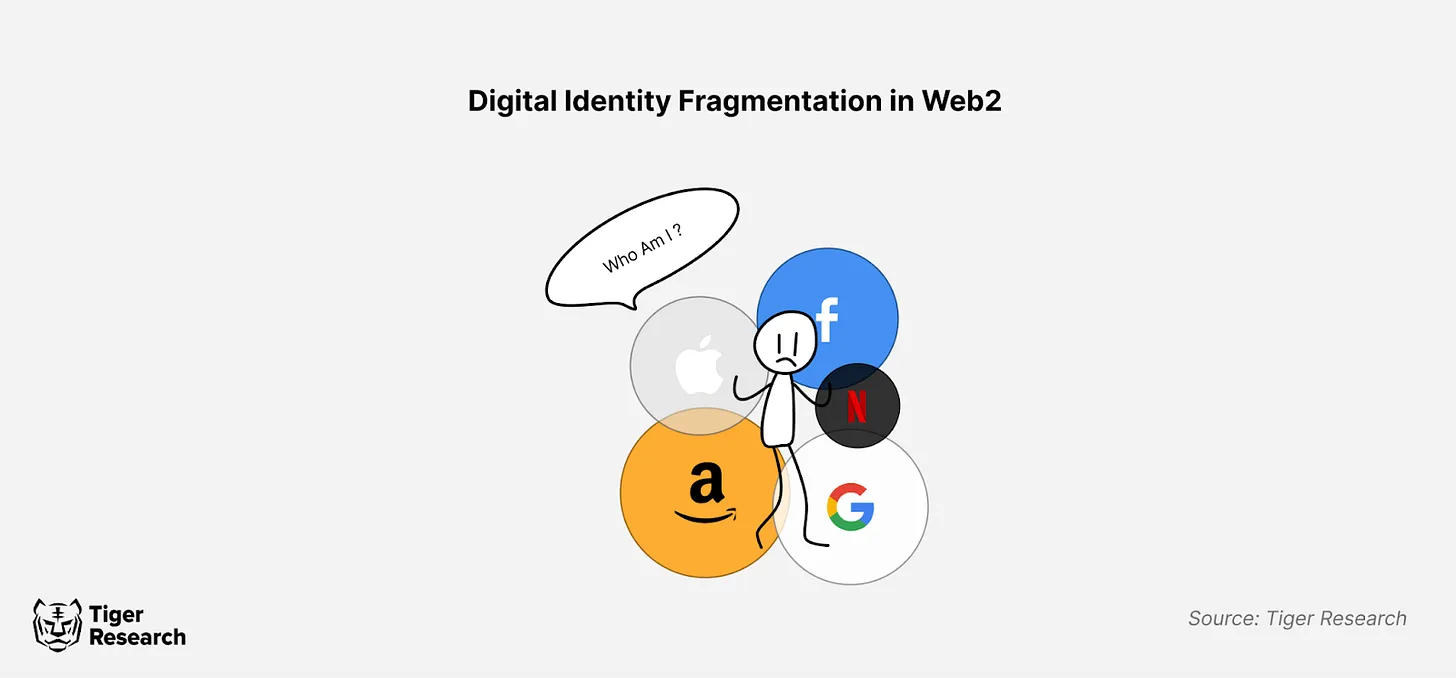
The fragmentation of digital identities has caused both users and businesses to miss out on important opportunities. Businesses struggle to accurately identify high-value users, while the true value of users remains unrecognized. This disconnect severely limits the value creation space for both parties.

This issue is particularly evident in the targeted advertising sector of the Web2 industry. Businesses use platforms like Meta to segment users and conduct promotional activities. However, these ads rely solely on the limited data from each platform, significantly reducing the breadth and accuracy of targeting. Although users interact with multiple platforms, the fragmentation of their digital identities means that promotional activities can only target specific platforms. This disconnect hinders both businesses and users from fully realizing their potential value.

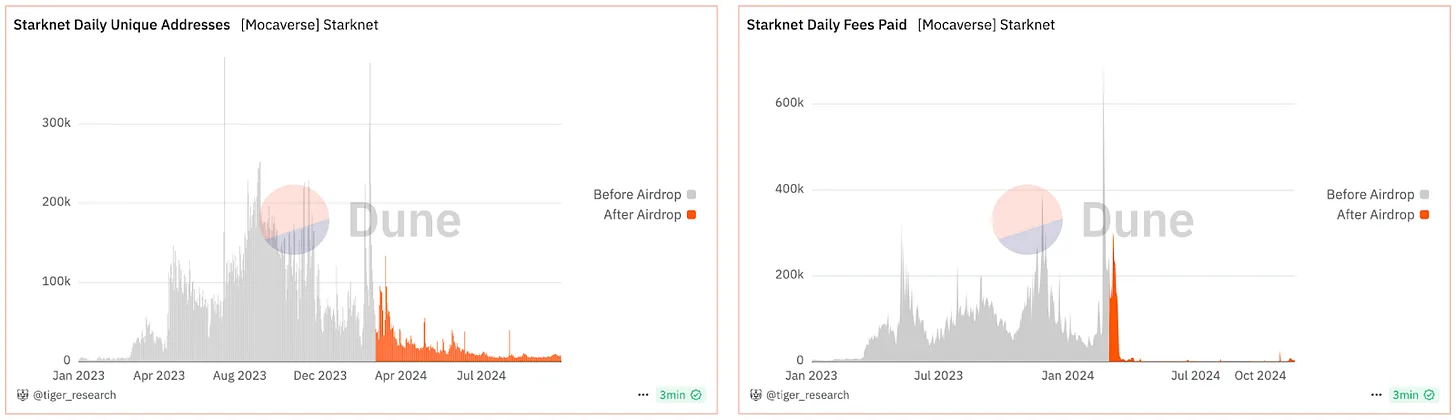
Source: Dune, Tiger Research
The Web3 industry faces even more complex challenges. Web3 projects attempt to reward contributors to the ecosystem through airdrops. However, this process is not smooth. User activities are scattered across Web2 and Web3 platforms, making it difficult to identify true contributors based solely on single-chain data. The anonymity and decentralization of Web3 also allow users to easily decide whether to continue using or exit the platform. The case of Starknet is a typical example: an airdrop targeting approximately 1.3 million wallets failed to accurately identify true contributors due to limited data, ultimately leading to a significant decline in on-chain activity.
2. Fundamental Causes of Digital Identity Fragmentation
The fragmentation of digital identities is a structural issue affecting both the Web2 and Web3 industries. The core problem lies in the fact that platforms, rather than users, control digital identities. Technical limitations are also a significant factor: each platform employs different technical specifications and data models to implement digital identities, making data sharing and integration extremely challenging. Tech giants like Alibaba, Tencent, and FAANG further exacerbate this fragmentation by confining user data within their own walls.
This structural problem not only results in lost opportunities but also causes substantial inconvenience and distorts value distribution. Users are forced to recreate accounts on each platform, repeatedly establishing their activity records and profiles. Platforms profit by monopolizing the aggregated value of data: Google and Meta generate hundreds of billions in revenue annually from ads reliant on user data, while Reddit earns billions each quarter by selling user data. However, the true data owners—users—are excluded from these business opportunities.
To address these issues, digital identity must be redefined as user-centered. Additionally, an open infrastructure that can operate seamlessly across different environments is needed. Moca Network provides solutions to these challenges.
3. Moca Network: Digital Identity Infrastructure for an Open Internet

Source: Moca Network
Moca Network's new MOCA 3.0 aims to build digital identity infrastructure for an open internet. This plan addresses the current system's disconnection and fragmentation issues, aiming to create a unified digital environment for seamless collaboration of digital identities. The infrastructure proposed by Moca Network focuses on three core features.
3.1. AIR Kit: Core Infrastructure for Unified Account, Identity, and Reputation Management
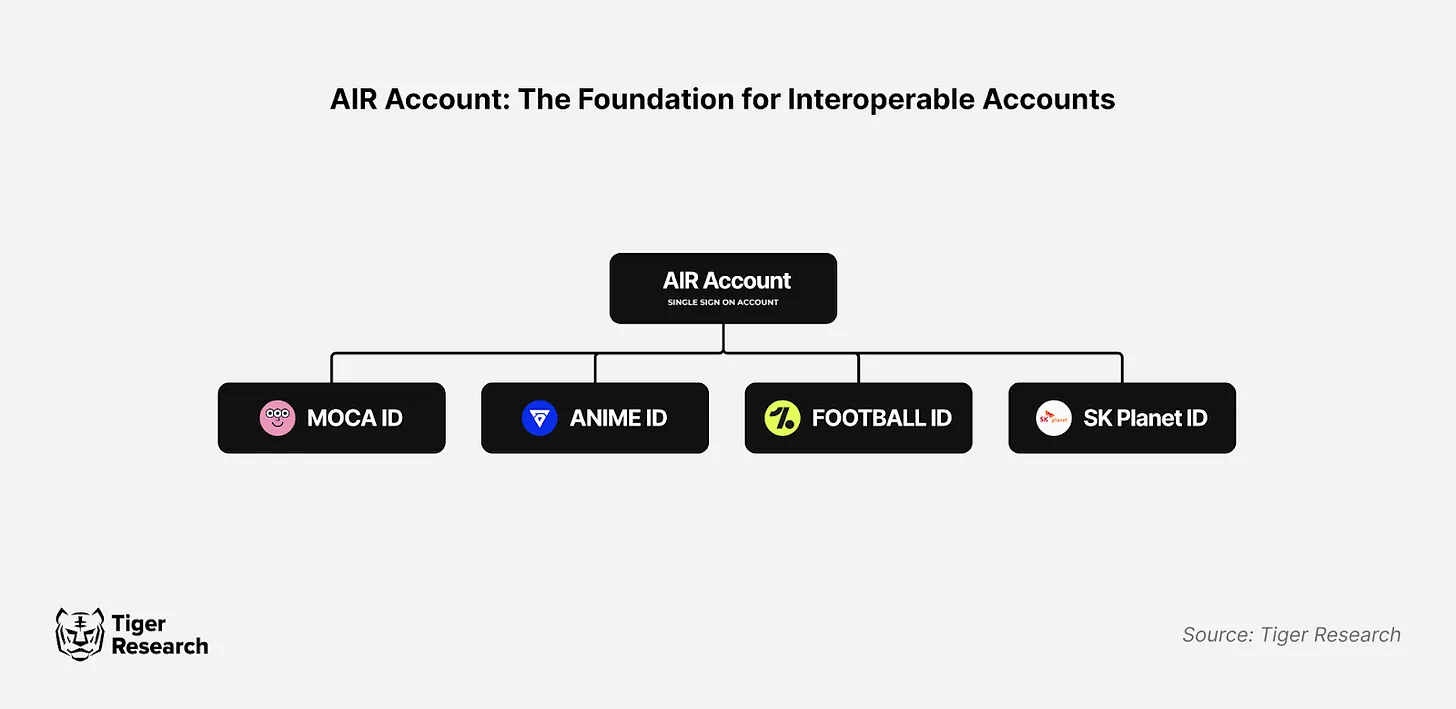
Moca Network's AIR Kit (Account, Identity, Reputation) is a universal account system. It is blockchain-agnostic and can operate in various environments. The system boasts high interoperability, allowing users to easily unify and manage their digital identities.

The AIR Kit enables seamless connection between accounts and identities. The identity ID serves as an interface between users and services, while the account acts as a hub connecting various identities and activities of the user. For example, the MOCA ID on Mocaverse and the FOOTBALL ID on OneFootball link to the same AIR account, while these identities remain independent. With over 1 billion addressable users, Moca Network allows users to participate in multiple ecosystems through a single account.
The AIR Kit can be used as an embedded account system, providing a seamless on-chain experience for Web2. This is similar to how Telegram's TON ecosystem and Grab embed wallets into their applications. Service providers can utilize the AIR Kit to integrate Web3 accounts into their platforms.
With the AIR Kit, creating a Web3 wallet is as simple as using social login. Users can perform on-chain activities without managing complex blockchain addresses or private keys. Features like gas fee payments and cross-chain transactions further optimize the user experience.
3.2. Credential System: Infrastructure for User Data Sovereignty
In addition to an open unified account system, Moca Network also introduces a complete credential system. This system not only provides infrastructure but also empowers users to manage their own data and create value from it. In this way, users can break free from the limitations of traditional centralized platforms and achieve true data sovereignty.

Source: Moca Network
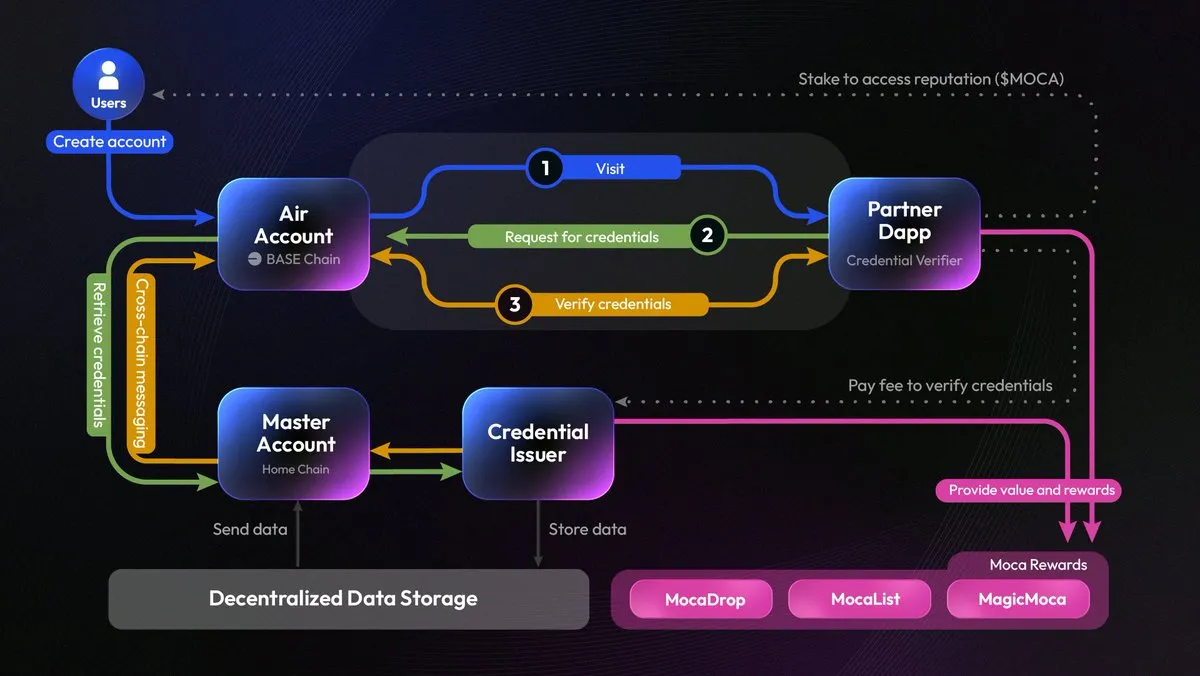
Moca Network supports the issuance, storage, and verification of credentials. It securely stores credential data in decentralized data storage, allowing users to directly set and manage access permissions for their credentials. Moca Network vividly describes this feature as a "decentralized user-owned Google Drive."
Moca Network employs tamper-proof technology and zero-knowledge proofs (ZKP) to ensure data security. It allows users to transfer credentials between different systems using cross-chain messaging protocols like LayerZero or Wormhole, enabling users to securely interact directly with any smart contract on-chain. This greatly enhances users' ability to derive value from their credentials.
Moca Network also plans to adopt zkTLS technology to achieve secure verification and use of Web2 data on-chain. By integrating Web2 and Web3 data, Moca Network is building a more comprehensive digital identity system. This system empowers users, effectively bridging the gap between Web2 and Web3, with the ultimate goal of creating a user-centered, inclusive, and symbiotic ecosystem.
3.3. $MOCA: Token System Driving Sustainable Ecosystem Development
$MOCA is the core governance token of the Moca Network ecosystem. Partners share the network effects of user groups and applications by staking $MOCA. $MOCA can also be used to pay for credential verification and generation fees, contributing to the economic growth of the ecosystem. For users, $MOCA serves both as a payment method and an incentive mechanism, effectively promoting user participation and interaction.

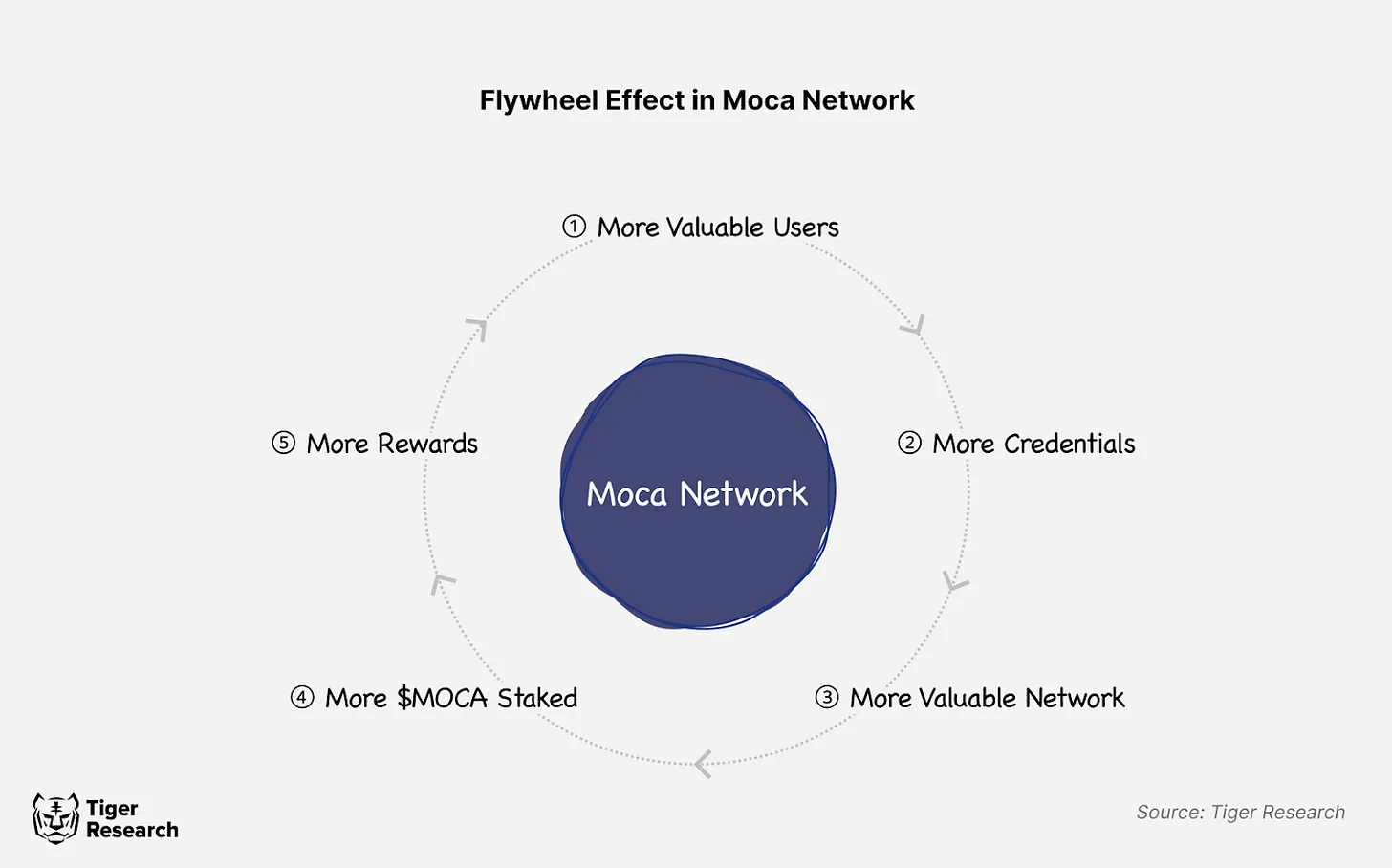
The growth of the ecosystem is driven by a $MOCA-centered flywheel effect: users earn $MOCA rewards through activities, which increases engagement, thereby raising the number of credential verification requests and fee payments from partners. As user activity grows, participants build stronger reputations and earn more rewards, enhancing their purchasing power. This virtuous cycle continuously attracts more partners, further enhancing user rights and expanding the ecosystem's scale.

Source: Moca Network
Moca Network offers various reward programs. These include the regulated token issuance platform Moca List operated in partnership with Coinlist and the staking reward program Moca Drop. Moca Network has also collaborated with Magic Eden to create the NFT issuance platform Magic Moca. Through Moca Drop, users can participate in partner activities and airdrops, with users who stake more receiving higher priority.
In addition to Moca Network's existing reward programs, partners can leverage Moca's infrastructure to create their own reward programs, thereby diversifying the rewards.
4. Moca Network in Action: Establishing Partnership with SK Planet
Moca Network's collaboration with SK Planet demonstrates that digital identity infrastructure is being put into practice. SK Planet has adopted Moca Network's AIR Kit, connecting the OK Cashbag mileage platform and the Syrup rewards platform to the Web3 ecosystem. The company is also exploring the use of $MOCA for rewards. This enables users to utilize their existing points and miles in more ways, gaining multiple cross-platform benefits.

Source: Moca Network
When users join through their accounts, they can purchase coffee vouchers and earn OKB (OK Cashbag) points and $MOCA. The earned $MOCA is stored in their accounts, which they can spend on platforms like the Syrup app or with OKB merchant partners. In the future, users may even use the same account for cross-border shopping, such as in Japan or other countries. Based on user credentials and achievements, merchant partners can seamlessly verify customer information and provide corresponding rewards.
This collaboration benefits all participants. The AIR Kit can instantly convert points, credentials, and tokens into programmable assets. Users gain more value through this process. Businesses can more effectively target valuable customers using verified credentials. Platforms enhance user experience and expand the ecosystem by providing seamless operations and benefits.
5. Accelerating the Ecosystem with Animoca Brands
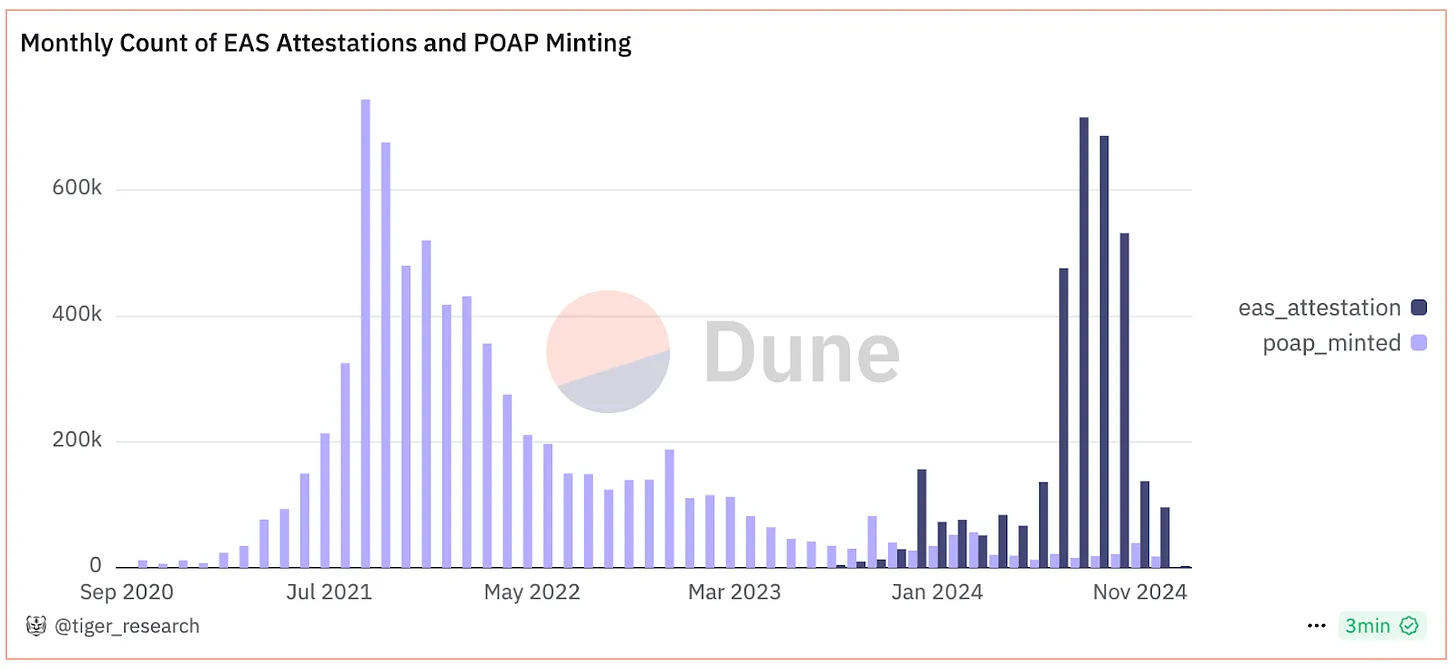
The Web3 industry continues to strive to build digital identity infrastructure. Projects like POAP and EAS showcase effective methods for verifying user identities and activities.

Source: Dune, Tiger Research
However, both projects face challenges in ecosystem building at early stages. Over time, their usage rates have been declining. The issue is not just about technological maturity. The success of identity infrastructure requires the creation of an ecosystem supported by strong network effects.

Source: Moca Network
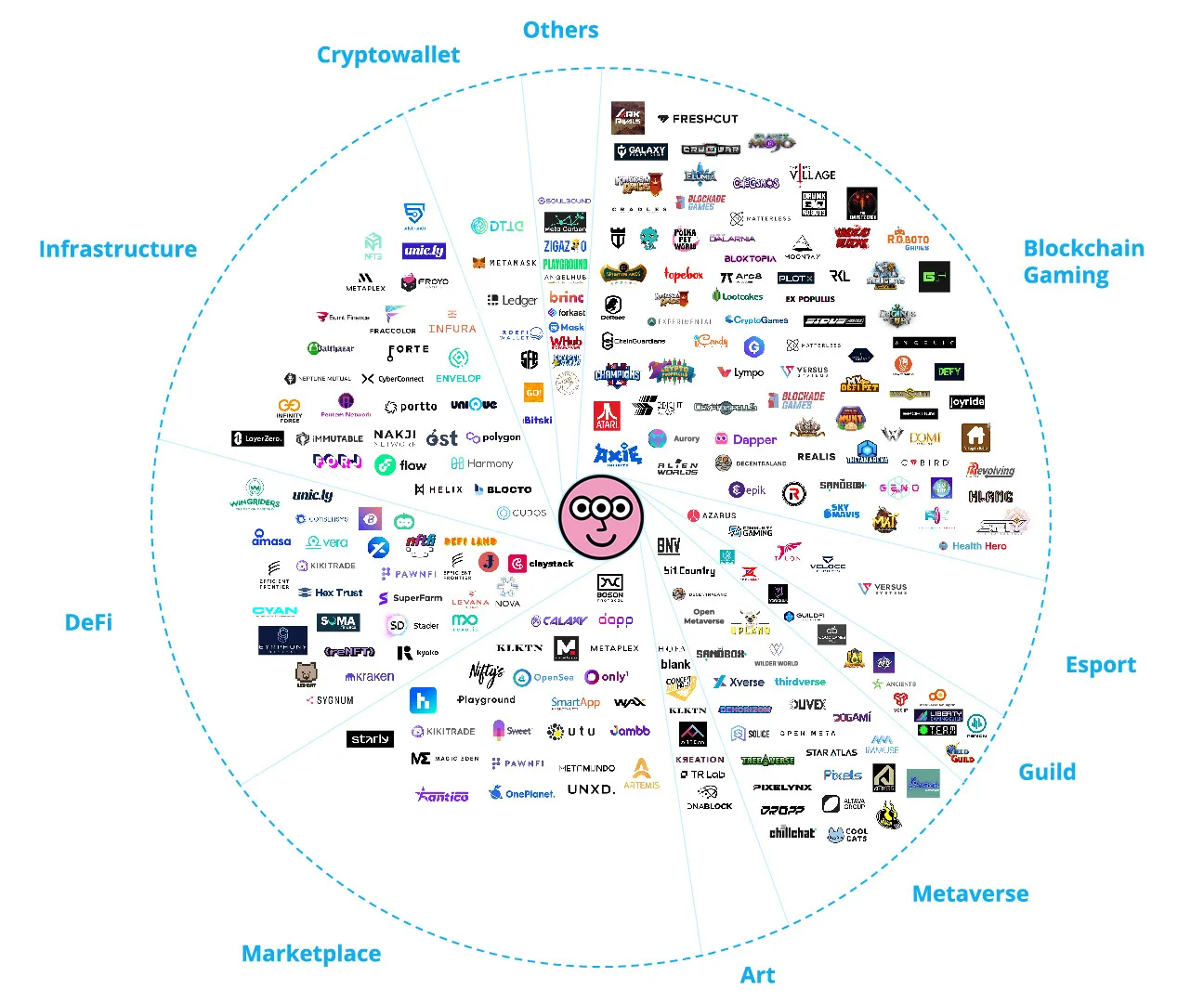
To address these limitations, Moca Network strategically leverages the existing ecosystem of Animoca Brands, which comprises over 540 companies. This extensive network will help accelerate the development of Moca Network's emerging ecosystem.

Source: Moca Network
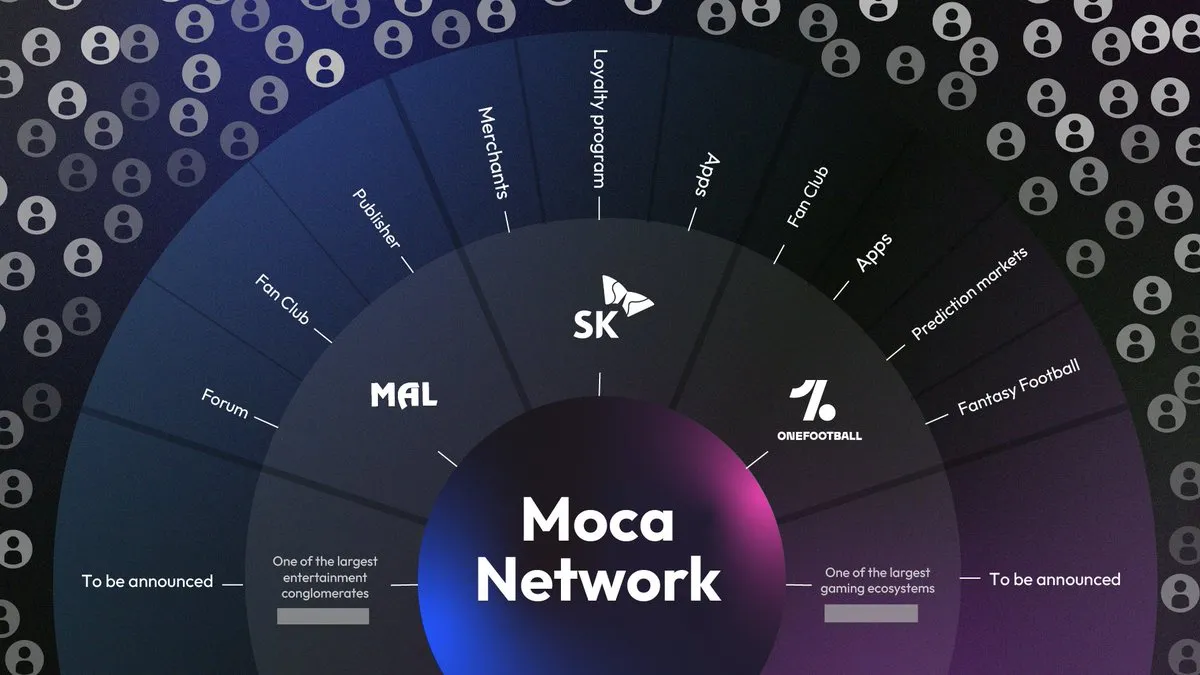
Moca Network has a total potential user base of approximately 1 billion+. This figure reflects the broad user networks of Animoca's major partners, including Telegram's TON (900 million), MyAnimeList (18 million), the football platform OneFootball (200 million), the Animoca ecosystem (700 million), and SK Planet (28 million). These partners are involved in releasing digital identities through the AIR Kit and integrating with the Moca Network ecosystem. Notably, the TON ecosystem will play a key role in accelerating its expansion by releasing digital identities and integrating with Moca Network through the AIR Kit. Learn more.
Animoca's global expansion further enhances the limitless possibilities for Moca Network. The company has established a joint venture with South Korea's CUBE Entertainment. It has also entered the Japanese market through Animoca Brands Japan and collaborated with NEOM City in Saudi Arabia. These initiatives lay a solid foundation for building a globally integrated ecosystem.
6. The Future of Moca Network: From Digital Identity to Reputation Economy
Moca Network plans to introduce a new model called the "Reputation Economy," which serves not only to verify identities but also to measure user reputation using credentials and apply it across various services. Moca Network's partners will create reputation scores based on Web2 and Web3 data, generating new value and opportunities for users.

Source: CopraFi
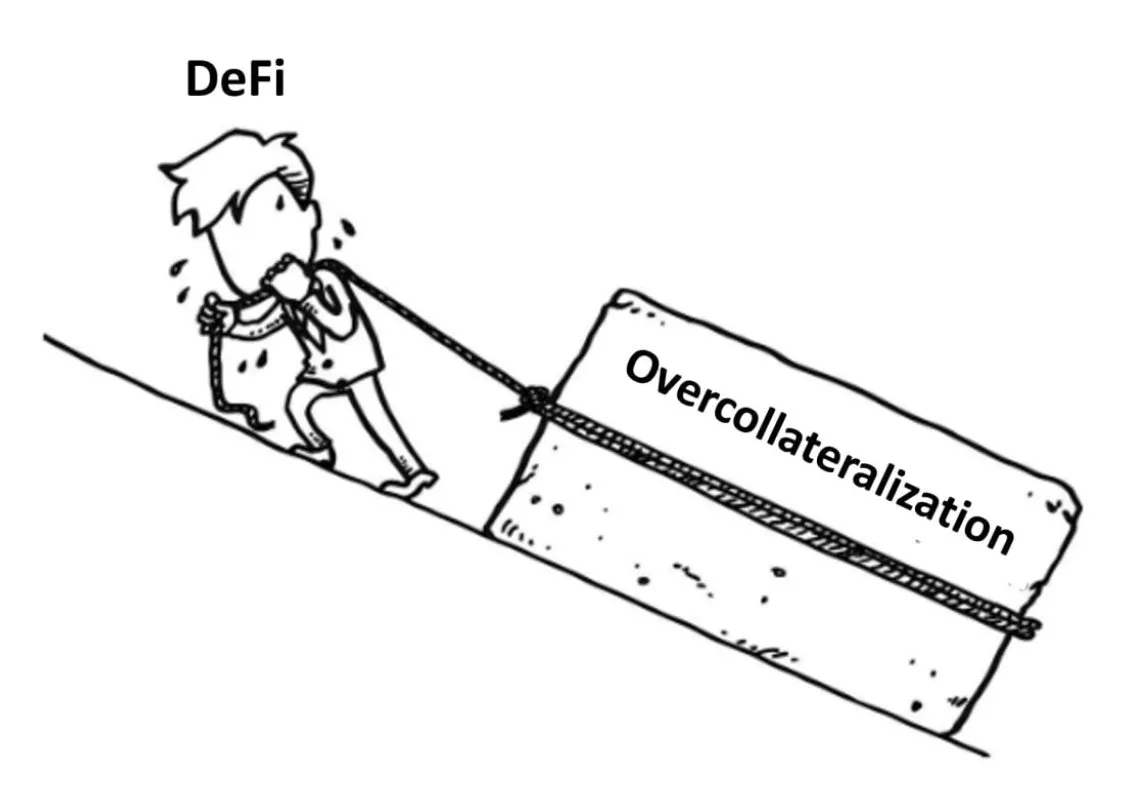
This reputation system can be utilized in DeFi. Currently, DeFi heavily relies on over-collateralization rather than personal credit. This limits market expansion and creates barriers for users. Moca Network will allow partners to apply for user credentials and measure reputation. This will enable credit-based financial services similar to traditional finance. Users can alleviate collateral burdens and access more financial services. For example, users with high reputation scores may receive loans with lower collateral requirements and interest rates when using lending protocols.

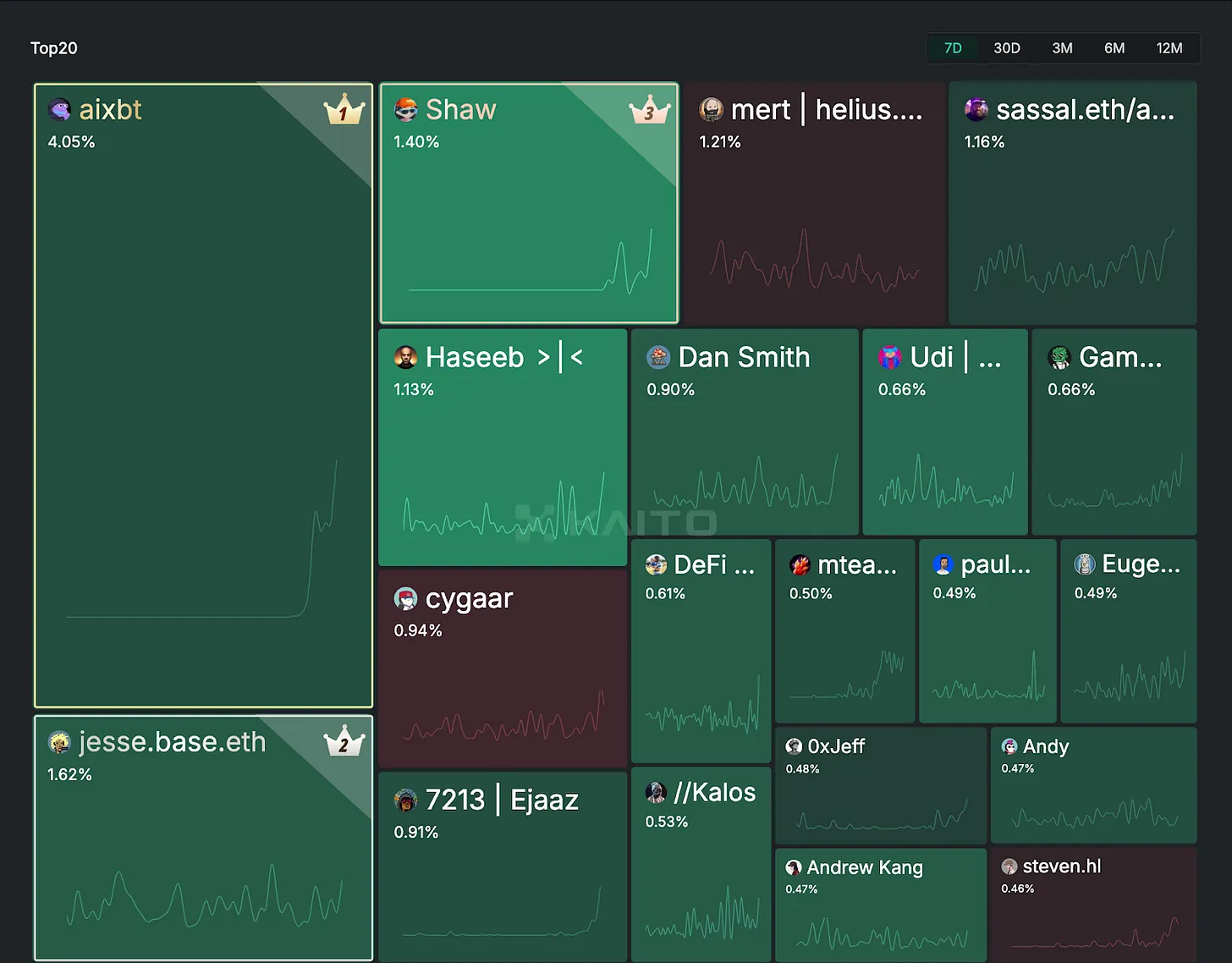
CT Mindshare Rankings, Source: Kaito
As AI agents play a larger role in social networks, the reputation system is expected to address the challenges of the AI era. With an increasing amount of AI-generated content on platforms like X and Discord, AI agents like aixbt are having a growing impact on investors. Verifying the credibility of AI becomes crucial. Moca Network aims to enable AI agent wallets through universal accounts and establish reputations for AI agents and users interacting with them. It is also expected to leverage identity and reputation data to verify digital objects, including physical robots. By facilitating genuine distribution, Moca Network anticipates driving the adoption of AI agents and supporting the development of a fully autonomous internet.
By expanding digital identity, Moca Network aims to establish a trust-based reputation economy. This approach will mark a new chapter in the digital economy.
7. Conclusion

Source: Moca Network
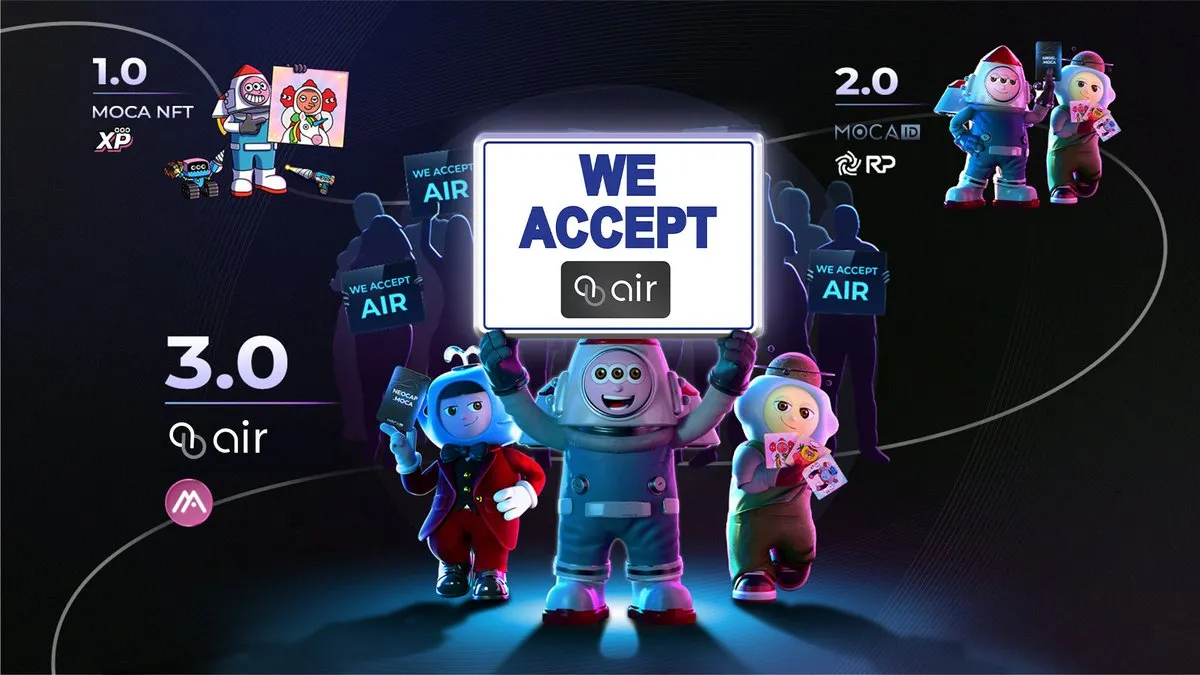
Over time, Moca Network has been making steady progress. In 2023, MOCA 1.0 focused on building a community through the minting of Mocaverse NFTs. MOCA 2.0 expanded the ecosystem through collaboration with Moca ID. With the launch of MOCA 3.0, the network is dedicated to creating an open digital identity infrastructure. Despite facing market fluctuations and challenges, Moca Network continues to make steady progress on its roadmap. It has already partnered with major platforms like SK Planet, MyAnimeList, and OneFootball, realizing its potential as a digital identity infrastructure.
On this foundation, Moca Network is transitioning to a more open and decentralized ecosystem. Through Moca DAO, it aims to enhance community engagement while actively supporting developers in creating new services. This shift aligns with its long-term goal of becoming a community-driven decentralized protocol like Ethereum, paving the way for truly open digital identity infrastructure.
As it develops, Moca Network's innovations create new opportunities across various industries. The Markets in Crypto Assets Regulation (MiCA) provides on-chain credentials for regulated use cases such as zkKYC and token issuance platforms, aligning with Moca Network's vision. By enabling trusted digital identities, Moca Network addresses compliance needs while promoting applications in DeFi, entertainment, and education. As the demand for secure digital identities grows in the AI era, Moca Network is set to lead innovation and solidify its position as a key player.
免责声明:本文章仅代表作者个人观点,不代表本平台的立场和观点。本文章仅供信息分享,不构成对任何人的任何投资建议。用户与作者之间的任何争议,与本平台无关。如网页中刊载的文章或图片涉及侵权,请提供相关的权利证明和身份证明发送邮件到support@aicoin.com,本平台相关工作人员将会进行核查。