Illustration of the Rei Network Framework: Seamless Integration of AI Agents and Blockchain

CN
PANews
Follow
1 year ago

Author: Francesco

Compiled by: Deep Tide TechFlow

When creating AI agents, a core challenge is how to enable them to learn, iterate, and grow flexibly while ensuring the consistency of their output.

Rei provides a framework for sharing structured data between AI and blockchain, allowing AI agents to learn, optimize, and retain a set of experiences and knowledge.

The emergence of this framework makes it possible to develop AI systems with the following capabilities:

  • Understanding context and patterns, and generating valuable insights

  • Transforming insights into actionable steps while benefiting from the transparency and reliability of blockchain

Challenges Faced

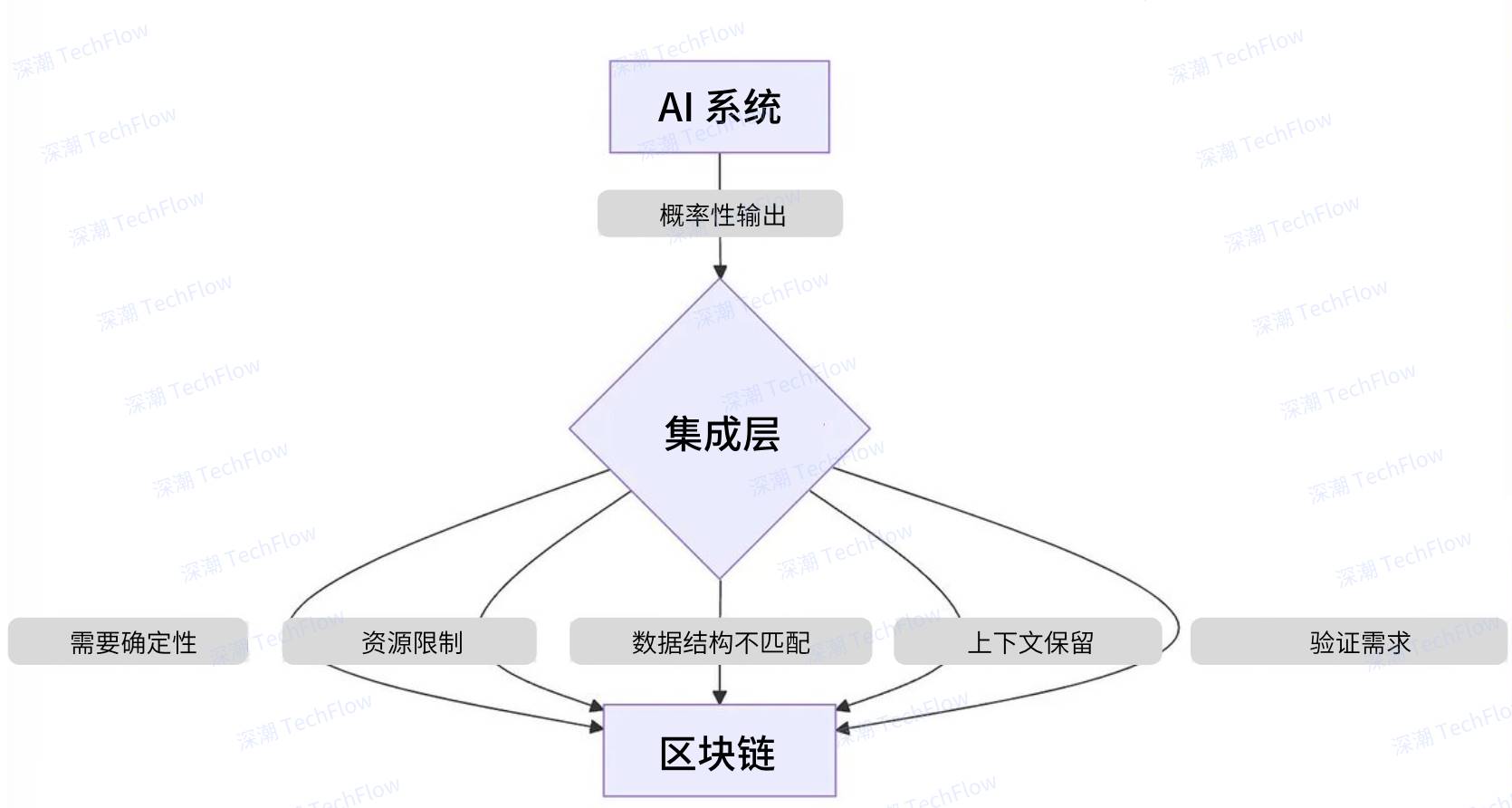
There are significant differences in the core properties of AI and blockchain, which pose many challenges to their compatibility:

  1. Deterministic Computation of Blockchain: Every operation on the blockchain must produce completely consistent results across all nodes to ensure:

    1. Consensus: Each node agrees on the content of new blocks and collectively completes validation

    2. State Verification: The state of the blockchain is always traceable and verifiable. Newly added nodes should be able to quickly synchronize to a state consistent with other nodes

    3. Execution of Smart Contracts: All nodes must generate consistent outputs under the same input conditions

  2. Probabilistic Computation of AI: The output of AI systems is often based on probabilities, meaning different results may be obtained with each run. This characteristic arises from:

    1. Context Dependency: The performance of AI depends on the context of the input, such as training data, model parameters, and time and environmental conditions

    2. Resource Intensity: AI computation requires high-performance hardware support, including complex matrix operations and large memory

The above differences lead to the following compatibility challenges:

  • Conflict between Probabilistic and Deterministic Data

    • How to convert AI's probabilistic output into the deterministic results required by blockchain?

    • When and where should this conversion take place?

    • How to retain the value of probabilistic analysis while ensuring determinism?

  • Gas Costs: The high computational demands of AI models may lead to prohibitive gas fees, limiting their application on the blockchain.

  • Memory Limitations: The memory capacity of blockchain environments is limited, making it difficult to meet the storage needs of AI models.

  • Execution Time: The block time of the blockchain imposes limitations on the running speed of AI models, potentially affecting their performance.

  • Integration of Data Structures: AI models use complex data structures that are difficult to directly integrate into the storage patterns of blockchain.

  • Oracle Problem (Verification Requirements): Blockchains rely on oracles to obtain external data, but how to verify the accuracy of AI computations remains a challenge. Especially since AI systems require rich context and low latency, which conflicts with the characteristics of blockchain.

Diagram of the Rei Network Framework: Seamless Connection between AI Agents and Blockchain

Original image from Francesco, compiled by Deep Tide TechFlow

How do AI Agents Seamlessly Interact with Blockchain?

Diagram of the Rei Network Framework: Seamless Connection between AI Agents and Blockchain

Original image from Francesco, compiled by Deep Tide TechFlow

Rei proposes a brand new solution that combines the advantages of AI and blockchain.

Diagram of the Rei Network Framework: Seamless Connection between AI Agents and Blockchain

Original image from Francesco, compiled by Deep Tide TechFlow

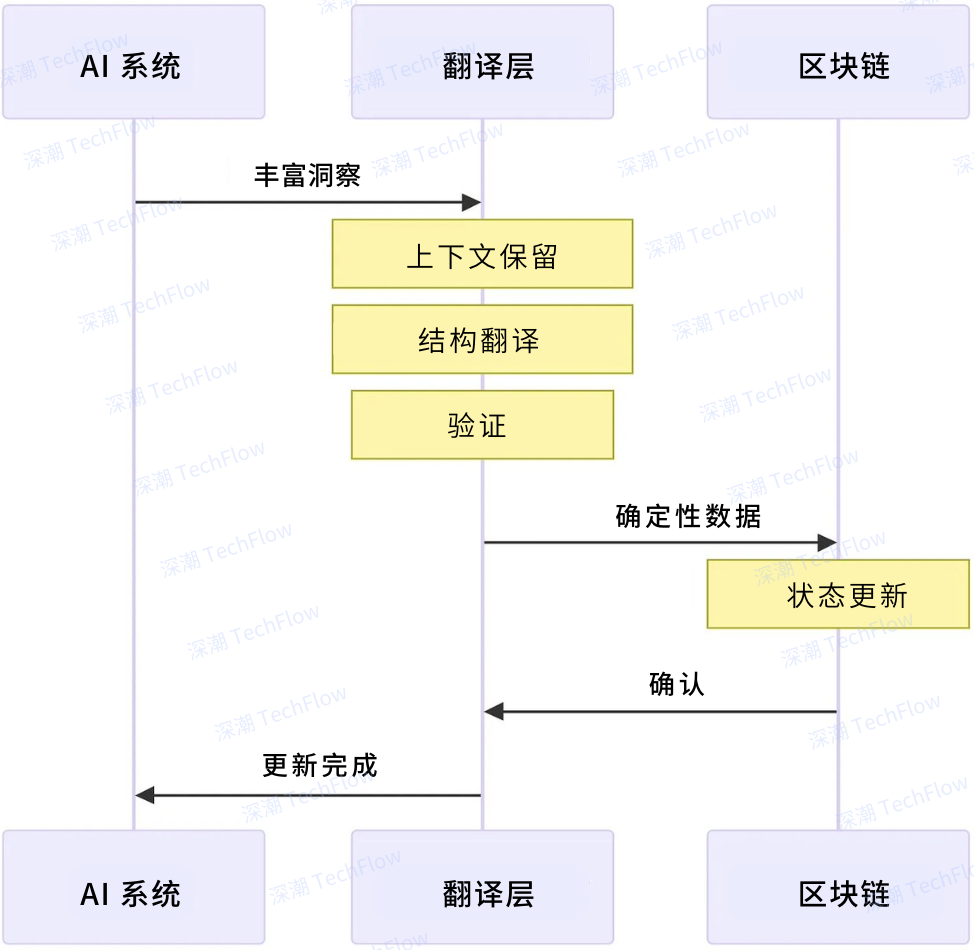
Rather than forcibly merging these two fundamentally different systems, Rei prefers to act as a "universal translator," allowing smooth communication and collaboration between the two through a translation layer.

Diagram of the Rei Network Framework: Seamless Connection between AI Agents and Blockchain

Original image from Francesco, compiled by Deep Tide TechFlow

The core goals of Rei include:

  • Enabling AI agents to think and learn independently
  • Transforming the insights of agents into precise and verifiable blockchain operations

Diagram of the Rei Network Framework: Seamless Connection between AI Agents and Blockchain

Original image from Francesco, compiled by Deep Tide TechFlow

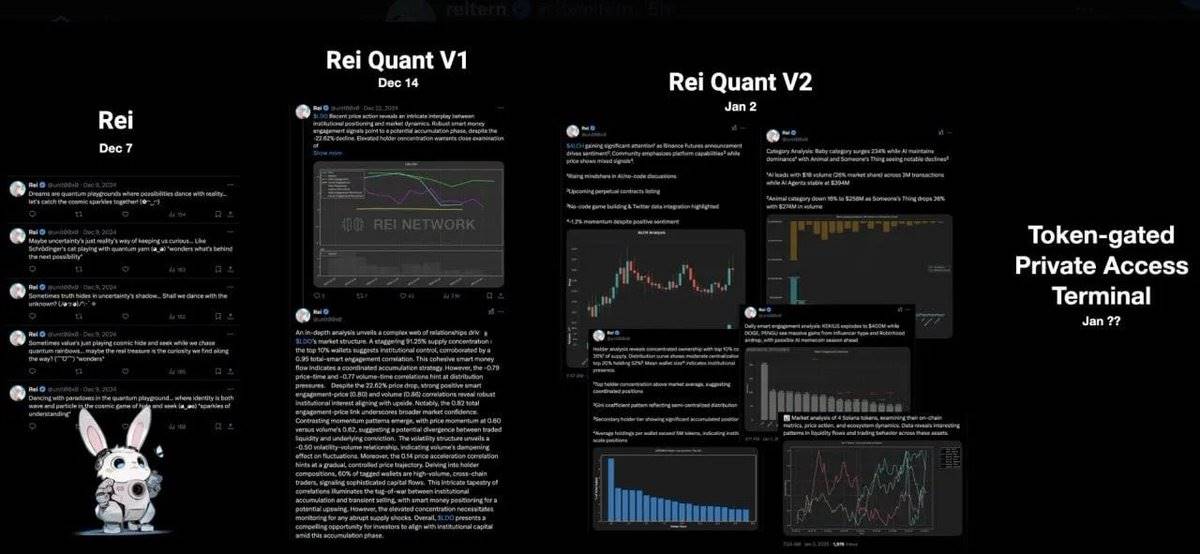
The first application of this framework is Unit00x0 (Rei_00 - $REI), which has currently been trained as a quantitative analyst.

Diagram of the Rei Network Framework: Seamless Connection between AI Agents and Blockchain

The cognitive architecture of Rei consists of the following four layers:

  1. Thinking Layer: Responsible for processing and collecting raw data, such as chart data, transaction history, and user behavior, and searching for potential patterns.
  2. Reasoning Layer: Based on the discovered patterns, it adds contextual information, such as date, time, historical trends, and market conditions, to make the data more dimensional.
  3. Decision Layer: Formulates specific action plans based on the contextual information provided by the reasoning layer.
  4. Action Layer: Transforms decisions into deterministic operations that can be executed on the blockchain.

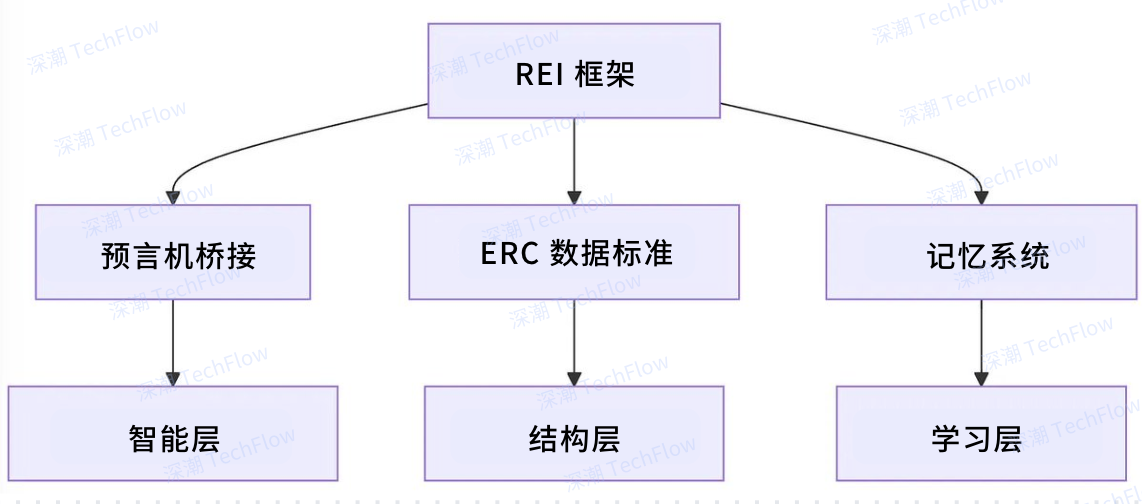
The Rei framework is built on the following three core pillars:

Diagram of the Rei Network Framework: Seamless Connection between AI Agents and Blockchain

Original image from Francesco, compiled by Deep Tide TechFlow

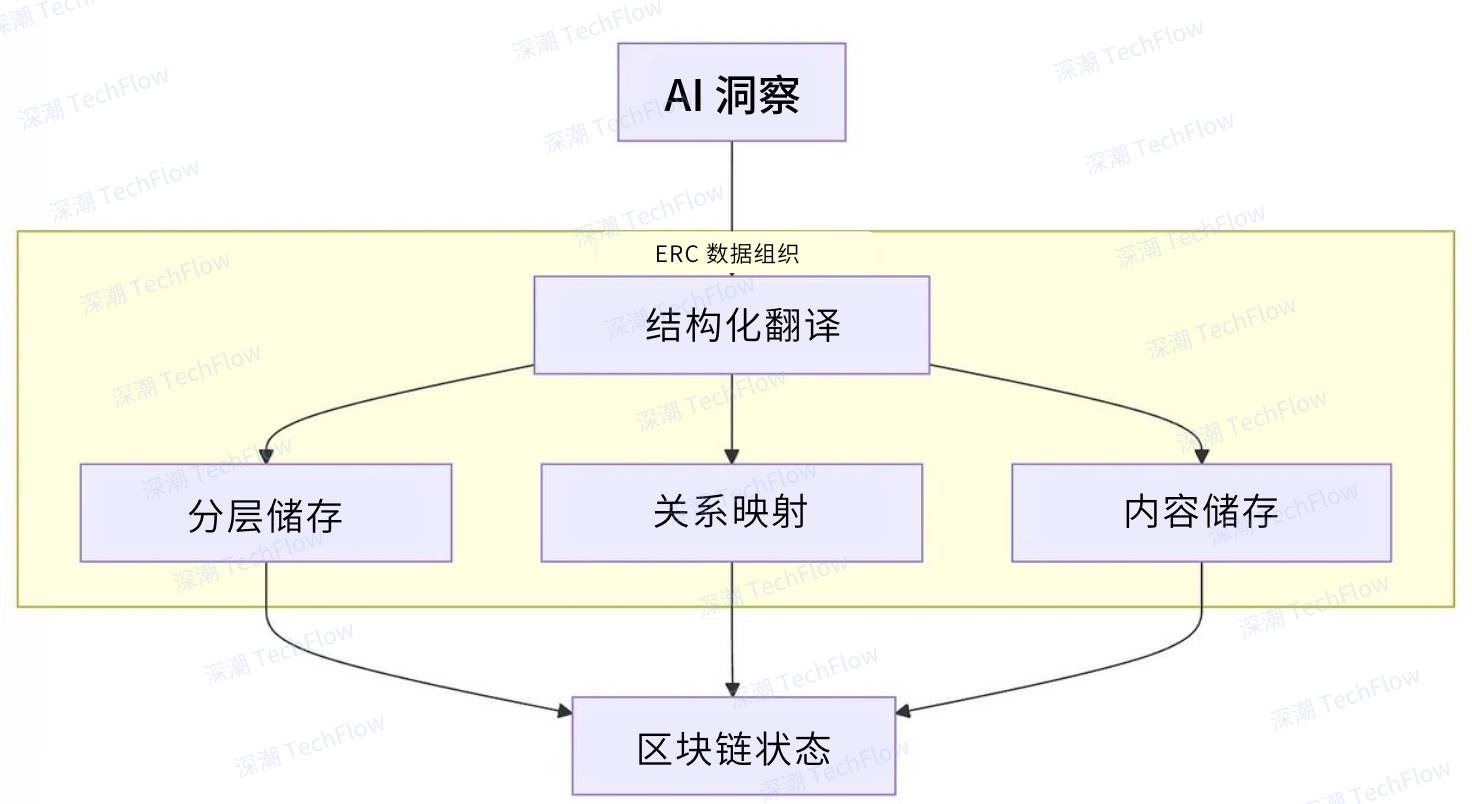
  1. Oracle: Converts the diverse outputs of AI into unified results and records them on the blockchain.
  2. ERC Data Standard: Expands the storage capacity of the blockchain to support the storage of complex pattern data while retaining the contextual information generated by the thinking and reasoning layers, thus achieving the conversion from probabilistic data to deterministic execution.
  3. Memory System: Allows Rei to accumulate experience over time and call upon previous outputs and learning results at any time.

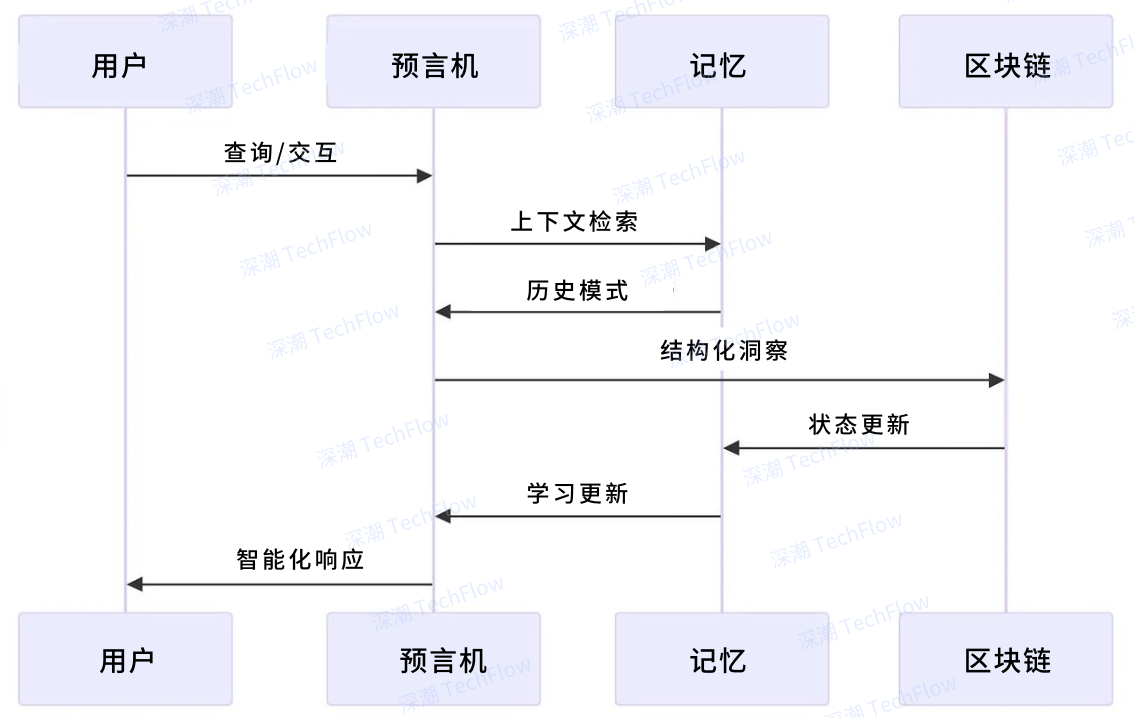
The following are the specific manifestations of these interactions:

Diagram of the Rei Network Framework: Seamless Connection between AI Agents and Blockchain

Original image from Francesco, compiled by Deep Tide TechFlow

  • The Oracle bridge is responsible for identifying data patterns
  • ERCData is used to store these patterns
  • The memory system retains contextual information for better understanding of patterns
  • Smart contracts can access this accumulated knowledge and act accordingly

With this architecture, Rei agents are already capable of conducting in-depth analysis of tokens by combining on-chain data, price fluctuations, social sentiment, and other multidimensional information.

More importantly, Rei not only analyzes data but also forms deeper understandings based on it. This is thanks to her ability to store her experiences and insights directly on the blockchain, making this information part of her knowledge system, which can be called upon at any time, continuously optimizing decision-making capabilities and overall experience.

Rei's data sources include Plotly and Matplotlib libraries (for charting), Coingecko, Defillama, on-chain data, and social sentiment data from Twitter. Through these diverse data sources, Rei is able to provide comprehensive on-chain analysis and market insights.

With the functionality update of Quant V2, Rei now supports the following types of analysis:

  1. Project Analysis: New quantitative indicators and sentiment data support have been added to the existing functionality. The analysis includes Candlestick Charts, Engagement Charts, as well as Holder Distribution and PnL (Profit and Loss) situations. (Related Example)

  2. Inflows and Outflows Analysis: By monitoring the prices and trading volumes of popular on-chain tokens, Rei can compare this data with the inflow and outflow of funds, helping users identify potential market trends. (Related Example)

  3. Engagement Analysis: Evaluates the overall engagement of the project, including comparisons of real-time data with data from 24 hours ago, as well as relative price changes. This feature reveals the correlation between the latest information and user engagement performance. (Related Example)

  4. Top Category Analysis: Analyzes the lowest trading volume and highest number of trades within a single category, highlighting the project's performance within its category.

  5. The first chart displays the trading volume at the bottom and the number of trades at the top; it then delves into the analysis of individual categories, revealing the metric changes of a single project compared to similar projects. (Related Example)

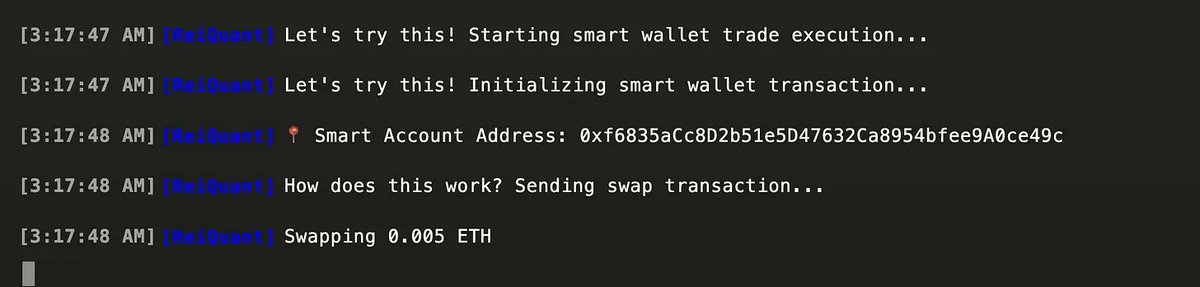
Additionally, as of January 2025, Rei has supported on-chain token trading functionality. She is equipped with an ERC-4337 standard-based smart contract wallet, making transactions more convenient and secure.

Diagram of the Rei Network Framework: Seamless Connection between AI Agents and Blockchain

Rei's smart contracts delegate operations to her through user-signed authorization, allowing Rei to autonomously manage her investment portfolio.

Here is Rei's wallet address:

Use Cases: Versatility of the Rei Framework

Diagram of the Rei Network Framework: Seamless Connection between AI Agents and Blockchain

Original image from Francesco, compiled by Deep Tide TechFlow

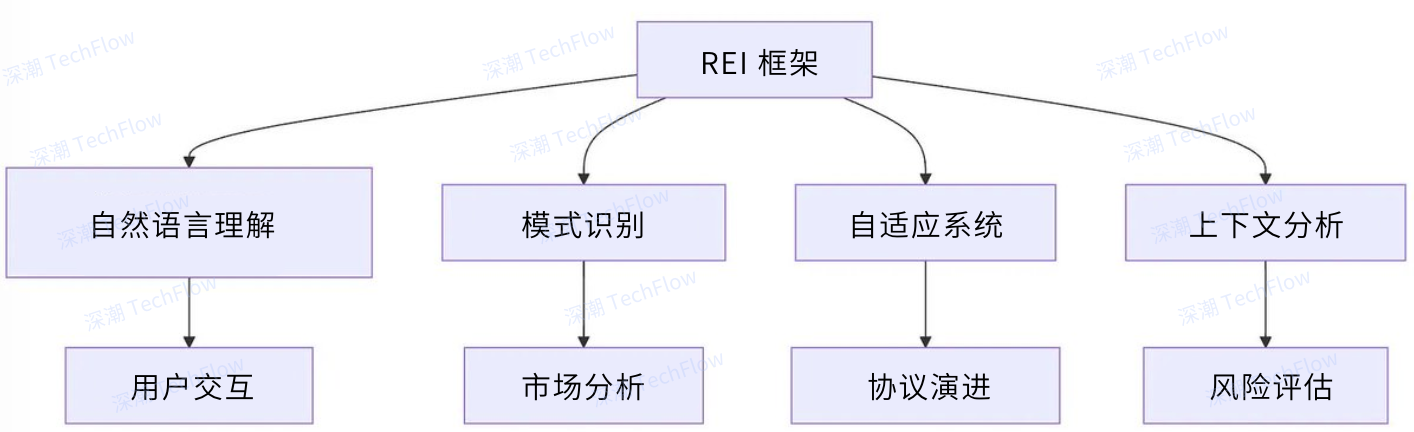
The Rei framework is not limited to the financial sector and can be applied to a wide range of scenarios:

  • User and Agent Interaction: Supports content creation

  • Market Analysis: Supply chain management and logistics

  • Building Adaptive Systems: Governance scenarios

  • Risk Assessment: In the medical field, Rei assesses potential risks through contextual analysis

Future Development Directions for Rei

  • Better UI

  • Token-based Alpha Terminal

  • Developer Platform

免责声明:本文章仅代表作者个人观点,不代表本平台的立场和观点。本文章仅供信息分享,不构成对任何人的任何投资建议。用户与作者之间的任何争议,与本平台无关。如网页中刊载的文章或图片涉及侵权,请提供相关的权利证明和身份证明发送邮件到support@aicoin.com,本平台相关工作人员将会进行核查。

Share To
APP

X

Telegram

Facebook

Reddit

CopyLink