Author: Revc, Golden Finance
The AI Agent track has recently attracted a large number of investors due to extreme volatility, with its high yield potential creating a unique trading experience. MEME trading stimulates excitement and addiction through "roller coaster-like jumps" in balance, with the instant release of dopamine testing investors on psychological and emotional levels.
For investors, while enjoying the profits brought by market fluctuations, it is essential to be wary of the erosion of addictive psychology and to avoid falling into emotional trading. At the same time, by deeply researching the long-term value and technical potential of projects, one can find more robust investment directions amidst the volatility. The market needs a balance of rationality and passion, rather than being dominated by a single stimulus.
Currently, the screening of MEME projects follows two lines: "speculation" and value discovery. This article analyzes high-frequency "speculative" trading methods, revealing how professional MEME creators exhaust investors' energy and capital.
1 Hour 15 Times Case

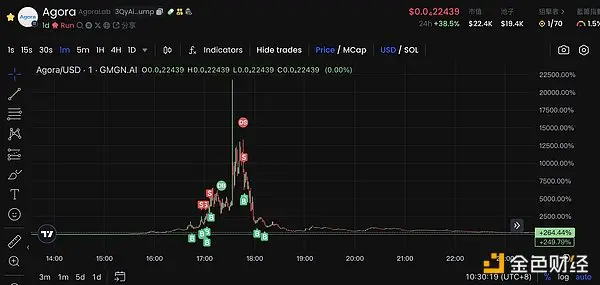
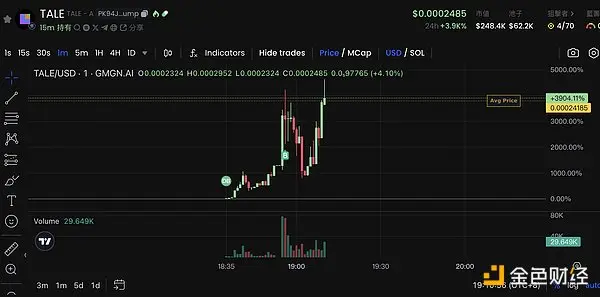
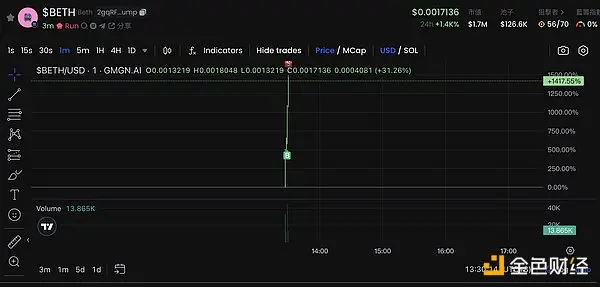
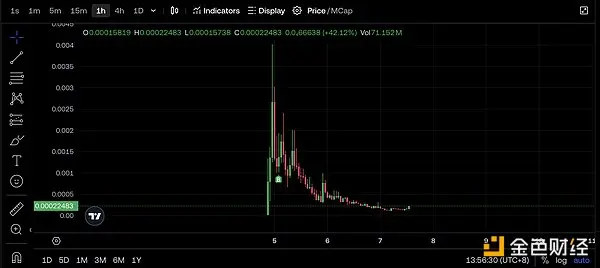
Taking the MEME token Agora as an example, investors initially judge that the project has the potential for an increase, and then engage in scalping trading for arbitrage. Multiple scalping trades quickly double the investor's capital, and this is just the beginning. After the second-to-last purchase, Agora rapidly surged to a 15-fold increase within 30 minutes. Due to the lack of take-profit and stop-loss options on the web trading interface, the actual profit was far from 15 times. However, stimulated by the 15-fold increase, investors fell into a cycle of continued speculation, ultimately losing everything amidst the volatility.
PS: Scalping is a high-frequency trading strategy where traders profit by capturing short-term price fluctuations in stocks, futures, or other financial instruments. The core idea of scalping is to quickly enter and exit trades based on short-term market fluctuations, earning small profits on each trade but accumulating gains through multiple trades.
30 Seconds Analysis to 10 Minutes Capital Zeroing "Strategy"
MEME trading is a high-intensity game of information capture and rapid execution, and PVP trading has evolved a structured indicator system for project screening. In this model, the analysis and execution phases are extremely compressed, usually completed in just a few minutes, especially when a project's market cap has just reached N times the internal market cap (about $68,000). At this point, N is usually less than 10, meaning the market cap is below $600,000, and market competition is exceptionally fierce. However, once a project peaks and then falls back, these new projects are often quickly abandoned by investors, leading to a sharp decline in interest.

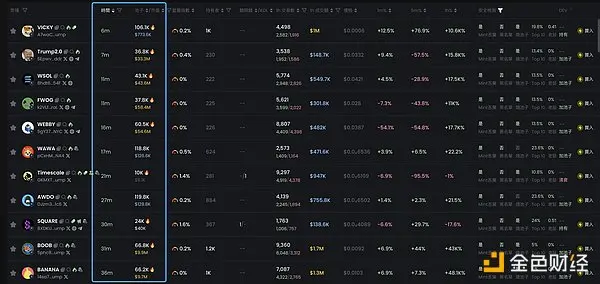
- Project Judgment and Screening: On the new project page, sort by launch time. At this point, projects typically exhibit trading volumes 3-5 times their market cap, with a blue-chip index in the range of 0-1.2%. During rapid screening on the primary page, focus on the following indicators: fast growth in the number of addresses, low market cap (avoid projects with market caps reaching tens of millions of dollars), and projects that have not experienced severe pullbacks and are still making new highs within 1-5 minutes.

Release Time: 30 minutes is usually a critical dividing line, as most projects begin to show signs of dumping and profit-taking about 30 minutes after release (data sourced around 6 PM Beijing time).
Market Cap Size: Projects with a market cap around $300,000 are generally reasonable, while those reaching tens of millions of dollars may carry a higher risk of exit scams.
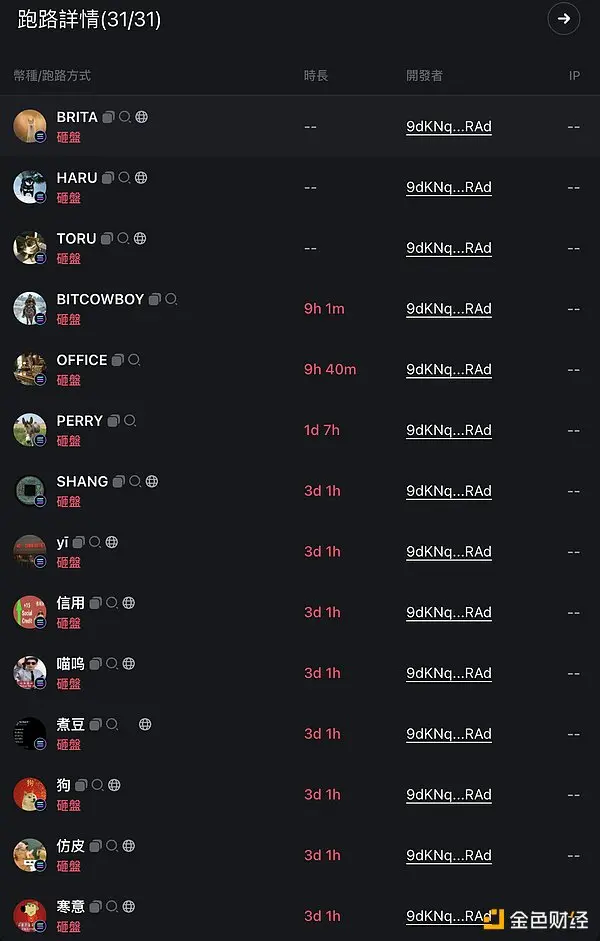
Exit Scam Risk: The GMGN platform marks developers' operational records in historical projects, such as withdrawing liquidity, dumping, or running away. These markers are important indicators for assessing project stability.

Blue-Chip Index: As a growth indicator, the blue-chip index reflects investors' purchasing power and community consensus by analyzing the blue-chip tokens held by investors, providing indirect evidence for assessing project health.
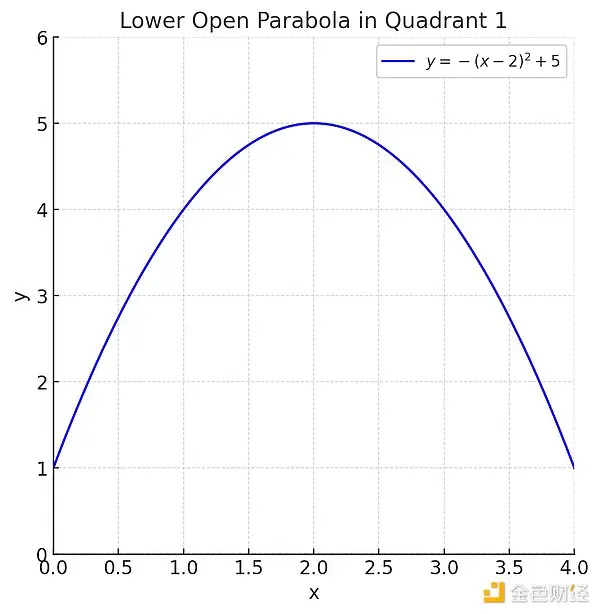
Order Book Health Indicator (X = Trading Volume / Market Cap): Typically, in the early stages of a project, the X value approaches 2, then shows a downward-opening parabolic trend. When the parabola peaks, trading volume hits a new high, and market cap approaches a cyclical peak, indicating that PVP trading activity has reached its climax. After that, trading volume decreases, market cap drops, and "smart money" begins to exit.
Additionally, trading volume can provide a preliminary judgment on tokens. For example, a single trade amount hitting a new high may indicate the entry of large funds, which is positive for the market. However, many trading platforms currently do not provide statistics on single trade amount trends or trading frequency, making reliance on trading volume data insufficient for a comprehensive market analysis.

- Marked Traders: Typically, these are leading MEME communities and DEX platforms, reflecting whether the promotion has covered mainstream communities, but such addresses usually withdraw liquidity quickly.

TOP10 Address Indicator: This indicator analyzes the top ten addresses by token holdings and their proportion of total supply. Generally, a holding ratio below 20% for the top ten addresses is considered healthy, indicating a more dispersed token distribution, stronger community consensus, and relatively lower sell-off risk.
Profit Expectation Formula: As a token's market cap grows from $300,000 to $3 million, its success rate is often very low. Investors typically invest 1-10 SOL in a single project, but excessive liquidity addition may lead to a price surge, triggering greed among holders and prompting quick profit-taking. For example, if the success rate of the projects selected by investors is P=10%, and funds go to zero after failure, then according to 1/P=10, a single project needs to achieve a 1000% return to break even. In this case, projects with market caps in the hundreds of thousands of dollars resemble a probability game.
New Coin Priority Strategy: As the screening and analysis framework for MEME tokens matures, creators often prefer to issue new tokens to more easily manipulate related indicators. This new coin issuance model not only caters to the market's preference for "innovation" but also increases the likelihood of attracting capital inflows in the short term.

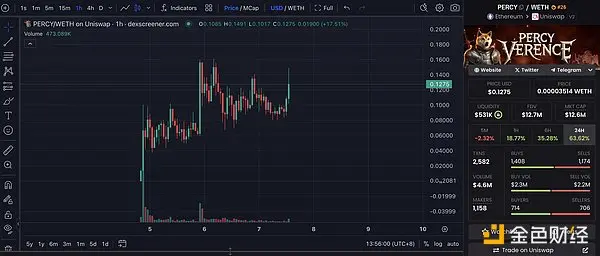
- Same Concept, Prefer Base: Taking the recent Percy concept promoted by Musk as an example, the performance of the Base network significantly outperforms Solana. This is because the users of the Base network are mostly seasoned DeFi users, whose purchasing power is typically 3-4 times that of Solana users. Additionally, trades on Base more frequently see whale entries, further enhancing its market performance and capital liquidity.


Doubling Out Strategy: Since PVP is a high-frequency and high-risk trading model, users are easily influenced by emotional fluctuations during this process. The "doubling out" strategy is a relatively scientific and psychologically lighter method. By withdrawing the initial investment after profits double, investors can more easily hold the remaining assets long-term, thus freeing themselves from the pressure and troubles caused by short-term emotional fluctuations.
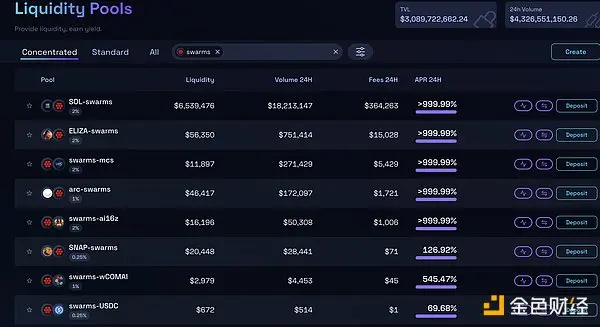
Motivation Analysis for Pool Adjustments: In medium to large projects, investors typically pair tokens with SOL to invest in Raydium liquidity pools, aiming for up to 999.99% 24-hour APR. The core essence of DeFi is to short volatility, and when paired assets experience a one-sided market, liquidity providers may face impermanent loss. When investors increase liquidity pool assets, it usually indicates their optimism about the corresponding asset's short-term rise, but the extent may be limited, reflecting signals of short-term consolidation. Conversely, when investors reduce pool assets, it often indicates a bearish outlook on a particular asset, possibly accompanied by sell-offs or readjustments of asset exchange ratios.

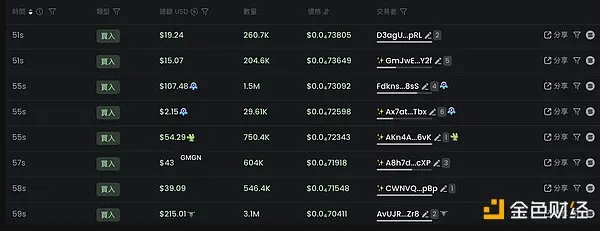
- Observation of New Address Activities: Regular market-making is considered a danger signal, such as large amounts being bought and sold against each other. It is also advisable to study the trading habits of developer addresses.
By understanding the methods mentioned above and conducting a preliminary analysis of internal market projects, congratulations, you are about to fall into the trap set by professional MEME operators. They will create a perfect MEME based on indicators that fit your project analysis and screening framework, then craft a narrative involving AI + founder interaction + hackathons, among other elements. Coupled with the emotional fluctuations brought about by high-frequency trading, this leads to a rapid loss of judgment regarding the project, breaking trading discipline and resulting in losses. Therefore, this article serves as a "MEME addiction prevention article." Regardless of where investors learn about the "wealth code," information asymmetry still exists because PVP must ensure someone is there to take over. Thus, new Web3 users should avoid becoming addicted to the MEME track and gradually cultivate their ability for value discovery.
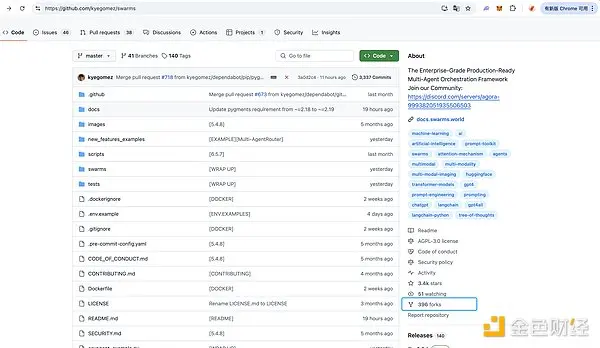
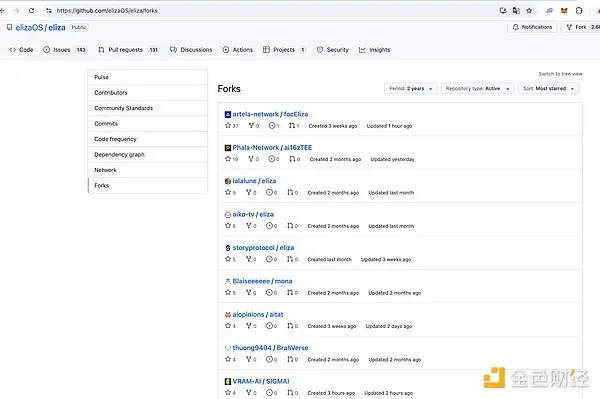
For framework-based AI Agent projects, one can pay attention to the Forks page in GitHub repositories to see which projects have referenced Eliza's code. However, even so, it is essential to cautiously assess the project's development progress and actual potential to avoid blindly following investment trends.


The final suggestion for MEME impact — arrange your time wisely and pay attention to rest!!
Summary
MEME trading is not only a test of innovation and risk tolerance but also fully demonstrates the potential of cutting-edge concepts like AI Agents in technological breakthroughs and decentralized narratives. Such high-volatility markets provide sharp investors with opportunities for quick profits while also driving the exploration and development of blockchain technology, token economic models, and AI application scenarios. In this environment, investors need to continuously optimize their instant decision-making abilities and market adaptability to find and apply advantageous strategies in a high-risk market.
However, the high-frequency volatility of the MEME market also carries significant risks. Severe price fluctuations can easily trigger emotional trading, causing investors to fall into a cycle of "blind speculation." The dopamine rush from short-term gains may lead one to overlook the logic of long-term value investing, and excessive reliance on short-term trading often results in substantial capital losses. Especially for projects lacking solid technical support or real application scenarios, they can easily devolve into mere speculative tools after the hype fades, leading to significant losses for investors. Such losses not only undermine individual investment confidence but may also negatively impact the healthy development of the entire cryptocurrency industry, further exacerbating market instability.
For investors, rationality and a long-term perspective are particularly important. When participating in MEME trading, one should combine technical analysis with project value exploration to avoid being swept away by short-term fluctuations. Only by finding a balance between risk and reward can one achieve truly sustainable profits in this highly volatile market.
免责声明:本文章仅代表作者个人观点,不代表本平台的立场和观点。本文章仅供信息分享,不构成对任何人的任何投资建议。用户与作者之间的任何争议,与本平台无关。如网页中刊载的文章或图片涉及侵权,请提供相关的权利证明和身份证明发送邮件到support@aicoin.com,本平台相关工作人员将会进行核查。