We will see a billion agents on the blockchain, not a billion humans.
Written by: Evan
Translated by: 1912212.eth, Foresight News
AI is the theme of this cycle, and many firmly believe it will be a long-lasting field. On the other hand, there are also many rational criticisms that most current AI products are of questionable quality, and it may take another 3 to 5 years for this technology to truly become meaningful.
Crypto x AI (the combination of crypto and AI) encompasses multiple levels. The true technological potential of crypto and AI mainly lies in driving better reasoning capabilities through cryptoeconomics or providing access to decentralized computing resources. This article from Delphi is a good starting point for learning about the entire tech stack.
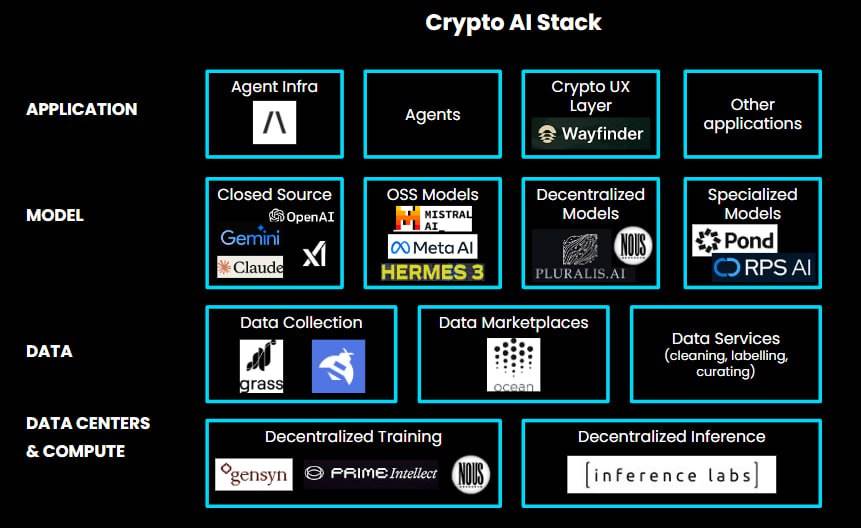
However, this article focuses on the current development status of intelligent agents. Although exciting innovations are also taking place at the bottom of the tech stack, intelligent agents seem to have attracted the attention of mainstream crypto Twitter (CT). Here are several major trends to watch in the evolving field of crypto and AI agents at this level:
Framework + Launchpad: Value accumulation is becoming important, and frameworks may exist long-term
Value accumulation is starting to become important. Why is that? Stepping back, why do people hold certain assets? There are two reasons they trade assets with dollars:
They believe they can sell the asset to someone else at a higher price, having seized the opportunity of narrative rotation, thus attracting new buyers.
The asset can generate more cash flow over time.
Jez (@izebel_eth) mentioned in his article "Old Coin Bad, New Coin Gud" that the only thing that matters is liquidity. These two reasons reflect two forms of bullish liquidity for assets:
New holders
Token burn mechanisms
However, in most cases, we have yet to see any real token burn mechanisms or token value accumulation. The model of using agents (like AIXBT) through agent terminals is more akin to staking rather than traditional value accumulation.
This is also why frameworks like Virtuals, AI16z, Zerebro, and Arc have recently become so popular. Virtuals has already generated $60 million in protocol revenue. AI16z initially focused on investing in DAOs, but since releasing details about its upcoming Launchpad and related token value accumulation, it has become one of the top protocols in this category.
Currently, the framework + Launchpad space has become extremely saturated, as many projects have developed based on the aura of early successes. There is also a lot of skepticism in the market regarding the roles of these Launchpads, especially when many agents themselves are of no use. However, many frameworks (like Eliza V2 + Launchpad, Zentients, Arc, and their handshake programs) have yet to officially launch their core products. If they can successfully attract developers and users, they may continue to lead the entire industry.
Why frameworks may exist long-term:
Regardless of whether agents are still of questionable quality, the frameworks used to launch agents will continue to perform well, as they cater to speculative behavior with market demand fit (PMF). Frameworks and Launchpads allow users to control the factory while participating in the casino. In many ways, Virtuals has already replaced pump.fun in the Base ecosystem.
Optimistically, as technology advances, leading frameworks may give rise to more advanced agents, and open-source repositories like Eliza will further accelerate this process. Additionally, many Launchpads are also positioning themselves as coordination layers for group coordination and communication between agents, which may involve some form of value transfer through their tokens.
DeFAI: The next wave of agents will prioritize practicality and value accumulation, and DeFAI (the combination of DeFi and AI) may be the first category to achieve market demand fit (PMF)
Most agents currently are just meme coins with no real utility. For the agent space to further develop, the next wave of agents must be able to execute practical use cases for us. The real growth opportunities will come from substantial value accumulation and agents that can take action. I believe the next year will be a critical period for the leap from first-level agents to third-level agents.
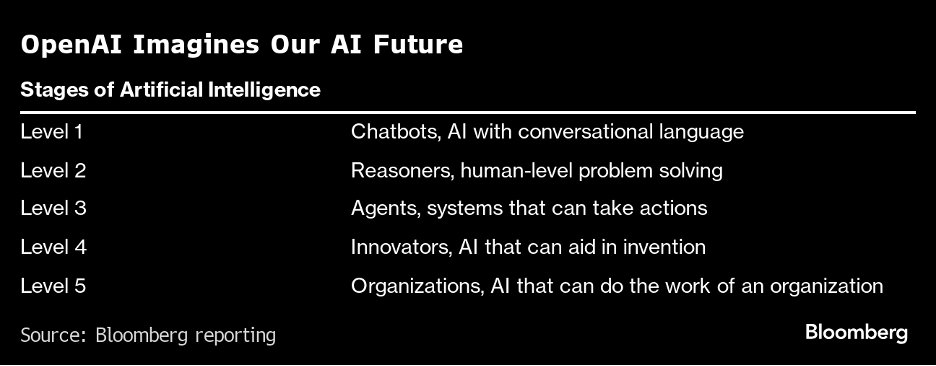
We first see this trend reflected in DeFi. In the future, we will see more terminals that allow users to express desired outcomes in natural language or voice, while agents will execute tasks in the background. Existing wallets and protocols will also integrate agents to improve user flows.
On the consumer level—agent representation, autonomous worlds, and gaming: Attention-based agents will develop more complex personalities and multimedia interactivity, which may drive the next wave of gaming and metaverse technology.
One of the issues facing existing agents is that they are all starting to homogenize, becoming commoditized, beautified chatbots. While some agent projects will shift towards infrastructure (many are already doing so), others will begin to think about useful products or applications, while some may continue down the path of attention tokens. However, the next generation of attention agents will be more powerful, developing more complex personalities and providing richer interactivity. This could be achieved through audio-visual expressions or by giving agents 3D representations and physical entities.
This concept has already seen early attempts, with Jeffy writing about the idea of giving Zerebro a body, and some attention-driven KOL agents launching directly through audio-visual expressions, focusing on short video content like TikTok. Slopfather and Ropirito are two early examples of agents using video.
However, I believe more agents will adopt these features, making them more dynamic. The market demand fit (PMF) in this field will be realized through the consumer layer, where individuals may wish to create personalized agent companions or interact with KOLs. This phenomenon has already occurred outside the crypto space, with ordinary people logging into sites like character.ai by the thousands to converse with AI character companions, and Google recently acquired the company for $2.7 billion.
Moreover, these 3D agents may find PMF in the existing consumer layer, especially in gaming and the metaverse. Agents add deeper backstories to worldviews. Imagine an NPC that is an agent, capable of independently completing tasks and playing games, with a continuously evolving memory and personality. True autonomous worlds in games may be realized through agents.
Agent Organizations: The Return of DAOs
Decentralized agent organizations are the next form of DAO evolution. Group or multi-agent systems are very exciting because they may be able to coordinate and execute more advanced strategies, similar to managing a company. A heterogeneous group with various types of specialized agents and models working in synergy may outperform a single large model.
Although fully autonomous agents and groups may take some time to achieve, the next iteration of DAOs will likely include human interaction with groups. This will reduce inefficiencies in bureaucracy and lower the costs and time of human execution. In terms of liquidity, the next developmental step is from income-earning agents to complete organizations that earn income.
Verifiable Agents: Today's agents are moving towards greater autonomy and actually possess their own liquidity
Currently, most agents still require a high degree of human intervention. The next wave of agents will move towards true autonomy, starting with managing funds.
The PMF of agents with crypto lies in the fact that crypto provides the financial infrastructure for true economic agents. However, the treasuries of most agents are not being passively utilized or managed by human teams. To achieve true economic agency, agents must be able to autonomously manage their own funds. This can begin to change agent behavior, as economic constraints can be imposed on agents, requiring them to cover their own reasoning costs. This will introduce Darwinism, where agents must earn income to survive.
Final Thoughts: We will see a billion agents on the blockchain, not a billion humans
Cryptocurrency is inherently unfriendly to human user experiences, while agents have no such concerns. We will start with interactions between humans and agents, but the ultimate form of crypto AI is the interaction between agents, where swarms of autonomous agents will interact and trade within their local economies.
For agents to have economic agency, enabling them to incentivize behavior (pay for services) and coordinate real-world activities, they need the ability to control and deploy capital. Cryptocurrency is the home for these agents—blockchain infrastructure allows agents to participate in permissionless financial activities. Stablecoins and high-performance L1s are ideal tools for driving efficient, round-the-clock, global transactions.
Beyond meta-narratives and popular trends, we indeed have ample reason to look forward to the realization of an entirely on-chain agent economy. Perhaps many real application scenarios, DAOs, and income-generating agents are closer to realization than we imagine.
免责声明:本文章仅代表作者个人观点,不代表本平台的立场和观点。本文章仅供信息分享,不构成对任何人的任何投资建议。用户与作者之间的任何争议,与本平台无关。如网页中刊载的文章或图片涉及侵权,请提供相关的权利证明和身份证明发送邮件到support@aicoin.com,本平台相关工作人员将会进行核查。


