Issuing a token is just the starting point of a project, not the endpoint.
Written by: Liu Honglin
In the impression of many newcomers to the crypto space, starting a Web3 venture is equivalent to issuing a token.
Although this statement may sound somewhat derogatory, it reflects the misunderstanding of some individuals in the current Web3 industry. For many entrepreneurs who have just entered the Web3 space, the biggest obstacle in their transition is how to develop a token, how to connect and list on exchanges, and how to navigate the crypto market for operations. These technical and market challenges leave many entrepreneurs feeling lost. As the saying goes, "crossing industries is like crossing mountains," and in the absence of a clear starting point, "one-stop services" have emerged to attempt to solve complex problems in a simple and quick manner.

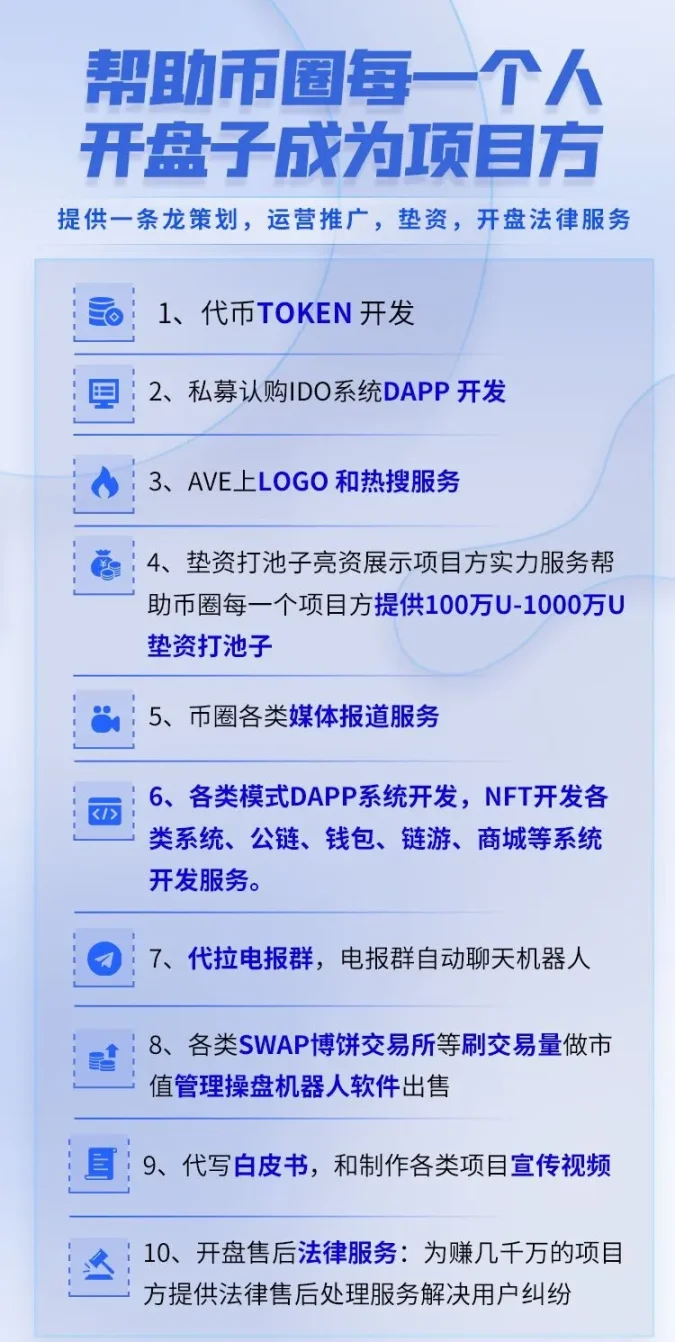
As seen by Lawyer Honglin in a certain WeChat group, the "one-stop service" for token issuance in the crypto space has recently become increasingly active, with all-encompassing service providers handling everything from token development, DApp development, private placements, community operations, to exchange listings, and even subsequent legal services. For project teams lacking technical and market experience, this is undoubtedly a godsend—just pay a fee, and the token issuance, listing, and promotion can be handled all at once. However, behind this apparent convenience lies many pitfalls.

Misunderstanding Web3: It's Not Just About Issuing Tokens
In fact, the connotation of Web3 is much richer than merely issuing tokens. Web3 represents the next generation of internet development, emphasizing decentralization, user autonomy, data privacy, and the widespread application of blockchain technology. It encompasses not only the financial sector but also social networking, entertainment, content creation, supply chain management, and more.
However, the current market is flooded with projects primarily focused on token issuance, leading many to equate Web3 with "issuing tokens." This narrow perspective not only limits people's understanding of Web3's potential but also causes truly valuable Web3 applications to be overlooked. In this context, entrepreneurs often find themselves forced to concentrate their efforts on token issuance and market speculation, neglecting the deeper technological and application development aspects of Web3.
To meet the customized needs of clients, some service providers in the industry resort to various means to create a false impression of user engagement and prosperity. On the surface, projects appear to be thriving, communities are active, and token trading is lively, but this "prosperity" is often the result of human manipulation. In reality, there are not many genuine users involved; the vast majority of active accounts are organized and disciplined "10U War God Teams." These so-called "War God Teams" typically create market activity by buying and manipulating tokens to attract more investor attention.
More seriously, some service providers, in pursuit of short-term results, even adopt multi-level marketing models to recruit participants, exaggerating the project's potential and prospects to attract uninformed novice investors. These service providers induce investors to pour in large amounts of money through inflated market predictions and false success stories. However, once these investors enter the market, they find that the project lacks substantial progress and that the token price cannot be sustained.
When service providers fail to deliver on their promises, project teams naturally face skepticism and accusations from investors. Many entrepreneurs who initially hoped to simplify token issuance through "one-stop services" ultimately find themselves trapped in traps set by competitors, with projects struggling to survive and even facing legal risks. This crisis of trust leaves many aspiring entrepreneurs in the Web3 field feeling overwhelmed.
Returning to the fundamentals of business, does issuing a token really equal success?
Setting aside legal risks, returning to the fundamentals of business, entrepreneurs need to consider: does issuing a token itself truly determine the success of a project? In other words, even if you can successfully issue a token and list it on an exchange, good times may still be hard to come by. After all, what truly determines whether a project can operate long-term is a clear business model, market demand, and ongoing operational capability.
Issuing a token, as a financing tool, is essentially similar to traditional companies raising funds by issuing stocks or bonds. Token issuance can provide initial funding support for a project, but it does not directly determine the project's success. True business success relies on the project's value creation, meeting real user needs, and continuous innovation and operational capability.
Understanding and meeting market demand is key to the success of any business project, and Web3 projects are no exception. A successful Web3 project first needs a clear and feasible business model. The existence of a token is not just to raise funds through issuance but also to ensure that the project can realize its value in the future. The business model needs to address key questions such as what problem the project solves, who the target users are, and how it will achieve profitability. Entrepreneurs need to conduct in-depth research on the target market, understand users' real needs and pain points, and design truly attractive and competitive products. Ignoring market demand and relying solely on token speculation, without substantial product and service support, will significantly undermine long-term sustainability. Conversely, a project with a clear business model and practical application scenarios can maintain stable long-term development based on its inherent value, even if token prices fluctuate significantly.
The success of Web3 projects relies not only on initial token issuance but also on long-term operation and maintenance. This includes continuous technological iteration, community building and management, and market promotion and maintenance. If a project lacks effective operational strategies after issuing a token, leading to a decline in user experience and an inability to maintain user activity and engagement, then the value of its token will also struggle to stabilize and increase.
There are too many projects in the market that have ignored these fundamentals, ultimately leading to a disastrous drop in token prices, and projects still face immense survival pressure after issuance. Countless cases have proven that relying solely on token issuance to raise funds, due to a lack of a clear business model and ongoing operations, results in token prices soaring in the short term before plummeting, investor confidence wanes, and project teams face the risk of a broken funding chain.
Lawyer Mankun's Recommendations
In practice, the trust relationship between service providers and project teams is often built on contracts and agreements, but these contracts do not fully protect the rights and interests of project teams. Once a service provider encounters issues, project teams often lack effective legal avenues to safeguard their interests. In such cases, project teams not only bear financial losses but may also suffer reputational damage and future development opportunities due to project failure.
When faced with the temptation of one-stop services, entrepreneurs need to maintain a clear understanding and avoid falling into traps set by "friendly competitors." Here are some suggestions from Lawyer Honglin to help entrepreneurs make wiser decisions when choosing service providers.
1. Choose reputable service providers with transparent cooperation models
As Jack Ma once said, there are no businesses between businesses, only business people dealing with business people. In this industry, character is paramount. When selecting a one-stop service provider, prioritize companies with a good reputation and track record in the industry. You can assess their reliability by reviewing past project cases, client feedback, and industry reputation. A reputable service provider typically focuses more on the long-term development of the project rather than just short-term market effects.
Entrepreneurs should ensure transparency in the cooperation model when working with service providers. Clearly define the responsibilities and obligations of both parties, sign detailed contracts, and specify the content and delivery standards of each service. Avoid choosing service providers with vague commitments and overly ambitious promises to prevent disputes and trust crises during the collaboration.
2. Dual support in technology and market
The technical foundation of Web3 projects is crucial. Whether it’s the security of smart contracts, the stability of blockchain networks, or the user experience of DApps, solid technical capabilities are essential. A project with strong technical capabilities can ensure the security of user data, the efficiency of transactions, and the stable operation of the system, thereby winning user trust and support.
The community is the lifeline of Web3 projects. An active and high-quality user community can provide continuous support and momentum for the project. Entrepreneurs need to invest resources in building and maintaining the community, attracting and retaining user participation and contributions through transparent communication, effective incentive mechanisms, and valuable content. An excellent service provider should not only offer technical support such as token development but also possess market operation and promotion capabilities. It is advisable for entrepreneurs to prioritize service providers that can offer independent and professional community management services, avoiding those that rely on fake users and short-term prosperity, ensuring the community's genuine activity and long-term user engagement.
3. Legal and compliance safeguards
As countries around the world tighten regulations on cryptocurrencies and blockchain technology, compliance operations have become an essential aspect for Web3 projects. Entrepreneurs need to understand and comply with relevant laws and regulations to ensure that projects operate within a legal framework. By operating legally and compliantly, projects can not only avoid legal risks but also enhance trust among investors and users.
Web3 projects involve complex legal and compliance issues, and entrepreneurs should choose service providers that can offer comprehensive legal services. Ensure that the project complies with relevant laws and regulations during token issuance, exchange listing, and subsequent operations to avoid project failure due to legal risks.
Conclusion
Issuing a token is just the starting point of a project, not the endpoint. Entrepreneurs may find it understandable to want to simplify token issuance through "one-stop services," but they must not view token issuance as a universal key to solving all problems. To establish a foothold in the Web3 world, the real moat lies in solid technical capabilities, a clear business model, and compliant operational pathways, rather than merely token issuance or short-term market speculation.
Only by organically combining these three elements can one stand out in the fiercely competitive Web3 field and achieve true long-term development. I sincerely hope that all entrepreneurs transitioning to Web3 maintain a clear mind, deeply understand the essence and potential of Web3, and avoid being misled by temporary market trends. Only by staying grounded can one create their own brilliant chapter in this field full of opportunities and challenges.
免责声明:本文章仅代表作者个人观点,不代表本平台的立场和观点。本文章仅供信息分享,不构成对任何人的任何投资建议。用户与作者之间的任何争议,与本平台无关。如网页中刊载的文章或图片涉及侵权,请提供相关的权利证明和身份证明发送邮件到support@aicoin.com,本平台相关工作人员将会进行核查。