Introduction
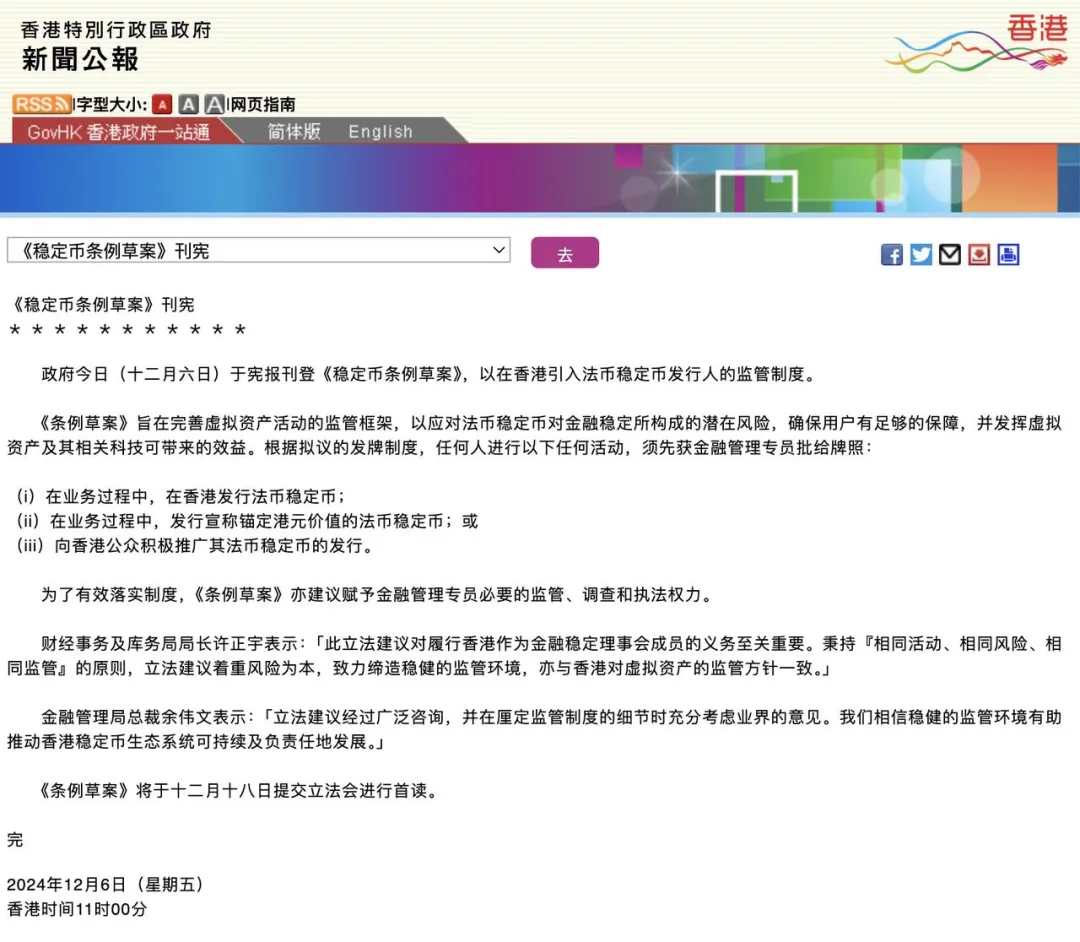
On December 6, 2024, Hong Kong took a significant step in the digital asset industry by announcing the groundbreaking "Stablecoin Bill." This initiative highlights Hong Kong's ambition to solidify its position as a global leader in digital asset regulation and sets a benchmark for other jurisdictions grappling with the complexities of this emerging market.

▲ Screenshot of related news
Stablecoins are often hailed as a bridge between traditional finance and blockchain technology, experiencing rapid growth worldwide due to their price stability and potential applications in payments, remittances, and decentralized finance. However, the lack of comprehensive regulation has exposed the vulnerabilities of stablecoins, from systemic risks to consumer protection issues, forcing policymakers to take action.
The proposed legislation aims to seek a delicate balance: promoting the growth of the Web3 economy while ensuring financial stability and protecting public trust. But can it successfully achieve this goal? This article will delve into whether the framework can align with Hong Kong's dual objectives of innovation and caution in the rapidly evolving stablecoin market.
The Necessity of Regulation
Regulating fiat-backed stablecoins (FRS) is crucial for fostering a secure and innovative financial ecosystem. One of the main benefits of regulatory transparency is enhanced investor confidence. By establishing clear rules, regulators can ensure that stablecoin issuers operate more transparently, thereby reducing the risks of fraud or mismanagement and attracting institutional and retail investors who might otherwise hesitate.
Moreover, the regulation of stablecoins plays a key role in mitigating systemic risks. Stablecoins, particularly those pegged to fiat currencies, are increasingly integrated into the financial system, serving as vehicles for payments, trading, and liquidity management. Without regulation, issues such as sudden redemptions, operational failures, or reliance on volatile collateral could spill over into traditional financial markets, affecting broader economic stability.
Regulation also promotes consistency with global standards, enabling cross-border interoperability and enhancing trust among international stakeholders. The European Union is advancing its "Markets in Crypto-Assets (MiCA)" regulation, and the United States is also discussing legislation regarding stablecoins, moving towards establishing a regulatory framework. Hong Kong's proposed law aims to align with these efforts, striving to set a benchmark for responsible innovation globally.
As a prominent financial center, Hong Kong's adoption of this legislation further solidifies its position as a gateway between the East and West. By prioritizing investor protection, financial stability, and regulatory consistency, this move enhances Hong Kong's status as a forward-looking, globally competitive financial hub, attracting innovators and investors in the Web3 space.
Challenges and Trade-offs
As Hong Kong strives to become a leader in stablecoin regulation, the proposed framework faces critical challenges and trade-offs. These challenges include how to balance stringent regulation with the promotion of innovation and navigate the rapid development of the digital asset ecosystem in a complex global environment.
Potential Barriers to Innovation
The Stablecoin Bill imposes strict licensing and compliance requirements on fiat-backed stablecoins (FRS). While this approach is essential for ensuring transparency, consumer protection, and systemic stability, it may inadvertently exclude smaller or emerging market participants. Startups are often hotbeds of innovation in the Web3 space, but they may struggle with high auditing costs, stringent governance requirements, and capital adequacy standards.
For instance, the EU's MiCA framework includes detailed compliance obligations. Some startups choose to relocate to jurisdictions with more lenient regulations, such as Switzerland or Dubai, to avoid these burdens. If Hong Kong's regulatory costs are perceived as too high, it may face similar challenges, driving talent and innovation away.
Additionally, there is a risk of regulatory capture, where the market may be dominated by large, resource-rich companies. For example, in the U.S., major players like Circle (the issuer of USDC) have lobbied for stricter rules that may disadvantage smaller competitors. If Hong Kong develops along this trajectory, it could create an oligopolistic market that stifles innovation in stablecoin design or application.
The Role of Global Coordination
Due to their cross-border nature, stablecoins require consistency in global regulatory frameworks to unlock their full potential. Different regulatory frameworks have posed challenges in the past. For example, the evolving U.S. approach to stablecoin regulation—emphasizing bank-level reserve requirements—differs significantly from Japan's system, which only allows licensed banks and trust companies to issue stablecoins. This fragmented regulatory landscape hinders interoperability and diminishes the utility of stablecoins in international trade and remittances.
Hong Kong needs to navigate these complex issues carefully. As a gateway between China and the global financial system, Hong Kong has a unique opportunity to align with global standards, such as MiCA or the Financial Stability Board's recommendations on stablecoins. However, if it fails to connect with international standards, local issuers may face isolation, impacting their interactions with international markets. Conversely, a flexible yet internationally aligned framework could enhance Hong Kong's reputation as a trusted digital asset center.
Conclusion by Mankiw Lawyer
Hong Kong's "Stablecoin Bill" marks a significant moment in the evolution of digital asset regulation, reflecting the city's ambition to lead in this transformative industry. By emphasizing transparency, stability, and investor protection, the legislation lays a solid foundation for the thriving stablecoin ecosystem. However, the success of the bill depends on finding a delicate balance between safeguarding financial integrity and promoting innovation.
The implications of this issue are profound—not only for Hong Kong but for the global stablecoin market. Will this framework position Hong Kong as a beacon of regulatory excellence, fostering innovation while ensuring stability, or will it become a cautionary tale of overregulation stifling growth and pushing opportunities elsewhere?
The answer lies in execution, adaptability, and global cooperation. The world is watching, and Hong Kong has the opportunity to set the gold standard for the industry.
免责声明:本文章仅代表作者个人观点,不代表本平台的立场和观点。本文章仅供信息分享,不构成对任何人的任何投资建议。用户与作者之间的任何争议,与本平台无关。如网页中刊载的文章或图片涉及侵权,请提供相关的权利证明和身份证明发送邮件到support@aicoin.com,本平台相关工作人员将会进行核查。