Original: Unchained
Compiled by: Yuliya, PANews
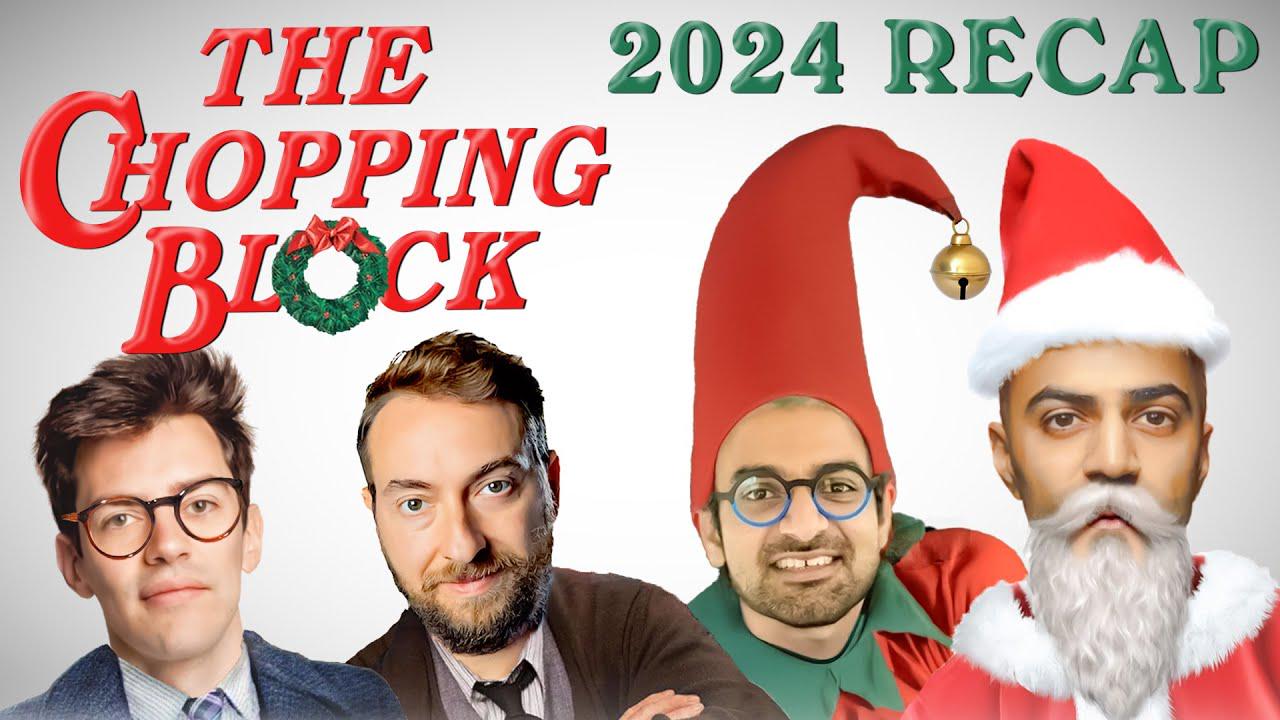
In this challenging and opportunity-filled year of 2024, the cryptocurrency market has experienced a tumultuous development journey. At the end of the year, the Chopping Block program invited four industry leaders: Dragonfly Managing Partner Haseeb Qureshi, Dragonfly General Partner Tom Schmidt, Superstate CEO Robert Leshner, and Robot Ventures Managing Partner Tarun Chitra, to reflect on the key moments of the year. PANews has compiled a written version of this podcast.
Biggest Winners
Haseeb:
I believe the biggest winner this year is HyperLiquid. This decentralized perpetual contract trading platform executed the most successful token airdrop of the season, marking what could be called the 'Uniswap moment' of this cycle. Although there is still a long way to go in terms of true decentralization, the way they distributed tokens and the community response have been exhilarating. As a VC, we truly regret not being able to participate—almost all VCs tried to invest in HyperLiquid, but they were all politely declined. This 'perfectly born' project is indeed impressive, especially in terms of product capability, execution, and technical delivery.
Robert:
"From my perspective, the biggest winners this year are all the cryptocurrency founders and companies in the United States. We have witnessed a significant turning point: a shift from the extreme hostility and resistance faced previously to the favorable situation we see now. As a U.S. cryptocurrency founder, this change is exhilarating. Finally, we no longer have to feel troubled about engaging in cryptocurrency business in the U.S."
Tarun:
"I would choose the entire DeFi (Decentralized Finance) sector. Remember the 36-month bear market predicted by Degen Spartan? DeFi was once seen as the problem child of the cryptocurrency world, with valuations of unlaunched public chains often ten times that of DeFi projects. But now, DeFi has made a strong comeback. As someone working in the DeFi space, seeing this development is indeed gratifying."
Tom:
My choice might be a bit surprising—it's Tether (USDT). They have performed exceptionally well this year, arguably becoming one of the most profitable companies globally. For years, many have been waiting for Tether to collapse or face significant issues, but the opposite has happened; it has become increasingly successful and more regulated. Tether not only continues to grow but has also become an important case study in the cryptocurrency industry, especially regarding stablecoin applications and the trend of global dollarization.
Biggest Losers
Robert:
Without a doubt, the anti-crypto camp is the biggest loser this year, including some members from both houses of Congress and certain individuals in the executive branch, particularly some members of the SEC and those pushing for 'Operation Choke Point 2.0'. They mistakenly believed that suppressing the cryptocurrency industry would advance their political careers, but it has proven to be a completely failed strategy. I hope this can change the political landscape in the future, making political suppression against cryptocurrency no longer a viable political tactic.
Tarun:
I would say the biggest losers this year are the numerous second-tier Layer 2 projects and application chains. At the beginning of 2023, the market generally believed that thousands of L2 projects would emerge, with each L2 tech stack spawning a multitude of application-specific chains. But reality has proven this assumption completely wrong. Just look at the ongoing turmoil in the Cosmos ecosystem. Previously, people thought successful applications like Blur could launch their own application chains or L2s, like Blast, but the actual results have not been ideal. Instead, we see users preferring to concentrate on a few top L2 projects.
Haseeb:
I believe financial nihilism is the biggest loser this year. In the first half of this year, the view that everything in cryptocurrency is meme coins and that all technology is meaningless was once prevalent. But the reality is that the trading volume of meme coins has significantly decreased from the early 20-30% of total trading volume to now 10% or even lower. The market has shown more enthusiasm and confidence in genuine technological innovation and substantial progress. If you think all technology is worthless, then you are indeed a big loser this year.
Tom:
I would say the biggest losers are those who abandoned cryptocurrency this year to turn to artificial intelligence. This is a classic case of 'game over, we're back'. When asset prices fall, investors exit, developers switch careers, and market sentiment becomes extremely negative, but cryptocurrency always finds a way to come back in different forms. I personally know many people who either sold off their cryptocurrencies, shut down their companies, or moved to other fields. It's unfortunate because in this space, you really need strong conviction to succeed. Those who lack that conviction and turned to AI may now regret it.
Biggest Surprises
Tarun:
Without a doubt, the biggest surprise for me this year has been the projects Pump.fun and BonkBot. I remember we discussed Pump.fun in our program back in January and February when it was just starting out, providing users with an innovative way to create assets. I believe that without Pump.fun, the development of meme coins would not have been so rapid. The other is BonkBot, a Telegram bot focused on meme coin trading. In terms of revenue, BonkBot is an invisible champion, and like Pump.fun, both companies achieved $100 million in revenue in their first year. The speed of development of meme coin infrastructure has truly amazed me.
Tom:
I have two aspects of surprise to share. First is the launch of World Liberty Financial, where a presidential candidate is associated with a DeFi token, and Trump even holds a wallet; this situation is indeed unbelievable. But even more surprising is its sales performance. Normally, ordinary meme coins or NFTs can sell out in a short time, but this presidential-related DeFi token only sold 25%, and sales have continued to decline. Both points were far beyond my expectations.
Additionally, regarding the point Tarun mentioned, I want to add that I predicted back in early 2024 that the application layer would generate significant revenue. For example, Photon, Banana Gun, and even Uniswap have all generated hundreds of millions in revenue, surpassing most DeFi protocols. While I did not specifically predict the meme coin infrastructure, applications have indeed performed excellently, with revenue and profitability exceeding many protocols.
Haseeb:
My two biggest surprises are: first, the rise of the "Tap to earn" model was unexpected, although there has been almost no news about it now, such as the Hamster Combat game even attracting military attention in Iran. Secondly, there have been no major cryptocurrency security incidents (L1/DeFi) this year, indicating a significant improvement in industry security. Despite a substantial rebound in TVL (Total Value Locked), we have not seen the massive losses typical of previous years, which is a positive signal.
Robert:
I want to add to the changes at the infrastructure level. The rise of Solana and Base as meme coin infrastructures is surprising. These two platforms have performed outstandingly in terms of new user activity due to low transaction fees and convenient token issuance mechanisms, with adoption speed and scale exceeding expectations.
Best New Mechanism
Tom:
I think it has to be the binding curve and LP locking mechanism of Pump. I'm glad to be the first to speak because I have a feeling this will be a popular choice.
Robert: I believe the best mechanism is the "yield amplification" model, which can be seen in several stablecoin projects like Ethena and Usual. The core idea is to allocate the returns generated by a certain underlying asset (which can be arbitrage trades, government bonds, or any asset) only to a portion of users, thereby significantly amplifying the yield. For example, if the annualized yield of the underlying strategy is 5%, when only a quarter of users participate in the distribution, those users' actual yield can be amplified to 20%. This mechanism has played an important role in the development of Ethena, and I believe we will see more projects adopting similar mechanisms in the coming months.
Tarun:
From my perspective, there are two outstanding mechanisms innovations this year. The first is the liquidity guidance mechanism for meme coins; the second is innovations related to basis trading, particularly Market Maker Lending Pools. This type of lending pool can be traced back to the GLP pool launched by GMX at the end of 2021, and it has now developed into Jupiter's JLP pool on Solana and HyperLiquid's HLP pool.
The innovation of this mechanism lies in solving a key problem for decentralized exchanges: centralized exchanges can directly provide collateral loans to market makers, while decentralized exchanges previously lacked a similar mechanism. Through these lending pools, users seeking yield can deposit assets into the pool, while perpetual contract traders can borrow these assets for market making and pay fees to depositors. This greatly enhances the capital efficiency of decentralized perpetual contract trading and is one of the important reasons for the historic high in current decentralized perpetual contract trading volume.
It is worth mentioning that projects like HyperLiquid have been able to develop rapidly largely due to this lending pool mechanism. Currently, the scale of Jupiter's JLP pool has reached $1.5 billion, and this infrastructure provides important support for on-chain basis trading. Although decentralized perpetual contract trading may never fully match the capital efficiency of centralized exchanges, this mechanism has indeed significantly narrowed that gap.
Haseeb:
This is indeed an important innovation. So regarding the specific operation of these lending pools, such as JLP or HLP, is there a specific third party operating them?
Tarun:
It depends on the specific project. For example, GMX's liquidity provision is programmatic, with target weights determined by governance or multi-signature. HyperLiquid's HLP is directly managed by the project team. JLP and GLP are similar to AMM (Automated Market Maker), where anyone can engage in arbitrage. The key is that this mechanism effectively connects LP users seeking yield with traders needing funds for market making.
Best Meme
Haseeb:
I vote for Justin Sun's birthday photo. You may remember this entrepreneur, who is highly regarded in our industry and reportedly loved by employees, posted a photo on his birthday. This photo was clearly AI-generated, as he had 14 fingers in it. This might be one of the most embarrassing moments for one of the most successful entrepreneurs in the crypto industry, but this meme has indeed left a deep impression on me, and I think I will remember it for a long time.
Robert:
Although it may not strictly be considered a typical meme, I would award the best meme to Pudgy Penguins. Perhaps it's because they just launched the PENGU token, which had a fully diluted valuation of $5 billion at launch. While I do not hold any Pudgy Penguins or PENGU tokens, I must acknowledge their achievement: they have continued to build during the bear market, transforming an ordinary meme into a huge success through sustained promotion and deep operations. They have now launched penguin dolls, meme coins, and other peripheral products, and the community is thriving.
Tarun:
I would choose Bonk. Mainly because BonkBot is a genius marketing strategy that helped Bonk grow from near-zero to a market cap of billions of dollars within a year. If we are to talk about the most successful "blue-chip" meme coin in the Solana ecosystem, it would be Bonk.
Tom:
This choice is indeed difficult, but I want to nominate Hugo Martingale, the operator of the Polymarket intern Twitter account. Their content is fresh and interesting, often filled with witty remarks in the comments, making it a very high-quality account.
Haseeb:
I’m glad to see that not everyone chose meme coins. To be honest, we may have discussed meme coins too much this year, and I hope we can have fewer meme coin-related topics next year.
Best/Worst Transformation
Robert:
I want to merge the "Best Transformation" and "Best Comeback Story" awards and give them to MicroStrategy. Although their transformation from a mediocre business intelligence software company to a Bitcoin leveraged ETF decision was made five years ago, 2024 is the year this transformation has truly gained market recognition. They not only broke through the historical highs from the dot-com bubble but also created an astonishing business model: by issuing convertible bonds to raise funds at a premium higher than Bitcoin, and then continuing to purchase Bitcoin, forming a perpetual funding cycle.
Tarun:
I want to nominate the Babylon protocol. Although their transformation technically began in 2023, it was only realized in 2024. Babylon initially provided Bitcoin timestamp services for the Cosmos chain, but later developed "remote staking" technology, allowing users to use Bitcoin as collateral for staking. Their TVL (Total Value Locked) has now reached $6 billion. Transforming from a single timestamp service to such a large-scale business is one of the most successful business model transformations I have seen.
Tom:
I want to nominate the Democratic Party for the "Worst Transformation." From the incident with Trump at Mar-a-Lago to Biden's executive statement on digital assets, and Kamala's vague remarks on cryptocurrency investment, the whole process seems very chaotic. In contrast, Trump took a straightforward strategy, saying what people wanted to hear and doing what people wanted, such as "Free Ross." The Democratic Party's performance on this issue is as disappointing as missing a shot just two inches from the goal.
Haseeb:
My choice for the best transformation is the NFT community's shift to meme coins. For example, Miladys launched the CULT token, and Pudgy Penguins launched the PENGU token, with these meme coins' market caps even surpassing the original NFT projects. Interestingly, this transformation did not provoke community backlash; no one accused them of deviating from NFTs. Although these tokens seem to have no practical use, this transformation strategy has been surprisingly successful. This may be related to the choice of public chains, as many high-quality NFT projects are on Ethereum, while meme coins have developed more on Solana, and this natural friction may explain why this transformation came relatively late.
Tom:
Interestingly, we find that in the cryptocurrency space, sometimes simple "vibe coins" are more popular than those trying to create serious value. This seems to prove a point: when issuing new tokens, there is no need to complicate things; people prefer to have multiple simple tokens rather than a complex conversion mechanism.
Most Disappointing Projects
Tom:
I believe the rebranding plan of MakerDAO to Sky is the most obvious failure. The clearest evidence of this failure is that even after the rebranding, people still refer to it as Maker rather than Sky. Although DAI still has a much larger scale compared to USDS, it is said that they are considering reversing this rebranding, which is clearly an unnecessary and ineffective decision.
Haseeb:
I choose Bitcoin L2 projects as the biggest failure. At the beginning of the year, the market had high hopes for Bitcoin L2, expecting it to reach billions in TVL, believing that the Bitcoin ecosystem would embrace DeFi. But the reality is that even with multiple projects launched, they have all turned into "ghost towns." Hardly anyone discusses these projects, and we rarely hear founders expressing intentions to launch projects on Bitcoin L2.
Additionally, celebrity coins are also a significant failure. There was a time when people thought celebrity coins would perform better than ordinary meme coins due to celebrity endorsements. For example, MOTHER belongs to this category. But these are essentially social tokens, and over time, their performance has been extremely poor. The market initially believed this would be a huge opportunity, but now it seems that expectation has completely fallen flat.
Robert:
I want to nominate Friend.tech and the decline of the social finance (Social Fi) craze it sparked. Earlier this year, Friend.tech was considered one of the hottest startups in the crypto space, but its development cycle was extremely short. From the initial concept to being highly sought after, then launching the V2 version and Friend token, and finally fading into silence. Now the value of the product and token has almost gone to zero, making it one of the few truly self-destructive projects. While projects like Farcaster are still developing, the entire crypto social space faces significant challenges.
Best Comeback Story of 2024
Tom:
I want to nominate Coinbase. When cryptocurrency prices fell, Coinbase often became the "punching bag" of the market. In 2023, they laid off thousands of employees, and many believed they might go bankrupt. However, with the launch of the Bitcoin ETF, Coinbase gained new development opportunities as the ETF custodian. Their overseas business, while not particularly outstanding, is steadily growing. Additionally, they received a stay in their lawsuit with the SEC, marking a series of important victories in 2024. Notably, this is the second consecutive year Coinbase has been recognized as the best comeback story, and this "double comeback" is indeed impressive.
Haseeb:
I want to nominate Magic Eden. They were once considered a "second-tier" NFT trading platform after OpenSea and Blur. However, by entering the Bitcoin ecosystem, particularly in BRC-20 tokens and Ordinals, they achieved astonishing trading volumes. Their performance in the Solana ecosystem has also been quite good. Recently, they launched a platform token, which can be seen as a perfect transformation.
Robert:
In addition to the previously mentioned MicroStrategy, I also want to nominate the entire Bitcoin ETF ecosystem. After years of rejections and failures, this year finally saw breakthroughs. This is thanks to Grayscale suing the SEC and winning, paving the way for Bitcoin ETFs and Ethereum ETFs. The performance of these ETF products has been outstanding, exemplifying a revival from "death." While some may argue this is more of a "winner" story than a "comeback" story, institutions like BlackRock have indeed demonstrated strong capabilities in this process.
Tarun:
I choose the Move ecosystem as the best comeback story. Sui's market cap has reached $50 billion, Movement's initial funding exceeded $5 billion, and many DeFi protocols have launched on these public chains. In the third and fourth quarters of 2023, when Solana received a lot of attention, the Move ecosystem seemed to be overlooked. But now they have clearly achieved a strong comeback through improved user experience and other feature optimizations.
Host: From these cases, we can see that in the cryptocurrency market, even projects that have experienced lows can achieve a strong comeback with the right strategic positioning and execution. This also reflects the resilience and innovative capacity of this industry.
Predictions for 2025
Haseeb:
I have three predictions. First, Bitcoin will reach $150,000 before experiencing a pullback; second, DeFi tokens will see explosive growth; third, AI-related tokens will rise significantly in price, but the actual applications of the underlying protocols may be relatively limited.
Robert:
I am more optimistic about Bitcoin, predicting it will reach $180,000 without a sharp pullback. Secondly, I believe the U.S. will introduce dedicated legislation for cryptocurrencies for the first time, which will be an important milestone for the industry. Finally, I predict there will be a media-sensational AI crypto scam incident.
Tarun:
My predictions mainly focus on three aspects. First, there will be a wave of consolidation in the application chain and L2 space, and we may see multiple merger cases, mainly due to high operating costs and transaction volume concentration issues. Secondly, the total market cap of AI agent-related tokens will increase at least fivefold, significantly rising from the current $10 billion. Finally, Solana's inflation rate will be reduced by at least 25%.
Tom:
I also have three predictions. First, money games like Farcaster or "buttons" will achieve mainstream popularity and go viral on platforms like TikTok. Second, new crypto asset ETFs will be approved, but they may be for relatively traditional coins like XRP or Litecoin, rather than the emerging assets the crypto community is looking forward to. Third, we may see a significant security incident at the application layer, possibly stemming from supply chain attacks or library vulnerabilities.
免责声明:本文章仅代表作者个人观点,不代表本平台的立场和观点。本文章仅供信息分享,不构成对任何人的任何投资建议。用户与作者之间的任何争议,与本平台无关。如网页中刊载的文章或图片涉及侵权,请提供相关的权利证明和身份证明发送邮件到support@aicoin.com,本平台相关工作人员将会进行核查。


