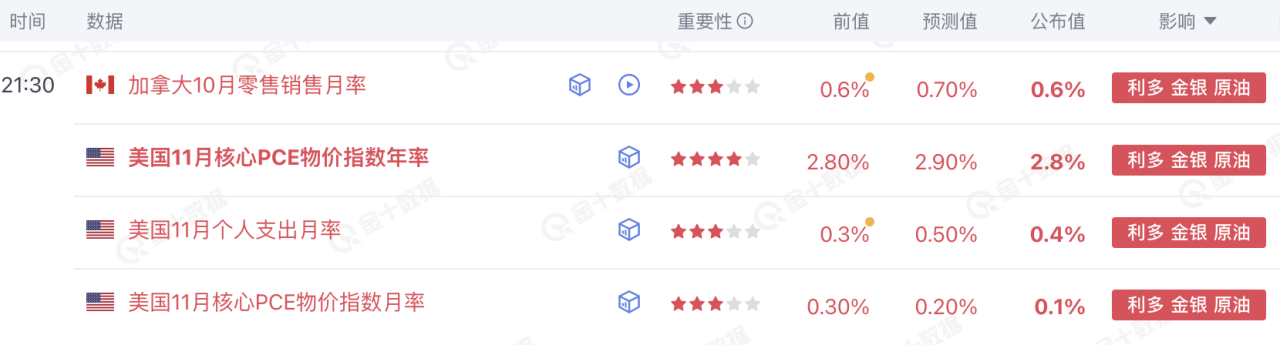
Macroeconomic Interpretation: People in the crypto circle still do not pay much attention to macroeconomic data and policies. The PCE index released at 21:30 this evening was quite unexpected; this price index measuring inflation hit a five-month low. This means that the Federal Reserve's future interest rate policy may still be accommodative, which would be bearish for the dollar and bullish for dollar-denominated assets such as gold, U.S. stocks, and the crypto market, leading to an immediate market reaction.

Today, the crypto market was completely dragged down by U.S. stock futures, falling all day. It was only after the data was released that U.S. stock futures began to rebound slightly. Sentiment may ease a bit, especially since the Federal Reserve's meeting statement and Powell's remarks the night before were very hawkish. After tonight's data release, the market expects that the Federal Reserve may not be as hawkish in its concerns about inflation levels. The U.S. stock market opened lower due to significant fluctuations in futures during the day, with the Nasdaq opening down about 1%, reflecting a response to the oversold conditions of U.S. stock futures during the day. However, U.S. stock futures and the crypto market had already completed most of their declines during the day; unless there is a continued drop tonight, it may not significantly impact the crypto market. If U.S. stocks rebound, it would be beneficial for a rebound in BTC.
Tonight, the global economic community is focused on the unveiling of the last key economic data of the year, namely the U.S. core personal consumption expenditures (PCE) price index for November. This data unexpectedly declined, attracting global market attention and some unusual market movements. The core PCE price index, a key inflation indicator closely monitored by the Federal Reserve, showed both annual and monthly rates below market expectations, specifically:
Annual data: The annual rate of the core PCE price index for November was 2.8%, unchanged from the previous value but below the market expectation of 2.9%. This result breaks the norm of the core PCE price index typically closely aligning with market expectations, indicating subtle changes in inflationary pressures.
Monthly data: The monthly rate of the core PCE price index for November was 0.1%, down from the previous value of 0.3% and also below the market expectation of 0.2%. This lower-than-expected growth rate further highlights the slowdown in inflation trends.
What is surprising about this data? The core PCE price index, as an important reference indicator for the Federal Reserve's monetary policy, unexpectedly falling below expectations may reflect a weakening of inflationary pressures in the U.S. economy. Previously, based on CPI and PPI data forecasts, analysts generally expected the core PCE price index to maintain robust growth, but the actual situation indicates that inflationary pressures may not have continued to strengthen as anticipated. The Federal Reserve's reaction to this data may also surprise the market, especially after San Francisco Fed President Daly expressed concerns about inflation stickiness. This suggests that there may be a certain deviation between the Federal Reserve's internal inflation expectations and the actual situation, which could influence its future monetary policy decisions.
Market Reaction and Subsequent Impact: After the data was released, the dollar index fell significantly, while gold, U.S. stock futures, crude oil, and the crypto market rebounded. This market reaction indicates that investors are optimistic about the easing of inflationary pressures, driving up safe-haven assets and the rebound of risk assets. At the same time, concerns about a potential government shutdown in the U.S. this weekend have also heightened market volatility. However, it is important to note that this rebound may only be a short-term market reaction, and future trends will need to closely monitor changes in economic data and the Federal Reserve's monetary policy decisions.
Future Outlook for the U.S. Stock Market: The closing situation of U.S. stocks tonight is crucial for assessing market trends. If U.S. stocks continue to decline, it may exacerbate pessimistic sentiment in the market and trigger a chain reaction in global stock markets. The recent sharp decline in U.S. stocks has already raised concerns about the health of the stock market, especially considering the high valuations and the possibility that the Federal Reserve's policies may not be as accommodative as expected. Therefore, the market needs to be wary of the potential emergence of the first bear, which could become an important turning point for market trends.

Market Analysis:
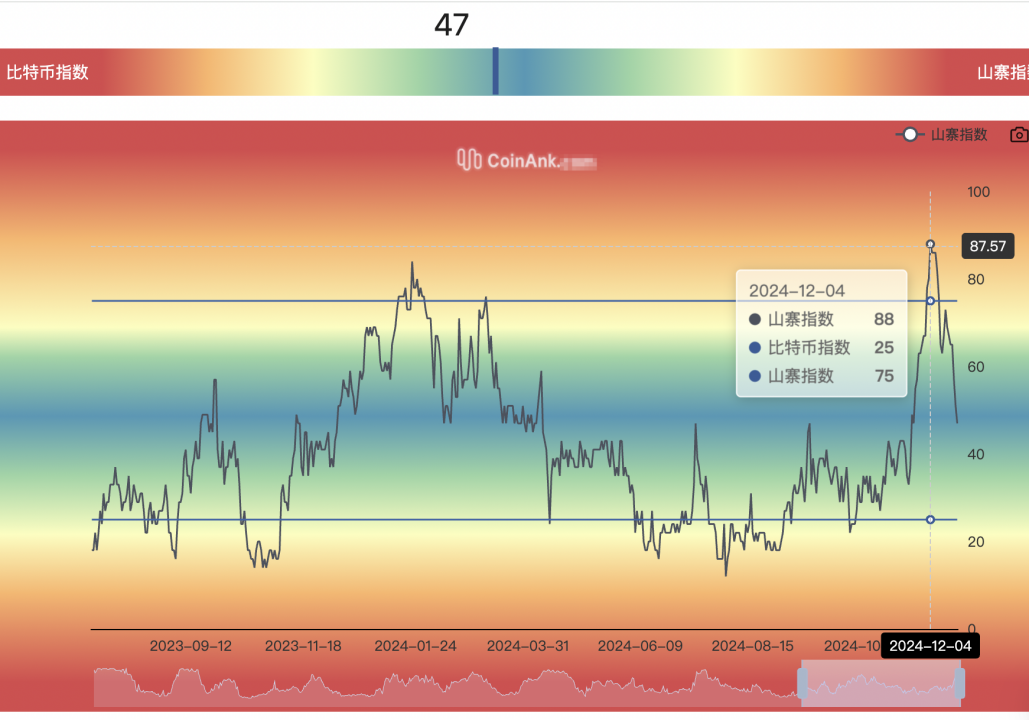
BTC showed signs of breaking below the trendline support this afternoon, but considering the previous significant rise, the decline is a normal retracement. However, some altcoins have already dropped to levels seen during the U.S. presidential election on November 5-6. Dust to dust, earth to earth. The crypto market is experiencing a widespread decline, with the altcoin index currently dropping back to around 48, and it is expected to be lower after tomorrow's market update.
Regarding the peak of altcoins, I informed everyone at the beginning of December, a week or two in advance, that if the altcoin index rose above 85 in the future, it would be necessary to pay attention to risk areas. The actual peak was 88, after which a significant decline began. I have always adhered to the view that the rebound of altcoins is not sustainable, and that rotation means taking profits and reducing positions in a timely manner after a rise.
From late November to early December, I provided tips and interpretations regarding the altcoin index. Starting from around 48, which was a healthy state when the upward momentum began in late November, to subsequent related tips, and then at around 78-80, I began to warn that exceeding 85 would enter a risk area. In fact, just a few days later, a widespread peak and decline occurred, especially with a significant drop starting on December 10.
On the four-hour level for BTC, closing below $96,800 can be seen as a breakdown. Breaking below the trendline indicates a bearish trend for the medium to short term. The short-term support below is around $92,230/$90,500, while the medium-term support is still looking at the trendline starting point around $85,000.
In fact, it mainly depends on the U.S. stock market. As I mentioned before, if the U.S. stock market is at a stage peak, then BTC will also follow with a significant correction.
Currently, many people like to attribute the reasons for the decline entirely to Powell's remarks about Bitcoin as a strategic reserve. This actually reflects a lack of understanding of macroeconomics and the hawkish logic behind the Federal Reserve's interest rate decisions and statements, remaining only within the narrative of the crypto industry. In reality, from the bull market at the end of 2020-2021 to the peak, the crypto market has almost entirely aligned with macro policies and the peak of U.S. stocks. Especially in the past three years, as the mining industry has shifted to North America, and with the Bitcoin spot ETF listed for trading in the U.S. earlier this year, the pricing power of BTC is now almost entirely controlled by the U.S. market. The overnight decline in U.S. stocks will naturally also impact the crypto market led by BTC. This is why I often mention the macro logic of the movements of U.S. stocks, the dollar index, gold, and their impact on the crypto market in my analyses.
免责声明:本文章仅代表作者个人观点,不代表本平台的立场和观点。本文章仅供信息分享,不构成对任何人的任何投资建议。用户与作者之间的任何争议,与本平台无关。如网页中刊载的文章或图片涉及侵权,请提供相关的权利证明和身份证明发送邮件到support@aicoin.com,本平台相关工作人员将会进行核查。