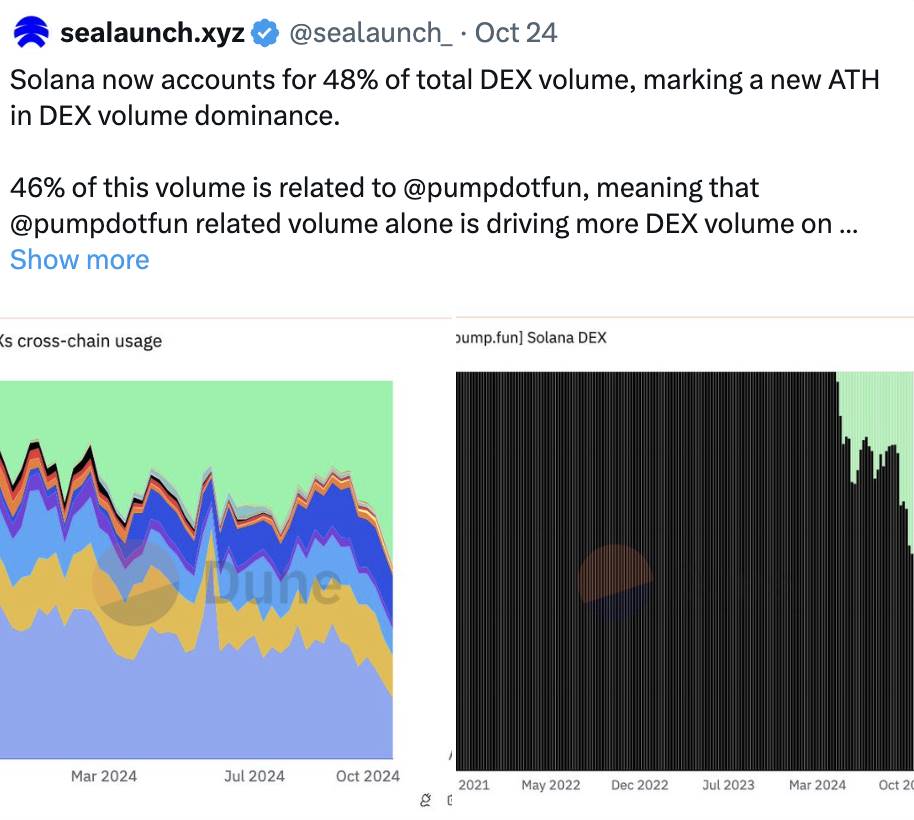
Most of Solana's trading volume comes from pools with lower liquidity, a significant portion of which comes from Pump Fun.
Author: jpn memelord
Compiled by: Deep Tide TechFlow
Recently, there has been much discussion about Solana surpassing all EVM chains in trading volume. I decided to delve into the quality of liquidity pools on top blockchains to determine whether this is a fleeting trend or a true disruption to existing chains. Join me for an in-depth exploration.
The methodology for this analysis draws from the criteria for stock inclusion in major stock indices.
The three main criteria are:
Established trading history
High liquidity
Sustained trading volume
These criteria also have similar applications in liquidity pools.
Methodology Overview
The following methodology summary is for reference only. For complete details, please refer to the methodology document on SP Global.
Scope: All component stocks must be U.S. companies.
Market Cap Qualification: To be included, a company must have at least $14.5 billion in unadjusted market capitalization, and its float-adjusted market cap must be at least 50% of the unadjusted minimum market cap threshold.
Public Float: The company must have at least a 0.10 investable weight factor (IWF).
Financial Viability: The company must have positive earnings in the most recent quarter and over the most recent four quarters (in total).
Sufficient Liquidity and Reasonable Pricing: Using a composite of pricing and trading volume, the annual trading volume (defined as the average closing price during the period multiplied by historical trading volume) to float-adjusted market cap ratio should be at least 0.75, and the monthly trading volume should be at least 250,000 shares in the six months prior to the evaluation date.
Industry Representation: Industry representation is measured by comparing the weight of each GICS® industry in the index to its weight in the S&P Total Market Index, considering company selection within the relevant market cap range.
Company Type: All eligible U.S. common stocks listed on qualified U.S. exchanges can be included. Real Estate Investment Trusts (REITs) are also eligible for inclusion. Closed-end funds, ETFs, ADRs, ADSs, and certain other types of securities are not eligible for inclusion.
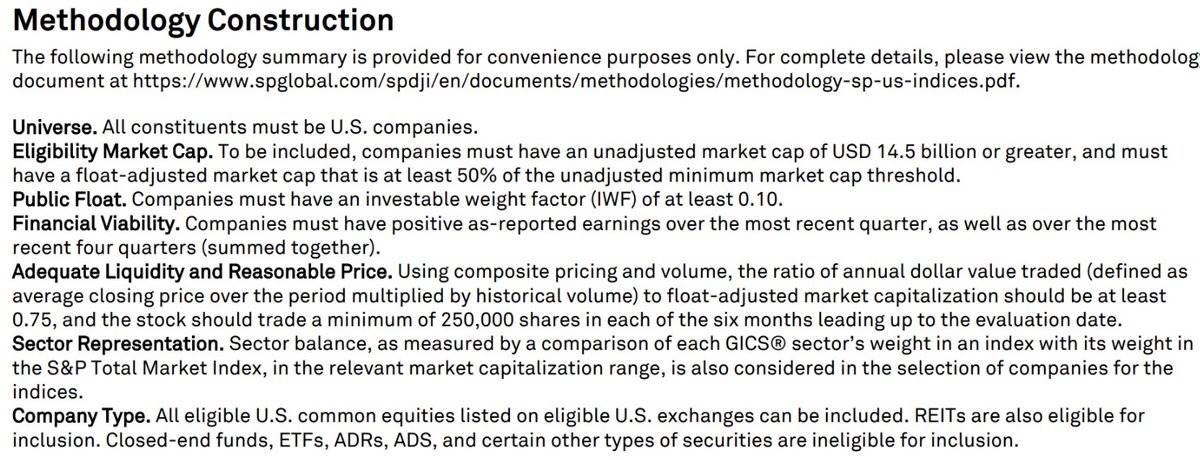
Are there stocks trading that are not in the major indices? The answer is yes.
However, these stocks constitute the "blue-chip" of the traditional financial world, and finding analogs in DeFi can help us assess the targets that traditional finance may focus on when entering the DeFi space.
I collected trading volume data from all liquidity pools on Ethereum, Solana, BSC, @arbitrum, and @base, and compiled the total trading volume over the past 30 days.
Next, I adjusted the weights of the pools created in the past 30 days to lower their rankings to meet the "established history" criterion.
Finally, I weighted the trading volume and total value locked (TVL) of each pool to comply with the other two criteria.
Next, I applied a weight adjustment to the liquidity pools created in the past 30 days to lower their rankings to meet the "established history" criterion. Subsequently, I weighted the trading volume and total value locked (TVL) of each pool to comply with the other two criteria. The specific formula is: Ln(TVL)/Ln(MAX(TVL)) * TVL_weight.
This scaling method has little impact on pools with good liquidity but reduces the rankings of pools with smaller TVLs.
Here are the top 20 "new quality" rankings derived from this weighting method.
Notably, Ethereum, Solana, Arbitrum, and Base each have a representative pool in the top 4!
These pools are the "major" pools trading their respective chain's native tokens against USDC.
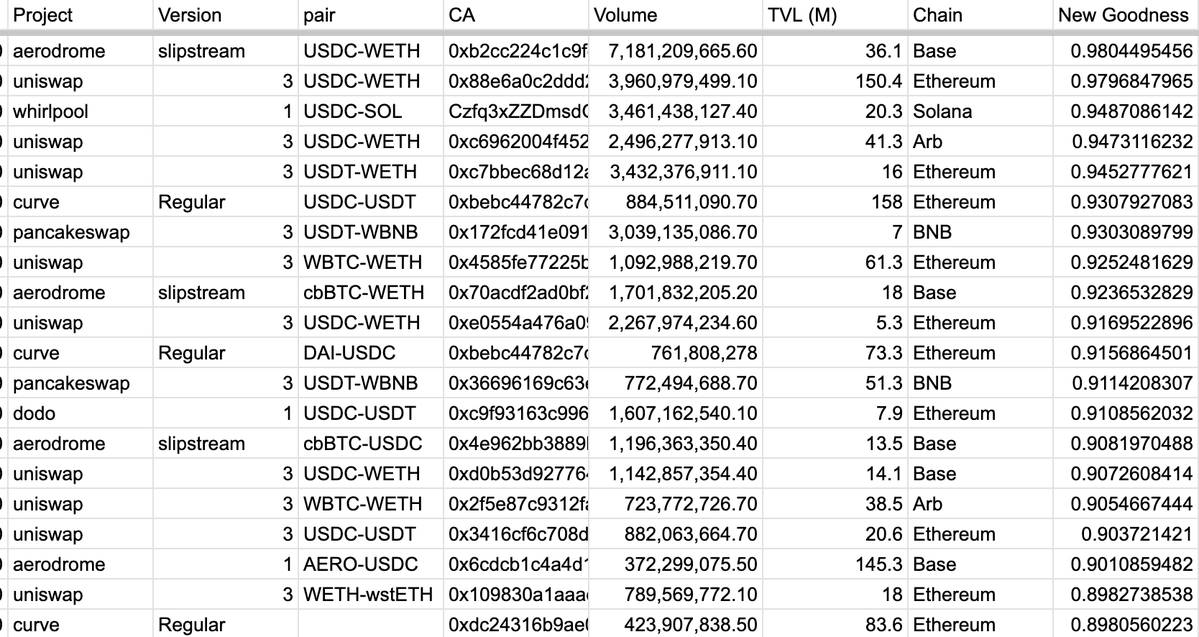
Another significant feature is that Ethereum still dominates, occupying half of the top positions in this ranking. High TVL combined with sustained trading volume makes it stand out among all chains.
I strongly suspect this is also part of the reason Blackrock chose to deploy on Ethereum.
Upon deeper analysis, the top two pools are particularly noteworthy:
The slipstream WETH-USDC pool from @AerodromeFi has the highest trading volume, while the pool with the highest TVL is
@Uniswap's v3 WETH-USDC pool on Ethereum.
Dune data link:
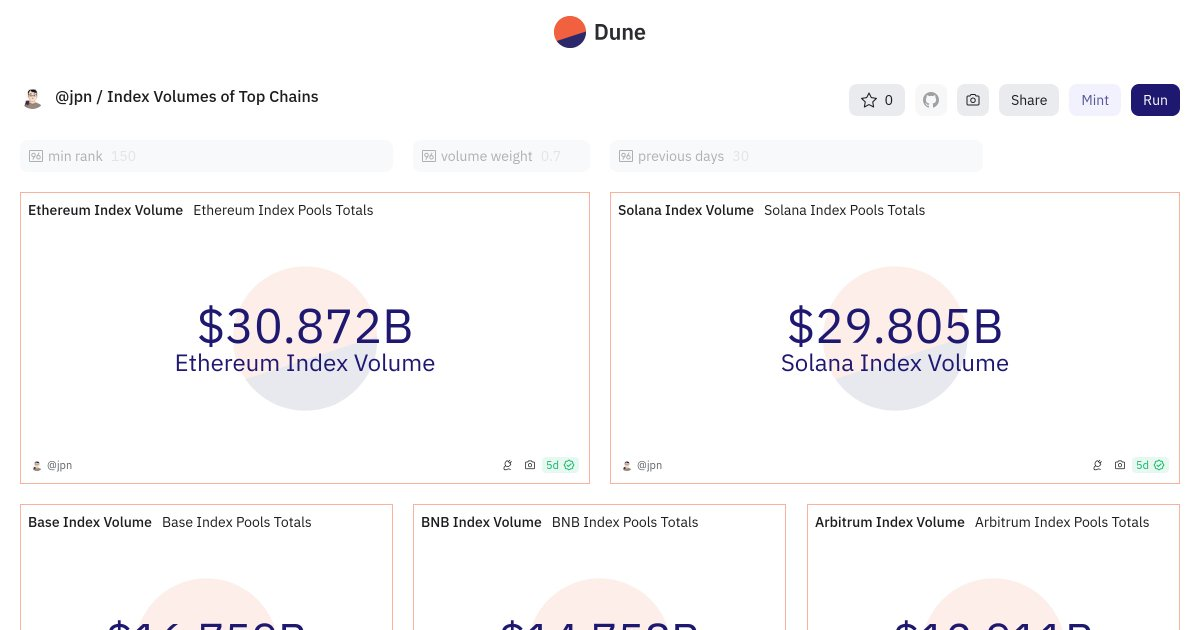
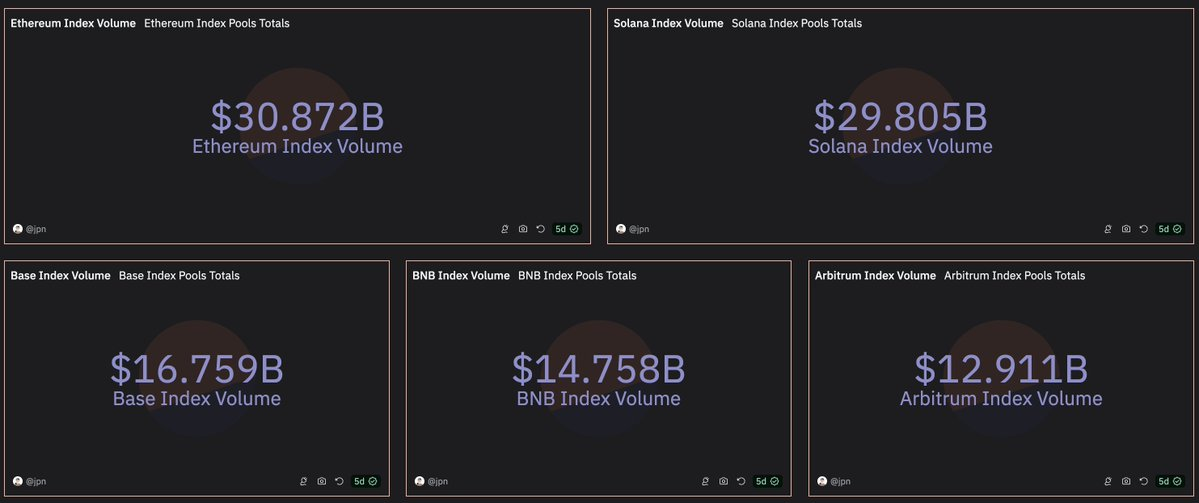
Trading Volume Index of Top Blockchains
On most blockchains, the main liquidity pools with a 0.05% fee rate are the top pools, but on the BNB chain, the 0.01% pools are the top pools, which is somewhat surprising.
Additionally, USDC is used in more top pools than USDT, which also caught me off guard.
How many pools are there on each chain?
Ethereum: 10
Base: 5
Arbitrum: 2
BSC: 2
Solana: 1
In this analysis, all other Solana pools were unable to make the top due to insufficient TVL (total value locked). Despite high trading volumes, these trades occurred in a context of significantly lower liquidity compared to other chains.
Without considering TVL, Solana has a substantial trading volume among the top 150 pools, but it has not come close to surpassing all EVM chains, nor has it surpassed Ethereum (though it is very close).
The top 20 assets traded across all pools include:
Stablecoins: USDC, USDT, DAI, pyUSD
Major coins: ETH, BNB, SOL, cbBTC, WBTC, and wsETH
Others: AERO
Surprisingly, Aero is the only token that is neither a stablecoin nor one of the top five cryptocurrencies by market cap.
TVL of the top 25 pools on each chain:
Ethereum: $1.04 billion
Base: $310 million
BNB: $194 million
Solana: $181 million
Arb: $155 million
Clearly, Ethereum remains the winner, but Base is leading among other chains.
Additionally, it is worth noting that 4 out of the 5 pools on Base come from Aerodrome, showcasing their significant lead on that chain, even as Uniswap dominates on Arbitrum and Ethereum.
Summary
Most of Solana's trading volume comes from pools with lower liquidity, a significant portion of which comes from Pump Fun. (link)
Ethereum remains the dominant player in DeFi, but Base is unexpectedly becoming a strong challenger as it has the highest trading volume pools.
This attention to liquidity is not a bad thing, but I believe that mature investors looking to delve into DeFi are more focused on sustained economic activity from deep liquidity pools rather than which meme coin is trending this week or today.
This analysis has many aspects that can be further explored and refined:
Automating the calculation of TVL metrics
Examining liquidity depth (CL pools have very high capital efficiency) in addition to TVL
Considering the fee tier of the pools
I will be launching the second part of the analysis in the coming weeks.
免责声明:本文章仅代表作者个人观点,不代表本平台的立场和观点。本文章仅供信息分享,不构成对任何人的任何投资建议。用户与作者之间的任何争议,与本平台无关。如网页中刊载的文章或图片涉及侵权,请提供相关的权利证明和身份证明发送邮件到support@aicoin.com,本平台相关工作人员将会进行核查。


