Pyth Oracle Security Staking (OIS): Enhancing DeFi Security with Safer Price Feeds Incentives

CN
1 year ago

Pyth Network is redefining the future of DeFi.

Pyth Network is committed to providing strong support for DeFi, bridging the gap between traditional finance and on-chain finance. In 2021, the launch of the Pyth price oracle marked a critical first step in this mission. As DeFi continues to evolve, the needs of developers and users are also evolving. The demand for higher security and reliability in the Web3 capital market is becoming increasingly urgent.

Oracle Integrity Staking (OIS) — the latest iteration of the Pyth price oracle, introduces a more robust data source accountability mechanism, creating a more secure DeFi ecosystem through decentralized staking rewards and network participant penalty mechanisms.

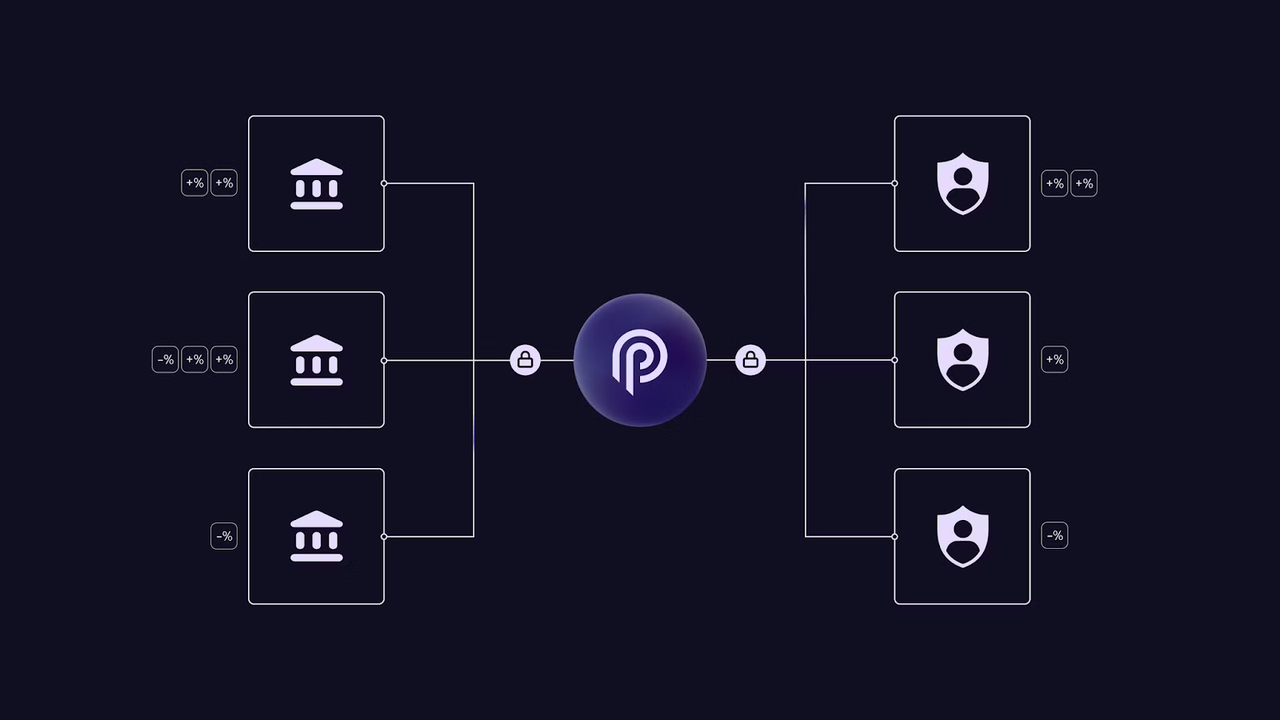
  • Pyth Data Publishers — will systematically receive rewards from the Pyth protocol to ensure the quality of price data. If the data they provide has a negative impact on the protocol, their staking will be reduced. The Pyth DAO can vote on how to handle these reduced funds, such as distributing them to affected users or for other purposes.

  • PYTH Stakers can delegate their staked tokens to Pyth's data publishers to increase the potential rewards for providing high-quality data. This helps strengthen the resilience and security of the Pyth price oracle; in return, PYTH stakers automatically receive rewards for protecting the oracle network and the DeFi ecosystem.

Oracle Integrity Staking (OIS) covers all 500+ Pyth price feed data, setting higher standards for integrating oracle technology and market participants into the DeFi ecosystem. This release is an important milestone for Pyth Network in achieving its mission to provide reliable and accurate price data for all blockchains, while meeting the ongoing demand for decentralization and sustainable development.

This article will delve into how Oracle Integrity Staking (OIS) allows developers to build applications with enhanced data accountability and price oracle security.

Pyth Network

Revolutionizing Developers with Oracle Integrity Staking (OIS)

The most pressing challenge in the oracle field is how to provide high-quality and reliable price data for all assets on all blockchains in a trustless manner for developers.

Currently, the available data infrastructure does not provide comprehensive accountability measures to ensure data quality. Existing oracles can only use a simple on-chain incentive mechanism to guarantee the quality of a few relatively secure markets.

Expanding asset coverage is also a complex challenge for push-model oracles. Pyth's pull-model oracle has established a new paradigm for rapidly expanding price feed data to new blockchains, while also rewarding applications using Pyth for accessing new, trending, or strategic assets, even if these assets are not widely recognized.

Oracle Integrity Staking (OIS) directly addresses the issues of data quality and scalability by holding Pyth data publishers accountable for price accuracy and asset coverage.

Price Accuracy

Data publishers must stake PYTH tokens to be eligible for on-chain data publishing rewards, and they can only receive mechanism rewards when providing high-fidelity price data.

Conversely, if data publishers provide incorrect or malicious data, a portion of their staked tokens will be slashed as a penalty. In addition, the Pyth DAO can vote on how to handle the slashed funds, including compensating affected users or using the funds for other purposes to support the development of the Pyth Network.

For developers, these results bring greater data trust, allowing them to focus on application building without worrying about data quality and security. These safeguards complement Pyth's existing reliability practices, including on-chain aggregation mechanisms to exclude the impact of abnormal data and consistency testing for newly listed asset price feeds.

Asset Coverage

Oracle Integrity Staking (OIS) also allows data publishers to increase their potential rewards by increasing the number of price feed data they support. Additionally, if data publishers start publishing unique price feed data, their potential rewards will increase.

This incentive mechanism makes Pyth the preferred oracle for smart contract developers in broad application development; regardless of where teams choose to build, and regardless of the types of assets they need, the Pyth price oracle can expand to cover these needs.

Protecting the DeFi We Love

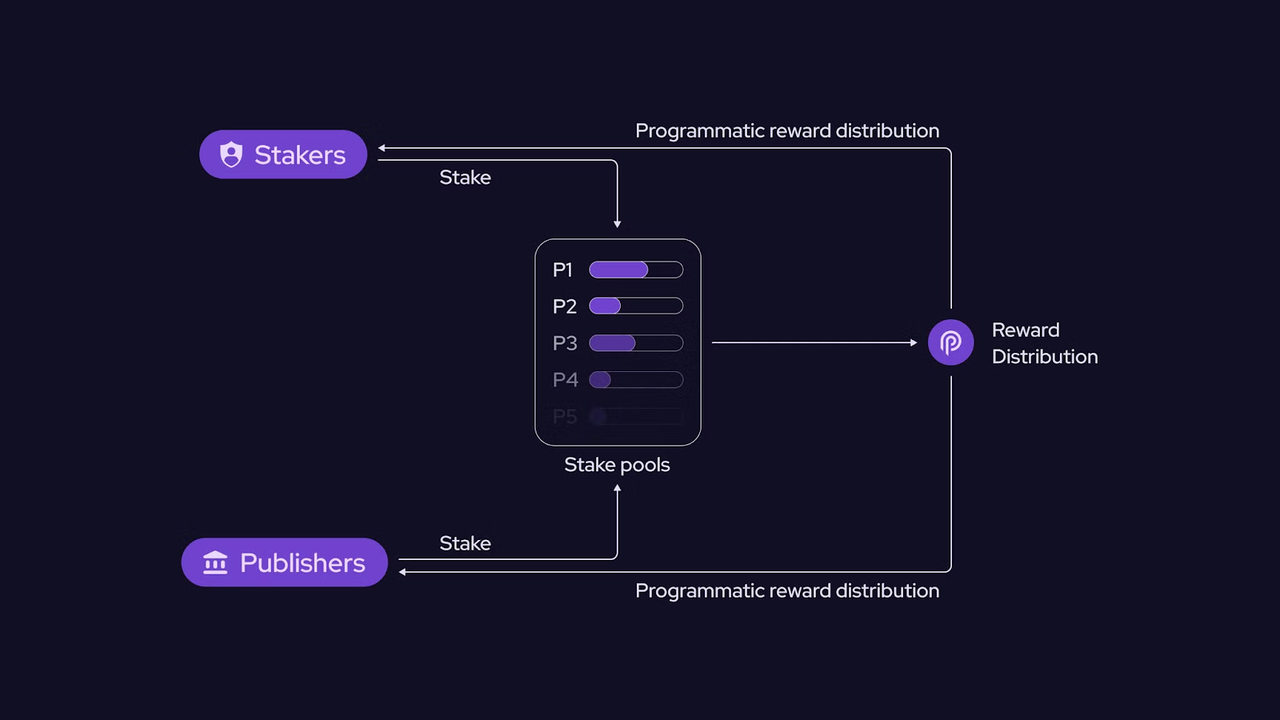
The Pyth community plays a crucial role in Oracle Integrity Staking (OIS). Now, PYTH stakers can programmatically contribute to the security of the oracle network and the DeFi ecosystem by staking tokens with Pyth data publishers. This enhances the potential rewards for the selected publishers and strengthens the resilience and accuracy of Pyth price feed data. The staking reward mechanism first rewards publishers based on data quality, and then rewards stakers based on their contributions to the network.

This mechanism provides stakers with a unique way to guide data publishers to support more price feeds and asset types, while maintaining high standards for price feed data. It is worth noting that the reward and slashing mechanisms of Oracle Integrity Staking (OIS) will impact both data publishers and their stakers. Publishers are responsible for the data they provide to the oracle, and stakers can help strengthen the oracle network by choosing which data publishers to support.

How Oracle Integrity Staking (OIS) Works

Oracle Integrity Staking (OIS) allows anyone to participate in safeguarding Pyth and protecting the security of the DeFi ecosystem. The program introduces decentralized staking rewards and slashing mechanisms to incentivize publishers and PYTH token holders to strengthen the quality of the oracle through staking tokens.

Staking Rewards and Slashing Process

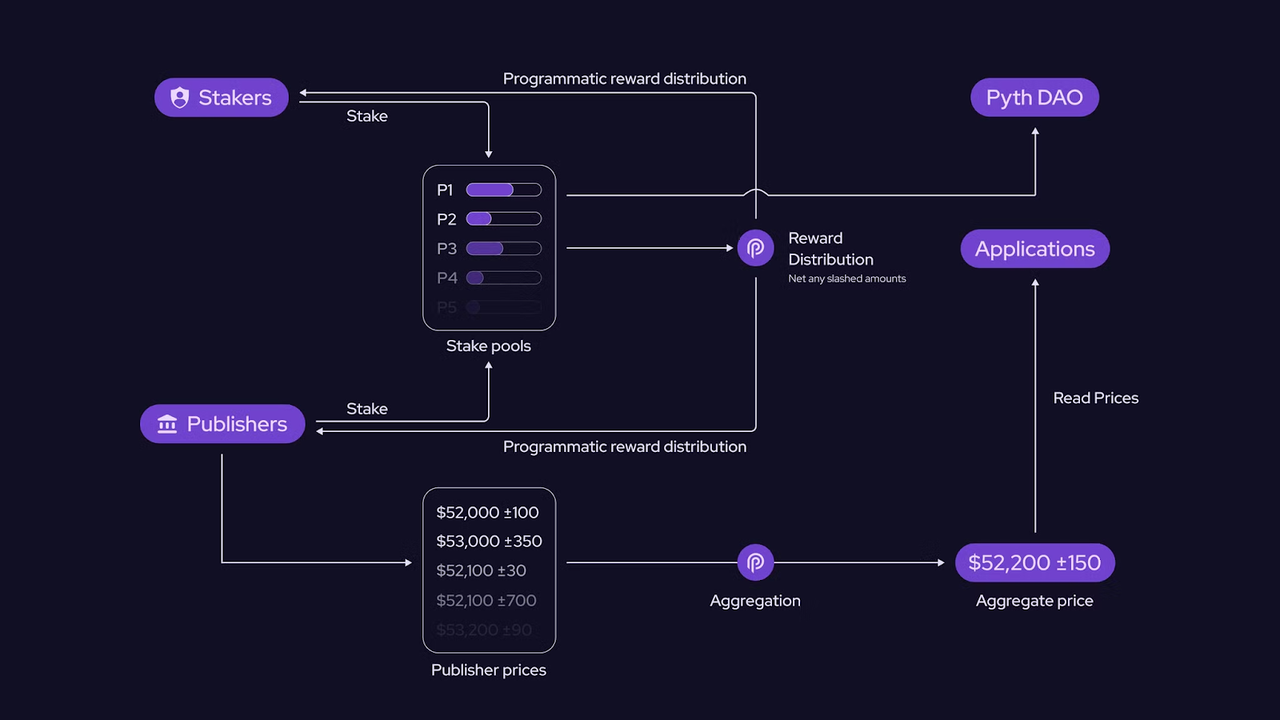
The core of Oracle Integrity Staking (OIS) is the staking pool, with each pool corresponding to a different data publisher. Each participating publisher can stake PYTH tokens on their own to receive data rewards for the data they publish. PYTH stakers — members of the Pyth community — can choose which publishers they want to support and stake PYTH tokens in any publisher's pool to help protect the security of the oracle network.

The total rewards generated by the staking pool are determined by the total amount of tokens staked in the pool (determined by both data publishers and stakers). As the total staked amount increases, the reward amount will also increase correspondingly until it reaches the staking cap. Data publishers can increase their staking cap by supporting more price feed data. Conversely, stakers can incentivize publishers to onboard more price feed data by staking with more publishers who provide important feeds to the ecosystem. Rewards will be automatically distributed between publishers and stakers, with rewards first going to publishers and the remaining portion being distributed to stakers.

Pyth DAO has set a maximum reward rate for the staking pool to strike a balance between sustainability and effective participation. The current rate is 10%, but it can be adjusted by a vote from Pyth DAO. When the total staked amount in the pool is below the staking cap, stakers can receive the maximum reward rate. However, the total reward amount can never exceed the maximum reward rate multiplied by the staking cap; this means that if the staking cap is exceeded, stakers will receive a lower reward rate.

This arrangement incentivizes stakers to carefully evaluate the complete list of publishers in the network when deciding which publishers to stake with, to help protect the oracle network. Detailed reward calculation methods can be found in the developer documentation.

In summary, the rewards in Oracle Integrity Staking (OIS) are determined by multiple key factors, all of which can be adjusted by a vote from Pyth DAO.

  • Staking Cap: This is the maximum amount of tokens that can be staked with a publisher (including the publisher's own and additional stakers' tokens) and be eligible for rewards. A higher staking cap allows publishers to attract more stakers and increase the nominal rewards of the staking pool.

  • Number of Symbols Supported by Publishers: Publishers can support more symbols to increase their staking cap and potential rewards. These additional rewards compensate for the increased risk of supporting more symbols.

  • Maximum Reward Rate: The DAO sets the maximum reward rate that can be earned in the staking pool, calculated as the annual percentage yield (APY). While a higher maximum reward rate can increase the total earning potential for participants, the DAO needs to manage this parameter carefully to balance incentivizing participation and ensuring the long-term sustainability of Oracle Integrity Staking and the Pyth Network.

  • Delegation Fee: Publishers charge a fixed percentage of rewards (currently 20%) as a delegation fee from stakers in the staking pool, net of any slashed amounts. The DAO can vote to adjust this fee rate and structure.

  • Slashing Mechanism: If a group of publishers provides data that does not meet the standards, both the publishers and the stakers supporting them may face slashing penalties. This shared responsibility model encourages stakers to carefully evaluate publishers and promotes a culture of accountability across the entire network. Currently, the upper limit of the slashing mechanism is 5% of the total staked amount, a ratio that can be adjusted by Pyth DAO. The DAO can also vote on how to use the slashed tokens, including whether to distribute them to affected parties due to data errors or for other purposes allowed by DAO governance.

How Stakers Participate

PYTH stakers play a crucial role in Oracle Integrity Staking, enhancing the security and data integrity of the oracle by staking tokens with publishers.

To get started, anyone holding unlocked PYTH tokens can access the Pyth staking dashboard and navigate to the Oracle Integrity Staking program. Eligible participants* can start exploring the list of publishers, choose the publishers they want to support, and help ensure the security of the oracle network.

Stakers can rank and assess publishers based on pool composition, publisher quality ranking, the number of price oracles supported by the publisher, or other criteria that are most important to them. When ready, stakers can stake tokens in the staking pool of any publisher. These tokens go through a warm-up period before formal staking and helping to ensure the oracle. Stakers can manage their staking allocations among different publishers based on personal preferences and strategies to maintain the integrity of the oracle network.

PYTH holders who have staked tokens in Pyth governance will see these tokens in the Oracle Integrity Staking program and can directly stake them with publishers without needing to withdraw to their wallets first.

Finally, participants can stake the same tokens in both the Oracle Integrity Staking program and Pyth governance, ensuring the security of the oracle and gaining voting rights for Pyth improvement proposals. Participants can also choose to stake only in Pyth governance without participating in Oracle Integrity Staking.

Role of Pyth DAO

Pyth DAO is responsible for determining and managing the parameters of Oracle Integrity Staking, such as the staking cap, delegation fees, slashing amounts, etc., to ensure that the incentive mechanism aligns with maintaining high data standards. The current parameter settings can be found in the documentation.

Pyth DAO also oversees important updates to the staking and slashing mechanisms, such as deciding the sources of rewards for publishers and stakers. To kickstart this program, the Pyth Data Association has allocated 100 million unlocked tokens. Pyth DAO can vote to decide additional sources of rewards, such as on-chain revenue generated by Pyth oracles.

Additionally, Pyth DAO can vote on how to handle tokens slashed due to publishers providing incorrect data. While slashed tokens automatically return to the DAO treasury, Pyth DAO can vote to distribute these tokens to affected parties due to data errors or for other purposes allowed by DAO governance.

The DAO can also change the reward structure, such as including other digital assets as rewards, allowing broader staking participation, further enhancing the security and coverage of the oracle.

Through these responsibilities, Pyth DAO empowers the community to shape the future of Oracle Integrity Staking, ensuring the continued resilience and scalability of the Pyth Network.

Price Oracle V3 and Future Developments

In decentralized finance (DeFi), the reliability and accuracy of oracle data are crucial. As more funds flow into the blockchain ecosystem, the risks of inaccurate or manipulated data are increasing.

While the existing reliability measures of the Pyth price oracle are crucial for maintaining the current DeFi landscape, the evolving DeFi space requires more advanced security mechanisms. Therefore, safeguarding price data with cryptoeconomics is the logical next step for price oracles.

Pyth Network first launched the price oracle V1 on Solana, pioneering high-frequency on-chain data from first-party sources. Leveraging Solana's high speed, Pyth set a new standard for reliable data delivery. With the launch of price oracle V2, Pyth became the first pull-model oracle, expanding its influence to multiple blockchain ecosystems such as EVM, Move, Cosmos, and Bitcoin, providing developers with high-quality, low-latency price data on any chain.

Oracle Integrity Staking unlocks price oracle V3, a significant advancement for the Pyth price oracle, introducing individual data source accountability. At the core of V3 is Oracle Integrity Staking, allowing Web3 developers to build without fear of inaccurate or maliciously tampered data.

Oracle Integrity Staking introduces a new paradigm in the oracle field, prioritizing the accountability of data sources and the protection of the entire data supply chain, setting higher industry standards for price oracles.

To date, Pyth Network is the only data infrastructure solution that provides this level of data accountability and security across all of its existing oracles, from the most commonly used price oracles to the long-tail assets with low liquidity. Oracle Integrity Staking ensures that every price oracle is secure, every user is protected, and every publisher is accountable.

Pyth Network is redefining the future of DeFi. Whether you come from any ecosystem or choose how to contribute, you are welcome to join this journey of change and create history together.

免责声明:本文章仅代表作者个人观点,不代表本平台的立场和观点。本文章仅供信息分享,不构成对任何人的任何投资建议。用户与作者之间的任何争议,与本平台无关。如网页中刊载的文章或图片涉及侵权,请提供相关的权利证明和身份证明发送邮件到support@aicoin.com,本平台相关工作人员将会进行核查。

Share To
APP

X

Telegram

Facebook

Reddit

CopyLink