This article focuses on the 2024 Fed rate cut and interprets its impact on the economy and the market. From the dynamics of the labor market to asset price fluctuations, it comprehensively analyzes the reasons and consequences of the rate cut. At the same time, it provides investors with diversified investment strategies to help them seize opportunities and cope with risks in the face of economic uncertainty.
Authors: Sylvia / Mat / Darl / WolfDAO
Editor: Punko
Macroeconomic Changes After the Rate Cut
1. FOMC Meeting Minutes and Rate Cut Outlook
At the September 2024 FOMC meeting, the Fed made a highly anticipated decision to cut interest rates, lowering the federal funds rate range by 2 basis points to 4.75%~5.00%. This indicates that the Fed is beginning to pay more attention to signs of weakness in the labor market, despite the overall stable economic conditions showing a slowing trend. This decision, combined with the gradual loss of strong growth momentum in the labor market and a slowdown in inflation, makes future policy changes crucial to the market.
Key Changes
- Labor market slowdown: Employment growth is transitioning from "moderate" to "slowing," and although the unemployment rate remains historically low, it has begun to climb slightly. This may indicate longer-term adjustments in the labor market.
- Continued progress in inflation: The Fed's confidence in reaching the 2% inflation target has strengthened, and it is expected that inflation will continue to decline this year, indicating effective relief of inflationary pressures.
- Clear employment goals: The Fed further emphasizes the policy goal of "maximizing employment," sending a dovish signal, indicating its firm commitment to supporting stable employment.
Rate Outlook

Fed Rate Cut Expectations Distribution - Source: @10xWolfDAO Compilation
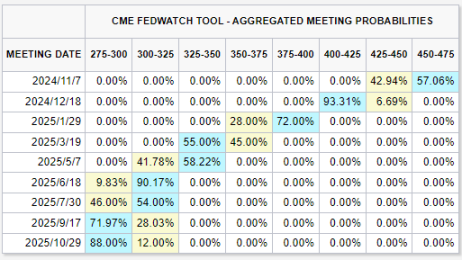
According to the latest dot plot, the rate cut expectations for 2024 have been raised from the previous 1 cut to 4 cuts, with an expected two more rate cuts within the year. In addition, there may be another 4 cuts in 2025, and a further reduction of 2 cuts in 2026. This forecast indicates the Fed's strong intention to use rate cuts to sustain economic growth over the next two years, stabilize the labor market, and prevent a worsening economic slowdown.
Fed Rate Cut Expectations for November-December 2024 - Source: @10xWolfDAO Compilation
Although the magnitude of this rate cut is slightly lower than market expectations, the Fed has clearly stated that future policies will depend on the latest economic data. This will prompt market participants to re-evaluate the Fed's policy pace and adjust their expectations for the impact of interest rate adjustments on different asset classes.
1.2 Economic and Inflation Forecasts
According to the latest economic forecasts, the Fed has slightly lowered its GDP growth forecast for 2024 to 2.0% and expects growth to remain around this level in the coming years. In addition, the unemployment rate is projected to rise to 4.3%~4.4% between 2024 and 2026, reflecting the need for a rebalancing of the labor market amid a gradual economic slowdown.
Meanwhile, the PCE inflation rate and core PCE inflation rate are expected to decrease to 2.3% and 2.6% respectively, indicating the Fed's optimistic outlook for future inflation relief. This also provides room for further rate cuts, allowing the Fed to flexibly address economic risks without excessive concern about inflationary pressures.
1.3 Balance Sheet Reduction Progress and Market Liquidity
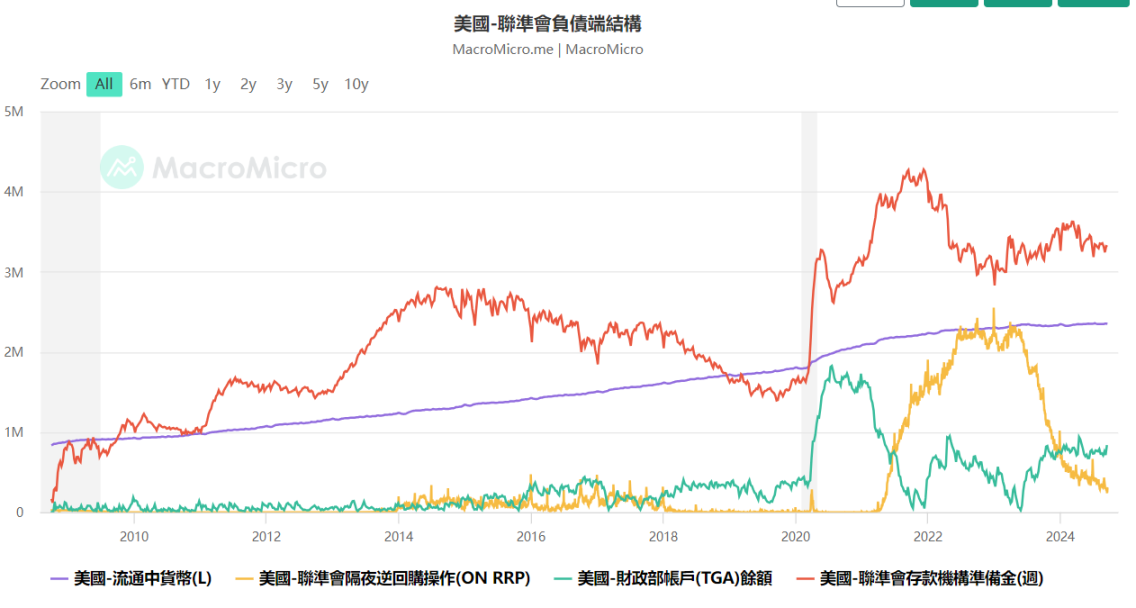
Source: Macromicro - @10xWolfDAO Compilation
Since May 2024, the pace of the Fed's balance sheet reduction has slowed, with the current reduction rate at $250 billion per month for US Treasuries and $350 billion for MBS maturities. By September, the Fed's balance sheet had decreased to $7.12 trillion. However, market liquidity remains ample, and the outflow of reverse repurchase agreements (ON RRP) has maintained liquidity stability. As the Fed continues to reduce its balance sheet, market reactions will be closely monitored, especially regarding liquidity spillover effects and their impact on asset prices.
1.4 Key Points from Powell's Press Conference
Fed Chair Jerome Powell reiterated the Fed's commitment to economic stability at the press conference. He pointed out that although the unemployment rate has risen slightly, it is more due to an increase in labor supply rather than a signal of economic recession. He also emphasized the Fed's confidence in cooling inflation and stated that the pace of future rate cuts will be adjusted based on data. Such remarks imply that the Fed's flexibility will be a core feature of future policy direction, and the market will continue to monitor changes in economic data to anticipate its policy response.
Rate Cut Outlook

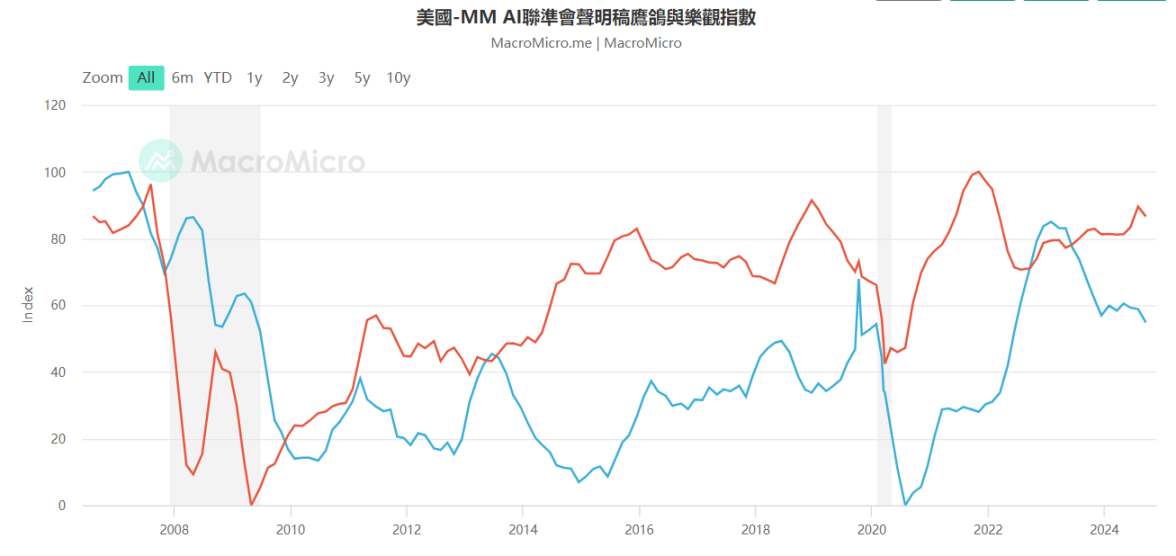
Source: Macromicro - @10xWolfDAO Compilation
The September FOMC meeting officially initiated a preventive rate cut cycle to address the risk of a labor market slowdown and support sustained economic growth. Although this rate cut was lower than some market expectations, the Fed's continued path of rate cuts still demonstrates its willingness to use rate adjustments to address economic challenges. In the future, monetary policy will be mainly driven by changes in the labor market, oil prices, and inflation.
Market participants should adopt flexible strategies and closely monitor key data, especially against the backdrop of increased global economic risks, where the flexibility of asset allocation is crucial.
Measures and Data Focus After the Rate Cut
2.1 Background and Economic Situation Analysis

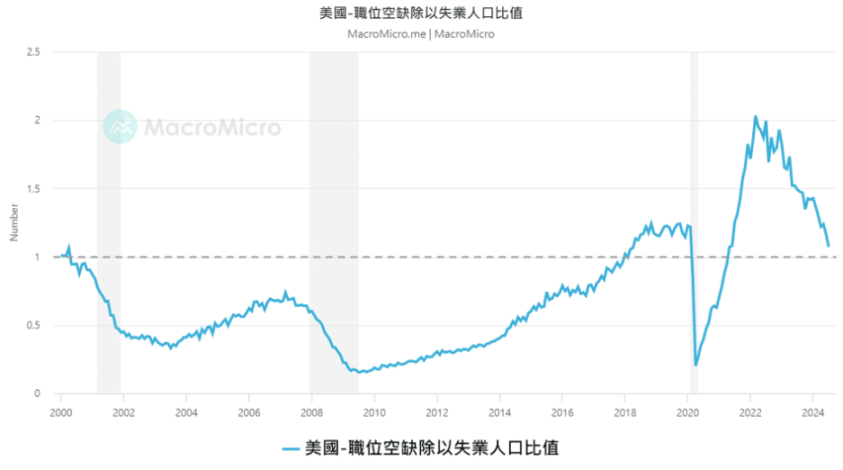
Source: Macromicro - @10xWolfDAO Compilation
The August 2024 non-farm payroll report showed that the supply and demand in the US labor market had basically reached a balance, with a ratio of job vacancies to unemployed persons at 1.07. This indicates that there is almost one job vacancy for every job seeker, and the overheating phenomenon in the labor market in recent years has weakened. At the same time, the Fed has taken rate cut measures to alleviate potential weakness in the labor market.
Labor Market Dynamics
- Disappearance of job protection: With the balance of supply and demand in the market, there are clear signs of a slowdown in business recruitment, and the unemployment rate may gradually rise, especially after significant downward revisions to non-farm employment data, revealing overestimated job growth in the past.
- Vulnerability in employment: Monthly non-farm employment growth shows weakness, with the average growth rate over 3 months dropping to 116,000, and unemployment rates in multiple states are also rising, indicating that the labor market may face greater challenges.
2.2 Reasons for the Rate Cut and Market Impact
The rate cut aims to lower corporate borrowing costs to prevent further slowdown in the labor market and stimulate the economy. By boosting corporate financing willingness, the rate cut is expected to drive recruitment activities and help stabilize the consumer market.

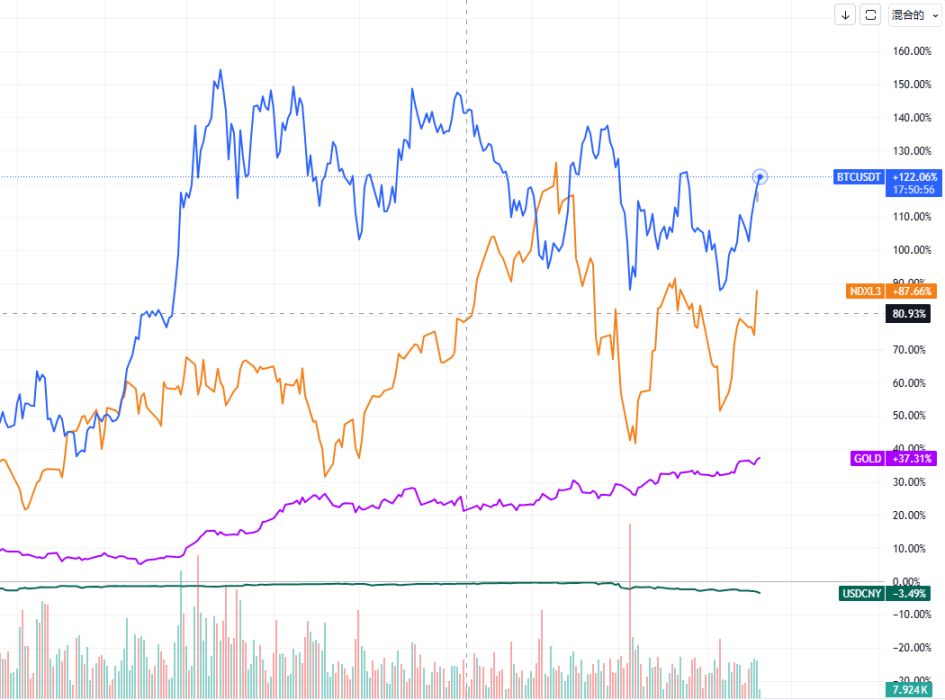
Comparison of Market Volatility in Different Financial Markets After the Fed Rate Cut Source: @10xWolfDAO Compilation
Market Outlook
- Short-term effects: After the rate cut, the market is expected to experience short-term volatility, but safe-haven assets such as gold and bonds will benefit. The price of gold has already shown a significant increase, indicating its clear benefits in the context of a rate cut. The dollar may come under pressure and depreciate due to the rate cut, pushing up the prices of other currencies and assets such as Bitcoin. Charts show that the price of Bitcoin has already rebounded, reflecting the market's preference for safe-haven assets.
- Medium to long-term impact: The rate cut will lower corporate financing costs and is expected to boost growth stocks such as technology stocks. Although the Nasdaq index (NDXL3) has experienced volatility, it has overall started to rise, reflecting the positive impact of the rate cut on technology stocks. In addition, funds will further flow into the cryptocurrency market, and the significant growth in the price of Bitcoin is confirming this. However, the volatility shown in the charts also reminds us that further observation is needed to determine whether the labor market can stabilize and grow.
2.3 Economic Vulnerability and Response Strategies
As the ratio of job vacancies to unemployed persons decreases, the vulnerability of the US economy increases, and the risk of recession rises. If the ratio continues to stay below 1, historical data indicates an increased likelihood of recession. Therefore, market participants need to adopt diversified investment strategies to diversify risks.
Response strategies:
- Diversify the portfolio: Increase holdings of government bonds, gold, and cryptocurrencies (such as BTC) to address economic uncertainty.
- Monitor data closely: Monitor the development of the labor market, especially the changes in the job vacancy to unemployed person ratio. Additionally, the monthly non-farm payroll increase needs to be maintained at a level of 150,000 to 200,000 to ensure that the economy does not enter a recession.
- Balanced allocation: Reduce the proportion of high-risk assets in the portfolio, increase the proportion of cash and low-volatility assets to address potential economic shocks.
Future Outlook: Market Response and Policy Continuity
- Market response to the rate cut: As rate cut expectations are gradually realized, the market will experience short-term volatility. However, if the rate cut successfully stabilizes employment and consumption, the market is expected to gradually move towards stability, and the stock market may see new growth opportunities.
- Continuity of policy support: The Fed will flexibly adjust policies based on future economic data. If employment continues to be weak, further rate cuts may be possible in the future.
- Global impact: Fed policy has a significant impact on global markets, especially in terms of capital flows and exchange rates. Global investors need to closely monitor the economic trends in the United States to guard against potential market risks.
The US economy faces high uncertainty, and the rate cut will be a key tool for the Fed to address the weakness in the labor market. Investors should adopt diversified strategies, closely monitor employment data, balance the allocation of risk assets, and increase holdings of safe-haven assets to address future economic fluctuations.
免责声明:本文章仅代表作者个人观点,不代表本平台的立场和观点。本文章仅供信息分享,不构成对任何人的任何投资建议。用户与作者之间的任何争议,与本平台无关。如网页中刊载的文章或图片涉及侵权,请提供相关的权利证明和身份证明发送邮件到support@aicoin.com,本平台相关工作人员将会进行核查。