Fractal Bitcoin: Comprehensive Research Report

CN
PANews
Follow
1 year ago

Fractal Bitcoin: Comprehensive Research Report

by Joven Wu, Principal of Investment at Ryze Labs

Abstract:

Fractal Bitcoin, launched on September 9, 2024, may represent another blind spot between the Eastern and Western crypto markets. Despite occupying a considerable portion of Bitcoin's computing power in the days following its launch, Fractal remains relatively unfamiliar to many in the global crypto community. This research aims to reveal the innovative project that has rapidly gained attention in the Bitcoin ecosystem.

Key Points:

  1. Innovative mining method: Fractal introduces a hybrid mining model that combines merged mining and permissionless mining. This model provides a new perspective for PoW, proving that even as the industry leans towards PoS, PoW remains a robust network security method.

  2. Leading network for Bitcoin: With its compatibility with the Bitcoin mainnet, Fractal provides developers with a real testing environment, offering valuable user data and activity insights. The activation of OP_CAT on Fractal marks the beginning of numerous anticipated experiments, solidifying Fractal's role as a potential Bitcoin upgrade and innovation testbed.

  3. Strong user base from day one: Through partnerships with OKX and UniSat, Fractal successfully attracted the most active Bitcoin users from the beginning. This early adoption helped Fractal avoid the "cold start" problem common to new platforms.

  4. Grassroots and community-driven: Fractal maintains a pragmatic community-driven strategy, avoiding excessive hype and institutional influence. This focus on organic growth and participation is at its core.

  5. Ecosystem integration: Fractal successfully integrates key participants in the Bitcoin ecosystem, including the BRC-20, Ordinals, and Runes communities, positioning Fractal ahead of current Bitcoin trends.

1. Introduction

Fractal Bitcoin is the only solution that uses the core Bitcoin code itself to recursively extend an infinite number of Bitcoin extension layers, built on the world's most secure and widely held blockchain.

To fully understand Fractal's innovation, it is necessary to understand the historical background of Bitcoin's scalability discussions. In 2017, Segregated Witness (SegWit) soft fork aimed to increase Bitcoin's block capacity, followed by the controversial Bitcoin Cash hard fork as another scaling solution. Since 2018, increasing attention has turned to second-layer solutions such as the Lightning Network. In this ongoing exploration of Bitcoin's scalability and feature enhancements, Fractal has emerged as a new approach, providing a unique perspective to address these long-standing challenges.

As a significant milestone, Fractal's mainnet officially launched on September 9, 2024, at 00:00 UTC.

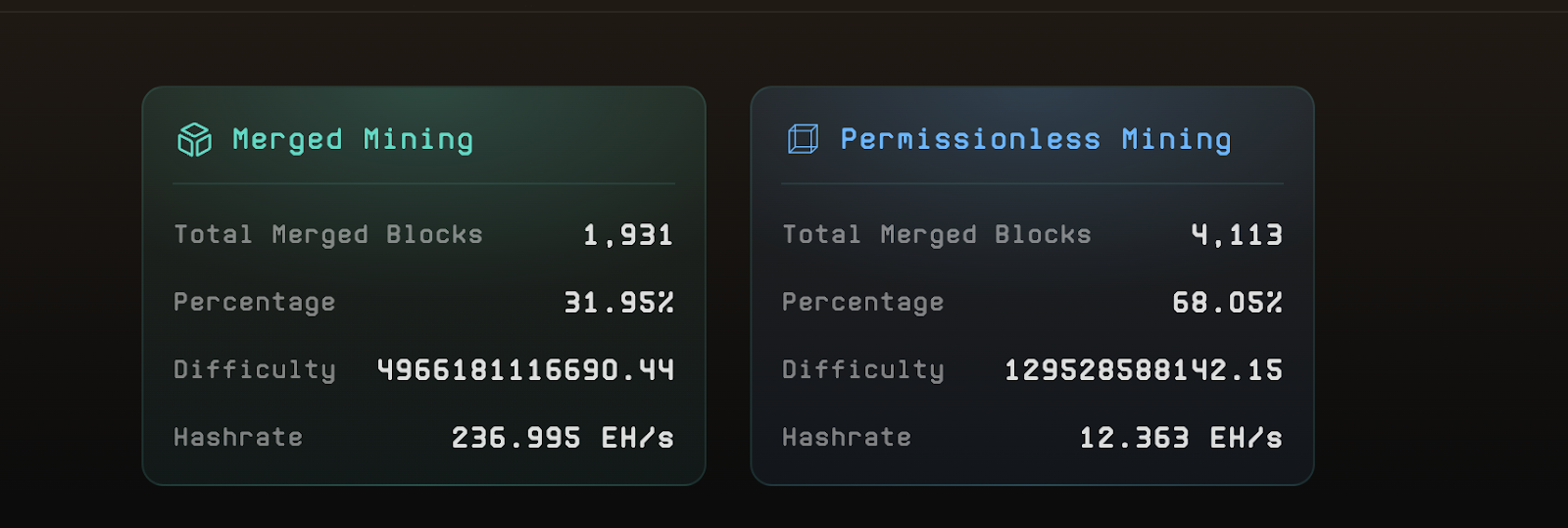
This launch was remarkably successful, demonstrating the project's strong appeal and technical robustness. Within 24 hours of the mainnet launch, Fractal's merged mining accounted for over 40% of Bitcoin's total hash rate, while free mining on Fractal accounted for 2% of Bitcoin's hash rate. To better understand these data, Fractal's free mining hash rate has exceeded three times the total hash rate of Bitcoin Cash (BCH). This rapid adoption by miners demonstrates a high level of confidence in Fractal's technology and its potential.

Fractal Bitcoin: Comprehensive Research Report

(snapshot taken at 10pm HKT on Sep 10, 2024)

The project has attracted participation from major players in the mining industry. Large mining pools such as F2Pool, Antpool, and Spiderpool have joined Fractal's mining ecosystem. Additionally, several other well-known mining pools are preparing to participate, indicating increasing interest in the Fractal mining network and further expansion potential.

2. Core Concepts and Technology

2.1 Native Bitcoin Extension

As a native extension of Bitcoin, Fractal's approach sets it apart from other extension solutions. By leveraging the existing Bitcoin codebase and modifying block production parameters, Fractal maintains full compatibility with the Bitcoin mainnet, ensuring seamless integration with existing infrastructure. This approach achieves a balance between innovation and maintaining the fundamental principles of Bitcoin's security model without affecting it.

2.2 Technical Specifications

Fractal introduces several key technological innovations:

  • Block time: Fractal achieves a 30-second block time, a significant improvement compared to Bitcoin's 10-minute block time. This faster block time allows for quicker transaction confirmations, greatly enhancing user experience. Additionally, it significantly increases the overall network throughput, potentially supporting a wider range of complex applications requiring high transaction volumes.

  • Mining mechanism: Fractal adopts a unique hybrid mining method. Every three blocks, two are permissionless mining, and one is merged mining with Bitcoin. This innovative mechanism encourages individual miners to participate freely in two-thirds of block production, promoting decentralization. Simultaneously, by conducting merged mining every third block, it leverages Bitcoin's strong computing power to enhance security. This balanced approach aims to maintain network security and decentralization while incentivizing existing Bitcoin miners to support the Fractal network.

  • Scalability: Fractal's architecture theoretically supports an infinite number of layers of improvement. Each Fractal layer provides a 20x capacity increase relative to the Bitcoin mainnet. This means the base layer provides 20 times the capacity of Bitcoin, and the second layer will provide 400 times the capacity. This exponential scalability model allows Fractal to address Bitcoin's throughput limitations while maintaining the security properties of the base layer.

  • Smart contract functionality: By implementing the OP_CAT opcode, Fractal achieves Turing-complete smart contracts on a Bitcoin-based platform. OP_CAT is a simple concatenation operation that, combined with other opcodes, enables complex smart contract logic. This feature opens up possibilities for advanced DeFi protocols, complex NFT mechanisms, and other decentralized applications previously limited to the Ethereum platform.

  • Parallel execution: Fractal's architecture allows different applications to run their own instances, ensuring specific optimizations do not affect the entire network. For example, a gaming platform can run on a specially optimized Fractal layer for high-frequency, low-value transactions, while DeFi protocols can utilize independently tuned layers for financial operations.

  • Compatibility: Fractal maintains 100% compatibility with Bitcoin standards such as BRC-20 and Ordinals. This ensures seamless operation of existing Bitcoin tokens and NFTs. Additionally, users can use the same addresses between the Bitcoin mainnet and Fractal, simplifying the user experience and reducing address management risks.

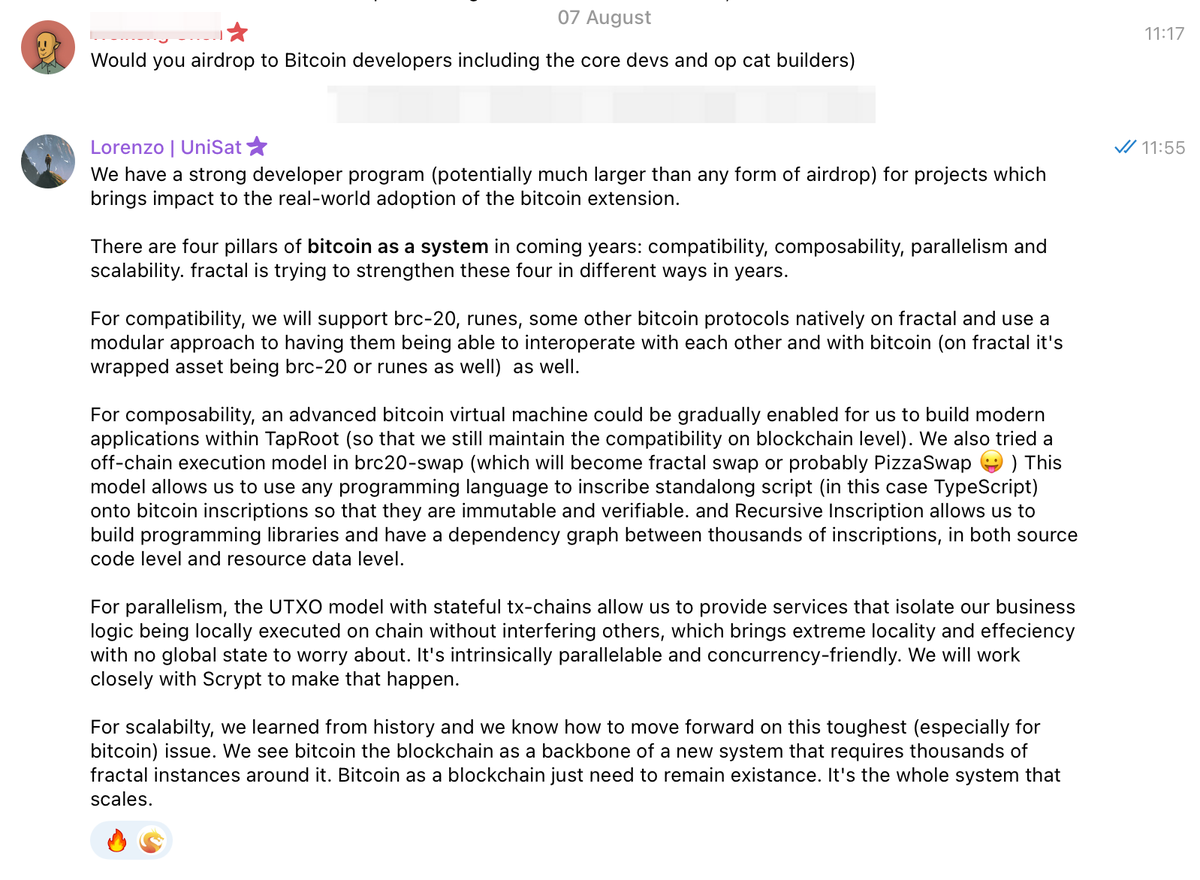
Founder of UniSat and core contributor to Fractal, Lorenzo, outlined his vision when answering community questions in a tweet.

Fractal Bitcoin: Comprehensive Research Report

2.3 Unique User Experience

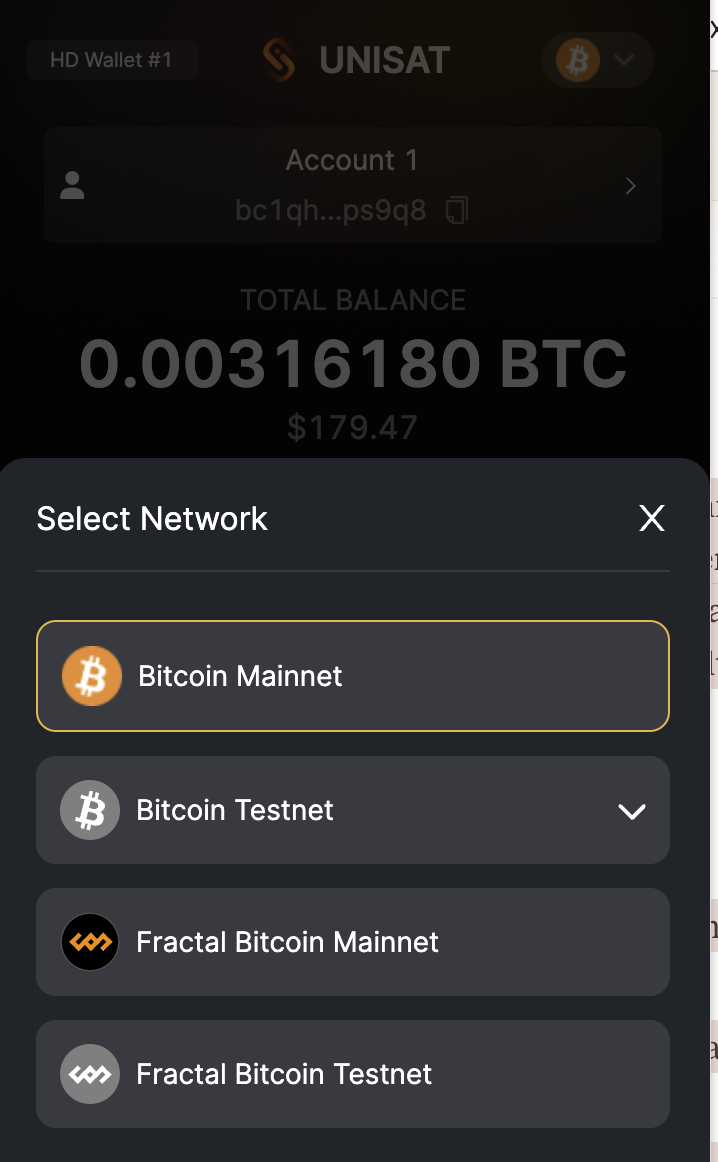
Unlike other Bitcoin Layer 2 solutions, wallet addresses on Fractal are identical to mainnet addresses. This design provides Ethereum-like convenience, allowing users to switch networks within the UniSat or OKX wallets to access different layers. Unlike other Bitcoin Layer 2 solutions that require separate EVM wallet addresses, Fractal allows users to continue using Bitcoin mainnet addresses in Layer 2 activities. Major wallets such as OKX and UniSat, serving the majority of active Bitcoin DeFi and collectibles users, fully support Fractal Bitcoin. Fractal Bitcoin: Comprehensive Research Report

3. Fractal's Position in the Bitcoin Ecosystem

3.1 Comparison with Other Bitcoin Solutions

Fractal enters a competitive market of Bitcoin extension solutions. Here's how it compares to some major alternative solutions:

  • EVM-compatible Layer 2: Some projects attempt to create EVM-based second-layer solutions for Bitcoin. While these solutions are relatively easy to implement and launch, they face significant challenges in acceptance within the Bitcoin community. The Bitcoin ecosystem, especially its core users and developers, often view these EVM-compatible solutions as "Frankensteins." In contrast, Fractal takes a Bitcoin-native approach, aiming to expand Bitcoin's capabilities without introducing external architecture. This approach may better align with Bitcoin purists' ideals and potentially achieve better integration and adoption within the existing Bitcoin ecosystem.

  • Bitcoin Cash (BCH): Bitcoin Cash emerged as a hard fork of Bitcoin, aiming to improve scalability through larger block sizes. This approach led to divisions within the Bitcoin community, forcing users to choose between two competing visions of Bitcoin. The fork of BCH sparked many political debates, often overshadowing technical discussions. In contrast, Fractal takes a fundamentally different approach. It does not create a separate chain or force users to choose but embraces Bitcoin as the mainnet and seeks to locally extend it. Fractal's architecture allows for the creation of multiple instances to scale together, potentially providing unlimited scalability without sacrificing the security or decentralization of the base layer.

  • Lightning Network: The Lightning Network excels in fast, low-cost payments and high privacy but has limited smart contract functionality and faces channel liquidity issues. In comparison, Fractal provides comprehensive smart contract support without the need for channel management, offering a simpler user experience.

3.2 Market Strategy and Built-in User Base

Fractal stands out in the competitive Layer 2 space, not only relying on technical innovation but also gaining an advantage through strategic market approaches and a strong built-in user base. With the support of UniSat, a leading Bitcoin wallet with approximately 1 million weekly active users, Fractal can reach an actively engaged audience.

Many UniSat users already hold BRC20 tokens and Runes assets in their wallets. These users naturally desire a more cost-effective, faster, and feature-rich trading environment. Fractal conveniently meets this demand, providing an improved trading experience while maintaining familiarity and compatibility with the Bitcoin ecosystem these users are accustomed to.

This built-in user base gives Fractal a significant advantage over other Layer 2 solutions and new blockchain platforms, which often face the challenge of "cold start," attracting initial user bases from scratch and building network effects. By leveraging UniSat's existing user base, Fractal may bypass early adoption barriers.

Additionally, Fractal's growth strategy sets it apart from many other blockchain projects. While many Layer 2 solutions and new blockchains prioritize Total Value Locked (TVL) as a core metric, Fractal plans to prioritize transaction volume as its guiding metric. This strategy aligns with its built-in user base, which is likely to naturally generate a significant number of transactions when interacting with existing assets on a more efficient platform.

By focusing on transaction volume rather than TVL, Fractal can demonstrate real usage and adoption, which may be more attractive to users and investors in the long run. This strategy also sets Fractal apart from many projects that focus on TVL numbers as a competitive focal point.

4. Ecosystem Development

Fractal's ecosystem development strategy is committed to decentralized and community-driven growth. This section outlines the strategies for building a strong, diverse ecosystem.

4.1 Decentralization Principles

The core of Fractal's ecosystem development is a firm commitment to decentralization, reflected in several key aspects:

  • Diverse cross-chain bridge solutions: Unlike some Layer 2 solutions that rely on a single official bridge, Fractal encourages the adoption of multiple cross-chain bridging methods between the mainnet and its network. This approach reduces the risk of single points of failure and promotes innovation in cross-chain interactions.

  • Open development environment: Fractal does not mandate specific development frameworks or methods, allowing developers to innovate freely within the ecosystem.

  • Community-driven governance: The ecosystem's direction is primarily determined by community input and initiatives, rather than unilaterally by central authorities.

  • Distributed infrastructure: Fractal promotes the development of distributed infrastructure, encouraging multi-party participation in building key components of the ecosystem.

4.2 User and Developer Onboarding

Fractal has implemented a series of strategic plans to onboard users and developers:

  • User reward program: After the mainnet launch, Fractal distributed 1 million FB tokens to over 100,000 eligible addresses from OKX and Unisat wallets, establishing a broad base of FB token holders and laying the foundation for increased participation in Fractal activities.

  • Partnership with OKX wallet: Successful collaboration with the OKX wallet demonstrates Fractal's ability to work with major players in the cryptocurrency space, significantly expanding its potential user base.

  • Developer incentives: Through various grant programs and developer resources, Fractal incentivizes developers to contribute to the ecosystem's growth.

4.3 Grant Programs and Project Evaluation

Fractal's grant programs aim to support and incentivize projects contributing to ecosystem growth and aligning with decentralized principles.

  • Retrospective Mode: Fractal adopts a retrospective funding approach, rewarding based on actual impact rather than speculative commitments. This mode encourages high-quality work and substantial results.

  • Evaluation Criteria: Project evaluation criteria include its contribution to the ecosystem, technical innovation, alignment with Fractal's decentralized principles, and potential long-term impact.

  • Diverse Project Types: The grant program supports a wide range of projects, from core infrastructure development to application layer innovations, ensuring comprehensive ecosystem development.

4.4 Highlighted Grant Projects

Through Fractal's grant program, several key projects have received support:

  • sCrypt: Enhancing Fractal's scripting capabilities to implement complex smart contracts on the Bitcoin network.

  • F2Pool: Contributing to Fractal's security as a major mining pool and providing crucial feedback on mining functionality.

  • Nubit: Developing a Data Availability (DA) layer to support scalable applications, including Ordinals and Layer 2 solutions.

  • DeTrading: Supporting cross-chain atomic swaps without the need for central authorities or collateral, simplifying trustless transactions on Fractal.

  • UniWorlds: Pioneering immersive environments on Fractal, developing a community and game toolkit for building interconnected virtual worlds.

  • FractalEcosystem: A community-driven directory showcasing Fractal projects, enhancing ecosystem transparency and discoverability.

4.5 Future Outlook

Looking ahead, Fractal is poised for continued ecosystem growth and innovation:

  • Expanded Grant Programs: The upcoming first season retrospective grant program (September 9, 2024, to October 9, 2024) will accelerate ecosystem development.

  • Community Engagement: Plans to launch community bounties and establish a community council in the fourth quarter of 2024 will deepen community involvement in ecosystem direction.

  • Potential Use Cases: Fractal's architecture supports a wide range of future applications, including advanced DeFi protocols, enhanced NFT capabilities, enterprise solutions, and decentralized identity systems.

  • Scalable Infrastructure: As the ecosystem develops, Fractal will continue to support scalable infrastructure development to accommodate growing network activity.

  • Cross-Chain Interoperability: Future developments may focus on enhancing interoperability with other blockchain ecosystems, expanding Fractal's influence and utility.

5. Token Economics and Economic Model

Fractal has designed a comprehensive token economic model to ensure long-term sustainability while maximizing value for the community and investors. The model incentivizes all participants in the ecosystem, from miners to developers, to collectively promote network growth and success.

5.1 Token Details

  • Name: FB (Fractal Bitcoin)

  • Maximum Supply: 210 million tokens

  • Total Supply: 105,153,225.00000000 (Data Source)

  • Circulating Supply: 1,213,225.00061300 (Data Source)

  • Primary Use: Transaction fees (within the Fractal ecosystem)

  • Secondary Use: Voting, applications

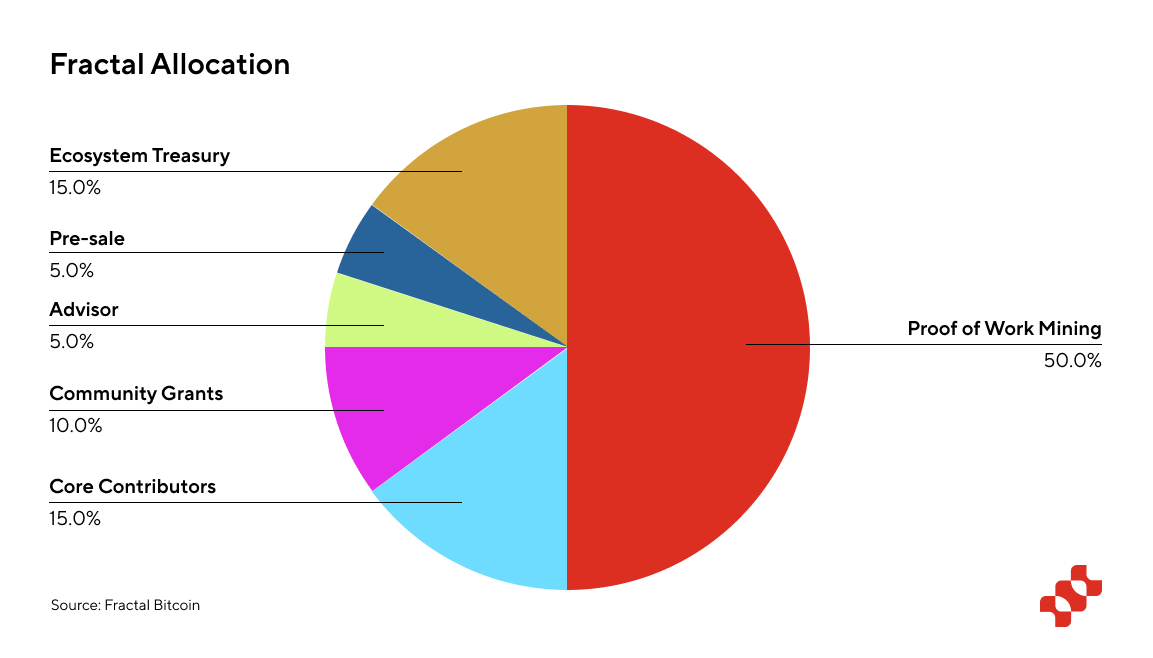
5.2 Token Allocation

Fractal's token allocation strategy aims to promote network security, incentivize growth, and reward key contributors throughout the ecosystem. The specific allocations are as follows:

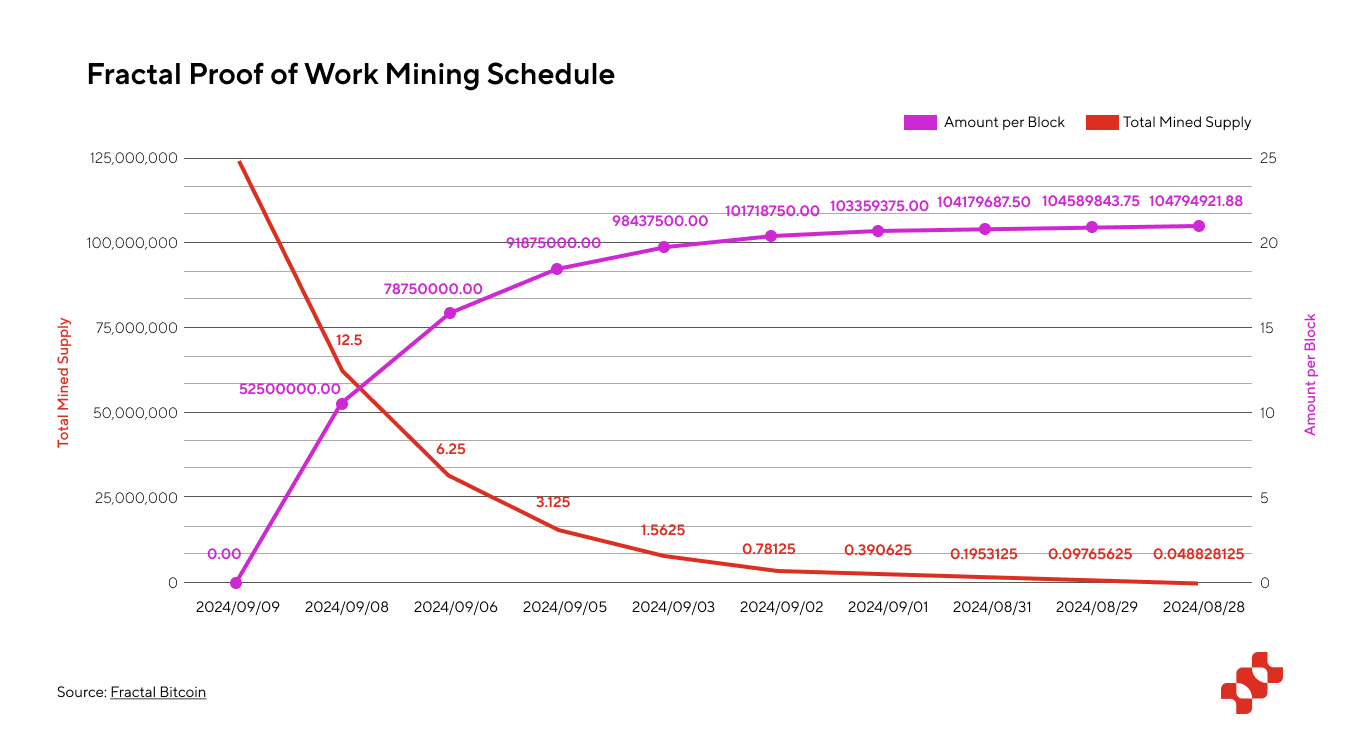
  • Proof of Work Mining (50%): 50% of the total supply is allocated to Proof of Work (PoW) mining. This significant allocation closely aligns Fractal with Bitcoin's security model, ensuring network security and reliable block production.

Fractal Bitcoin: Comprehensive Research Report

  • Ecosystem Reserve (15%): This portion is allocated to invest in the Fractal ecosystem, supporting and funding projects to improve the ecosystem and providing funds for ongoing core improvements in Fractal. Up to 10% of this pool can be accessed annually within 10 years.

  • Community Rewards (10%): Used to establish partnerships and liquidity programs. These community-driven initiatives aim to increase network participation over time. Similar to the ecosystem reserve, this pool can access up to 10% annually for 10 years.

  • Presale (5%): This portion is allocated to early investors to cover initial development and operational costs, as well as for security audits. These tokens have a seven-month lock-up period and will be linearly released until the end of twelve months.

  • Advisor Pool (5%): Reserved for current and future advisors who will provide strategic advice and support for Fractal's ongoing development. Up to 20% can be accessed annually within 5 years.

  • Core Contributors (15%): Allocated to individuals building and maintaining the core software of Fractal. These tokens follow the same lock-up and release schedule as presale tokens.

Fractal Bitcoin: Comprehensive Research Report

5.3 Release and Lock-Up Period

To ensure long-term commitment and alignment of interests:

  • Presale and core contributor tokens have a seven-month lock-up period, followed by linear release until the end of twelve months.

  • Ecosystem reserve and community reward tokens have a maximum annual release rate of 10% within 10 years.

  • Advisor tokens have a maximum annual release rate of 20% within 5 years.

5.4 Transparency and OP_CAT Governance Voting Mechanism

To achieve full transparency, Fractal has publicly disclosed official addresses for each token allocation category, which can be tracked upon the mainnet launch. This transparency facilitates community monitoring of token allocation and usage.

Additionally, Fractal encourages all users to participate in ongoing governance processes and contribute to project development. Proposal content may include protocol upgrades, parameter adjustments, and allocation decisions for the ecosystem reserve or community reward funds. This participatory approach aims to ensure that Fractal responds to community needs and adapts to evolving market conditions.

The Fractal team plans to adopt an OPCAT-based governance voting mechanism. This innovative approach will be the first application in the Bitcoin space. By enabling OPCAT, Fractal token holders will directly vote on proposals within the Fractal ecosystem.

6. Team and Partners

6.1 Core Contributors

Fractal Bitcoin is built by an experienced team within the Bitcoin ecosystem:

  • UniSat: As a leading Bitcoin wallet, UniSat has over 900,000 weekly active users and extensive experience in cryptocurrency application interface design, implementation, and support of Bitcoin standards such as BRC-20 and Ordinals, as well as secure management of high-value digital assets. Their involvement adds credibility to the project and provides a large potential user base for early adoption.

  • Block Space Force: Co-founders have successfully built and expanded world-class projects such as Coinbase, CoinMarketCap, and Cobo. With decades of experience in USD A9 exits and 100x investment projects, as well as developing the most widely used blockchain applications globally, they demonstrate expertise in scaling blockchain projects from concept to mass adoption, addressing regulatory challenges in the cryptocurrency space, and managing investor relations.

6.2 Developer Platform Partnerships

Fractal has the support of the Scrypt team, which is using OP_CAT to build a meta-protocol for smart contracts on Bitcoin. This partnership may bring significant synergies, including collaborative development of advanced smart contract standards, shared security audits, best practices, cross-platform promotion, and ecosystem building.

7. Challenges and Risks

While Fractal presents an innovative approach to expanding Bitcoin's capabilities, it also faces challenges and risks that potential investors and users should consider:

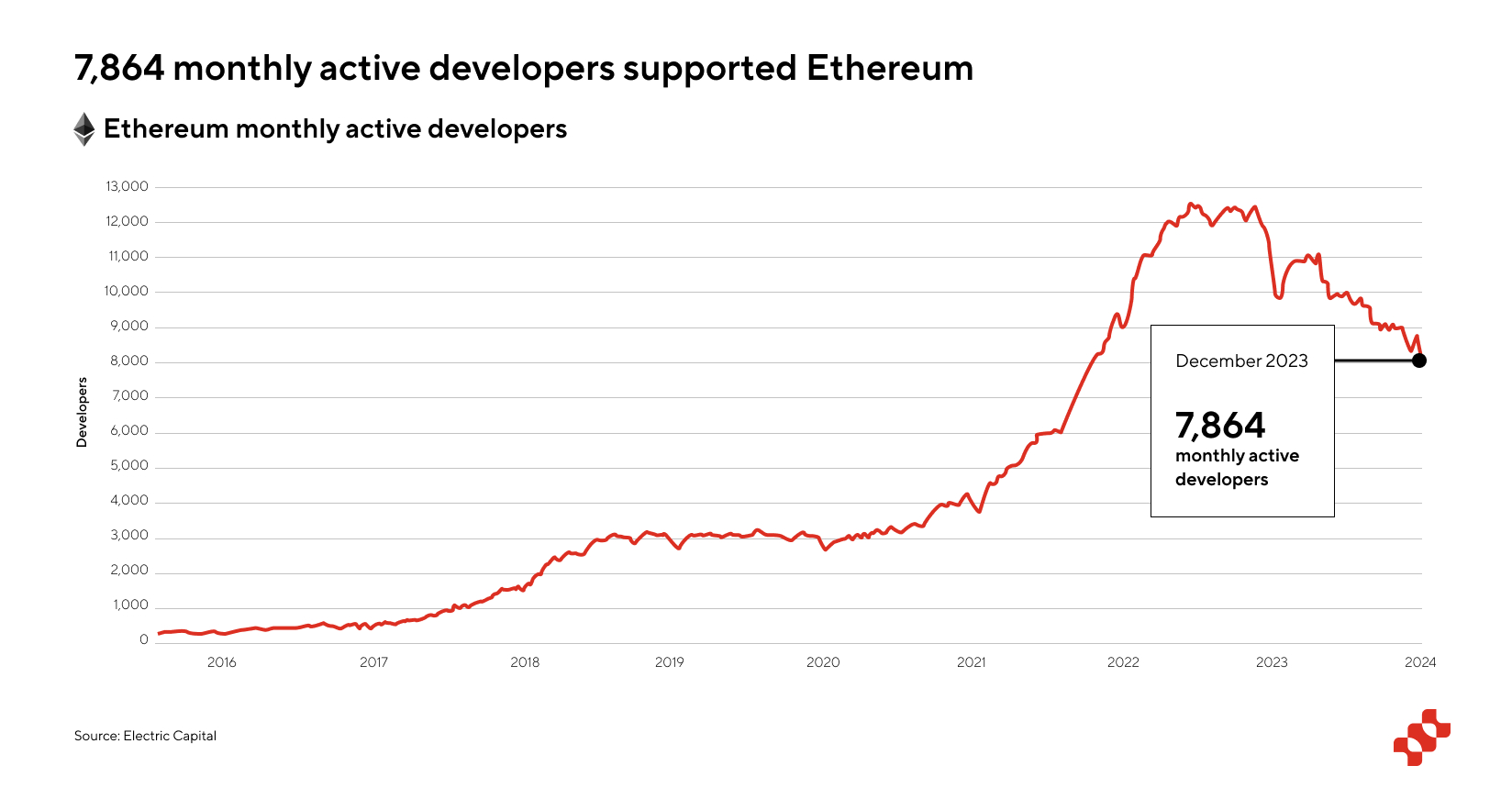
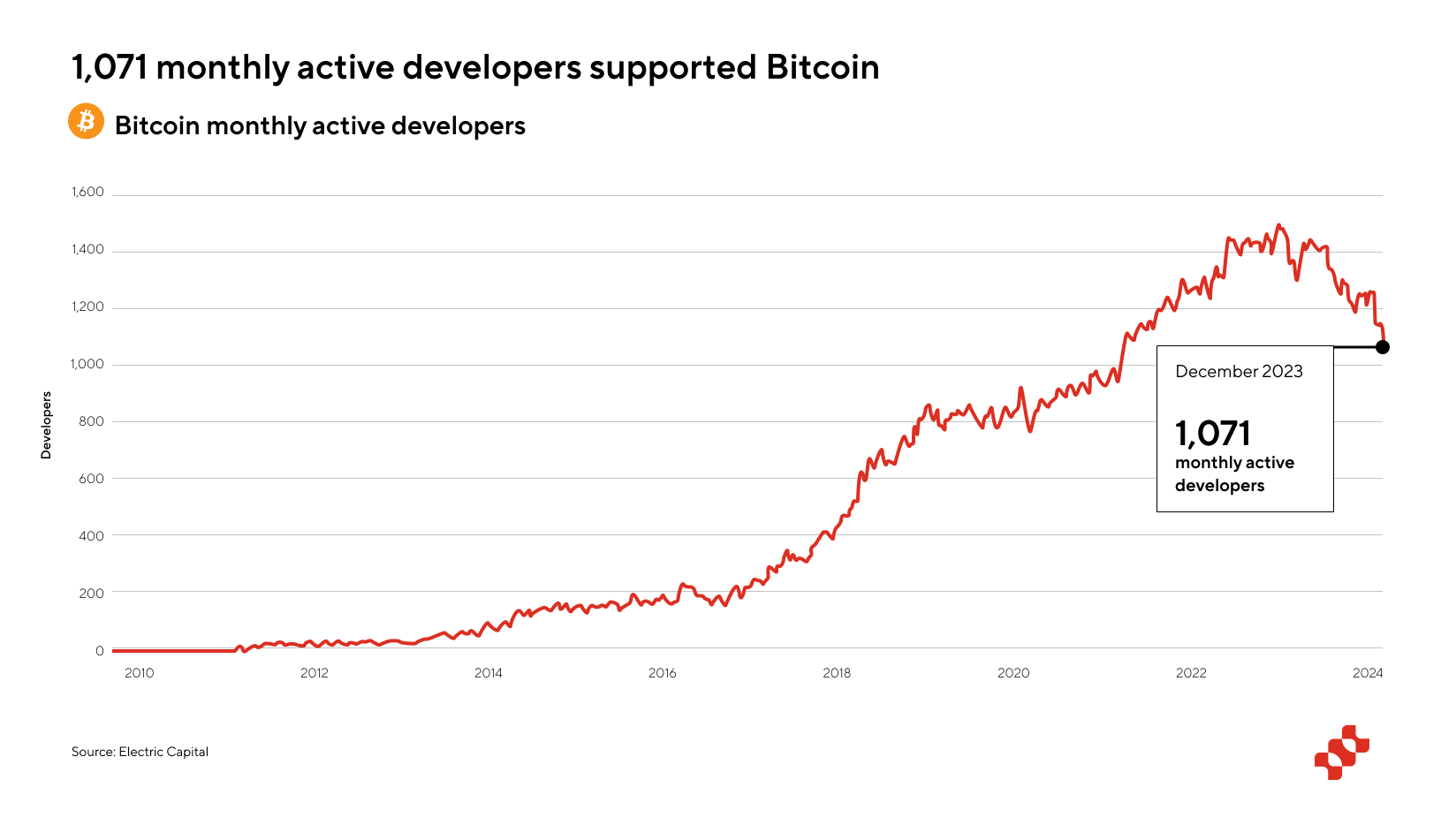
Programmability is a major challenge for Fractal. Due to its 100% compatibility with the Bitcoin mainnet, Fractal uses Bitcoin Script for programming, which may hinder ecosystem growth. According to the Electric Capital Developer Report, Bitcoin has 1071 monthly active developers, while Ethereum has 7864 monthly active developers.

Bitcoin Script is less well-known than popular languages like Rust or Solidity, making it more challenging to use and potentially resulting in fewer developers. Fractal's high coding threshold, coupled with potentially less functionality compared to other blockchains, may slow down ecosystem expansion. Additionally, development tools, libraries, and frameworks for Bitcoin Script are relatively immature compared to other blockchain environments, which may further hinder application development and deployment on Fractal.

Technical risks also pose significant challenges. Modifying Bitcoin's core parameters and implementing new features like OP_CAT inherently carries the risk of introducing vulnerabilities or unintended consequences. Managing recursive expansion and multi-layer complexity adds to the technical challenges.

Adoption risk is another significant challenge. Fractal may face resistance from Bitcoin maximalists who believe that any modification or extension of Bitcoin is unnecessary or potentially harmful. Convincing users and developers to transition from established Layer 2 solutions or other blockchain platforms to Fractal may be difficult, especially considering the network effects of these existing solutions. Additionally, while Fractal is compatible, the Runes, Ordinals, and BRC-20 communities may be reluctant to adopt the same standards. These communities have already established their own ecosystems and may feel there is not enough incentive to migrate or expand to a new platform, even if it offers better performance. Fractal needs to clearly articulate its value proposition and may need to provide significant incentive measures to drive initial adoption from these user groups. The challenge lies not only in providing technical advantages but also in overcoming the inertia of established communities and their existing investments in the current platforms.

To address these challenges, especially the programmability issue, Fractal may need to make significant investments in developer education, create robust development tools, and explore methods to make the development process more user-friendly without compromising its integration with the Bitcoin core.

8. Conclusion

Fractal Bitcoin represents a groundbreaking approach to expanding Bitcoin's capabilities. As the only Bitcoin extension solution that recursively expands an infinite number of layers using Bitcoin Core code itself, Fractal offers a unique value proposition in the competitive Layer 2 solution market.

Fractal's key strengths include:

  • Native Bitcoin integration: Fractal maintains full compatibility with the Bitcoin mainnet, achieving seamless integration with existing infrastructure while enhancing its functionality.

  • Technological innovation: With 30-second block times, a hybrid mining approach, and support for OP_CAT, Fractal significantly improves transaction speed and achieves complex smart contracts on a Bitcoin-based platform.

  • Built-in user base: Fractal has a significant advantage in overcoming the "cold start" problem. With the support of the UniSat wallet, Fractal has a solid foundation of over 1 million weekly active users, and through the Fractal mainnet launch plan, there are already 100,000 active addresses holding FB tokens, representing some of the most engaged users in the Bitcoin ecosystem. Additionally, full integration with the OKX wallet further expands Fractal's potential user base within the OKX ecosystem.

  • Strong mining and network security: Obtaining 30-40% of Bitcoin hash power through joint mining and 1-2% through free mining.

  • Ecosystem development: Through strategic grant programs and community initiatives, Fractal is actively nurturing a diverse ecosystem covering DeFi, gaming, and core infrastructure development.

  • Unique user experience: Fractal's approach allows users to use the same addresses between the Bitcoin mainnet and Fractal, providing a similar network switching experience to Ethereum.

  • Long-term vision team: Fractal's core contributors have been building in the Bitcoin and crypto industry since 2013, helping the team adopt a longer-term industry perspective, pushing Fractal towards a broader audience.

However, Fractal also faces significant challenges:

  • Programmability: Bitcoin Script may pose a barrier to developers more familiar with Solidity or Rust.

  • Technical risks: Modifying Bitcoin's core parameters and implementing new features like OP_CAT carries inherent risks.

  • Adoption barriers: Convincing users and developers to transition from established solutions to Fractal may be challenging.

Despite the challenges, Fractal's innovative approach, strong support, and early mining adoption demonstrate tremendous potential. The project has successfully attracted major mining pools, and the rapid growth of hash power post-launch is particularly encouraging.

As the ecosystem continues to develop, Fractal is positioning itself as a Bitcoin application platform for innovation across various domains, potentially reshaping the utility and adoption landscape of Bitcoin. The planned implementation of the OP_CAT-based governance voting mechanism further demonstrates Fractal's innovative commitment within the Bitcoin ecosystem.

While the road ahead is filled with opportunities and challenges, Fractal Bitcoin represents a bold step forward in the journey of expanding Bitcoin. Its success could profoundly impact the future of the Bitcoin and blockchain ecosystems. Like any emerging technology, potential investors and users should carefully weigh the project's potential and its risks, and closely monitor its technical development, ecosystem growth, and market adoption.

免责声明:本文章仅代表作者个人观点,不代表本平台的立场和观点。本文章仅供信息分享,不构成对任何人的任何投资建议。用户与作者之间的任何争议,与本平台无关。如网页中刊载的文章或图片涉及侵权,请提供相关的权利证明和身份证明发送邮件到support@aicoin.com,本平台相关工作人员将会进行核查。

Share To
APP

X

Telegram

Facebook

Reddit

CopyLink