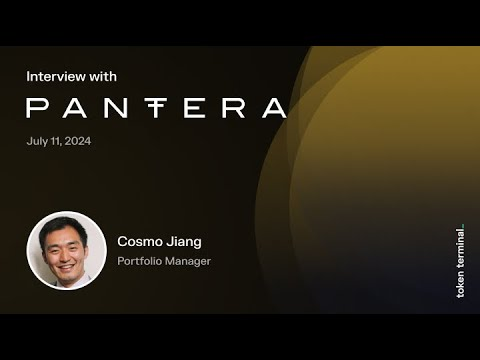
Podcast Notes | Conversation with Pantera Fund Manager: How did TON become our largest investment?

CN
1 year ago

TON has three main verticals: community, gaming, and payments and stablecoins. These areas form the investment logic of TON, and the accumulation of value is important for evaluating the importance of TON tokens.

Organized & Compiled by: Deep Tide TechFlow

Guest: Cosmo Jiang, Pantera Fund Manager

Host: Oskari Tempakka, Host of Fundamentals podcast

Podcast Source: Token Terminal

Original Title: TON: Pantera's Largest Investment Ever | Interview With Cosmo Jiang

Broadcast Date: July 11, 2024

Background Information

In this episode, Cosmo Jiang, portfolio manager of Pantera Capital, discussed with Token Terminal the details behind Pantera's largest investment ever, the initial L1 network of The Open Network (or TON) designed by Telegram.

The podcast discussed Pantera's long-term approach to fundamental-based investments and introduced their typical sources of trades and due diligence processes. Factors that helped Pantera build confidence in their largest investment to date were explored, including the strategic partnership between Telegram and TON, TON's unique advantage in attracting the first billion users to use cryptocurrencies, the importance of a thriving developer ecosystem, the impressive appeal of mini-games on TON, and the growth of stablecoins on the network.

This episode also discussed Pantera's bullish case for TON, investment-related risks and unanalyzable factors, and how Pantera supports the post-investment growth of TON.

Getting to Know Cosmo Jiang

  • Cosmo Jiang is a portfolio manager at Pantera Capital, focusing on investments in the consumer internet sector, responsible for the company's liquid token strategy, and working closely with founder Dan Morehead.

  • He believes that tokens are a new form of capital formation and can coordinate relationships between employees, management teams, token holders, and users through incentive mechanisms. He is convinced that digital assets and cryptocurrencies have the potential to disrupt traditional internet giants, and therefore is fully committed to this field.

Pantera Overview

  • Pantera was founded by former Tiger Management macro head Dan Morehead in 2003 and was initially a macro-oriented fund. In 2013, Pantera fully transitioned to blockchain, becoming the first U.S. institutional investment firm focused on blockchain. Pantera's first Bitcoin fund achieved a return of 1000 times, greatly satisfying early investors.

  • Jiang joined Pantera last year, having previously founded his own digital asset hedge fund, Nova River, aiming to apply rigorous fundamental analysis from traditional finance to the crypto space.

  • Jiang emphasized that Pantera's investment philosophy is to invest in the future of the digital asset industry in the long term, compounding capital through years of industry growth. He also mentioned that educating investors about the importance of fundamental investing and applying this strategy on a larger scale is crucial for their success and the development of the entire industry.

How TON Entered Pantera's Radar

  • Jiang mentioned that Telegram is the world's third-largest messaging app, behind only Facebook Messenger and WhatsApp. As an internet investor, he observed that messaging apps have extremely high user retention rates, but monetization is relatively difficult. This is because message content is usually more private, making it difficult to target ads, resulting in greater difficulty in monetization.

  • The TON network was initially developed by Telegram, but due to SEC litigation, Telegram had to abandon the project and return it to users. Nevertheless, the TON network has undergone multiple iterations and developments in the past few years.

  • Jiang pointed out that in September last year, TON reached a new strategic partnership with Telegram, integrating the TON wallet into its app and allowing users to use TON to pay for advertising fees and share in-app advertising revenue. This makes the relationship between TON and Telegram more concrete and practical.

  • Jiang believes that this partnership will combine TON's ecosystem with Telegram's 900 million monthly active users, with huge potential to significantly expand the distribution and use of TON as a blockchain.

Strategic Partnership Between Telegram and TON

Oskari mentioned whether the strategic partnership between TON and Telegram was the main reason for Pantera's in-depth research into TON, or because they observed some initial indicators and activities on the TON network.

  • Jiang responded that it was indeed this strategic partnership that made them start paying serious attention to TON. They had always known about the relationship between TON and Telegram, but it wasn't until last year that this relationship became clear, making them realize that there could be significant progress.

  • Jiang explained that Pantera had been tracking the history of TON, and their biggest question was why these changes were happening now. Many Web 2.0 platforms have tried to enter the blockchain space but have not been serious, and therefore have not succeeded. Pantera's due diligence was primarily to understand the relationship between Telegram and TON and the motivations behind it.

  • Earlier this year, Telegram launched an integrated TON wallet, which allowed Pantera to see actual progress. The success of TON is crucial for the sustainability of Telegram as a private company. Due to Telegram's emphasis on data privacy and user sovereignty, it cannot monetize through advertising, and the subscription model is not successful enough.

  • Therefore, Jiang believes that the only sustainable way for Telegram to monetize may be through cryptocurrencies and the distribution of TON.

  • Jiang also mentioned that Telegram may go public, which would benefit TON, but if TON is successful, Telegram may not need to go public, which aligns more with its principles of user sovereignty and data privacy. Understanding this, Pantera realized that Telegram needs to ensure the success of TON not only economically but also strategically.

Pantera's Due Diligence Process

Oskari asked about Pantera Capital's typical findings and due diligence process, specifically mentioning the case of liquid tokens.

  • Jiang pointed out that they focus on investing in blockchain businesses and protocols that have product-market fit, strong growth prospects, excellent management teams, and the ability to create and capture economic value. In the early stages, they primarily focus on the strength of the management team, a clear vision, and the ability to communicate information, as these factors are crucial for building the initial product and finding product-market fit. As the company develops, they focus more on the product itself, competitive advantages, and profit plans.

  • Jiang explained that their process is similar to due diligence in traditional asset classes, including talking to customers and competitors, understanding the competitive landscape, analyzing the services provided by the business and their added value, and ultimately translating this information into financial models. They write detailed investment memoranda and actively engage in portfolio construction and management.

  • Specifically for TON, as it is already relatively mature and has traceable fundamental data, they pay special attention to key performance indicators (KPIs) such as transaction volume, user numbers, and usage. This data is ultimately incorporated into financial models to ensure that investment decisions are based on solid foundations.

  • Jiang emphasized that due diligence is not just about numerical analysis but also includes an understanding of human interaction and teamwork, as these factors ultimately translate into financial data. They track data to ensure that the narrative and fundamental story are consistent, enabling wise investment decisions.

Oskari summarized that this is a balance of qualitative and quantitative analysis, especially in an emerging industry where fully similar historical cases cannot be found.

  • Jiang added that fundamental investing is not just about numbers but also includes an understanding of human interaction and collaboration. This approach allows them to conduct in-depth research on TON and conclude that TON is a very exciting investment opportunity.

Building Confidence in TON Investment

Oskari asked about the basis of Pantera Capital's confidence in TON investment.

  • Jiang pointed out that the key question is whether TON can grow from the initial 1 million monthly active users (MAU) to the next billion users. This is a huge challenge, as the current number of cryptocurrency users is only in the tens of millions. Jiang believes that TON has the potential to achieve this goal, primarily based on the following aspects:
  1. Telegram's User Base: Pantera analyzed the growth history and distribution of Telegram users and compared it with potential blockchain users. TON currently has a low penetration rate on Telegram but has grown from 1 million MAU to 4 million MAU. They studied how TON could increase its penetration among Telegram users, as well as potential growth drivers and strategies.

  2. User Monetization: Pantera studied how to monetize users in both cryptocurrency and non-cryptocurrency applications. They considered monetization models in multiple areas such as DeFi, transaction fees, payment alternatives, as well as advertising and business models in social media and Web 2.0. They built reasonable assumptions to predict TON's monetization potential.

  3. Competitive Dynamics: Pantera understood the strengths and weaknesses of the TON ecosystem and how to increase developer adoption through conversations with the development team. They believe that developer adoption will ultimately translate into user adoption.

  • By combining user growth, monetization potential, and competitive dynamics, Pantera built a model to predict the valuation and price target of the TON network.

Oskari concluded that TON's advantage lies in its close connection with Telegram, which is already a large community integrating blockchain technology, rather than trying to create an entirely new community like most blockchain projects.

Telegram vs. Other Community Platforms

Oskari asked Jiang why he believes Telegram has an advantage over other community platforms and can successfully integrate blockchain technology into the user experience.

  • Firstly, Jiang emphasized the relationship between Telegram and TON as their primary focus for due diligence. He pointed out that Telegram is currently the only major social media platform with a blockchain strategy. Other platforms, such as Facebook (forced to exit), WeChat (unable to implement due to being in China), and Google (failed in social experiments), do not have a similar blockchain strategy. Telegram is based in Dubai, free from regulatory restrictions in the US and China, giving it more operational space in the blockchain field.

  • Secondly, Jiang mentioned that Telegram does not have traditional business models to break and does not face regulatory pressure in the US and China like other platforms. This makes Telegram more flexible and free in trying and implementing blockchain strategies. Additionally, Telegram already has a large user base, providing a solid foundation for its blockchain strategy.

  • From a strategic perspective, Jiang believes that Telegram's founding principles - user sovereignty and data privacy - are highly aligned with the philosophy of blockchain. This philosophical consistency makes Telegram's attempts and implementations in the blockchain field more natural and reasonable.

  • From a community perspective, Jiang pointed out that although TON's current developer and crypto-native community is small, the entire cryptocurrency field is still in a very early stage. Instead of starting from scratch, TON already has 2 to 5 million daily active users, which is an important starting point in the process of reaching a billion users. Despite TON's small and early-stage community, this is not a major disadvantage considering the very low penetration rate in the entire cryptocurrency field.

Gaming on TON

Oskari mentioned that although Telegram is not currently heavily promoting wallet integration and other features, these features are very easy to set up, and the user experience is very smooth.

  • Jiang agreed, pointing out that the ultimate user experience should be one where users are not aware that they are using blockchain technology. Many teams in the current cryptocurrency field are overly focused on complex technical improvements, neglecting what users truly care about, which is the usability of the product. TON's strategy prioritizes the user interface rather than emphasizing blockchain technology first, which sets it apart from other blockchain projects.

Regarding gaming, Oskari mentioned that while there has been much discussion about how games can attract the first billion users, there have been no particularly successful cases so far. However, some recent small games launched on TON show new trends and potential.

  • Jiang believes that past blockchain games have been too focused on the "play-to-earn" model, which is unsustainable because it relies on continuous new value input (i.e., players investing money and time) rather than extracting value from the system. Future blockchain games need to focus more on the fun of the game itself to attract players willing to invest resources for enjoyment rather than just for earning money.

    • Games on TON have already seen significant success. For example, Not Coin is the first game on Telegram and reached 10 million daily active users within a few months, far exceeding the user count of the previously most successful blockchain game, Axie Infinity. Another game, Hamster Combat, has also achieved tremendous success, with 200 million unique users and 40 million daily active users.
  • Jiang pointed out that these successes are mainly attributed to the seamless user experience on TON. Users can easily open these small games within the Telegram app, which is one of the most frequently used apps by users every day. This convenience and high-frequency usage allow TON to leverage Telegram's large user base to drive widespread adoption of the games.

Popularity of Notcoin and Hamster Combat: The Appeal of Casual Games

  • Jiang noted that while these games may seem very simple, even somewhat silly, such as Hamster Combat being just a click game, casual games are actually one of the most popular game categories globally. This category of games has the fastest growth rate and does not require high mental investment, allowing players to enjoy the game without much effort.

  • Jiang emphasized that while the games on TON may currently appear relatively simple and immature, these simple game forms are very meaningful globally, especially in the non-cryptocurrency field. The popularity of casual games demonstrates the huge potential and market demand for these game forms.

Oskari added that a key advantage of casual games is that they do not disrupt users' other activities. This game format is very suitable for integration into messaging apps, as users can open the game while waiting for friends to reply to messages, perform simple actions, and then return to the messaging interface to continue chatting.

  • Jiang further explained that this is the strength of mini-apps in messaging apps. Users can open games in the gaps of chatting with friends, constantly switching between messages and games, always staying active within the app. This seamless user experience greatly increases user stickiness, allowing games on the TON platform to quickly gain a large number of users.

Payment and Stablecoins on TON

Oskari mentioned that TON can transition to financial services companies not only by attracting developers through games but also through the functionality of payments and stablecoins. One of TON's goals is to bring USDT into the pockets of every user, and they have made some progress in this regard.

  • Jiang pointed out that the adoption speed of stablecoins on TON is remarkable. Currently, TON has issued approximately $600 million of USDT, and this number is rapidly growing every month. In fact, TON is the fastest blockchain in Tether's history in terms of USDT adoption. This demonstrates TON's strong distribution capabilities, even though Tether was only launched on TON in April of this year.

  • Jiang further explained that for blockchain to be successful, it needs some basic primitives, with stablecoins being the most important. The emergence of stablecoins has helped the development of Ethereum's DeFi (decentralized finance) because users want to use non-volatile assets for transactions and settlements. TON has shown tremendous potential in this regard.

  • In addition to stablecoins, Jiang also mentioned other important primitives, such as exchanges and bridges. While TON is still relatively early in terms of cross-chain bridging, there may be some major bridge integration announcements in the future, which will further drive the development of TON.

  • Highlighting the importance of payments, Jiang pointed out that payments are a very core part of our daily lives. In the past 20 years, user acquisition strategies have mainly been achieved through social media networks, but the most successful growth networks in recent years have been fintech platforms such as Venmo and PayPal, as they provide peer-to-peer and everyday payment functionalities, which are crucial to users' daily lives.

  • The beauty of blockchain payments is that they are global, permissionless, and frictionless from day one. This is completely different from traditional financial systems. For example, sending money to a grandmother living in China not only takes time and money but is also a complex and error-prone process. Blockchain payments can immediately complete these transactions without such friction.

Oskari concluded that once TON solves its current growth bottlenecks, such as cross-chain bridging, its strong distribution channel power will be fully realized, and the future data will be very exciting.

Accumulation of Value and Investment Potential of TON

Oskari mentioned that TON has three main verticals: community, gaming, and payments and stablecoins. These areas build the investment logic of TON, and the accumulation of value is crucial in assessing the importance of TON tokens.

  • Jiang explained that the TON token is very similar to other Layer 1 blockchain tokens; it is a gas token used for all transactions on the TON blockchain. Currently, the cost of each transaction is approximately 2 cents, with half of the transaction fees being burned.

  • This mechanism is similar to Ethereum, although Ethereum burns a larger proportion. The burning of a portion of transaction fees helps reduce the token supply, increasing the value of the remaining tokens. Jiang emphasized that he usually considers the issue from an earnings per share or per token value perspective. As the token supply decreases due to burning, if the total economic value of the system remains constant, the value of each token will increase. This is the mechanism of value accumulation for TON tokens.

  • To achieve value growth, more transactions and economic activity need to be seen. These activities will translate into more token burning and an increase in the value of each token. Therefore, the value accumulation of TON depends on active transactions and economic activities within its ecosystem.

Risks and "Unanalyzable"

  • Jiang pointed out that many people are confused about the relationship between Telegram and TON. Through in-depth research, they found that the strategic significance of Telegram on TON is very clear. Telegram can earn TON tokens by achieving certain metrics in the next five years, and this economic and philosophical consistency makes them more confident in this relationship.

Another question is, why would TON be more successful than other applications based on EVM or Solana.

  • Jiang explained that the TON wallet is a new tab within the Telegram app, which provides significant advantages. User experience and UI design are crucial, as every click can lead to user churn, so TON only requires one click to access, while other apps require multiple clicks.

  • TON is still in a very early stage, and when they initially researched TON, it didn't even have stablecoins. Many infrastructures are yet to be established, such as cross-chain bridging and developer tools. These are all things that require time and effort to achieve, and investors need to have confidence in the future potential.

  • TON is not EVM compatible, nor is it written in Rust, but in FunC (a variant of C language). While many developers are familiar with C language, few cryptocurrency developers are accustomed to using C language. This may affect TON's ability to attract developers.

  • Going from the current few million users to hundreds of millions of users in the future requires a lot of execution work and coordination of multiple factors. This is a huge challenge and carries high execution risk.

Market Opportunities and Valuation Potential

  • Jiang believes that the core of L1 blockchains is to serve as a settlement layer for transactions, and its value depends on how much economic activity it can attract to the blockchain.

  • User Growth: Telegram may reach 1.5 billion users in the next few years, currently at 900 million. If TON can penetrate one-third of this, TON could have approximately 500 million users.

  • Average Revenue Per User (ARPU): If TON can achieve an ARPU of $10 per user, then 500 million users can bring in $5 billion in annual revenue.

  • Payment Settlement Network is a high-margin business, with almost 100% profit margin. Therefore, a higher price-to-earnings ratio can be applied.

  • Valuation Calculation: Assuming $5 billion in annual revenue multiplied by a 30x price-to-earnings ratio, it could reach a market value of $150 billion.

  • Token Price: Currently, TON's token supply is approximately 5 billion, which means the potential price per token could reach $30.

Supporting TON's Growth

Jiang detailed how they actively support the growth and development of TON (The Open Network) as long-term investors. Here are some key points:

1. Role of Long-Term Investors

a. Active Participation

Jiang emphasized that as long-term investors, they are not just passive fund providers but actively engage in the management and development of the invested companies. They work closely with management teams, providing advice and support in both early and later stages.

b. Education and Guidance

As significant investors in the industry, they feel a responsibility to educate those outside the industry and guide the development within the industry. They use their perspective and experience to help companies identify and address market and competitive changes.

2. Providing Comprehensive Support

a. Talent and Resources

Pantera has various professional talents and resources to provide support in multiple areas, including existing portfolio company networks, service provider relationships, token economics experts, in-house legal advisors, capital markets, and marketing. Different stages of companies require different support, and they provide assistance based on the specific needs of the company.

b. Investor Perspective

Management teams typically focus on day-to-day execution and may not always be aware of broader industry dynamics or competitive changes. The role of investors is to help management teams see these changes and provide strategic advice. Additionally, management teams, especially in the early stages of the cryptocurrency field, often focus more on technology and product, potentially overlooking considerations in capital markets and commercialization. Investors can provide expertise in these areas to help companies achieve commercial and capital market feasibility.

3. Specific Measures

a. Improving Developer Experience

They work closely with the TON team to improve developer documentation and ensure the availability of development tools. They also gather feedback from applications within the entire TON ecosystem to understand what is working well and what needs improvement.

b. Feedback Collection and Communication

They act as the eyes and ears of developers, collecting feedback and regularly communicating with the TON Foundation to provide feedback and suggestions, helping guide product development.

4. Support for Risk Mitigation

a. Improvement in Developer Experience

By improving developer documentation and tools, they aim to attract more developers to join the TON ecosystem.

b. Market and Capital Support

They help the TON team better understand investor needs, ensuring that the product is not only technically feasible but also commercially and capital market viable.

Conclusion and Future Outlook

  • Jiang emphasized that Pantera Capital's investment strategy is always based on fundamental and rigorous investment principles. They focus on investing in high-potential startups and protocols that must have product-market fit, economic surplus generation capability, strong growth prospects, a reliable management team, and the ability to capture a certain proportion of economic surplus.

  • Jiang detailed how they actively support TON's development, including improving developer experience, collecting and providing feedback, and offering expertise in capital markets and commercialization. They believe TON has tremendous potential and are committed to helping it achieve long-term success.

  • Pantera Capital's investments cover various aspects of the cryptocurrency field, from applications to infrastructure. They have specific views on different applications and infrastructures, although Jiang personally leans towards investments at the application layer.

  • Jiang highlighted several areas they believe have high potential:

    • Block Space: This is the largest market, including blockchains such as TON, Ethereum, and Solana, which primarily sell block space.
    • Decentralized Finance (DeFi): Especially those using token incentive mechanisms to incentivize real-world behavior and business.
    • Intersection of AI and Cryptocurrency: While not profitable at the moment, it has huge profit potential in the future. Blockchain can uniquely support many AI use cases, accelerating the adoption of AI.
  • Jiang emphasized the importance of fundamental analysis in investments. They always focus on projects that can create economic value and have strong growth prospects when selecting investment targets.

  • Pantera Capital remains open to any high-potential projects in the cryptocurrency field and continuously seeks new investment opportunities to drive the development of the entire industry.

免责声明:本文章仅代表作者个人观点,不代表本平台的立场和观点。本文章仅供信息分享,不构成对任何人的任何投资建议。用户与作者之间的任何争议,与本平台无关。如网页中刊载的文章或图片涉及侵权,请提供相关的权利证明和身份证明发送邮件到support@aicoin.com,本平台相关工作人员将会进行核查。

Share To
APP

X

Telegram

Facebook

Reddit

CopyLink